Nov 25, 2013 | Agendas, Events
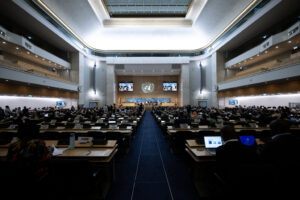
This is the title of a book to be launched on Monday 2 December at the UN in Geneva, in partnership with the Permanent Mission of Ecuador, and the ICJ.
Do the ‘Respect, Protect, and Remedy Framework and the Guiding Principles on Business and Human Rights adequately address the challenges concerning the human rights obligations of business?
This book engages critically with these important developments. The chapters in the book revolve around four key issues: the process and methodology adopted; the source and justification of corporate human rights obligations; the nature and extent of such obligations; and the implementation and enforcement thereof.
In addition to highlighting several shortcomings of the Framework and the Guiding Principles, the contributing authors also outline a vision for the twenty first century in which companies have obligations to society that go beyond the responsibility to respect human rights.
Ian Seiderman, ICJ’s Legal and Policy Director, will be one of the discussants.
Invitation UNOG Business-event-2013 (full text in pdf)
Nov 24, 2013 | News
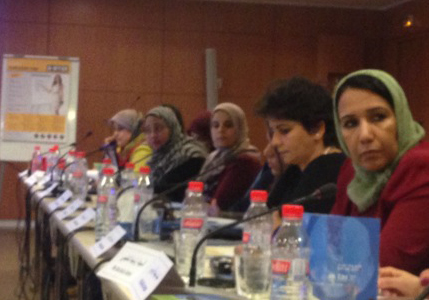
Women judges and lawyers from across the Middle East and North Africa participated in the ICJ Colloquium on Women and the Judiciary in MENA on 22 and 23 November in Tunis.
The event brought together women of different generations from a range of countries including Bahrain, Egypt, Kuwait, Libya Morocco, Palestine and Tunisia.
They discussed the significant personal and professional challenges faced by women judges and lawyers in the region.
Sharing their personal testimonies and experiences, participants underscored the specific challenges which arise for women judges and lawyers in situations of transition, conflict and occupation or in contexts where women’s participation in the judiciary is not possible or subject to significant restrictions.
They identified recommendations for change and highlighted the need for increased cross-regional support networks and opportunities for dialogue and joint action.
The Colloquium marks the initial phase of an ICJ initiative to support women judges, lawyers and human rights defenders in the Middle East and North Africa as agents of change.

Nov 21, 2013 | Communiqués de presse, Nouvelles, Publications, Rapports
La CIJ a appelé aujourd’hui les autorités marocaines à assurer une réforme globale et significative du pouvoir judiciaire.
Cette déclaration intervient alors que la CIJ vient de conclure une mission de haut niveau au Maroc et de lancer son rapport «Réformer le système judiciaire au Maroc », le 21 Novembre 2013.
La CIJ a déclaré que les réformes devraient viser à mettre fin à toute forme d’influence ou de contrôle abusif du pouvoir exécutif sur les affaires judiciaires.
Elle a appelé au renforcement de l’autorité du Conseil Supérieur du Pouvoir Judiciaire (CSPJ) nouvellement créé, sur tous les aspects relatifs à la carrière des juges et des procureurs.
La CIJ a souligné que le Ministère Public devrait être séparé du pouvoir judicaire et qu’il devrait conduire ses activités de manière objective et impartiale, et en défense des droits de l’homme.
L’organisation a également demandé à ce que la compétence des tribunaux militaires soit limitée au personnel militaire pour manquement à la discipline militaire, et qu’en aucun cas ces tribunaux ne devraient être utilisés pour juger des crimes constituant des violations des droits de l’homme.
Morocco – Réforme judiciaire – News-press release-2013-Fr (Texte complet en PDF)
Maroc – Réformer le système judiciaire-publications-rapport RESUME-2013-fr (Résumé du rapport en PDF)
Nov 21, 2013 | Articles, Nouvelles, Publications
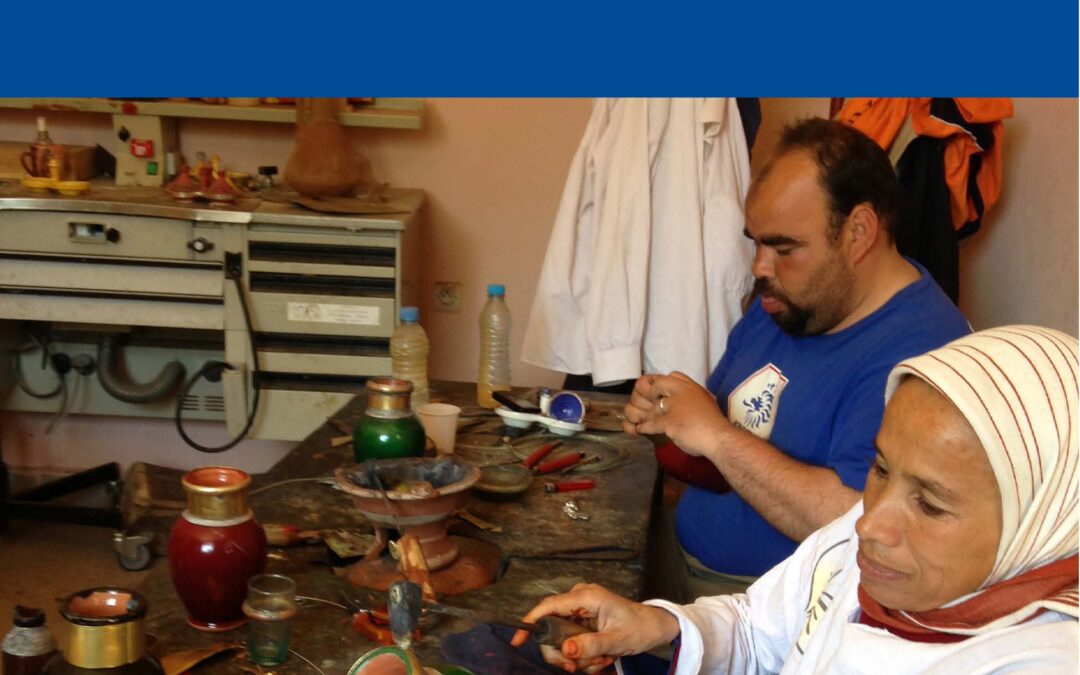
Ce nouveau rapport de la CIJ sur accès à la justice pour les droits économiques, sociaux et culturels au Maroc a été présenté à l’issue d’une mission de quatre jours dans le pays. Il a largement bénéficié des informations et discussions collectées et menées au cours d’un processus entamé en 2012.
Le rapport souligne que les provisions de la Constitution de 2011 devraient contribuer à garantir les droits économiques, sociaux et culturels.
Mais il identifie aussi un certain nombre de lacunes qui privent de nombreux(ses) Marocain(e)s d’accès à la justice en cas de violation de ces droits.
Un atelier organisé en collaboration avec l’Organisation marocaine des droits humains en septembre 2012 et une mission de recherche organisée conjointement par les programmes DESC et MENA de la CIJ en avril 2013 ont été l’occasion de consulter des acteurs pertinents, qu’ils soient utilisateurs ou au service de la justice.
Morocco-Access to Justice ESCR-publications-report-2013-Fr (full text in French, pdf)
Nov 18, 2013 | News
Following its mission to Tajikistan on 10-13 November, the ICJ called on the Tajikistan authorities to reconsider provisions of a draft law which could undermine the independence of the legal profession.
The draft Law on Lawyers’ Activities and Advokatura would allow the Ministry of Justice a significant role in regulating entry to the profession.
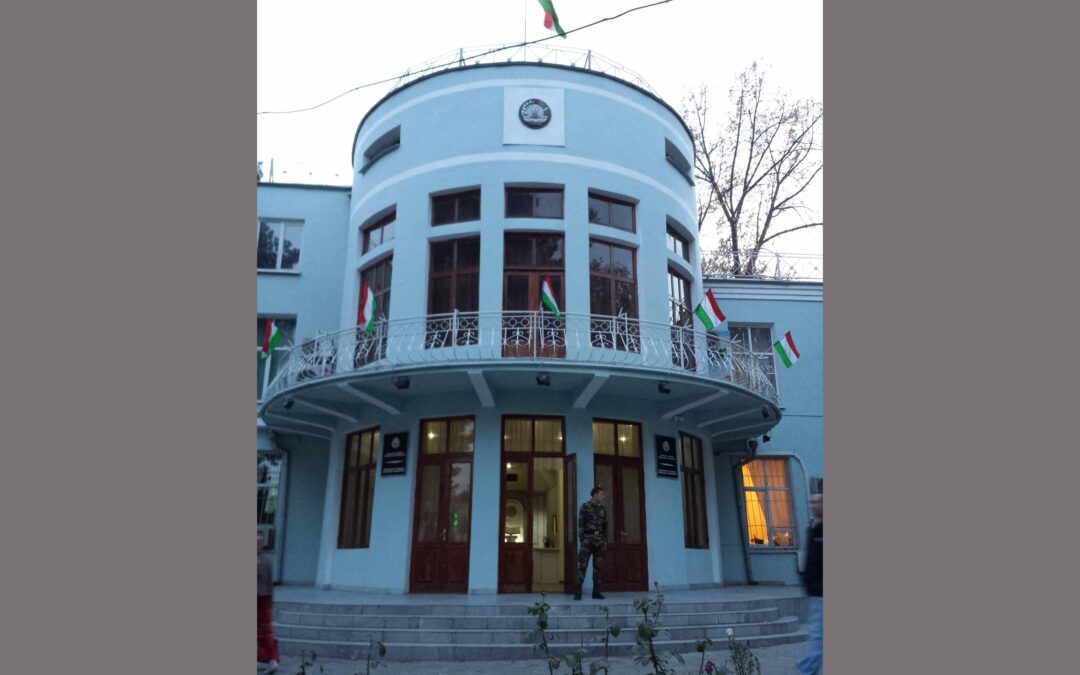
In particular, the Qualification Commission for lawyers, which would be responsible for access to the profession, would operate under the Ministry of Justice (picture).
It would be chaired by a deputy Minister, and would also include five lawyers, one representative of Parliament, one legal academic, and one other representative of the Ministry of Justice.
It is particularly worrying that all lawyers would be required to go through a new qualification process, carried out by this Commission, within one year of the new law coming into force.
“The draft law would bring welcome reforms, unifying a divided profession under a single, independent, Union of Lawyers. However, the value of these reforms would be undermined, since every lawyer would have to go through a new qualification process, the nature of which is not yet clear, administered by a body under the Ministry of Justice,” said Judge Egbert Myjer, Commissioner of the ICJ.
“The procedure would risk cleansing the profession of independent lawyers and leading to de facto domination of the profession by the Ministry of Justice, contrary to the UN Basic Principles on the Role of Lawyers,” he added.
Under international standards on the role of lawyers, independent self-governing professional associations of lawyers should be established, and should have sufficient powers to regulate the profession, including control of the qualification of lawyers.
The ICJ emphasized that at present there is a lack of consistency in the varied qualification procedures in the different sections of the legal profession in Tajikistan, which impedes high professional standards.
This should be addressed through a unified, independent and rigorous qualification process administered by the profession itself, in line with international standards, and as recommended by the UN Human Rights Committee, the International Bar Association and the ICJ.
The ICJ heard consensus from lawyers’ associations in Tajikistan that the proposed role of the Ministry of Justice would impair the effective and independent work of lawyers.
The lawyers’ associations added that these concerns were not taken into account in the drafting process.
In response to criticism by the UN Human Rights Committee earlier this year, the Minister of Justice stated that the Qualification Commission would only be placed under the Ministry for Justice for a transitional period.
This is not reflected in the current draft law. However, the authorities reassured the ICJ that the role of the Ministry of Justice in qualification was not intended to be permanent.
The ICJ mission to Tajikistan took place from 10 to 13 November. It was led by Justice Egbert Myjer, an ICJ Commissioner and former judge of the European Court of Human Rights, and also included ICJ staff members Róisín Pillay, Director of the Europe Programme of the ICJ, and Temur Shakirov, Legal Advisor of the Europe Programme.
The mission included a roundtable discussion with lawyers’ associations of Tajikistan, as well as meetings with representatives of the judiciary, the Ombudsman, and the National Legislative Centre and NGOs.
On 14 November, ICJ staff members met with the first deputy Minister of Justice.
The ICJ mission followed its report on the Independence of the Legal Profession in Central Asia, which analysed the law and practice of each of the five Central Asian states, including Tajikistan, in light of international law and standards, and made recommendations on the principles that should guide reform of the legal profession.
Contact:
Róisín Pillay, Director, ICJ Europe Programme, roisin.pillay(a)icj.org
Temur Shakirov, Legal Adviser, ICJ Europe Programme, temur.shakirov(a)icj.org
Tajikistan-ICJ Mission-news-web story-2013 (full text in pdf)
Tajikistan-ICJ Mission-news-webs story-2013-rus (full text in pdf)