Nov 18, 2013 | Новости, Статьи
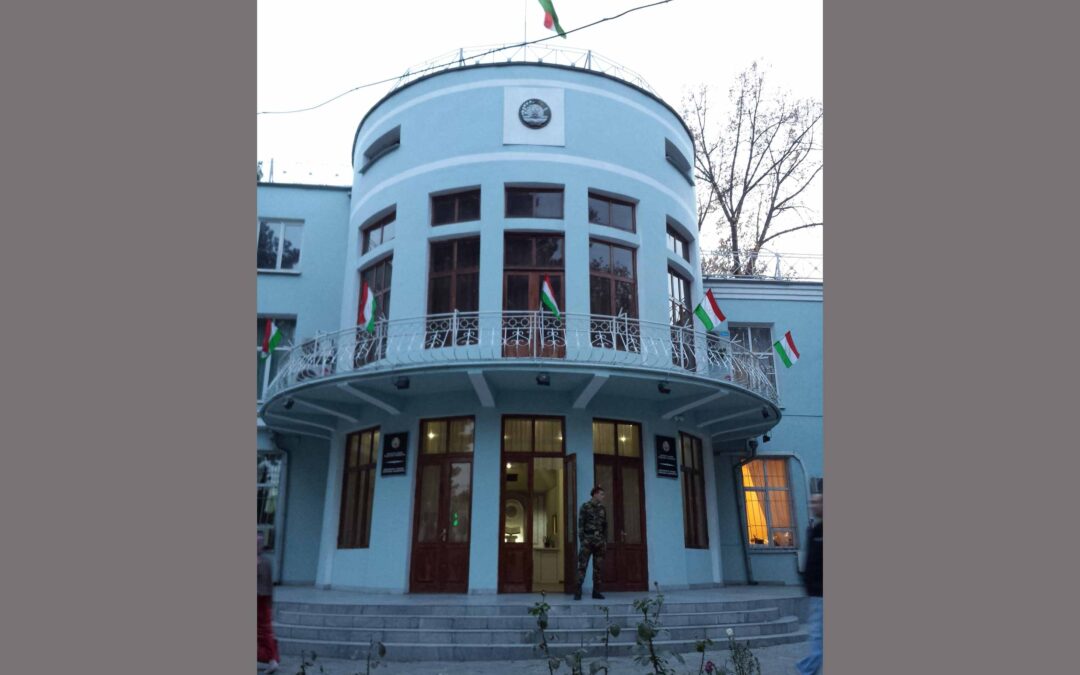
По завершении своей миссии в Таджикистан, проведённой с 10 по 13 ноября, МКЮ призвала власти Таджикистана пересмотреть положения законопроекта, которые способны подорвать независимость юридической профессии.
Проект закона «Об адвокатской деятельности и адвокатуре» предоставит Министерству юстиции значительную роль в регулировании доступа к профессии.
В частности, Квалификационная комиссия, орган ответственный за доступ к профессии, будет действовать при Министерстве юстиции.
Комиссия будет осуществлять свою деятельность под председательством заместителя Министра, также будет включать пять адвокатов, одного представителя парламента, одного учёного-правоведа, а также ещё одного представителя Министерства юстиции.
Вызывает особое беспокойство тот факт, что все адвокаты должны будут заново пройти процедуру квалификации, осуществляемую данной Комиссией, в течение одного года после вступления закона в силу.
«Проект закона даст начало желаемым реформам, которые объединят разобщённую профессию в единый, независимый Союз адвокатов. Однако значение этих реформ может быть подорвано, в связи с тем, что каждому адвокату необходимо пройти через новый, до сих пор не разработанный процесс квалификации, осуществляемый органом при Министерстве юстиции», – сказал судья Эгберт Мейер, комиссар Международной комиссии юристов.
«Данная процедура создаёт риск «очищения» профессии от независимых адвокатов и фактическому главенствованию над адвокатами Министерства юстиции, вопреки требованиям Основных принципов ООН, касающихся роли юристов», – добавил он.
В соответствии с международными стандартами о роли юристов, необходимо создание независимых самостоятельных профессиональных объединений адвокатов, и они должны иметь достаточные полномочия для регулирования профессии, включая и контроль над квалификацией адвокатов.
МКЮ подчеркнула, что в настоящее время отсутствует последовательность в различающихся процедурах квалификации в разных сегментах юридической профессии в Таджикистане, что препятствует существованию высоких профессиональных стандартов.
Эту проблему необходимо решать через единый, независимый и строгий процесс квалификации, находящийся в ведении самих адвокатов, в соответствии с международными стандартами, и рекомендациями Комитета ООН по правам человека, Международной ассоциации юристов и МКЮ.
МКЮ слышала консенсусное мнение коллегий адвокатов в Таджикистане о том, что предлагаемая роль Министерства юстиции умаляет эффективную и независимую работу адвокатов. Коллегии адвокатов добавили, что эта озабоченность не была принята во внимание в процессе разработки законопроекта.
В ответ на критику со стороны Комитета ООН по правам человека ранее в этом году, министр юстиции заявил, что Квалификационная комиссия будет находиться в ведении министерства юстиции лишь в течение переходного периода. Это не отражено в текущем законопроекте.
Однако власти заверили МКЮ в отсутствии намерений делать роль Министерства юстиции в квалификации постоянной. Миссия МКЮ в Таджикистан проходила с 10 по 13 ноября.
Её возглавил судья Эгберт Мейер, комиссар МКЮ и бывший судья Европейского суда по правам человека, в миссию также входили сотрудники МКЮ Роушин Пиллей, директор программы МКЮ по Европе, и Тимур Шакиров, правовой советник Программы МКЮ по Европе.
Во время миссии был проведён круглый стол с коллегиями адвокатов Таджикистана, а также встречи с представителями судебной системы, омбудсменом, Национальным центром по законодательству и неправительственными организациями.
14 ноября сотрудники МКЮ встретились с первым заместителем министра юстиции.
Миссия МКЮ была проведена вслед за опубликованием доклада «О независимости юридической профессии в Центральной Азии», в котором был представлен анализ законодательства и практики каждого из пяти государств Центральной Азии, включая Таджикистан, в свете международного права и стандартов, а также были сделаны рекомендации относительно принципов, которыми следует руководствоваться при проведении реформы юридической профессии.
Контакты:
Роушин Пиллей, директор Региональной программы МКЮ по Европе, roisin.pillay(a)icj.org
Тимур Шакиров, правовой советник Региональной программы МКЮ по Европе, temur.shakirov(a)icj.org
Tajikistan-ICJ Mission-news-webs story-2013-rus (полный текст)
Nov 15, 2013 | News
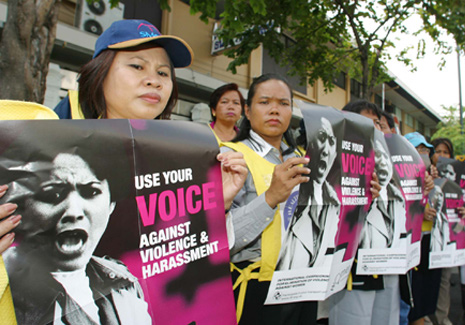
The ICJ and Amnesty International urge the Association of Southeast Asian Nations (ASEAN) to increase efforts to protect the rights of women and children.
ASEAN must act in light of the newly adopted Declaration on the Elimination of Violence against Women and Elimination of Violence against Children, which was recently adopted at the 23rd ASEAN Summit in Bandar Seri Begawan, Brunei Darussalam, the rights groups said.
The Declaration states the commitment of all 10 ASEAN member states to further “prevent and protect [women and children] from and respond to all forms of violence, abuse and exploitation of women and children particularly for those who are in vulnerable situations”.
AI and ICJ welcome this commitment, which allows for no exceptions or discrimination, while expressing concern that no explicit mention was made of lesbian, bisexual, transgender and intersex women and children in the non-exhaustive list of those requiring particular protection from discrimination and violence that follows this general statement.
The Declaration details a wide array of measures that Member States should take, within “a holistic, multi-disciplinary approach”, in order to eliminate violence against women and children.
These include changes to legislation, policies and practices; training and education; investigation, prosecution, punishment and where appropriate rehabilitation of perpetrators; creating an enabling environment for the participation of women and children; and the development of strategies for the elimination of harmful practices.
AI and ICJ pointed out that the Declaration suffers from some serious deficiencies in substance, as well as in the process of its adoption.
In terms of process, most ASEAN Member states failed to meaningfully consult with national civil society in the elaboration of the Declaration.
Only Philippines, Indonesia, Thailand and Vietnam held consultations, which in some of these states were limited.
This problem was compounded once the ACWC had finalised its draft, as the discussions and approval processes thereafter were completely shrouded in secrecy.
This final draft was never circulated to women’s and children’s groups in the region, despite written requests from several civil society groups calling for its release.
This unacceptable lack of transparency violates international guidelines on consultation with civil society, the ICJ and AI stressed.
AI and ICJ also deplore the fact that the Declaration reaffirms the General Principles of the discredited ASEAN Human Rights Declaration (AHRD), some of which are wholly incompatible with international law and allow for impermissible restrictions on human rights.
The two organizations reiterate their call to revise the AHRD, particularly by repealing or substantially amending General Principles 6-8, so as to bring it into line with international human rights law and standards.
AI and the ICJ further underline that international law allows no justification for violence against women and children and requires States to comply with their obligations to prohibit, prevent, investigate, punish and ensure reparations for victims of such violence in all circumstances.
Nothing in the Declaration may be construed to circumvent ASEAN Member States’ obligation to eliminate “prejudices and customary and all other practices” as well as “harmful and discriminatory traditional practices” that amount to, result in or perpetuate violence against women and children.
In addition, a significant omission of the Declaration is the lack of a reference to economic barriers to protection, assistance and justice faced by women and children in situations of violence.
ASEAN Member States should ensure that financial means do not impede access to justice, particularly of those living in poverty.
The rights groups also highlighted that ACWC rejected the proposal from women and children groups to have two separate declarations.
Although both women and children share similar vulnerabilities necessitating for additional protection, there remains certain rights, approaches and differing needs that are specific to each groups that could only be adequately addressed by having two separate declarations.
AI and the ICJ stated that ASEAN’s determination to end violence against women and children will ultimately be measured only by effective implementation of the Declaration in a manner which complies with their international obligations.
The Declaration tasks the ACWC to promote the implementation of the Declaration and review its progress.
AI and the ICJ call on the ACWC to actively implement this mandate, and for ASEAN Member States to cooperate with the ACWC in fulfilling this role.

Nov 14, 2013 | News
The International Bar Association’s Human Rights Institute (IBAHRI) and the ICJ urge the Commonwealth Heads of States meeting in Colombo this week to make Sri Lanka accountable to Commonwealth values.
The IBAHRI and the ICJ recall that the Commonwealth Charter, passed in March 2012, sets out 16 core values, which include safeguarding the independence of the judiciary, protecting the rule of law, respecting the separation of powers and promoting democratic rule.
But the two organizations point out numerous examples where these values have not been respected by the Government of Sri Lanka.
The IBAHRI and the ICJ were holding a press conference in Bangkok Thailand today after a high-level IBAHRI delegation was blocked from entering Sri Lanka late last week to attend a conference on the rule of law and independence of the legal profession hosted by the Bar Association of Sri Lanka.
Giving a statement remotely, Gabriela Knaul, UN Special Rapporteur on the Independence of Judges and Lawyers, expressed “serious concerns about acts of reprisals against judges, prosecutors, lawyers and other actors of the judicial system who cooperate, or seek to cooperate, with UN and regional human rights mechanisms.”
“Reprisals against judicial actors and legal professionals are a kind of attack to their institutional and functional independence,” she added.
Earlier this year, the IBAHRI conducted a remote fact-finding mission on the politically motivated impeachment of Chief Justice Banadranayake in January 2013, after being denied entry into Sri Lanka.
The IBAHRI Mission concluded that the Chief Justice’s removal was unlawful, undermined public confidence in the rule of law and threatened to eviscerate the country’s judiciary as an independent guarantor of constitutional rights.
In an open letter signed by 56 eminent jurists and senior judges from around the world, the ICJ also expressed its grave concern over the disregard for international standards on the independence of the judiciary and the removal of judges.
“This weakening of rule of law and independence of the judiciary is accompanied by an equally deteriorating human rights situation,” said Sheila Varadan, ICJ Legal Adviser for South Asia.
The United Nations High Commissioner of Human Rights, Navi Pillay, in her recent visit to Sri Lanka expressed concern over the curtailment or denial of personal freedoms and human rights, the persistent impunity and the failure of rule of law.
“The state of affairs in Sri Lanka sits uneasily with the aspirations set out in the Commonwealth Charter,” said Human Rights Barrister and IBAHRI Sri Lanka Mission Rapporteur, Sadakat Kadri. “The Government of Sri Lanka has spent years undermining the values and principles of the Commonwealth.”
“If the Commonwealth is to remain a relevant and effective international organization, it is paramount that those heads of State who have chosen to attend this week’s summit take measures to make Sri Lanka accountable to the core values and principles of the Commonwealth,” said IBAHRI Senior Programme Lawyer Alex Wilks.
Contact:
Sheila Varadan, ICJ Legal Advisor, South Asia Programme (Bangkok), t: +66857200723; email: sheila.varadan(a)icj.org
Notes:
- The IBAHRI delegation blocked from entering Sri Lanka included UN Special Rapporteur on the Independence of Judges and Lawyers, Ms Gabriela Knaul, former UN Special Rapporteur on the Independence of Judges and Lawyers and ICJ Commissioner Dato’ Param Cumaraswamy, and IBAHRI senior programme lawyer Alex Wilks, had intended to travel to Colombo to attend a conference on the rule of law and independence of the legal profession hosted by the Bar Association of Sri Lanka. IBAHRI Mission Rapporteur Sadakat Kadri was also unable to enter Sri Lanka as he was denied a visa.
- The Bar Association of Sri Lanka with the International Bar Association’s Human Rights Institute had planned a conference for 13 November 2013 on ‘Making Commonwealth values a reality: the rule of law and independence of the legal profession’. The 13 November 2013 conference was cancelled when the Government of Sri Lanka revoked visas for the UN Special Rapporteur and the IBAHRI delegation on 7 November 2013.
- In March 2013, a delegation of the IBAHRI undertook a remote fact-finding mission to investigate the impeachment proceedings of Chief Justice Bandaranayake, the independence of the legal profession and rule of law in Sri Lanka. The mission was conducted remotely following the cancellation of visas by the Government of Sri Lanka for the IBAHRI delegation. A report was released in April 2013 A Crisis of Legitimacy: The Impeachment of Chief Justice Bandaranayake and the Erosion of the Rule of Law in Sri Lanka.
- The ICJ released a report, Authority without Accountability: The crisis of impunity in Sri Lanka in November 2012 documenting the systemic erosion of rule of law and accountability mechanisms in Sri Lanka. The ICJ report described how decades of Emergency rule and legal immunities granted to the President and other government officials weakened the checks and balances in the Sri Lankan government, while political interference has increasingly led to attacks on the independence of the judiciary and rule of law.

Nov 14, 2013 | Events, News
The International Bar Association Human Rights Institute (IBAHRI) and the ICJ urge Commonwealth Heads of States meeting in Colombo this week to make Sri Lanka accountable to Commonwealth values.
The IBAHRI and the ICJ are holding a press conference in Bangkok, Thailand, this morning after a high-level IBAHRI delegation was blocked from entering Sri Lanka late last week.
You can watch the event here: http://www.ustream.tv/recorded/40754120
Further reading:
Sri Lanka-Muttur killings-ICJ-ACF Q&A-briefing paper-2013 (full text in pdf)
ICJ open letter signed by 56 eminent jurists and senior judges from around the world
ICJ report Authority without Accountability: The crisis of impunity in Sri Lanka
Nov 7, 2013 | News
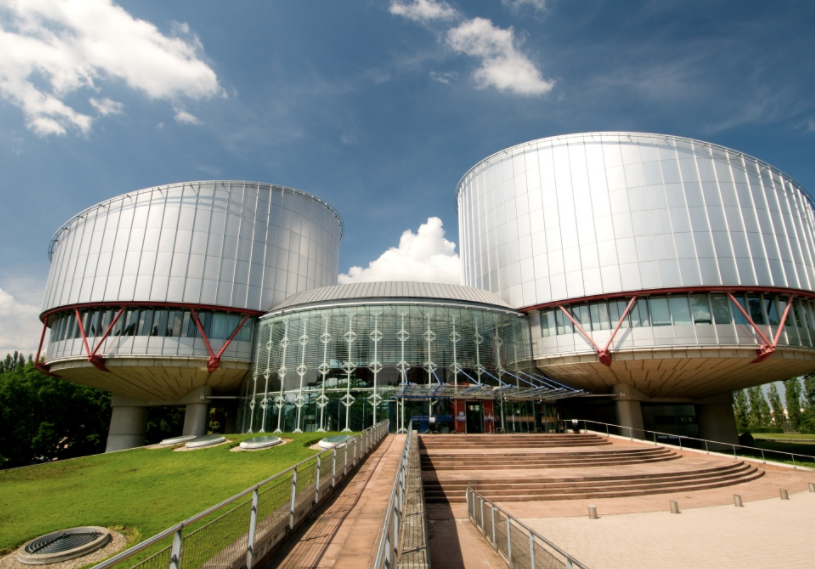
The Court of Justice of the European Union (CJEU) today declined to hold that the criminalisation of consensual same-sex activity necessarily constitutes “persecution” for the purposes of EU asylum law.
This ruling is out of step with international human rights and refugee law, the ICJ and Amnesty International said.
In X, Y and Z v Minister voor Immigratie, Integratie en Asiel the Luxembourg-based CJEU considered three joined cases arising from asylum requests lodged in the Netherlands by nationals of Senegal, Sierra Leone and Uganda.
The three men claimed that they have a well-founded fear of persecution based on their – undisputed – same-sex sexual orientation and the fact that sex between men is criminalised in their home countries.
“The Court skirted around the real issue in this case and missed a key opportunity to state clearly that to criminalise consensual same-sex conduct ultimately amounts to criminalising people for who they are and, therefore, amounts to persecution per se, regardless of how often sentences of imprisonment are enforced,” said Sherif Elsayed-Ali, Amnesty International’s Head of Refugee and Migrants’ Rights.
A key question facing the Court was whether “the criminalisation of homosexual activities and the threat of imprisonment” for the same constitute “persecution” under EU asylum law.
The Court did affirm that the prosecution and imprisonment of a person for such conduct would constitute persecution.
However, according to the two organizations, the mere existence of laws that criminalise consensual same-sex sexual activities – and which thus effectively criminalise individuals for their sexual orientation and who they are – also runs contrary to international human rights law and jurisprudence, as well as a growing raft of national court decisions.
“The Court should have found that these laws, even when they have not recently been applied in practice are capable of giving rise to a well-founded fear of persecution in lesbian, gay, bisexual transgender and intersex people, and who accordingly should be recognised as refugees when they apply for asylum,” said Livio Zilli, Senior Legal Adviser at the International Commission of Jurists.
Amnesty International has extensively documented how these laws provide state actors with the means to perpetrate human rights violations and contribute to an atmosphere of state-supported homophobia.
They enable harassment and abuse, and deny lesbian, gay, bisexual, transgender and intersex (LGBTI) individuals – or those perceived to be LGBTI – effective state protection to which they are entitled under international human rights law.
Contact:
Livio Zilli, Senior Legal Adviser, ICJ, t + 41 22 979 38 23 ; e-mail: livio.zilli(a)icj.org
Notes:
In its request to the CJEU, the Dutch Council of State asked the Luxembourg-based CJEU to answer the following questions:
1) “Do foreign nationals with a homosexual orientation form a particular social group as referred to in Article 10(1)(d)” of the Qualification Directive?
2) “Which homosexual activities fall within the scope of the Directive”; “how should national authorities assess what constitutes persecution in this context” and “whether applicants for refugee status should be expected to conceal, or exercise restraint in expressing, their sexual orientation in their country of origin” in order to avoid persecution?
3) Do the criminalisation of same-sex sexual activity and the possibility of imprisonment upon conviction constitute persecution within the meaning of the Qualification Directive?
Read also:
Criminalization of same-sex acts and the threat of imprisonment give rise to a well-founded fear of persecution