Overview of the September 2019 Human Rights Council session

Overview of the September 2019 Human Rights Council session

Today, at the close of the 42nd regular session of the UN Human Rights Council in Geneva, the ICJ and other NGOs highlighted key acheivements and failures.

The joint civil society statement, delivered by International Service for Human Rights (ISHR) on behalf of the group, read as follows (not all text could be read aloud due to time limits):

“The Council reaffirmed that reprisals can never be justified. Council members rejected attempts to weaken the text including attempts to delete the references to the roles of the Assistant Secretary-General and the Human Rights Council Presidents. The resolution listed key trends such as the patterns of reprisals, increasing self-censorship, the use of national security arguments and counter-terrorism strategies by States as justification for blocking access to the UN, acknowledged the specific risks to individuals in vulnerable situations or belonging to marginalized groups, and called on the UN to implement gender-responsive policies to end reprisals. The Council called on States to combat impunity and to report back to it on how they are preventing reprisals, both online and offline. The Bahamas and the Maldives responded to this call during the interactive dialogue and we encourage more States to follow their good practice. We also encourage States to follow the good practice of Germany and Costa Rica in raising specific cases of reprisals. The Council also welcomed the role of the Assistant Secretary-General and invited the General Assembly to step up its efforts to address reprisals and ensure a coherent system-wide response.

We welcome the creation of a Fact-Finding Mission (FFM) on Venezuela as an important step towards accountability for the grave human rights violations documented by the High Commissioner. We urge Venezuela to cooperate with the FFM and to honor the commitments they have made during this session, including by allowing OHCHR unfettered access to all regions and detention centers and implementing their recommendations. Cooperation and constructive engagement and measures for international accountability and justice should be seen as complementary and mutually reinforcing.

We welcome the renewal and strengthening of the mandate of the Group of Eminent Experts on Yemen, sending a clear message to parties to the conflict – and to victims – that accountability is at the center of the mandate, and providing a crucial and much-needed deterrent to further violations and abuses. States should support the recommendations made by the GEE in their recent report, including prohibiting the authorization of transfers of, and refraining from providing, arms that could be used in the conflict to such parties; and clarifying the GEE’s role to collect and preserve evidence of abuses.

We welcome the renewal of the mandate of the Special Rapporteur on Cambodia, but regret that calls to strengthen the mandate of the OHCHR to monitor and report on the situation have been ignored. We regret that the resolution fails to accurately depict the continuing crackdowns on civil society and the severity and scale of recent attacks on the political opposition.

We welcome the renewal of the mandate of the Commission of Inquiry on Burundi. Its work is vital as the country heads towards elections in 2020. The Burundian Government should desist from denial and insults, and should cooperate with the Commission and other UN bodies and mechanisms.

We welcome that the EU and OIC have jointly presented a resolution on Myanmar requesting the High Commissioner to report on the implementation of the recommendations of the Fact-Finding Mission at HRC 45. However, the international community needs to take stronger action to ensure accountability for and cessation of grave international crimes, in particular by referring Myanmar to the ICC and imposing a global arms embargo – and by acting on the FFM’s reports, including those on economic interests of the military and on sexual and gender-based violence in Myanmar and the gendered impact of its ethnic conflicts.

The joint EU/OIC resolution on Myanmar welcomes the FFM report on the military’s economic interests, which identifies companies contributing to abuses. The High Commissioner, however, has still not transmitted the database of companies facilitating Israel’s illegal settlements more than 2 and a half years after its mandated release. The High Commissioner pledged in March to fulfil the mandate “within the coming months”. The ongoing unexplained and unprecedented delays have become a matter of credibility, for both the High Commissioner and the HRC. Mr. President, we request that you confer with the High Commissioner and advise as soon as possible when this important Council mandate will be fulfilled.

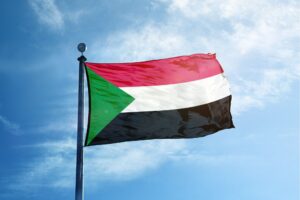
‘Cautious optimism’ best defines our approach to Sudan. While this year’s resolution, which welcomes the peaceful popular uprising, renews the Independent Expert’s mandate, supports the opening of an OHCHR country office, and highlights the role and needs of civil society, is an improvement on 2018, significant challenges remain. Ensuring accountability for the perpetrators of grave human rights and humanitarian law violations should be a central priority for the new Government, and the Council should assist in this regard.

We regret the lack of Council action on Kashmir and urge the Council, as well as India and Pakistan, to act on all the recommendations in the report of the UN High Commissioner for Human Rights.

On terrorism and human rights, we are deeply disappointed that Mexico and other States have partially acquiesced in attempts by Egypt to dilute or distract the work of the Special Rapporteur on counter-terrorism away from its appropriate focus on human rights violations while countering terrorism and human rights of victims of terrorism. We regret that States have asked the Special Rapporteur to spend the limited time and resources of the mandate, to comment on the overbroad concept of the “effects” of terrorism, by which Egypt and some other States seem primarily to mean macroeconomic, industrial, and investment impacts, rather than the human rights of individual victims. The length to which States seem willing to put the existing Special Rapporteur’s mandate at risk, in the name of protecting it, while failing even to incorporate stronger consensus text on human rights issues included in the most recent merged parallel resolution at the General Assembly, suggests that the merger of the previous Mexican and Egyptian thematic resolutions no longer holds any real promise of positive results for human rights.

We welcome the adoption of the resolution on the question of the death penalty, which is an important reflection of the movement towards the international abolition of this cruel punishment. Significantly, this resolution reiterates and affirms the position of international law that the abolition of the death penalty is an irrevocable commitment and that an absolute prohibition exists to guard against its reintroduction. We also welcome the acknowledgement of the ‘most serious crimes’ threshold that acts to restrict the death penalty, in States that have yet to abolish it, only to crimes of extreme gravity; this resolution plainly identifies that criminal conduct that does not result directly and intentionally in death can never meet the threshold test and can never serve as a basis for the use of the death penalty. We are very pleased to acknowledge that the adoption of this resolution is complimentary to the General Assembly’s resolution calling for an international moratorium on the death penalty and, together, they serve to illustrate the advancing global commitment to abolition.

We welcome the Council’s renewed attention to the protection of the right to privacy in the digital age: fully integrating human rights into the design, development and deployment of Artificial Intelligence, machine learning technologies, automated decision-making, and biometric systems, is essential to safeguard not only the right to privacy, but also to freedom of expression, peaceful assembly, and association, and economic social and cultural rights.

On human rights in the administration of justice, we welcome the focus in this year’s resolution on concrete measures to prevent and respond to violence, death and serious injury in situations of deprivation of liberty, which illustrates the potential of thematic resolutions to set out specific practical, legal and policy steps that can be drawn on by governments, civil society, and other stakeholders to have real positive impact at the national level.

We commend Australia for its leadership on Saudi Arabia, as well as the other States who stood up for women’s rights activists and accountability. We urge more States to live up to their commitment to defend civil society and sign the statement in the coming 2 weeks.

We appreciate the attention paid by individual governments to the situation in China, including the dire situation facing Uyghurs and other Turkic Muslims; the crackdown on human rights defenders, including those working to draw attention to violations of economic, social and cultural rights; and the suppression of fundamental freedoms in Tibet. However, we deplore that the Council and many of its members have once again failed to take decisive action to ensure monitoring and reporting on the human rights situation in the country, especially Xinjiang, and press for access for the High Commissioner.

For five years since the last joint statement in March 2014, the Council has failed to hold Egypt accountable for continuing systematic and widespread gross human rights violations. In the latest crackdown on peaceful protests, reports indicate that more than 2000 people have been arrested in the past week. When will the Council break its silence and convene a Special Session to address the grave and deteriorating human rights situation in Egypt?”

Signatories:

  1. International Service for Human Rights (ISHR)
  2. DefendDefenders (the East and Horn of Africa Human Rights Defenders Project)
  3. Commonwealth Human Rights Initiative (CHRI)
  4. CIVICUS: World Alliance for Citizen Participation
  5. Cairo Institute for Human Rights Studies
  6. Asian Legal Resource Centre
  7. Asian Forum for Human Rights and Development (FORUM-ASIA)
  8. International Commission of Jurists (ICJ)
  9. Amnesty International
  10. Association for Progressive Communications (APC)
  11. Human Rights Watch
  12. International Federation for Human Rights (FIDH)


Zimbabwe: ICJ partners with Zimbabwe’s Judicial Service Commission to improve justice service delivery

Zimbabwe: ICJ partners with Zimbabwe’s Judicial Service Commission to improve justice service delivery

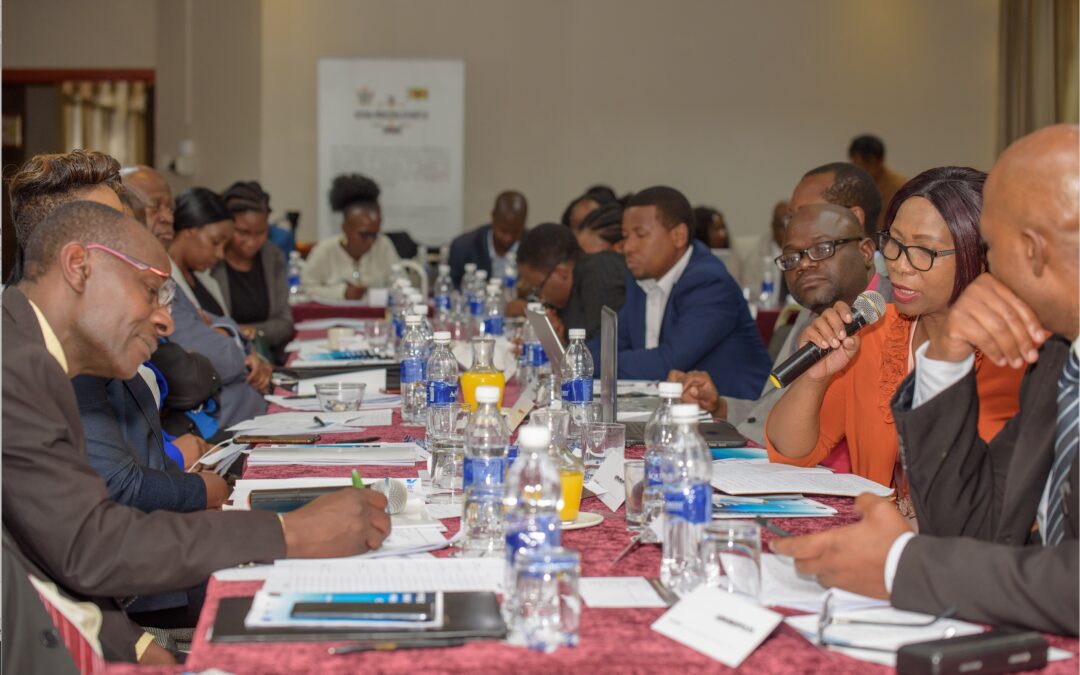
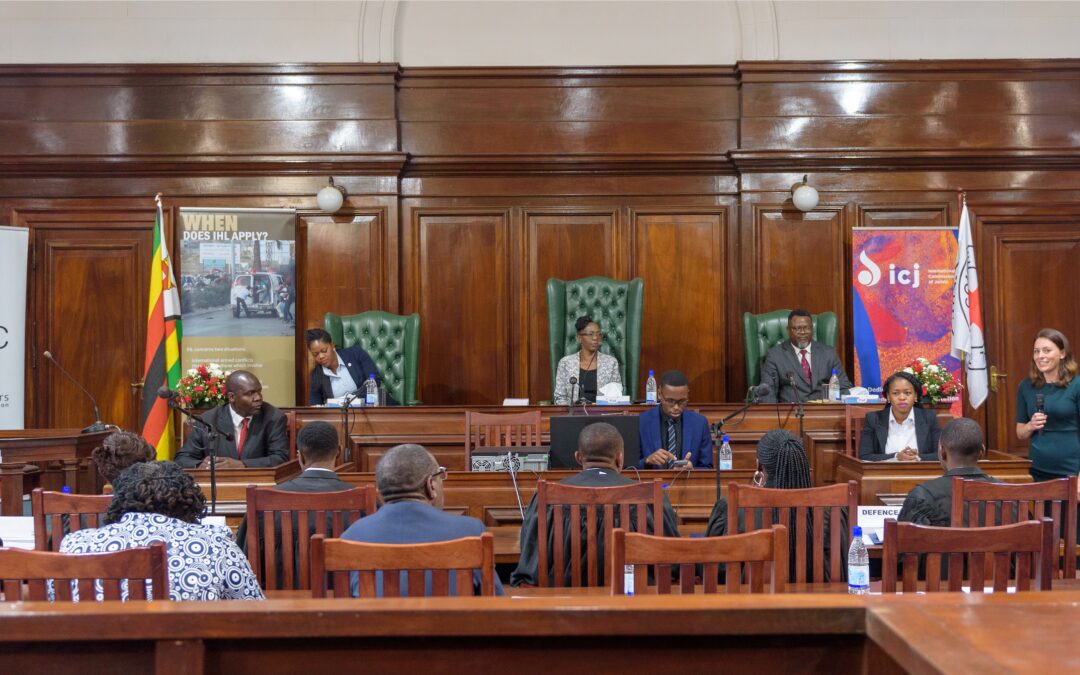
The ICJ, in collaboration with the Judicial Service Commission (JSC) of the Republic of Zimbabwe, has concluded a two-day Judicial Symposium on the theme ‘Core-Skilling: Towards a Human Rights Jurisprudence’, organized to mark the end of the second judicial term in the Zimbabwe judicial calendar.

In his remarks at the opening of the symposium, ICJ’s Africa Regional Director, Mr Arnold Tsunga, noted that the theme of the symposium had been carefully chosen to enhance discourse on national transformation in an atmosphere of respect for the rule of law and international human rights. He noted further that the symposium was to critique the concept of transformative adjudication and explore its relevance to applying the Constitution of Zimbabwe as an instrument and framework for national transformation.

Noting that the ICJ appreciated its on-going partnership with the JSC in Zimbabwe, Mr Tsunga expressed the hope that the training and symposium would enhance the effectiveness of the judiciary with a view to improving access to justice for all, especially victims of human rights violations, women, marginalized and vulnerable groups and contributing to attainment of the United Nations Sustainable Development Goals number 16 and 5.

On his part, in his opening remarks the Chief Justice of the Republic of Zimbabwe, the Hon. Chief Justice Malaba, noted that the ICJ-JSC organized symposia have provided a platform for continuous improvement of judicial work  and networking amongst judges.

Chief Justice Malaba observed that these meetings have enabled judges to dialogue on how to improve the effectiveness and efficiency in the justice delivery system. He noted that this year’s theme on human rights jurisprudence lies at the heart of an independent and effective judiciary.

He further noted that the current Constitution of Zimbabwe has a better framework and potential for the protection of human rights than previous constitutions. Accordingly, he expressed the view that the judiciary has a more important role to play in protecting and safeguarding human rights.

He highlighted that the judiciary’s commitment to the protection of human rights is evidenced in local jurisprudence in respect to human rights cases, where several important judgments have been given by all the courts.

Chief Justice Malaba used the opportunity to give updates on developments which were taking place within the JSC, particularly in its research centre, in the High Court, in the Fiscal and Tax Appeals Division, amendments to the Judicial Laws which were gazetted on the 9th of September 2019.

Chief Justice Malaba stated that in performance appraisal, the JSC has constituted a Performance and Training Committee led by the Deputy Chief Justice to come up with a system that enables accurate measurement of the performance of judges.

Responding to issues of accountability raised by the Chief Justice, ICJ’s Mr Tsunga urged the JSC to develop and adopt a system to track, monitor, document and communicate results arising from these trainings, as the results would help the ICJ, and international development partners to evaluate the usefulness of the trainings and efforts at justice sector reforms.

This year’s symposium was attended by 16 female and 27 male judges from the Constitutional Court, Supreme Court, High Court, Labour Court and Administrative Court of Zimbabwe.

Zimbabwe: ICJ launches anti-corruption awareness campaign

Zimbabwe: ICJ launches anti-corruption awareness campaign

The ICJ in collaboration with the Zimbabwe Anti-Corruption Commission (ZACC) and the National Prosecuting Authority (NPA), today launched a broad base anti-corruption awareness campaign in Harare.

The campaign was introduced by the President of Zimbabwe H.E. Cde Emmerson D. Mnangagwa and is expect to effectively run for 15 months.

It will harness different forms of media to spread awareness on the negative impact corruption has on the rule of law, human rights and development.

The anti-corruption awareness campaign is part of a broader longstanding rule of law initiative by the ICJ in collaboration with with stakeholders in the justice sector, to strengthen the rule of law for the protection and promotion of human rights for all, including women and persons from marginalized or disadvantaged groups.

Corruption undermines the rule of law by impeding access to justice through diversions of public resources for private gain.

As such the ICJ, through the support of the EU, is working towards increased transparency and integrity in the justice delivery system in order to increase access to justice for all.

“Zimbabwe has no option but to fight corruption if it is to be a just, peaceful and successful developmental state,” said Arnold Tsunga, ICJ’s Africa Regional Director.

“The reconstituted ZACC has demonstrated a strong desire to pursue its mandate with renewed commitment from other stakeholders in the justice delivery chain,” he added.

The campaign is not undertaken in isolation. It builds on other initiatives to combat corruption under this programme, which include the establishment of an anti-corruption court, training of personnel for the court and various research initiatives.

The campaign seeks to support the national efforts against corruption, and sensitize the public on the negative effects of corruption in society.

It will promote awareness on how to report corrupt practices, how to avoid corrupt practices and the impact of corruption on the public interest.

The campaign acknowledges that different sections of the population engage with media in varying manners. As such it utilises a wide array of approaches designed to build the optimism of the people of Zimbabwe to take an active role in efforts to combat corruption at every level of society.

The campaign launch was attended by justice sector actors, civil society representatives, business representatives and the diplomatic.

Contact:

Arnold Tsunga, Director of the Africa Regional Programme, International Commission of Jurists C: +263 77 728 3248, E: arnold.tsunga(a)icj.org


Zambia: ‘Constitutional Amendment Bill’ threatens judicial independence

Zambia: ‘Constitutional Amendment Bill’ threatens judicial independence

The ICJ today raised concerns that the proposed Zambian Constitutional Amendment Bill 2019 may negatively impact the independence of the judiciary in Zambia.

The proposed amendments to provisions regarding disciplinary measures and processes against judges and the composition of the Supreme Court and Constitutional Court are particularly concerning, according to a statement by a group of organisations including the ICJ.

 “The ICJ implores the President of Zambia and the Zambian legislature to ensure the alignment of all constitutional amendments with international human rights standards on the independence of the judiciary, the rule of law and the separation of powers,” said Arnold Tsunga, the ICJ’s Africa Director.

The joint statement calls upon the President of Zambia and the Zambian legislature to ensure that the proposed constitutional changes are in line with international human rights standards.

According to such standards, individual judges ‘may be dismissed only on serious grounds of misconduct or incompetence, in accordance with fair procedures ensuring objectivity and impartiality set out in the constitution or the law’. Examples include ‘incapacity or behaviour that renders them unfit to discharge their duties’ and ‘physical or mental incapacity that prevents them from undertaking their judicial duties.’

Moreover, disciplinary proceedings regarding judicial officers must be held by an institution independent of the executive and the legislature to secure the independence of the judiciary.

Article 143 (a) of the Zambia Constitution currently provides that ‘a judge shall be removed from office on the following grounds: (a) a mental or physical disability that makes the judge incapable of performing judicial functions; (b) incompetence; (c) gross misconduct; or (d) bankruptcy.’

However, the Amendment Bill worryingly replaces subsection (a) and allows for removal when a judicial officer is ‘legally disqualified from performing judicial functions.’

Furthermore, the proposed amendment does not set out the circumstances or infractions that could lead to the ‘legal disqualification’ leaving the provision open to abuse and in violation of the principle of legal certainty and the rule of law.

“The amendment introduces unnecessary obscurity and vagueness to the Constitution, which, in turn, increases the risk of judges being removed on politically motivated grounds and threatens the rule of law,” Tsunga added.

Another worrying aspect of the proposed amendment is the suggested changes to Article 144 of the Constitution transferring the authority to determine whether judicial officers are removed from the Judicial Complaints Commission to a Tribunal Appointed by the President.

The amendment allows for the possibility of a Tribunal staffed by members of the executive and the legislature, further heightening concerns about threats to judicial independence.

“It is vital that the processes and procedures for the removal of judicial officers in Zambia are constrained in terms of tightly defined constitutional provisions, overseen by independent decision makers without improper influence by the executive and the legislature,” said Tsunga.

The full statement is available here.

The statement is signed by:

Commonwealth Lawyers Association (CLA)

Commonwealth Magistrates’ and Judges’ Association (CMJA)

International Bar Association’s Human Rights Institute (IBAHRI)

International Commission of Jurists (ICJ)

Judges for Judges (J4J)

Lawyers’ Rights Watch Canada (LRWC)

Southern Africa Litigation Centre (SALC)

Translate »