Sep 7, 2019
An open letter to the UN Secretary General signed by 16 international NGOs regarding the recent report by Gert Rosenthal, “A Brief and Independent Inquiry into the Involvement of the United Nations in Myanmar from 2010 to 2018.”
The Rosenthal report describes the UN’s failure to stop, mitigate, or even draw attention to violence that the UN Independent International Fact-Finding Mission found amounted to crimes under international law including crimes against humanity, and warrants an investigation of the crime of genocide against Rohingya.
Download the letter here: Myanmar-Letter UNSG Rosenthal-Advocacy-open letters-2019-ENG.pdf
Sep 6, 2019 | News
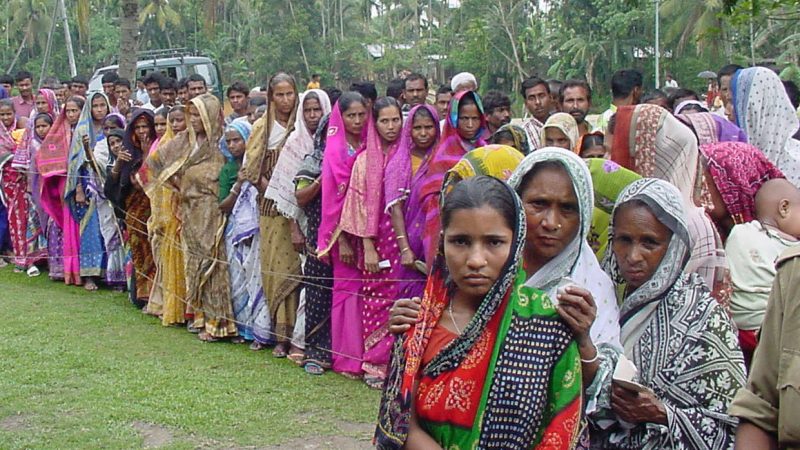
The ICJ, along with 124 other international and domestic civil society groups from around the world have condemned the actions of Indian government in publishing an incomplete and discriminatory Assam National Register of Citizens (NRC) on 31 August, 2019.
The NRC excludes some 1.9 million people – nearly 6 percent of the population of Assam – thereby rendering them at risk of statelessness. The statement points to violations of rights to equality and non-discrimination, as the process has disproportionately affected Muslims of Bengali descent, undocumented women and children as well as other minorities.
The groups call on India to take measures to redress the situation in a non- discriminatory and non-arbitrary manner, with full regard to due process rights and a commitment to protect the right to a nationality and to avoid statelessness of all long-term residents and their children.
Arbitrary deprivation of nationality is a human rights violation, which undermines the enjoyment of the human rights of those affected and their ability to participate fully in society. International law prohibits the arbitrary deprivation of nationality and obliges States to avoid statelessness, while guaranteeing the right of every child to acquire and preserve their nationality and to be protected from statelessness.
In 2015, the Assam state government, pursuant to a Supreme Court decision, announced it would initiate a process of updating the NRC, requiring every person in Assam who recognized themselves as an Indian citizen, to submit proof of their ancestry (or birth) in the country pre-dating 1971, the year that Bangladesh was formed. The act of requiring individuals to prove their citizenship by providing documentary evidence dating back over 50 years, and excluding applicants on the basis of their inability to fulfill this evidentiary burden, has led to arbitrary deprivation of nationality, contrary to Article 15 of the Universal Declaration of Human Rights.
Further, poor birth registration rates, despite an obligation under Article 7 of the Convention of the Rights of the Child to immediately register every birth has denied numerous applicants of a critical piece of evidence to establish their citizenship. Similarly, many people who possessed the required documents, have nonetheless been penalized due to administrative errors.
Despite repeated calls to action by UN human rights authorities, India has refused to reverse the process and other States have done little to press the Indian government to reverse course.
Those excluded from the list must appeal within 120 days to Foreigners Tribunals (FT), a quasi-judicial institution mandated to determine citizenship. In essence, this implies that the government already considers those excluded from the NRC to be foreigners, and not Indian citizens.
Find the full statement, endorsed by the ICJ and 124 other international and domestic civil society groups from around the world here: https://files.institutesi.org/cso-joint-statement-on-assam-nrc.pdf
Contact:
Maitreyi Gupta (Delhi), ICJ International Legal Adviser for India, t: +91 7756028369 e: maitreyi.gupta(a)icj.org
Frederick Rawski, ICJ Asia-Pacific Director, t: +66 64 478 1121; e: frederick.rawski(a)icj.org
Sep 4, 2019 | News
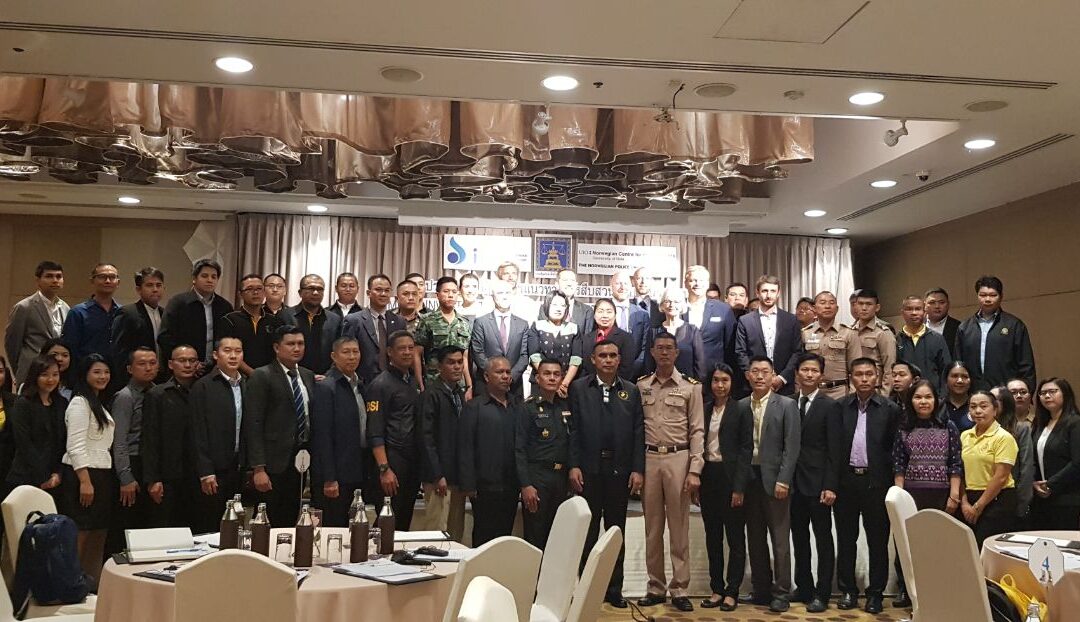
From 2 to 3 September 2019, the ICJ co-hosted a workshop in Bangkok for justice sector authorities from Thailand on ‘Human Rights Compliant Criminal Investigation and Investigative Interviewing’. The event focused on international law and standards regarding investigative interviewing of victims, witnesses and suspects in criminal cases.
The workshop was co-hosted with Thailand’s Ministry of Justice and the Norwegian Centre of Human Rights, University of Oslo.
The participants included 50 criminal investigators, public prosecutors, representatives of the Ministry of Justice’s Department of Special Investigation (DSI), the Internal Security Operations Command, Ministry of Defense’s Judge Advocate General’s Office, the National Anti-Corruption Commission, the Office of the Narcotics Control Board and the Royal Police Cadet Academy.
A primary objective of the workshop was to promote and explain the principle that interviews which are conducted in compliance with human rights standards produce much more effective results without resort to torture, ill-treatment or coercion. The workshop also addressed the problem of a ‘confession culture’ and looked into how unlawful interrogations threatened the quality and legitimacy of justice sector officials and bodies in meting criminal justice. Participants also conducted discussions and participated in group activities on human memory, investigative management and the conducting of interviews grounded in fundamental principles of international human rights law.
Speakers at the Workshop included:
- Aim-orn Siangyai, Deputy Director General of Thailand’s Rights and Liberties Protection Department, Ministry of Justice;
- Frederick Rawski, Asia Pacific Regional Director, ICJ;
- Gisle Kvanvig, Programme Director for ASEAN/Vietnam, Norwegian Center for Human Rights;
- Asbjørn Rachlew and Dr. Ivar A. Fahsing, experienced investigators from the Norwegian Police Department;
- Lilian M. Stein, Professor at the Psychology Postgraduate Department, Pontifical Catholic University of Rio Grande do Sul; and
- Mary Schollum, a criminologist and lead drafter of the Universal Guidelines on Investigative Interviewing.
Background
This workshop is part of the ICJ’s ongoing efforts to ensure the domestic implementation of international law and standards in crime investigation.
Previous ICJ workshops on the above topic have included:
Regional Workshops
National Workshops
Sep 4, 2019 | News
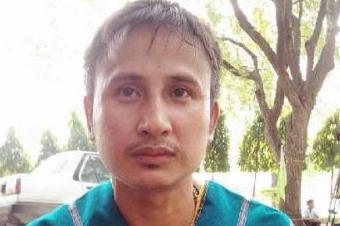
The announcement that the remains of Pholachi “Billy” Rakchongcharoen, a Karen rights activist, have been located, brings a sad end to years of uncertainty for his family, said the ICJ and Amnesty International today.
This development should lead to a renewed focus on identifying the perpetrator(s) of his apparent enforced disappearance and bringing them to justice.
On 3 September 2019, the Thai Ministry of Justice’s Department of Special Investigations (DSI) announced it had located bone fragments, which they had identified as likely belonging to Billy inside an oil tank submerged in water near a suspension bridge inside Kaeng Krachan National Park in Phetchaburi province.
“The DSI should redouble its efforts to identify the perpetrator(s) of Billy’s killing and bring them to justice,” said Frederick Rawski, Asia Regional Director of the ICJ. “If, based on an assessment of the evidence, it is found that Billy was the victim of enforced disappearance, then the perpetrators, including those with command responsibility, should be charged with the appropriate, serious offences in accordance with Thailand’s obligations under international law – not only with lesser crimes that do not reflect the gravity of the offense.”
Billy was last seen on 17 April 2014 in the custody of Kaeng Krachan National Park officials.
“This case highlights the serious risks activists and human rights defenders face in Thailand, including assaults, enforced disappearance and killings,” said Nicholas Bequelin, Amnesty International’s interim Regional Director of Southeast Asia and the Pacific. “It underscores the long-overdue need for the Thai government to make enforced disappearance a crime under national law. A failure to do so results in the lack of an independent, impartial and effective mechanism to investigate the cases, exacerbating the current climate of impunity.”
The DSI stated that the recovered bones contain DNA inherited from Billy’s mother, which suggests they belong to a person who was related to her. However, the DSI declined to disclose the name of any suspect(s) and requested more time to investigate the case and examine the remains.
Background
Thailand is a state party to the International Covenant on Civil and Political Rights (ICCPR) and the Convention against Torture and other Cruel, Inhuman or Degrading Treatment or Punishment (CAT). Freedom from enforced disappearance is protected under both these treaties, as enforced disappearance will always constitute violations of some or more of the following rights: the right to life; freedom from torture and other cruel, inhuman, or degrading treatment or punishment; the right to liberty; and the right to recognition as a person under the law. These are in addition to violations of the rights of members of the disappeared person’s family through suffering deliberately inflicted on them through the imposition on them of uncertainty about their love one’s fate and whereabouts.
Thailand has also signed, but not yet ratified, the International Convention for the Protection of All Persons from Enforced Disappearance (ICPPED). The ICPPED affirms the absolute right not to be subject to enforced disappearance and places an obligation on states to investigate acts of enforced disappearance, to make it a criminal offence punishable by appropriate penalties that take into account its “extreme seriousness” and to take necessary measures to bring those responsible to justice.
The Government has stated it will not ratify the Convention until its provisions are incorporated in domestic law. However, efforts to pass the Draft Prevention and Suppression of Torture and Enforced Disappearance Act (draft Act) stalled after it was dropped by the National Legislative Assembly (NLA) prior to the 2019 national election. The draft Act is currently pending the consideration of the President of the National Assembly. Under international law of treaties, as signatory to the ICPPED, still is bound to desist from any acts which would defeat its object and purpose.
Thailand has a binding obligation under international law to conduct prompt, effective and thorough, independent and impartial, and transparent investigations into all suspected cases of unlawful death and enforced disappearance.
According to the ICPPED and the revised Minnesota Protocol (2016), which contains the international standards on the conduct of investigations into unlawful death and enforced disappearance – and which Thailand launched in May 2017 – records that investigations “must seek to identify not only direct perpetrators but also all others who were responsible for the death, including, for example, officials in the chain of command who were complicit in the death.” (para 26)
Download
Thailand-Discovery of Billy remains-news-webstory-2019-THA (full story in PDF)
Further reading
Thailand: special investigation into apparent enforced disappearance of “Billy” welcome, but much more is needed
Thailand: ICJ submits recommendations on draft law on torture and enforced disappearance amendments
Justice for Billy: Time for Thailand to Account for Activist’s Disappearance
Contact
For ICJ: Frederick Rawski, ICJ Asia-Pacific Director, t: +66 64 478 1121; e: frederick.rawski(a)icj.org
Sep 3, 2019 | Advocacy, News
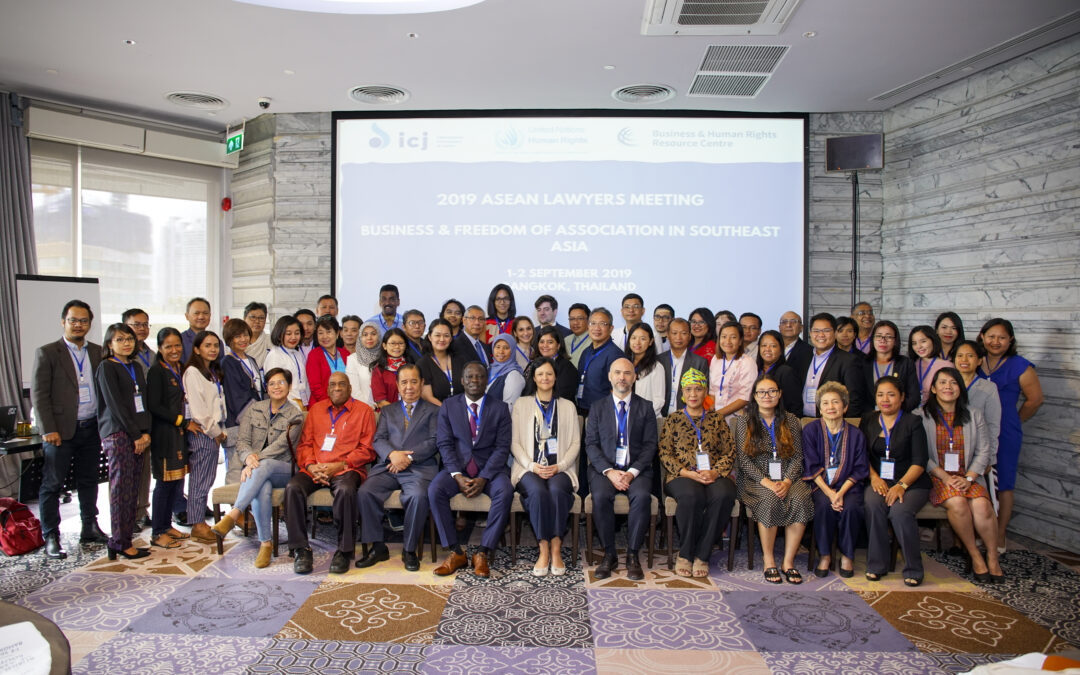
From 1 and 2 September 2019, the UN Special Rapporteur on freedom of association and assembly, Clément Nyaletsossi VOULE, and lawyers and trade union representatives met and discussed challenges faced in Southeast Asia on exercising the right to freedom of association of workers.
The event was organized by the ICJ together with Business & Human Rights Resource Centre (BHRRC), and supported by the Office of the United Nations High Commissioner for Human Rights (OHCHR).
At the meeting’s conclusion, the participants reached a consensus to work for the development regional guidelines on freedom of association of workers in the ASEAN and agreed to form a Working Group that would be tasked to develop these guidelines. The Working Group nominated by the participants is composed of trade union representatives at the national level, lawyers, among other experts.
In his keynote speech, the Special Rapporteur emphasized that freedom of association is a fundamental right for all workers without which they lack the power to fight discrimination and injustice in the workplace. He also explained the link between the rights to freedom of association and expression, “Freedom of association is closely related to freedom of expression as they both represent opening up of space for dialogue and an enabling environment where unions can participate freely.”
The participants at the meeting were practicing lawyers from Southeast Asia focusing on labor and employment and trade unions leaders and representatives. Other participants included representatives from human rights organizations addressing business and human rights and the right to freedom of association; the ASEAN Secretariat; the International Labor Organization (ILO), the ASEAN Trade Union Council (ATUC), and the International Trade Union Confederation (ITUC).
“Shrinking political and civic space combined with inequality and social marginalization are key challenges at the heart of business-related human rights violations in Southeast Asia,” said Katia Chirizzi, Deputy Regional Representative for UN Human Rights. “Governments must implement their obligations to respect, protect and promote human rights in relation to business activities. It is equally critical to ensure that businesses meet their responsibilities to respect human rights.”
During the meeting, the participants also discussed the role of women in labour organizing and the additional challenges women face when they exercise the right to freedom of association in the workplace. Betty Yolanda, Asia Regional Manager of the Business and Human Rights Resource Center (BHRRC) said: “Women workers face multiple forms of discrimination and challenges. They are fighting for their rights as workers in the company and at the same time they are also fighting the patriarchy.”
The participants identified common challenges confronted in the region where workers’ rights to freedom of association face legal and physical limitations. Migrant workers, women workers and workers in Special Economic Zones (SEZs) were identified as being particularly at risk in exercising their rights.
“It is crucial that we discuss these challenges openly and with all stakeholders, particularly issues that affect those who work in the informal sector, and other vulnerable communities such as migrant workers. Special investment frameworks, special economic zones and other government-led initiatives meant to attract foreign investment potentially create new opportunities to increase transparency and accountability. Unfortunately, they are more often used to justify lowering human rights standards, or impose new restrictions that act to limit workers and communities abilities to express their grievances or exercise their rights to association,” said Frederick Rawski, ICJ’s Regional Director for Asia and the Pacific.
Contact:
Boram Jang, International Legal Adviser, Asia & the Pacific Programme, e: boram.jang(a)icj.org