Feb 7, 2019 | Advocacy, Non-legal submissions
The ICJ has submitted a written statement on Sri Lanka to the Human Rights Council ahead of its 40th Session in Geneva.
Almost ten years after Sri Lanka emerged from a period of conflict and massive human rights violations, the Government of Sri Lanka still has largely failed to implement its human rights obligations and commitments as reflected in Resolution 30/1.
The ICJ statement focuses on two of four transitional justice mechanisms which the Government committed to establish under the Resolution: (a) the judicial mechanism with special counsel to investigate violations of human rights and international humanitarian law; and (b) the office of missing persons. It highlights how female victims of war are uniquely impacted by the Government’s failure to implement the commitments made before the UNHRC and underscores the importance of holistically including women when such measures are implemented.
Recommendations:
The ICJ considers that the gravity and character of the crimes under international law committed in Sri Lanka, and the failure of the Government of Sri Lanka to meet its obligations and commitments to ensure justice for such crimes including as provided for in resolution 30/1, means that referral to the International Criminal Court or the creation of another international mechanism to facilitate criminal accountability would be fully warranted. If however the Council does not choose to pursue these options at this stage, the ICJ urges the Council at minimum to:
- Continue the monitoring of Sri Lanka through the adoption of a new resolution to ensure that the Government complies with all its obligations and commitments as reflected in resolution 30/1.
- Provide for OHCHR to develop, with the Sri Lankan Government, an implementation strategy with definitive timelines to ensure that the time afforded under the new resolution is utilised to expedite the implementation of measures assured under Resolution 30/1.
- Encourage Member States to exercise universal jurisdiction in order to bring perpetrators to justice.
The ICJ urges the Government of Sri Lanka to:
- Take immediate measures to establish the judicial mechanism with international involvement as contemplated under operative paragraph 6 of Resolution 30/1. The mechanism should ensure gender parity, be accessible for women in civil society, and allow female victims to fully participate in the process.
- Spread awareness regarding the importance of certificates of absence and confirm to the community that issuance of a certificate will not result in the end of efforts to find the person.
- Ensure an overall gender strategy is integrated in all other transitional justice mechanisms that are yet to be established so that structural injustices against women, especially in terms of discrimination and lack of participation, are addressed.
(full text of submission, in PDF: UN-HRC40-SriLanka-WrittenStatement-2019-EN)

Jan 30, 2019
The ICJ today, alongside dozens of other non-governmental organizations, called on the UN Human Rights Council to adopt a resolution addressing the situation in China, at its upcoming March 2019 session.
The NGOs urge a resolution that would call on China, among other things:
- to provide independent international human rights experts with unfettered access to all parts of the country, including areas populated by ethnic and religious minorities;
- to promptly reform national security legislation to meet international standards, and to stop using such laws in ways that violate human rights;
- to release individuals — including human rights defenders and lawyers among others — unjustly or arbitrarily detained.
The letter reads as follows:
30 January 2019
At upcoming session of Human Rights Council, States should pass resolution to address human rights violations in the People’s Republic of China
Your Excellency,
The past year was marked by vitally important monitoring and review of China’s human rights situation by the United Nations human rights system. The upcoming session of the UN Human Rights Council provides a key opportunity to reinforce the issues raised over the last year, and express collective concern about worsening rights abuse in China and the government’s failure to follow through on its obligations and commitments.
Considerable information has been available in the last year for governments to deepen their understanding of the situation in the country, spanning two UN reviews and nearly two dozen expert letters or opinions, including a full paragraph in the annual update from the UN High Commissioner for Human Rights. Nonetheless, the Chinese state, at the direction of the Chinese Communist Party, continues to suppress dissent and undermine efforts to hold it accountable to its obligations under international agreements.
Millions in the country face dire abuses of their fundamental human rights – be they members of ethnic groups, practitioners of Islam, Tibetan Buddhism or Christianity, human rights defenders, feminists, petitioners, lawyers, journalists, professors or students. Uyghurs and Tibetans are particularly targeted with discriminatory policies and practices. Furthermore, these abuses increasingly affect individuals and communities beyond China’s borders.
In light of this, the international community must push with one voice for change. We urge your government to contribute to and support a resolution on the human rights situation in China.
In doing this, you will join with others to make clear that no State’s development model or economic and political influence can exempt it from its international human rights obligations. If China seeks to be a responsible member of the United Nations and global actor, it should be open to and engage with criticism, rather than seek to deflect or discredit views with which it disagrees.
Such a resolution and any other joint action at the Council should:
- urge prompt, unfettered and independent access to all parts of the country, in particular Uyghur, other Turkic Muslim and Tibetan areas, by independent international human rights experts, including the UN High Commissioner for Human Rights and relevant UN Special Rapporteurs;
- demand an end to the abuse of national security legislation as a means of criminalising the work of human rights defenders, freedoms of expression, association, religion or belief and subverting due process, and call on China to seek technical assistance from UN experts to this end, including at the Office of the High Commissioner for Human Rights (OHCHR).
- call for the immediate release of any and all individuals subjected to unlawful and unjustified deprivation of liberty, in particular those held extra-legally or in extended pre-trial detention, and provide remedies and reparations to address harsh treatment, at times including torture, and loss of livelihoods.
- express support for the OHCHR and UN Country Team to take steps to expand, improve and regularise monitoring and reporting of the situation in China.
Resisting efforts by China to shield itself from international scrutiny, analysis, and reporting is essential to preventing widespread impunity for violations which, in some cases and based on available reporting, may amount to crimes against humanity. This resistance has the greatest, and perhaps only, chance of success when conducted jointly, and when backed by a multi-pronged multilateral and bilateral effort.
We therefore urge you to take advantage of this moment, and the platform of the Human Rights Council, to convey to China the need to open itself to international monitoring and reporting, and the need for rapid and drastic improvement of its human rights performance across all civil, cultural, economic, political, and social rights.
In so doing, you will demonstrate your commitment to supporting the Chinese, Tibetan and Uyghur human rights communities – those most central to sustainable change, and yet those most vulnerable in the struggle for it. You will also send a clear message to the Chinese government that such abuses cannot be tolerated or ignored, and that the international community will defend the universality of human rights.
Please rest assured, your Excellency, of our highest consideration, and our willingness to engage with you on these issues in the days and weeks to come.
Sincerely,
- Asian Forum for Human Rights and Development (FORUM-ASIA)
- Asociación Cultural Tibetano-Costarricense
- China Human Rights Accountability Center
- China Labour Bulletin
- Christian Solidarity Worldwide
- CIVICUS
- Core Group for the Tibetan Cause
- Free Tibet
- Frontline Defenders
- Grupo de Apoio ao Tibete
- Human Rights in China
- Humanitarian China
- International Campaign for Tibet
- International Commission of Jurists
- International Federation for Human Rights (FIDH)
- International Service for Human Rights
- International Tibet Network Secretariat
- Lawyers for Lawyers
- Lawyer’s Rights Watch Canada
- LUNGTA – Actief voor Tibet
- Network of Chinese Human Rights Defenders
- PEN America
- Safeguard Defenders
- Students for a Free Tibet
- Students for a Free Tibet Denmark
- Swedish Tibet Kommitten
- The Rights Practice
- Tibet House, Moscow
- Tibet Initiative Deutschland
- Tibet Justice Center
- TIBET LIVES
- TibetMx Querétaro
- Tibet Society UK
- Tibet Support Group Netherlands
- Tibet Watch
- Tibetan Youth Association Europe
- Uyghur Human Rights Project
- West Africa Human Rights Defenders Network (ROADDH)
- World Organisation Against Torture (OMCT)
- World Uyghur Congress
Relevant Background
The below points summarize key updates from the last six months and provide additional detail for the substance of a resolution. It is important to note that joint action should not preclude continuing the positive practice of raising the overall deterioration of human rights in China through bilateral statements under the full range of dialogues and general debates on the Council’s agenda.
- In August 2018, a review by the Committee on the Elimination of Racial Discrimination declared that western China’s Xinjiang region was akin to a ‘no-rights zone’, and urged the government to take prompt action to disclose information about internment camps and to release the up to one million Uyghurs, Kazakhs and other Muslim minorities arbitrarily detained there.
- In her update to the September 2018 session of the Human Rights Council, the UN High Commissioner on Human Rights Michelle Bachelet echoed the Committee’s concerns, noting ‘deeply disturbing allegations of large-scale arbitrary detentions of Uighurs and other Muslim communities, in so called re-education camps across Xinjiang’ and adding that her Office has also received ‘reports… of patterns of human rights violations in other regions’. She requested access for her Office to all regions of China.
- At the Universal Periodic Review of China in November 2018, the consistency of recommendations related to the need to improve respect for minority rights in general, and in particular address serious violations in Xinjiang and Tibet, was remarkable. Similarly, key issues of interest to the diverse human rights community in mainland China – freedom of expression and opinion, freedom of religion or belief, civil society space, ‘residential surveillance in a designated location’, and protections for LGBTI individuals – were clearly articulated.
- Over 2018, the UN Special Procedures issued at least 21 official communications on China, on issues ranging from access to education and cultural rights for Uyghurs and Tibetans; to due process violations, including risk of torture and suppression of the legal profession; to forced evictions and occupational safety risks for electronics workers. Also in 2018, the Working Group on Arbitrary Detention adopted at least two opinions, concerning two citizen journalists and three lawyers, deeming their detentions in China arbitrary under international human rights law.
- Naming specific individuals is critical; this contributes to sustained attention and improved conditions. Those who have been the subject of Communications by Special Procedures and, in some cases, referred to in the Concluding Observations of UN treaty bodies, include: Huang Qi, Li Yuhan, Jiang Tianyong, Qin Yongmin, Tibetan language advocate Tashi Wangchuk, Uyghur intellectual Ilham Tohti, and human rights lawyer Wang Quanzhang, sentenced after a closed trial on 26 December 2018 to four and a half years imprisonment for subversion of State power.
- An additional Communication by 10 Special Procedures, issued in August 2018, called for the removal of legal provisions permitting ‘residential surveillance in a designated location’, echoing concerns of the Committee against Torture that this constitutes de facto incommunicado detention.
The letter may be downloaded in PDF format here: UN-HRC40-OpenLetter-China-2019
The ICJ has repeatedly raised concerns about violations of rights of human rights lawyers in China. See for instance:
Jan 29, 2019 | News
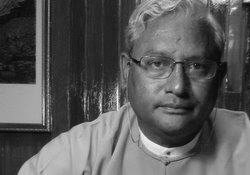
On the second anniversary of the killing of prominent lawyer U Ko Ni, in public view at Yangon International Airport, the ICJ repeats its calls for a thorough and impartial investigation with a view to establish the facts, to deliver justice and to deter the repetition of similar crimes.
“This brazen killing of a prominent democracy advocate demands a rigorous State response to show this type of crime will be fully punished,” said Frederick Rawski, the ICJ’s Director for Asia and the Pacific.
Despite an official investigation and reports of more than 100 court hearings, nobody has been held accountable for U Ko Ni’s death – criminally or otherwise – and the circumstances have not yet been satisfactorily explained.
“Myanmar simply cannot satisfy its international law obligations without conducting an impartial and independent investigation that is free of military influence. Such an investigation is a pre-requisite for conducting an effective prosecution in a fair trial setting,” added Rawski.
U Ko Ni was well known as a vocal advocate for human rights and democratic reform in Myanmar. As an adviser to the National Legal of Democracy party, he was involved in creating the position of State Counselor, which formalized a leadership role for Daw Aung San Suu Kyi, despite a constitutional provision barring her from the Presidency.
At the time of his death, it is understood that U Ko Ni was working on proposals to replace Myanmar’s 2008 Constitution, the source of law underpinning military power.
“A credible justice process is required not only for U Ko Ni and his family, but to demonstrate the State will protect the right to life of all people including democracy advocates,” said Sean Bain, legal adviser for the ICJ.
“A crime of this nature stifles participation in the democratic process and so an effective justice process is imperative to deter its repetition,” Bain added.
Myanmar has a particular obligation to ensure that lawyers and others acting as human rights defenders are protected in carrying out their work.
Any justice process must be timely, effective and shed light on the facts.
The investigation into U Ko Ni’s killing has been beset by obstacles, including the unknown whereabouts of a primary suspect, the incorrect identification of a deceased individual as a suspect and the arrest of a person with the same name, and reported military involvement in the police investigation. Lines of inquiry related to the political motivations for the killing, particularly considering the military links of many suspects, do not appear to have been pursued satisfactorily, nor impartially, given military involvement in the investigation.
Criminal proceedings in Yangon’s Northern District Court, and related proceedings in the Yangon High Court, have been sluggish. Observing lawyers and individuals including from the ICJ have noted multiple instances of admission into evidence of testimony that appears to be irrelevant, failures of key witnesses to appear, and the long drawn out process of court proceedings whereby weeklong delays are common while continuances over successive days are rare.
These issues are emblematic of challenges in Myanmar’s justice system previously identified by the ICJ in which police, prosecutors and courts generally lack the independence and or will to effectively administer justice, particularly in politically sensitive cases.
“Two years is an incredibly long time to get to the position we are in now, and in our experience this highlights broader problems with the administration of justice in Myanmar,” added Bain.
Contact
Frederick Rawski, ICJ Asia Pacific Region Director, e: frederick.rawski(a)icj.org
Sean Bain, ICJ Legal Adviser, e: sean.bain(a)icj.org
Download:
Myanmar-Ko Ni Statement-News-web stories-2019-ENG (full story with background information, PDF)
Myanmar-Ko Ni Statement-News-web stories-2019-BUR (full text in Burmese, PDF)
Read also:
Myanmar: reverse laws and practices that perpetuate military impunity – new ICJ report
Killing of lawyer U Ko Ni must be promptly and impartially investigated
Jan 18, 2019
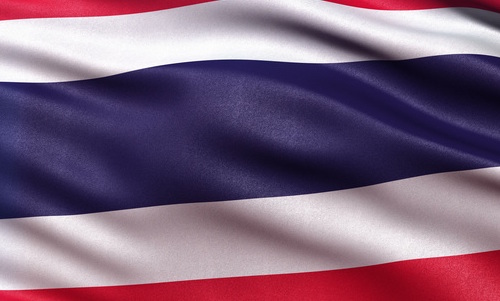
Today, the ICJ submitted recommendations to the Committee Considering the Draft Prevention and Suppression of Torture and Enforced Disappearance Act (‘Draft Act’) and urged that the Draft Act be amended without delay in order to ensure compliance with Thailand’s international legal obligations.
The Act, if properly conceived and implemented, will help ensure that Thailand is able to effectively address the crimes of torture and enforced disappearance, including by holding perpetrators accountable.
The Committee was recently set up by Thailand’s National Legislative Assembly (‘NLA’) to review the Draft Act, under discussion since 2017.
The recommendations were made with respect to the most recent amendments to the Draft Act that were approved by the NLA, in its first reading on 20 December 2018.
The ICJ’s recommendations reflect proposals for changes that ICJ and Amnesty International jointly first submitted to the Ministry of Justice on 23 November 2017.
While the ICJ welcomes the NLA’s decision to retain certain sections regarding emergency situations and non-refoulement in the Draft Act, it expressed concern at a number of deficiencies that would need to be addressed in order to bring the Draft Act into line with Thailand’s international human rights obligations, including the UN Convention against Torture and Other Cruel, Inhuman or Degrading Treatment or Punishment (UNCAT) and the International Convention for the Protection of All Persons from Enforced Disappearances (ICPPED).
The key concerns include:
- Incomplete definitions of the crimes of torture and enforced disappearance, as well as of other key terms;
- Absence of provisions concerning cruel, inhuman and degrading treatment or punishment (“CIDT/P”);
- Inadequacy of provisions relating to modes of liability for crimes described in the Draft Act;
- Inadequacy of provisions on the inadmissibility in legal proceedings of statements and other information obtained by torture, CIDT/P and enforced disappearances as evidence in legal proceedings; and
- Insufficient safeguards against torture, CIDT/P and enforced disappearances.
Background
Thailand is a State party to the International Covenant on Civil and Political Rights (ICCPR) and UNCAT, and has signed, but not yet ratified, ICPPED.
The Draft Act was produced by the Ministry of Justice in consultation with non-governmental organizations and other civil society actors. Public hearings on the Draft Act, as required by the 2017 Constitution, were conducted through a series of meetings, including a forum that was co-hosted by the ICJ.
The evaluation of the public hearings was prepared by the Ministry of Justice and included the recommendations that were submitted by the ICJ and Amnesty International in November 2017. However, not all of the critical issues raised were satisfactorily addressed.
The amended Draft Act was proposed to the Cabinet, which later forwarded it to the NLA.
Thailand’s NLA requires three readings of a bill before it can be passed into a law.
On 20 December 2018, the Draft Act was approved by the NLA, in its first reading, during meeting No. 86/2561, with 167 supporting, 3 against and 15 abstaining.
Consequently, 15 Committee members were appointed to review the bill within 45 days before to the second and third readings by the NLA. 10 of 15 members of the Committee are from the Thai military, police or navy.
The Committee’s revision of the Draft Act was due to have been completed by 2 February 2019, but this deadline has reportedly been extended for another 30 days.
The NLA will reportedly stop passing any laws before the national elections, due to be held on 24 March 2019, and will be terminated on the day prior to the date of convocation of the first sitting of the National Assembly after the elections.
The termination of the NLA would leave the status of the bill in doubt, and at the least mean significant delays in its consideration and passage.
Download:
Thailande-Torture and enforced dis-Advocacy-non legal submission-2019-ENG (full text in English, PDF)
Thailande-Torture and enforced dis-Advocacy-non legal submission-2019-THA (full text in Thai, PDF)
Read also:
ICJ and Amnesty International, Recommendations to Thailand’s Ministry of Justice on the Draft Prevention and Suppression of Torture and Enforced Disappearances Act

Jan 16, 2019
The trial of civilians by military courts is a glaring surrender of human rights and fundamental freedoms, found the ICJ in its Briefing Paper Military Injustice in Pakistan released today.
The Pakistani Government must not extend the tenure of military courts to try civilians for terrorism-related offences, the ICJ said.
“Military trials of civilians have been a disaster for human rights in Pakistan,” said Frederick Rawski, ICJ’s Asia Director.
“As a recent judgment of the Peshawar High Court has confirmed, proceedings in these tribunals are secret, opaque, and violate the right to a fair trial before an independent and impartial tribunal,” he added.
In the briefing paper, the ICJ has documented serious fair trials violations in the operation of military courts, including: denial of the right to counsel of choice; failure to disclose the charges against the accused; denial of a public hearing; failure to give convicts copies of a judgment with evidence and reasons for the verdict; and a very high number of convictions – more than 97 per cent – based on “confessions” without adequate safeguards against torture and ill treatment.
The ICJ has also demonstrated how military courts are being used to give legal cover to the practice of enforced disappearances.
The use of military courts to try civilians is inconsistent with international standards, the ICJ recalled.
According to the military, in the four years since military courts were empowered to try terrorism-related offences, they have convicted at least 641 people. Some 345 people have been sentenced to death and 296 people have been given prison sentences. Only five people have been acquitted. At least 56 people have been hanged.
An earlier law giving military courts authority to try civilians will lapse on 30 March 2019. Last week, the Cabinet approved a proposal to extend the tenure of military courts for another two years. The Government is currently in consultation with opposition parties to get consensus on the extension.
“Extending the tenure of military courts is an attempt to deflect attention from the real issue: the Government’s failure to enact reforms to strengthen the criminal justice system during the four years military courts have been in operation,” said Rawski.
“The Government must account for its failure to deliver on the promise of delivering justice for the victims of terrorism and other abuses in Pakistan instead of once again extending the “exceptional” use of military courts for civilian trials,” he added.
The ICJ fears that repeated extensions risk making the practice effectively permanent.
If the Government decides to table legislation to extend the tenure of military courts, the Parliament must take a stand in defense of the rights of all people in Pakistan, instead of once again extending a discredited and abusive process, the ICJ says.
Contact
Frederick Rawski (Bangkok), ICJ Asia Pacific Regional Director, e: frederick.rawski(a)icj.org
Reema Omer, ICJ International Legal Advisor (South Asia) t: +447889565691; e: reema.omer(a)icj.org
Additional Information
The National Assembly and Senate of Pakistan passed the 21st amendment to the Constitution in January 2015, authorizing military courts to try civilians for terrorism-related offences for a period of two years. The 21st amendment lapsed on 6 January 2017.
Despite earlier promises that military courts were only temporary and “exceptional”, after the expiration of the 21st Amendment, Parliament enacted on 30 March 2017 the 23rd Amendment and amendments to the Army Act to renew military courts’ jurisdiction over civilians. The amendments were given retrospective effect from 7 January 2017, and were due to lapse two years after their date of “commencement”.
According to the law ministry, the expanded jurisdiction of military courts will lapse on 30 March 2019. (Earlier reports had suggested the amendments expired on Jan 6, 2019 — two years after the date of “operation” of the 23rd Amendment.)
Pakistan-military courts-Advocacy-Analysis brief-2019-ENG (full briefing paper in PDF)