Aug 27, 2018 | News
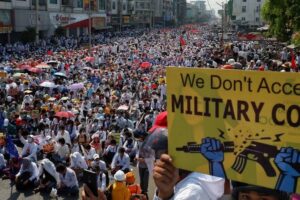
The ICJ today joined other International Non-Government Organizations operating in Myanmar in a statement marking one year since the commencement of military ‘clearance operations’ that caused the exodus of around 700,000 Rohingyas into neighbouring Bangladesh.
The statement reads:
As the UN Security Council meets in New York to mark one year since nearly 700,000 Rohingya refugees fled to neighboring Bangladesh, International Non-Governmental Organizations (INGOs) working in Myanmar say 600,000 Rohingya still left in Myanmar face daily discrimination and human rights abuses, making conditions unsafe for refugees to return.
INGOs urge the Security Council to use the one-year anniversary as an opportunity to step up pressure on the government of Myanmar to take action on three critical areas: addressing the root causes of the crisis in Rakhine State; ensuring accountability for human rights violations and improving humanitarian access.
Discriminatory policies mean that Rohingya communities in Rakhine State continue to lack citizenship and face restrictions on their freedom of movement, impeding their ability to go to school, seek medical care, find jobs or visit friends and family.
128,000 Rohingya and other Muslim communities remain trapped in closed camps in central Rakhine for the sixth year since the intercommunal violence of 2012.
Although some steps have been taken to relocate camp residents to new sites, the displaced communities have not been adequately consulted, are unable to return to their original homes, or another location of their choice, and continue to lack freedom of movement, access to jobs and services, thus further entrenching their confinement and segregation.
At the same time, a full and independent international investigation into human rights violations – sexual violence, killings, beatings and destruction of homes and properties – that caused refugees to flee has not happened and the perpetrators who facilitated these abuses have not been brought to justice.
The rights violations committed in Rakhine State are part of a pattern of ongoing military abuses against ethnic minorities throughout Myanmar, including in Kachin State, Shan State and the southeast of the country.
Humanitarian organizations working throughout Rakhine State continue to face serious restrictions on their access to affected communities and bureaucratic and administrative barriers hamper their ability to carry out their daily work.
In northern Rakhine, from where the majority of refugees in Bangladesh fled, full humanitarian access for most organizations has not been restored more than one year since restrictions were first put in place.
Although a Memorandum of Understanding was signed between UNHCR, UNDP and the Government of Myanmar in June with a view to enabling both agencies to resume operations in northern Rakhine, they still await full, unfettered access, and have not yet been able to begin the work of supporting affected communities and monitoring conditions.
The recommendations of the Kofi Annan-led Advisory Commission on Rakhine, published one year ago, provide the best roadmap for addressing the root causes of the crisis in Rakhine State, improving the lives of all communities and creating the conditions for an inclusive, fair and prosperous society for all the people in Rakhine.
INGOs welcome the progress made by the Government of Myanmar in implementing some of the recommendations, including those related to improving development and infrastructure, such as building new roads, schools, and hospitals, but conclude that not enough progress has been made in addressing structural human rights issues or in creating an environment where all communities can benefit from these developments without discrimination.
Without citizenship rights and freedom of movement, Rohingya communities in Rakhine State cannot equally benefit from improved development and refugees in Bangladesh will not feel safe to return.
INGOs call on the UN Security Council to set time-bound and measurable targets for the Government of Myanmar to make meaningful progress in all three of these areas and to hold regular public meetings on the crisis.
Specifically, the Security Council should call on the Government of Myanmar to implement the recommendations of the Advisory Commission in their entirety, including addressing structural problems of discrimination, restrictions on movement and denial of citizenship faced by Rohingya communities.
Implementation of the Advisory Commission recommendations also requires listening to the perspectives of all ethnic groups in Rakhine in an effort to break down the divisions that have pitted communities against each other.
Second, the Security Council should request the government of Myanmar to grant full and unfettered access for humanitarian organizations to all parts of Rakhine State as well as full access for independent media and journalists.
And finally, it should step up efforts with the government of Myanmar to allow independent human rights investigators full and unimpeded access to investigate human rights abuses, gather untampered evidence and refer cases to an international tribunal.
The Security Council must send a strong message to the Government of Myanmar to end impunity and prevent future violations.
Unless these measures are implemented, the international community risks perpetuating impunity and cementing segregation in Rakhine State for decades to come.
Myanmar-RohingyaJointNGOstatement-News-webstory-2018-ENG (full story in PDF)
Aug 23, 2018 | News
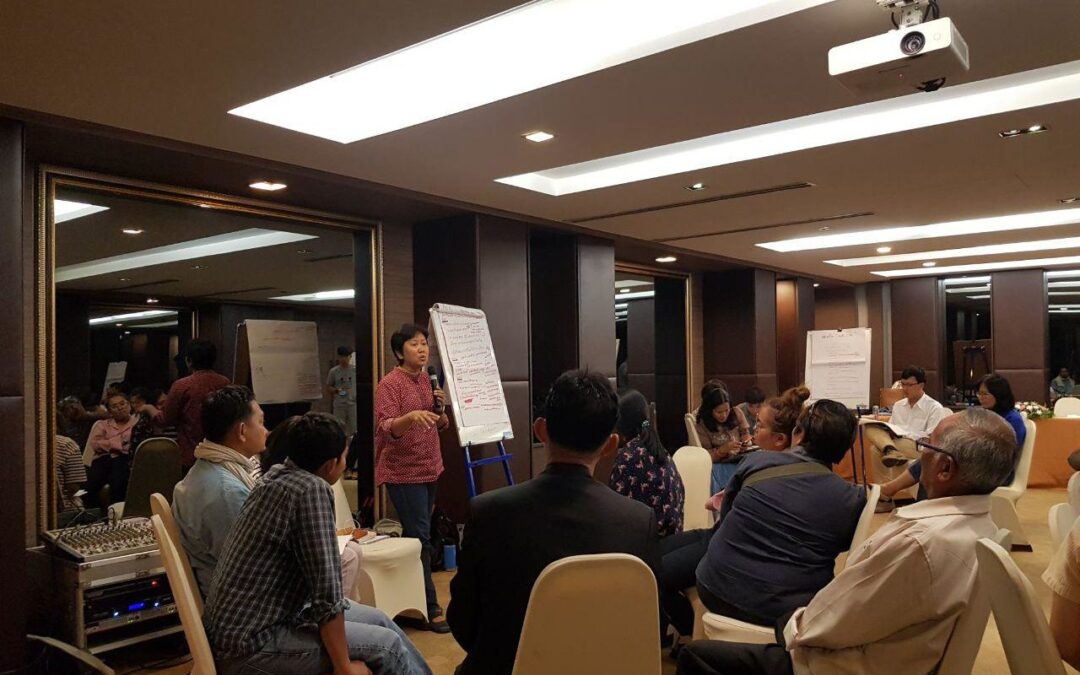
On 22 August, the ICJ co-organized a preparatory discussion in Bangkok for civil society organizations on Thailand’s National Action Plan on Business and Human Rights (NAP).
This event was organized one day in preparation for a formal NGO consultation event on the NAP held today.
The formal NGO consultation event was organized by the National Human Rights Commission of Thailand (NHRCT) to consider the draft NAP released by Thailand’s Ministry of Justice’s Rights and Liberties Protection Department (RLPD) in August 2018.
The ICJ hosted the preparatory discussion jointly with Community Resource Centre Foundation (CRC), Amnesty International Thailand (AI Thailand), Protection International (PI), Fortify Rights and the United Nations’ Office of the High Commissioner for Human Rights (OHCHR).
Thirty members of civil society organizations from all across Thailand attended the preparatory discussion.
Of these participants, four persons from the North of Thailand were supported by the ICJ to attend the discussion, including Ms. Arisara Lekkam, Lecturer of Law at Mae Fah Luang University in Chiang Rai, who was also a speaker at the event.
The event began with a presentation about the NAP and business and human rights issues in Thailand, during which Arisara Lekkam provided an overview of the business and human rights situation in Thailand.
Following the presentation, participants divided into groups to discuss four prioritized areas covered by the NAP: Labour, Land and Natural Resources, Human Rights Defenders and Cross-Border Investment.
At the end of the discussion, each group presented a set of recommendations on the draft NAP pertaining to each prioritized area. These recommendations will be provided to the Ministry of Justice’s RLPD.
This is the third event the ICJ has held on business and human rights in collaboration with partners from the North of Thailand.
On 22 November 2017, the ICJ, in collaboration with Chiang Mai University’s Faculty of Law, held a roundtable discussion on human rights litigation concerning special economic zones in Myanmar and Thailand.
Between 29 and 31 July 2017, the ICJ, in collaboration with Chiang Mai University’s Faculty of Law, held a workshop on ‘Introduction to Business and Human Rights & Basic Principles on Documenting Human Rights Violations” for 25 academics, NGO representatives and lawyers in Chiang Mai.
Background
During the second Universal Periodic Review of Thailand in May 2016, the Royal Thai Government accepted a recommendation to develop, enact and implement a national action plan on business and human rights in order to implement the UN Guiding Principles on Business and Human Rights.
In August 2018, Thailand’s Ministry of Justice’s RLPD, which is currently leading the development of the NAP, released a revised ‘zero draft’ of the NAP.
In line with the release of the revised ‘zero draft’, the NHRCT led the organization of a formal NGO consultation event on 23 August 2018, jointly with Thailand’s Ministry of Justice, Thailand’s Ministry of Foreign Affairs, United Nations Development Programme (UNDP) and OHCHR.
The Royal Thai Government reportedly plans to launch the NAP in September 2018.
Aug 21, 2018
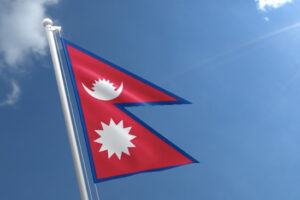
The ICJ has issued Challenges to Freedom of Religion or Belief in Nepal, in which the ICJ identified a number of challenges related to the protection and promotion of the right to freedom of religion or belief in the country.
These challenges are:
1. the prohibition and criminalization of “proselytism”;
2. criminal offences related to “blasphemy” and “hurting religious sentiment”;
3. discrimination against religious minorities arising from denial of use of burial grounds and cemeteries in and around Kathmandu; and
4. Tibetan Refugees’ exercise of their right to freedom of religion or belief.
In light of concerns detailed in the briefing, and arising in connection with the above-mentioned challenges, the ICJ made a number of recommendations to the authorities of Nepal.
Nepal-Freedom of religion brief-Advocacy-Analysis brief-2018-ENG (full text, PDF)
Aug 15, 2018
Today, the ICJ submitted recommendations to Thailand’s Council of the State concerning the Draft Criminal Inquiry Act and the Draft National Police Act, which were scheduled for public consultation between 2 and 16 August 2018.
The ICJ welcomed the Committee Considering Draft National Police Act’s efforts to enhance the effectiveness and fairness of the criminal justice system in Thailand through the draft laws.
The ICJ noted, however, that modifications would be necessary to some amendments to ensure they optimally served the ends of justice and were in conformity with international standards.
In particular, the ICJ made recommendations as to how these provisions could be further strengthened:
With respect to the Draft Criminal Inquiry Act
- Section 7. Receipt of complaints and/or allegations by inquiry officers
- Section 16. Prohibitions against violation of the presumption of innocence; and Duty to conduct prompt, continuous and fair investigations
- Section 17. Prohibition against entry into a search area and audio and/or visual recordings of the operations of officers by unauthorized personnel
With respect to the Draft National Police Act
- Section 105. Use of firearms and/or force against a police officer in a situation of dereliction of duty, in strictly unavoidable circumstances
Contact
Kingsley Abbott, ICJ Senior Legal Adviser, e: kingsley.abbott(a)icj.org
Full letter in English (PDF): Thailand-Draft-Police-Code-Advocacy-Open letters-2018-ENG
Full letter in Thai (PDF): Thailand-Draft-Police-Code-Advocacy-Open letters-2018-THA
Read also
Thailand: ICJ submits recommendations on criminal justice reform amendments
Aug 13, 2018 | News
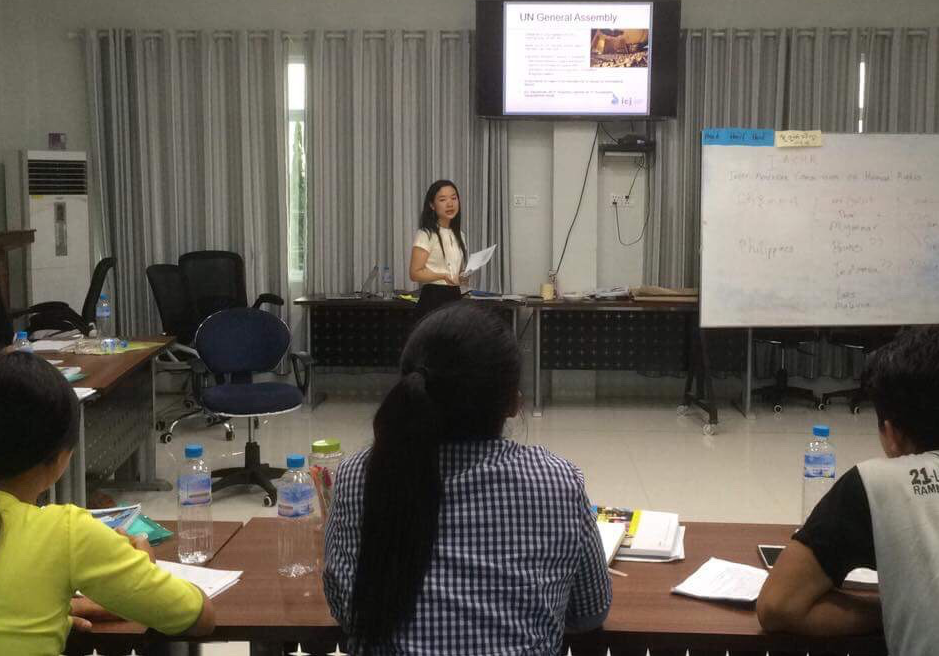
From 9-12 August, the ICJ-supported trainings on human rights and the law for lawyers, youths and activists from Kachin and Shan states in Myanmar’s north.
On 9 and 10 August, the ICJ joined a “training of trainers” organized by the Humanity Institute, a civil society organization based in Myitkyina.
This aims to improve the capacity of local youths and activists from Kachin and Northern Shan State on basic human rights concepts and measures to engage with Regional and UN Human Rights mechanisms.
The ICJ’s national legal researcher, Ja Seng Ing, shared information about the advantages and limitations of regional human rights mechanisms, including the Europe Commission of Human Rights and the ASEAN Commission of Human Rights. She provided an overview of the UN human rights framework and human rights mechanisms.
In addition to explaining how these work, she also focused on how human rights defenders can communicate with and participate in UN human rights mechanisms by reporting on human rights violations.
Then on 10 and 11 August, the ICJ facilitated a legal training for senior law students, and junior lawyers hosted by the Kachin Legal Clinic, an independent lawyers network.
The Kachin Legal Clinic seeks to develop a pool of young lawyers and with knowledge on the role of lawyers in the field of domestic and international human rights setting and the independence of the lawyers.
On the first day, a national legal adviser from the ICJ shared experiences of litigating for human rights in Myanmar. She also noted the critical role of independent lawyers in protecting human rights, by representing clients from all communities in different parts of Myanmar.
On the second day, Ja Seng Ing gave an overview of global and local law and standards and issues related to accountability and redress for gross human rights violations.
The ICJ’s international legal adviser, Sean Bain, gave an overview of international laws and standards related to the protection of human rights in times of conflict or crises, sourced from international human rights law as well as international humanitarian law and international criminal law.
These activities are part of the ICJ’s ongoing support to civil society actors in Myanmar, from community to national level.