Dec 8, 2016
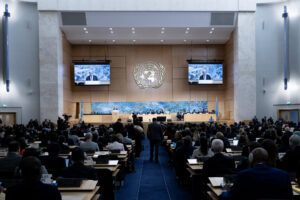
The ICJ is helping human rights lawyers from Myanmar, Cambodia, Thailand, Vietnam and Lao PDR, to understand how United Nations human rights mechanisms can help improve access to justice.
To build the awareness and capacity of human rights lawyers from these countries to make use of human rights mechanisms based in Geneva, the ICJ is organizing workshops with human rights lawyers in the region, as well as hosting practical mentorships for some of the participating lawyers with the ICJ’s office in Geneva. The ICJ has also prepared unofficial translations of key UN guides for use in the project, which are also being made available on the ICJ’s website for a wider audience.
The publications, originally produced in English by the UN Office of the High Commissioner on Human Rights (OHCHR) are:
- Working with the United Nations Human Rights Programme: A Handbook for Civil Society
Cambodia/Khmer – Laos – Myanmar/Burmese – Thai – Vietnamese (existing OHCHR official version)
- United Nations Human Rights Council – A Practical Guide for NGO Participants
Cambodia/Khmer – Laos – Myanmar/Burmese – Thai – Vietnamese
- Universal Periodic Review – A Practical Guide for Civil Society
Cambodia/Khmer – Laos – Myanmar/Burmese – Thai – Vietnamese
- How to Follow Up on United Nations Human Rights Recommendations – A Practical Guide for Civil Society
Cambodia/Khmer – Laos – Myanmar/Burmese – Thai – Vietnamese
Given the particular interest in the issue in the region, the ICJ also commissioned translation of the following additional OHCHR publication:
- Land and Human Rights: Standards and Applications
Laos – Myanmar/Burmese (word version)
Official UN versions of all of these documents, in English and other languages, are available on the OHCHR website here.
For more information about the project, please contact Matt Pollard, Senior Legal Adviser, at matt.pollard(a)icj.org .

Dec 6, 2016 | News
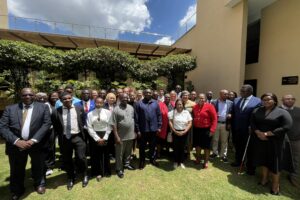
Hosted on 3-4 December, the event was attended by a total of 40 participants which includes representatives of CSOs, lawyers, MPs and village track administrators.
The workshop aimed to raise awareness of international standards and best practice of resettlement and development-based eviction and displacement among local community in order to mitigate potential adverse impact associated with the development of the Kyauk Phyu Special Economic Zone.
In the opening, Dr Daniel Aguirre, ICJ International Legal Adviser, outlined the essential role of lawyers and community members in safeguarding human rights and holding the State and investors accountable.
The discussion was led by international experts and experienced and committed leaders of Civil Society Organization.
Susanna Price from Australian National University highlighted key principles of the ADB’s Involuntary Resettlement Policy along with experiences from China, Cambodia and Indonesia.
U Hayman Oo, ICJ Legal Researcher, explained how the UN principles on Development-based Eviction and Displacement are applicable in the context of Myanmar and urged the participants to use these standards for their advocacy work.
U Myo Mrat Hein, the Director and lawyer of the Thazin Legal Aid Group, discussed important issues surrounding the national land acquisition legislation whilst Sean Bain, legal consultant at the ICJ give a brief overview of important provisions of the Myanmar SEZ Law (2014).
The other two guest local speakers shared their first-hand experiences of advocacy work and resettlement issues which occurred during the development of Dawai and Thilawa SEZ respectively.
Participants exchanged strategies and ideas to take preparatory steps to mitigate potential impacts of the KPSEZ in terms of protecting their economic, social and cultural rights, learning from Dawei and Thilawa, as well as from international standards which Myanmar recognizes.
The new Kyauk Phyu SEZ Management Committee, along with Dawai and Thilawa, was formed last month with over 30 members including international and local social and environmental experts.
In a meeting held in Nay Pyi Taw following the establishment of the SEZ Management Committee, Daw Aung San Su Kyi emphasized that the current three SEZs of the country are leading projects for Myanmar’s economic growth.
She also expressed concerns over the potential negative effect of these zones if not properly implemented.

Dec 5, 2016 | News
A joint statement calls on members of the House of Representatives of the Philippines to stop further attempts to reintroduce the death penalty and to block any legislation that subverts human rights.
On 29 November 2016, the Sub-Committee on Judicial Reforms of the House Committee of Justice approved a bill restoring the death penalty in the Philippines by railroading the proceedings in the committee and ignoring important questions from other lawmakers questioning the need for the legislation or its urgent passage.
The full statement can be downloaded here:
philippines-joint-statement-death-penalty-news-web-story-2016-eng (PDF)

Nov 29, 2016 | News
The Philippines House of Representatives must immediately cease efforts to rush through legislation restoring the death penalty, the International Commission of Jurists (ICJ) said today.
On 29 November 2016, the Sub-Committee on Judicial Reform, which is chaired by Congressman Marcelino “Ching” Veloso, hastened the passage of a bill restoring the death penalty in the Philippines.
According to reports received by the ICJ, ex-officio members of the Sub-Committee on Judicial Reform railroaded the proceedings and ignored important questions from other lawmakers questioning the need for the legislation or its urgent passage. The Sub-Committee did not present any report, as is the normal practice, on the discussions and information presented in the previous hearings.
“Filipino lawmakers seem intent on embracing the barbaric practice of executions purely as a political measure, without any understanding or even proper discussion of the death penalty’s impact or what their actions would mean to the international obligations of the Philippines,” said Emerlynne Gil, ICJ’s Senior International Legal Adviser for Southeast Asia.
A representative of the ICJ spoke at the hearing of the Sub-Committee on 22 November 2016, and brought to the lawmakers’ attention the country’s obligations under the 2nd Optional Protocol to the International Covenant on Civil and Political Rights (ICCPR) and the general prohibition on reintroduction of capital punishment once abolished, which commit the country not to execute anyone within its jurisdiction.
“There are already thousands of alleged cases of extrajudicial killings in the country. This bill, if it becomes law, will unquestionably usher the Philippines into a dark period where respect for the right to life is comprehensively degraded,” Gil emphasized.
The ICJ has previously written to President Rodrigo Duterte underscoring that the evidence shows that death penalty is not effective at deterring crime at a greater rate than alternative forms of punishment. Investing in improved detection and investigation techniques and capacity, and improving the effectiveness and efficiency of the justice system, is more likely to achieve real results in reducing crime.
The ICJ categorically opposes the death penalty and considers its use to be a violation of the right to life and freedom from cruel, inhuman, or degrading punishment.
The UN General Assembly has repeatedly adopted resolutions by overwhelming majorities, calling on all retentionist States to impose a moratorium with a view to abolition.
Contact:
Ms. Emerlynne Gil, ICJ’s Senior International Legal Adviser
Telephone: +66 840923575
Email: emerlynne.gil(a)icj.org
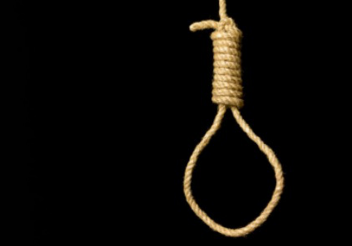
Nov 28, 2016 | News
The ICJ, along with a number of other NGOs, issued a joint statement expressing solidarity for the families of executed prisoners in Singapore.
The statement was issued following the execution of a Nigerian national, Chijioke Stephen Obioha, and a Malaysian national, Devendran a/l Supramaniam in Singapore on 18 November 2016.
The full statement can be downloaded here:
singapore-joint-ngo-statement-singapore-executions-news-web-story-2016-eng (PDF)