Feb 17, 2017
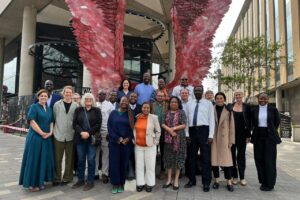
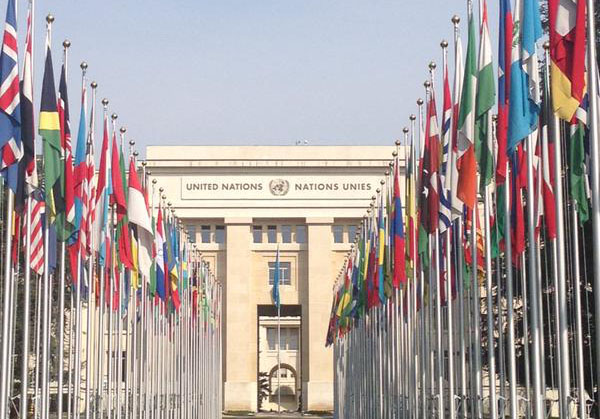
The ICJ and other NGOs have written to States urging action on human rights in China, at the upcoming March 2017 session of the UN Human Rights Council.
The joint letter highlights continuing concerns about arbitrary arrests, detentions, denial of access to lawyers, incommunicado and secret detention, and unfair trials of lawyers and other human rights defenders, as well as unjustified restrictions on freedom of expression, alongside other human rights issues in the country.
The letter calls on States at the Council to, among other things:
- Insist that China uphold its obligations to prevent, punish and remedy torture and other cruel, inhumane or degrading treatment or punishment, including by ordering prompt, impartial, independent investigations into reports of torture of detained lawyers and human rights defenders.
- Urge China to amend or repeal the Overseas NGO Management Law, which contradicts international human rights standards and undermines the independence of civil society.
- Call for the repeal or revision of the Counter-Terrorism Law, and speak out against the increasing use of national security legislation and draft ‘regulations on religious affairs’ to criminalise and harass those exercising freedom of thought, conscience and religion and freedom of expression.
The letter comes as the UN High Commissioner for Human Rights expressed similar concerns, stating that, “Lawyers should never have to suffer prosecution or any other kind of sanctions or intimidation for discharging their professional duties”, emphasising that lawyers have an essential role to play in protecting human rights and the rule of law, and urging the Government of China “to release all of them immediately and without conditions.”
The joint letter can be downloaded in PDF format here: UN-HRC34-China-JointLetter-Advocacy-2017
Feb 14, 2017
An opinion piece by Emerlynne Gil, ICJ Senior International Legal Adviser in Bangkok.
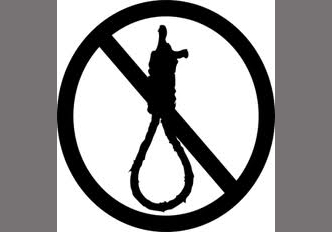
In the next few days, the House of Representatives may vote in plenary on the bill proposing to bring back the death penalty in the Philippines.
Curiously, when this bill was being heard at the Sub-Committee on Judicial Reforms in Congress, the Department of Justice (DOJ) and the Philippine National Police (PNP) presented scant evidence in support of the proposed measure.
It was as if they were confident that the bill would get passed anyway, regardless of the facts.
Even more curious is that the committee report on the hearings on this bill did not reflect the arguments presented by anti-death penalty groups.
In fact, the committee report did not discuss at all what transpired during the hearings.
I doubt that members of Congress really ruminated on both sides of the debate on this issue.
I think congressmen will vote to pass this bill not because they genuinely believe death penalty will deter crime, but it will be their sycophantic gesture to please President Rodrigo Duterte, who they think will grant them political favors if they do what he wants.
There will also be others who will vote for this bill because of pressure from the party leadership.
Nobody will openly admit this. They will point to public opinion. They will claim that Filipinos are clamoring for the death penalty. Hence, their support for the bill.
Looking at social media comments and online opinion polls, one could indeed get the impression that many Filipinos want the death penalty back. However, social media comments and online polls do not use valid scientific methodology for random selection of participants. Furthermore, even when appropriate methodologies are used, results can be easily affected by how the questions are framed.
In 2012, the Bar Council of Malaysia and the Death Penalty Project, a UK-based non-governmental organization, conducted a study on the public’s views on mandatory death penalty in Malaysia.
At the outset of the survey, majority of the respondents said that they were in favor of the death penalty – whether it was discretionary or mandatory.
Ninety-one percent (91%) said they were in favor of death penalty for murder, 74 percent to 80 percent were in favor of the death penalty for drug trafficking (depending on the drug concerned), while 83 percent were in favor of death penalty for the discharge of firearms during the commission of certain crimes.
However, when asked to ‘judge’ specific cases, there was a significant difference between support of the respondents at the beginning and their support after they have been faced with ‘real’ cases.
When respondents were asked whether they would still support the death penalty after being shown cases where innocent persons were executed, the numbers of those in favor of death penalty for murder drastically fell to 33 percent, for drug trafficking to 26 percent, and for the discharge of firearms to 23 percent.
Even leaving aside the unscientific nature of comment forums and online polls, there is no evidence that the members of the public responding to questions about the death penalty have had their initial beliefs tested in the ways set out above.
We simply do not know with any certainty what the well-informed public opinion on this question would be.
Political leadership, not public opinion, matters most in preventing the death penalty from being brought back.
President Duterte openly said he wants to bring death penalty back, but he, alone, is not the Philippines’ political leadership.
It is imperative for Philippine lawmakers to act as independent leaders now and show the public how death penalty is deeply incompatible with human dignity. They have to see that the imposition of the death penalty is a violation of the right to life and the absolute prohibition of torture and other cruel, inhuman or degrading treatment or punishment.
The ICJ has previously said that the imposition of the death penalty is a violation of the right to life and the absolute prohibition of torture and other cruel, inhuman or degrading treatment or punishment.
As a party to the Second Optional Protocol to the International Covenant on Civil and Political Rights (ICCPR), the Philippines has a legal obligation to ensure that no person within its jurisdiction will face execution.
If the Philippines adopts a law bringing back the death penalty, it will violate its commitments under international law and would stand in opposition to the international trend towards the abolition of the death penalty.
The Philippine Constitution was designed so that the country’s democracy will not be held hostage by one man.
This bill will be one of the very many tests in the next few years on how well established and how strong Philippine democracy has become.
Feb 13, 2017 | News
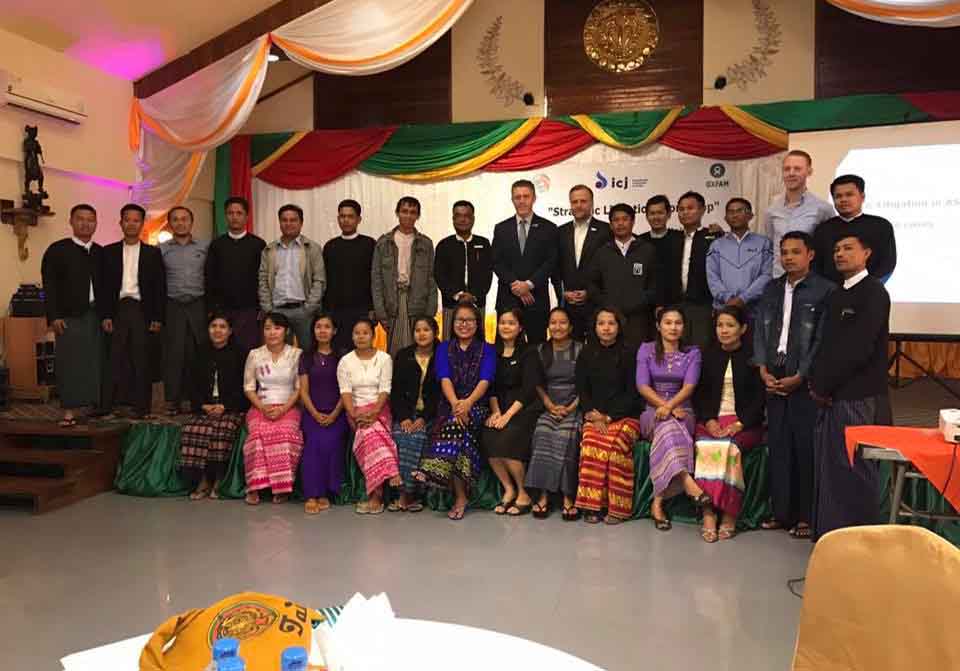
The workshop, held from 11-12 February in Sittwe, brought lawyers and civil society together to discuss of experiences of strategic litigation elsewhere in Myanmar and the region, and consider potential public purpose litigation cases in Rakhine State.
Dr Daniel Aguirre, the ICJ’s International Legal Adviser in Myanmar, provided an introduction to strategic litigation as a method for promoting accountability in a time of transition in governance.
He noted the critical role of independent lawyers in protecting human rights, by representing clients from all communities in Rakhine State.
And he emphasized the importance of strategic litigation as a means to prevent violations and abuses of human rights, or to seek reparations where violations and abuses have occurred.
Kingsley Abbot and Jintana Sakulborirak, from the ICJ’s Asia Regional Office in Thailand, discussed strategic litigation cases from the region, including in northern Thailand where community members have launched an action to appeal the legality of land acquisition for a planned SEZ in Tak Province.
The cases highlighted how media engagement is a critical part of strategic litigation, to raise public attention on human rights issues and demands for accountability in the implementation of investment projects.
Daw Aye Mon Thu, advocate from Dawei Pro Bono Lawyers Network presented the experiences of Heinda Mine cases from Dawei Region, Southern Myanmar, emphasizing the importance of trust-building and cooperation with local community as stake-holder. Such a strategic litigation cases are extremely rare in Myanmar.
Discussions followed about potential cases for strategic litigation from Kyauk Phyu and Sittwe, including issues related to land acquisition for railways construction and an SEZ appear to have been carried out unlawfully in violation of human rights.
Participants discussed the principle of undertaking litigation for broader advocacy objectives rather than solely focusing on actually winning the case in the court.
They also reflected on the challenges and limitations for Myanmar lawyers to undertake strategic litigation.
Highlighting the vital role of lawyers, speakers encouraged participants to consider strategic litigation as a means to challenge unlawful acts that violate or abuse human rights, particularly accompanying business enterprises.
Rakhine State is among Myanmar’s poorest and most isolated provinces, where lawyers and CSOs have had limited exposure to concepts of human rights and international laws.
This workshop, the first of its kind to be held in Rakhine State, is part of efforts to address this gap by building legal literacy on international human rights law and lawyers to consider litigation as a strategy to protect human rights.
Feb 13, 2017 | Advocacy, Non-legal submissions
The ICJ and Thai Lawyers for Human Rights (TLHR) have made a submission to the UN Human Rights Committee in view of its forthcoming review of the implementation of the International Covenant on Civil and Political Rights by Thailand.
In their submission, the ICJ and TLHR have brought to the Committee’s attention their concerns in relation to the following issues:
- Constitutional and legal framework within which the Covenant is implemented;
- States of emergency;
- Right to life and prohibition of torture and cruel, inhuman or degrading treatment or punishment;
- Right to liberty and security of the person, treatment of persons deprived of their liberty, right to a fair trial and independence of judiciary; and
- Freedoms of expression and association and right to peaceful assembly.
Thailand-ICCPR Submission ICJ-TLHR-Advocacy-Non legal submissions-2017-ENG (Full text in PDF)
Thailand-ICCPR Submission ICJ-TLHR-Advocacy-Non legal submissions-2017-THA (Thai version, in PDF)
Feb 10, 2017 | News
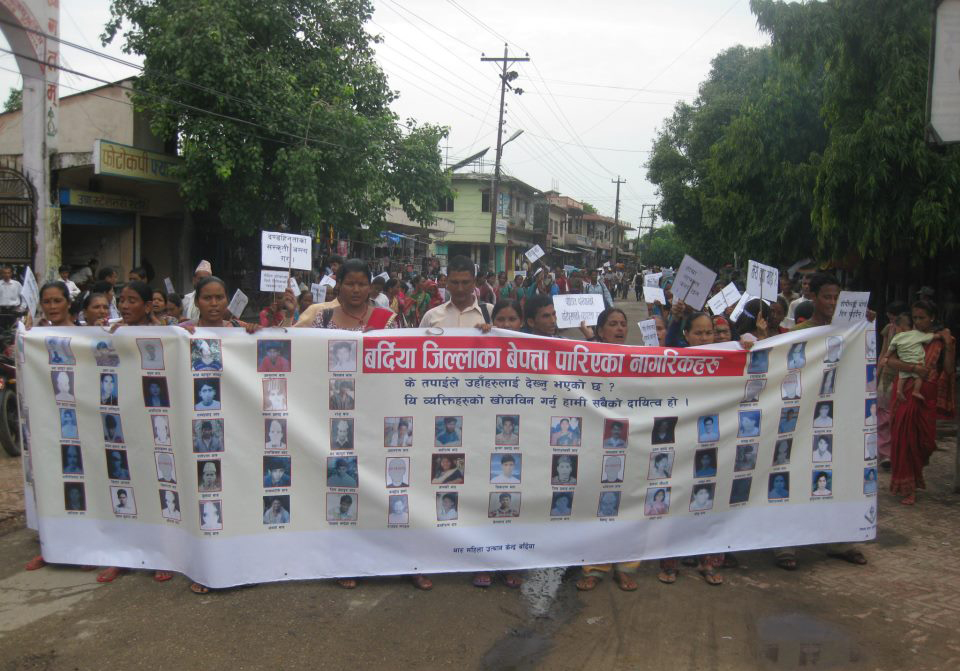
Extending the mandate of the Truth and Reconciliation Commission (TRC) and Commission on Investigation of Disappeared Persons (COID) without accompanying legal amendments to the TRC Act, 2014, in line with Nepal’s international legal obligations, will be meaningless, the ICJ said today.
It will fail to empower the commissions to address the root causes of the conflict and provide justice to victims, the ICJ added.
On 9 February 2017, the Government of Nepal formally extended the mandate of the TRC and COID for another year.
The TRC and COID were established on 10 February 2015 through the Commission on Investigation of Disappeared Persons, Truth and Reconciliation Act, 2014 (TRC Act), with the mandate to investigate alleged human rights abuses committed by both sides of Nepal’s decade-long armed conflict between the Government of Nepal and Communist Party of Nepal-Maoist (CPN-M) rebels.
However, due to a flawed legal mandate, resource and capacity limitations, and lack of political will, the commissions have been unable to carry out their work effectively.
“Unless the government of Nepal is prepared to amend the TRC Act in line with the Nepal Supreme Court’s rulings and international law, and to take other concrete steps to address the persistent challenges that have plagued the commissions’ ability to complete their work over the past two years, the extension of their mandate will be meaningless,” said Sam Zarifi, the ICJ’s Asia-Pacific Director.
In two separate rulings, the Nepal Supreme Court has previously ruled that the TRC Act and its predecessor TRC Ordinance were in violation of Nepal’s international legal obligations, as they allowed for amnesties for gross human rights abuses and serious violations of international humanitarian law amounting to crimes under international law.
Despite repeated calls by the ICJ, as well as other human rights and victims groups, to ensure a credible transitional justice process by amending the TRC Act in line with Nepal’s Supreme Court order and international standards, and by providing adequate resources to enable the commissions to carry out their work effectively and independently, the Government of Nepal has thus far failed to take any steps to implement the Supreme Court’s orders.
Nevertheless, the commissions finally commenced their work in February 2016, one year into their two-year mandate, and despite a severe lack of public faith in the commitment of the government and the ability of the commissions to deliver justice, victims came forward to submit more than 60,000 complaints to the two commissions combined.
“The government of Nepal must demonstrate its commitment to deliver justice to victims of Nepal’s armed conflict,” said Zarifi. “Victims have already waited more than a decade to receive justice and are losing hope in the transitional justice process.”
“The Nepal government and political parties must not once again betray the trust of victims by perpetuating a fundamentally flawed transitional justice process without concomitant reforms that will address victims’ rights to truth, justice and reparation,” he added.
While extending the mandate of the TRC and COID, the Government of Nepal must immediately establish a credible transitional justice process that ensures victims’ rights to truth, justice and reparation by: amending the TRC Act in line with the Supreme Court rulings and international law; empowering the TRC and COID with adequate resources to function independently, transparently and in a victim-centred manner; and, adopting necessary legislation to criminalize serious international crimes, including enforced disappearance, torture and other ill-treatment, and rape and other sexual violence, with retroactive effect and without any limitations period for conflict-era cases.