Nov 4, 2016 | News
The Myanmar government’s recently announced plan to enlist civilians as a ‘regional police force’ in Myanmar’s troubled northern Rakhine State is likely to aggravate an already dire human rights situation, warned the ICJ today.
“In a country where the regular police and military are notorious for grave human rights violations, it’s difficult to extend the benefit of the doubt to poorly trained civilians,” said Sam Zarifi, ICJ’s Asia Director.
“Establishing an armed, untrained, unaccountable force drawn from only one community in the midst of serious ethnic tensions and violence is a recipe for disaster,” he added.
Over the last month the region has experienced increased tension and violence including attacks on border police and allegations of human rights violations by security forces, including attacks on Rohingya villages and sexual assaults.
Humanitarian assistance and independent monitors, including the media, remain severely restricted in the area.
The Rakhine State police are recruiting civilians for the force along ethnic and religious lines, officially excluding Rakhine state’s Muslims, most of whom belong to the area’s persecuted Rohingya community.
Recruits will reportedly be armed and paid by the border police after undergoing abbreviated training.
The ICJ considers that a civilian regional police force necessarily lacks the adequate training and oversight to perform policing functions in accordance with human rights and professional standards on policing.
Moreover, there does not appear to be an appropriate accountability mechanism in place to deal with instances of misconduct and human rights abuses, the ICJ says.
Such a ‘regional police force’ will be dangerously under qualified and prone to committing human rights violations, especially as they will answer to the military rather than civilian government, the Geneva-based organization adds.
According to the ICJ, if a new security authority is contemplated, it must be a professional police force, whose members are recruited and trained in accordance with principles of non-discrimination and respect for human rights.
Police must also be accountable to the law and subject to administrative and judicial oversight.
The ICJ calls on the governments to establish and enforce effective reporting and review procedures for all incidents involving the use of force.
The government and police must ensure the following accountability measures are in place:
- Police are not deployed without comprehensive training on duties including restrictions on use of force and human rights obligations;
- An effective process to review the use of force, conducted by independent administrative or prosecutorial authorities is available;
- Access to an independent judicial process for persons affected by the use of force (including dependents) or their legal representatives, which is capable of providing for effective remedy and reparation for any abuses;
- Superior officers must be held responsible if they know, or should have known, that law enforcement officials under their command are using force without taking all measures in their power to prevent, suppress or report such use.
Accountability and oversight is essential to protect human rights and prevent escalation of conflict: a new force should not be raised without these guarantees, the ICJ says.
Contact
Sam Zarifi, ICJ’s Regional Director for Asia & Pacific, t: +66807819002
Background
Under international law, any body authorized by the State to perform security functions and use force, including lethal force, must respect human rights in performing their functions.
The United Nations Basic Principles on the Use of Force and Firearms set standards on the qualifications and the training of Law Enforcement Officials.
These Principles also provide standards on the use of force consistent with protecting the right to life.
Under the Principles, all law enforcement officials must receive continuous and thorough professional training, subject to periodic review. They must be screened and selected to ensure they have appropriate moral, psychological and physical qualities for the effective exercise of their functions.
Training must include appropriate guidance on the use of force with special requirements to carry firearms.
It must focus on issues of police ethics and human rights, especially in the investigative process, to alternatives to the use of force and firearms, including the peaceful settlement of conflicts, with a view to limiting the use of force and firearms.
Nov 3, 2016
An opinion piece by Vani Sathisan, ICJ International Legal Adviser in Myanmar.
Sagaing Region ministers have been meeting opponents of the Letpadaung copper mine to discuss a list of grievances, including lingering questions about the death of a protester.
“Here is a real bullet, beside a shotgun shell with rubber pellets inside, that were used on the day Daw Khin Win was killed. I kept them as evidence. Why were real bullets used to disperse a crowd that was peacefully protesting?”
A relative of Khin Win put the question to representatives of the International Commission of Jurists during a recent visit to Monywa to monitor the human rights impact of the nearby Letpadaung copper mine.
The bullet displayed by the villager was used in the fatal shooting on December 22, 2014, of Khin Win, a landowner, during a protest against the expansion of the mine.
Two other villagers were hurt in the same protest over the seizure of land in 35 nearby villages.
There remains a lack of transparency about whether there has been any credible investigation of villagers’ claims that workers from Wanbao joined forces with police that day to violently disperse the protestors.
Wanbao – a subsidiary of China’s state-owned weapons maker Norinco, which runs the mine in a joint venture with the Union of Myanmar Economic Holdings Limited – restarted production in May.
In April, Wanbao released a slick corporate social accountability video called “A New Dawn” to show it had a “social licence” to operate.
However, the ICJ’s discussions with affected communities, including meetings at the Sagaing regional hluttaw and the General Administration Department of the Ministry of Home Affairs, found different sentiments in villages near the project.
Grievances in the communities included land grabs, loss of livelihoods and environmental damage.
Lawyers in the region have noted a problem of “compensation culture”, in which villagers sometimes exhaust the “compensation” they have accepted for the loss of farmland and then allegedly submit unjustified or frivolous claims for compensation from companies.
Whether or not this is common practice, it is clear that Wanbao has failed to engage in genuine community consultation about compensation that is equitable and transparent.
Last year, Amnesty International reported that Wanbao “directly engaged in forced evictions… by constructing infrastructure on their land despite being aware that the people had not agreed to move or been paid adequate compensation.”
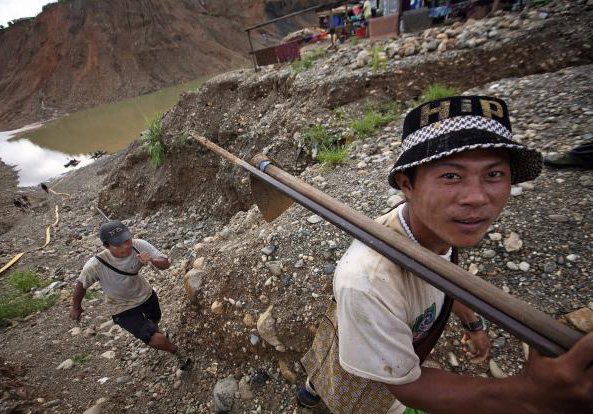
The ICJ representatives saw destroyed arable land and crops as well as polluted waterways near the mine site, which is close to the Chindwin River.
The Letpadaung operation has been dogged with opposition since its inception in 2011 under Myanmar’s former military government.
In November 2012, police allegedly used white phosphorous smoke grenades to disperse hundreds of peaceful protesters camped at the mine site.
Dozens of people, including many monks, suffered extensive chemical burns.
The use of white phosphorous, a highly corrosive chemical, against civilians even in armed conflicts is prohibited under the 1980 Geneva Conventions.
The government responded to outrage over the incident by appointing Daw Aung San Suu Kyi, who was opposition leader at the time, to chair an investigation commission while work was suspended at the mine.
In its report published on March 12, 2013, the commission acknowledged that Wanbao had not conducted an environmental and social impact assessment, but said that cancelling the project would affect job creation and ties with China, one of Myanmar’s biggest trade partners and its top foreign investor.
Wanbao publicly stated that it welcomed the commission’s report.
In an effort to address community outrage, Wanbao has taken some steps to implement the terms of its revised agreement with the former Myanmar government.
The Myanmar Centre for Responsible Business stated that Wanbao’s ESIA disclosed in January 2014 and completed by Australian consulting firm Knight Piesold, was undertaken with “benchmarking against international standards, including those of the International Finance Corporation”.
However, public consultation on Wanbao’s ESIA report has been limited.
When the ICJ wrote to Wanbao seeking more information on how it could better protect the human rights of those affected by its project, it responded that “Myanmar Wanbao adheres to international good practice and international standard in environmental conservation and CSR activities and are making every effort to reduce the environmental impact of the project and minimize the footprint of our activity throughout the different phases of the project.”
The response made no reference to human rights.
The Myanmar Police Act 1945 empowers police officers to regulate public assemblies and processions, but nowhere in the legislation is there a justification for unlawful disproportionate use of force.
International law and standards govern the use of force. The United Nations Basic Principles on the Use of Force and Firearms by Law Enforcement Officials, while acknowledging that in certain limited circumstances police can and will need to use force to maintain law and order, states that this must be done in proportionately and in compliance with international human rights law and must never be seen as a licence to kill or granting immunity to police officials.
The judiciary has shown itself unable or unwilling of providing for access to justice.
The legal system has instead been used to suppress freedom of expression and arbitrarily try and imprison those who peacefully protest against human rights abuses by businesses.
The ICJ had monitored the trials of activists who peacefully demonstrated outside the Chinese Embassy in Yangon in 2014, calling Myanmar authorities to carry out an urgent and impartial investigation into the death of Khin Win.
In early September, Sagaing Region ministers met communities opposed to the mine project in a first effort by government to address their longstanding grievances.
The Union government must increase protection for human rights and the environment by ensuring that corporations such as Wanbao embed human rights in their business practices and are held accountable for failing to do so.
Until then, there continues to be impunity for those responsible for Khin Win’s death.
Oct 16, 2016 | News
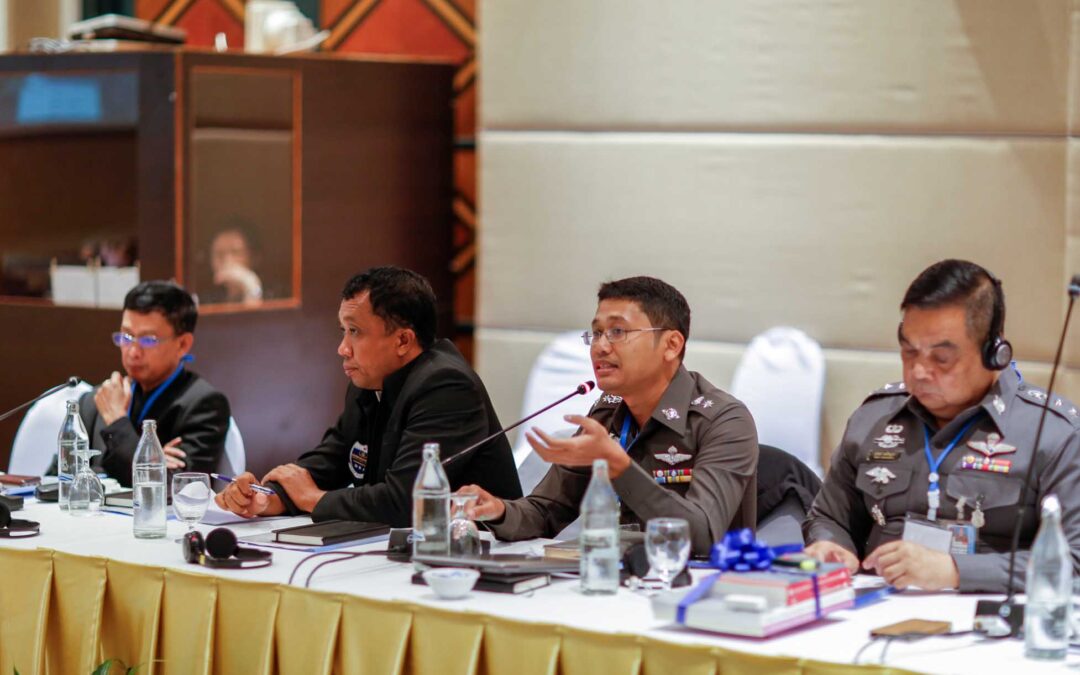
On 15-16 October 2016, the ICJ held a Workshop for justice sector actors in Thailand’s deep South on “the Use of Telecommunication Evidence in Criminal Cases” for police, special investigators, prosecutors and lawyers.
The attendees included 30 public prosecutors, police and Department of Special Investigation (DSI) officials, 15 defense lawyers, and observers from the Thailand Institute of Justice (TIJ) and the Asia Foundation.
This is the sixth ICJ workshop related to strengthening the administration of justice in the deep South since 2011.
The objective of the workshop, held in Hat Yai, was to discuss how telecommunication information may be used as part of an effective criminal investigation, and the ways in which prosecutors, lawyers and judges should consider approaching the use of this kind of information as evidence at trial.
The Workshop observed a moment of silence for the passage of the late King Rama IX.
Kingsley Abbott, ICJ Senior International Legal Adviser, opened by saying that the use of telecommunication evidence is one tool that can be used in an effective investigation of serious criminal and security related cases followed by fair trials.
However, it is important to ensure that the acquisition and use of this information as evidence fully respects the right to privacy guaranteed by the International Covenant on Civil and Political rights (ICCPR) to which Thailand is a State Party.
The ICJ firmly believes that respect for human rights and the rule of law must be the bedrock in countering terrorism and violent crime.
Speakers at the Workshop included Judge Wasupatchra Jongpermwattanapol, Chief Judge of the Office of the Chief Justice Region 9; Mr Sophon Tipbamrung, Executive Director of the Special Office of Criminal Litigation 3, Region 9; Lt. Col. Thatphichai Chanwaranon, Deputy Superintendent of the Investigation Bureau, Southern Border Provinces Police Operation Center and national expert on the use of telecommunication evidence; and Mr Nigel Povoas, a British Barrister with experience leading high profile international serious and organized crime cases and an expert in the use of telecommunication evidence.
Background
Previous ICJ workshops in the deep South have included:
- The Protection of Victims in Criminal Cases (2015)
- The Principle of Inadmissibility of Evidence Obtained by Unlawful Means and Hearsay Evidence: International Standards Compared to Thai Law (2014)
- Rule of Law and Strengthening the Administration of Justice in the Context of Habeas Corpus in the Southern Border Provinces (2012)
- Rule of Law and Strengthening the Administration of Justice in the Context of Bail in the Southern Border Provinces (2012)
- Rule of Law and Strengthening the Administration of Justice in the Context of the Application of Emergency Laws in the Southern Border Provinces (2011)