Aug 31, 2016
An opinion piece by Sean Bain, ICJ Legal Consultant in Myanmar.
In August, Myanmar’s newly elected Government overhauled the senior figures heading the administrative framework for governing Special Economic Zones.
Union Vice-President Henry Van Thio replaces former president Thein Sein as Chairperson of the SEZ Central Body, responsible for determining policies to promote foreign investment and rapid economic growth through the creation of SEZs.
One of his first tasks will be to select members for the SEZ Management Committees.
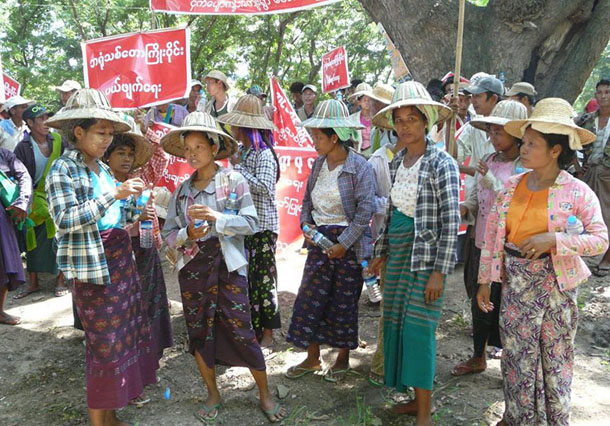
Each SEZ has a Management Committee with an extensive mandate to prepare development plans, propose projects, facilitate investment approvals and, crucially, coordinate resettlement for people displaced by projects in SEZs (picture).
Above these committees is the Central Working Body, where senior officials scrutinise project plans and develop policy advice for implementation. At the top sit the Union Ministers who make up the Central Body.
With the exception of the Thilawa Management Committee, these bodies have been inactive since the change of government in April.
The selection of Management Committees is an opportunity to appoint members who have a good knowledge of human rights law and environmental protection as well as investment law.
And to only select persons who are not tainted by corruption. This will be important to help ensure projects conform to human rights obligations and environmental laws.
And because the legal framework established by the 2014 SEZ Law is not clear enough to be administered in a straightforward manner.
Research by the International Commission of Jurists and others has found that Management Committees implementing SEZs have failed to protect the rights of people whose homes, land and livelihoods have been adversely affected by Myanmar’s three SEZs in Dawei, Thilawa and Kyauk Phyu.
In each SEZ, affected persons have been denied the right to access information about project plans, which the government failed to make transparent.
A lack of meaningful consultation has contributed to poor planning for resettlement, resulting in inadequate arrangements for compensation and livelihoods.
The impact for many has been deterioration in living standards. Under international law, the failure to protect people from deterioration in living standards generally amounts to a violation of rights to food, health and adequate housing.
The human right to an adequate standard of living is enshrined in the International Covenant on Economic, Social and Cultural Rights – which Myanmar has signed and is taking steps to ratify.
International standards, such as the World Bank Policy on Involuntary Resettlement, affirm that people displaced by development projects should be assisted to improve or at least restore their livelihoods to pre-displacement levels.
Management Committees have played a central role in managing the resettlement of communities affected by Myanmar’s SEZs.
But this role is not recognized in law, so there is no formal accountability in cases where committee members fail to protect the rights of affected communities.
Consider for example the provisions guiding the resettlement of people living in the SEZ area.
Article 80 of the SEZ Law requires companies to cover resettlement costs associated with their projects and to ensure that a displaced person’s living standards do not deteriorate.
With the Management Committee, the company should ‘coordinate…as necessary’, but under this Law the responsibility falls on the company, which does not have the protective human rights obligations of the State.
The Management Committee may be directing the process but the company could be held financially liable for substandard implementation.
Article 82 of the SEZ Law requires the Ministry of Home Affairs to take responsibility for land acquisition – another critical stage of any resettlement process.
But the Law does not clarify how the Ministry is to interact with the Management Committee and companies.
Overlapping duties among these actors has meant that duty-bearers are unsure of their duties while rights-holders are largely unaware of their rights.
To add to the confusion, the Law does not specify which of Myanmar’s more than 50 overlapping and conflicting land laws, each with different compensation arrangements, shall apply in SEZs.
This gives rise to inconsistent application of the law both within and across SEZs. A new land law based on the 2016 National Land Use Policy would help clarify this messy legal framework.
The lack of clarity regarding the role of the Management Committees reflects the general problem of uncertainty in many aspects of the SEZ Law, which is often vague, creating uncertainty about the roles and duties of different parties and worrying some investors.
Of particular concern to local residents is that the Law contains three chapters on investor’s benefits but does not mention human rights at all.
By assigning vague powers to authorities while omitting protections for affected communities, the Law codifies power imbalances in Myanmar.
This imbalance is aggravated by the general lack of accountability and access to justice for victims of human rights abuses in Myanmar.
The SEZ Law should be amended to clarify the duties of Management Committees including its obligations to respect, protect and fulfil human rights.
Investment revenues from SEZs should finance increased resources for the commissions and departments responsible for enforcing human rights and environmental standards.
These amendments are consistent with the government’s priorities of economic development in line with land rights, and should be considered before approving new investments in SEZs.
Reforming the SEZ Law would be a critical step toward ensuring that rights violations in SEZs are not repeated under the NLD’s watch.
In the meantime, the performance of SEZ Management Committees will significantly impact upon the ability of the Government to uphold its State duty to protect human rights and provide access to remedy for those living in the SEZ areas.
The Central Body must choose Management Committee members carefully.
Aug 31, 2016 | News
ASEAN meeting should highlight disappeared Lao leader Sombath Somphone, denial of liberties, said human rights and advocacy groups at a press conference held today in Bangkok.
On the eve of the annual ASEAN leaders summit in Vientiane, the groups (Human Right Watch, ASEAN Parliamentarians for Human Rights, Civil Rights Defenders, Focus on the Global South, Mekong Watch and the ICJ) called upon the Lao PDR Government to commit to address its widespread violations of human rights, including instances of enforced disappearances and arbitrary detention.
Visiting world leaders have a unique opportunity to publicly raise human rights concerns during the ASEAN summit in Vientiane from September 6-8. They should press the Lao government to cease the abuses that have consistently placed Laos at the bottom of rights and development indexes measuring rights, press freedom, democracy, religious freedom, and economic transparency, the groups added.
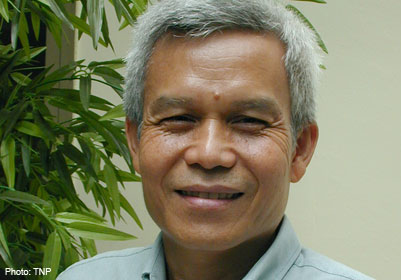
At the event organized by The Sombath Initiative at the Foreign Correspondents Club of Thailand in Bangkok, the groups also released a set of briefing papers on forcibly disappeared civil society leader Sombath Somphone (photo), Laos’ restrictions on democracy and human rights, lack freedom of expression, failure to meet human rights obligations, and impacts of foreign aid and investment.
“More than three and half years after he disappeared, the Lao government still has provided no clear answers to what happened to my husband, Sombath Somphone, who was taken away in truck at a police checkpoint in Vientiane,” said Shui Meng Ng, wife of Sombath and board member of The Sombath Initiative.
“President Obama, the United Nations, and ASEAN and its dialogue partners should urge the Lao Government to urgently resolve the case of Sombath’s enforced disappearance and return him safely to me and my family. They should also demand the Lao Government end enforced disappearances, so that the ordinary people of the country can respect their government rather than fear it.”
“The fact that the Lao PDR government’s last detailed report on the progress of the investigation was released over three years ago suggests the Lao authorities are not carrying out an effective investigation into this case as they are required to do under international law,” said Kingsley Abbott, a Senior International Legal Adviser with the International Commission of Jurists (ICJ).
“It is not enough for the Lao government to simply keep asserting on the international stage that it is investigating this case. International law obliges Lao PDR authorities to conduct an investigation that is credible and effective, and provide regular updates on its progress including to Sombath’s wife, Shui Meng,” he added.
Basic civil and political rights are systematically denied in Laos, and government authorities move quickly to arbitrarily arrest those expressing critical views of the government, either in day to day life or more recently on-line.
In March 2016, police arrested three Lao migrant workers who had posted critical comments about the Lao government while they were working in Thailand, and continues to detain them arbitrarily. A Lao court also sentenced activist Bounthanh Khammavong in September 2015 to 4 years and 9 months in prison for posting critical comments on Facebook.
Laos also imposes onerous restrictions on the right to freedom of association that are incompatible with its human rights obligations.
The government strictly controls the registrations of organizations such as non-profit associations (NPAs), and closely monitors the work plans and budgets of NPAs that it does approve to operate.
Any person who dares to organize and operate an unsanctioned organization faces arrest and prosecution.
Workers are compelled to belong to the Lao Federation of Trade Unions and organizing unions outside that framework is illegal. At the village level, mass organizations controlled by the ruling Lao People’s Revolutionary Party are often the only organizations operating.
Public protests or assemblies are strictly forbidden without government permission, and any efforts organize such events face immediate suppression by the police and security forces.
“Civil society in Laos remains under a hostile spotlight from the government, and UN rights officials have noted that there are few places in the world where they have encountered greater fear and intimidation among community organizations and NGOs,” said Walden Bello, former member of the Philippines Congress and Vice Chair of ASEAN Parliamentarians for Human Rights (APHR).
“Laos has now become one of the most rights repressing countries in ASEAN: leaders in the region and from around the world must stop looking the other way, and demand Vientiane end its asphyxiation of independent civil society,” he added.
Read the full text and quotes here: Laos-End to Human Rights Abuses-News-Press Releases-2016-ENG (in PDF)
Contact
Kingsley Abbott, ICJ Senior International Legal Adviser, t: +66 9 4470 1345, e: kingsley.abbott(a)icj.org
Aug 30, 2016
An opinion piece by Daniel Aguirre, ICJ International Legal Adviser in Myanmar.
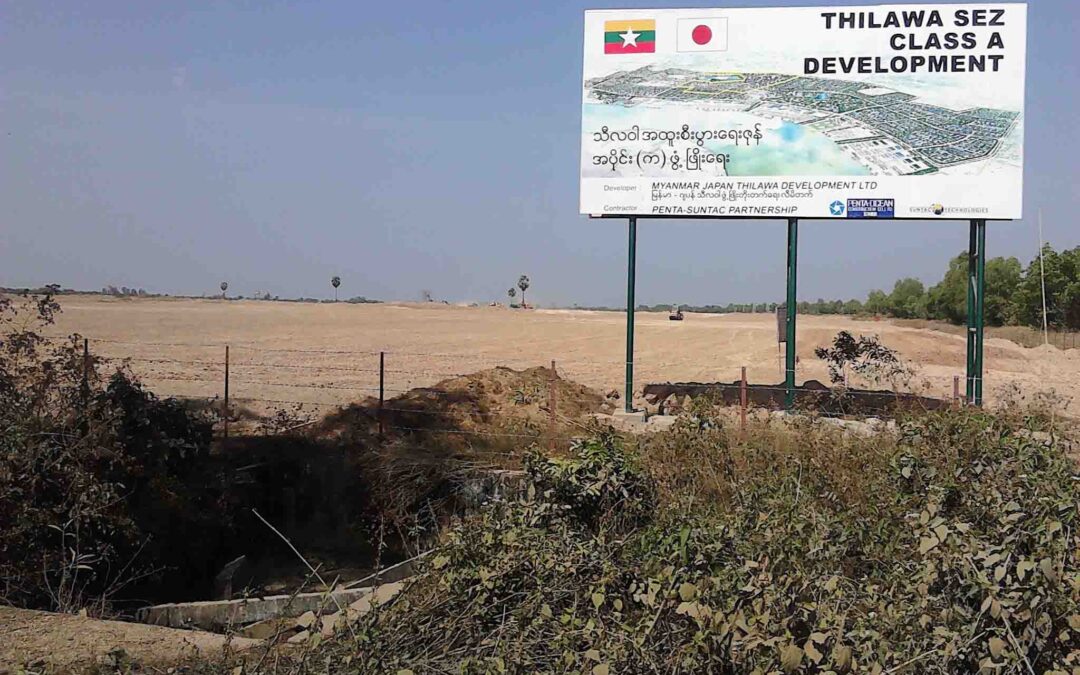
This month the newly elected Myanmar government released its economic policy and announced that it will seek to attract even more foreign investment than under previous administrations.
But the new policy did not outline how it will ensure that foreign investment will contribute to the protection of human rights and sustainable development.
Myanmar’s previous military government was committed to investment protection treaties.
Will the new government follow suit? These treaties between States enable foreign investors to challenge new laws and policies by the host government – potentially including those protecting human rights and the environment – through international arbitration if they believe these may adversely affect their profits.
Foreign governments want their investors to benefit from the opening up of Myanmar’s economy.
Myanmar has already entered into investment protection treaties with Japan, South Korea, the Philippines, China, Laos, Vietnam, Thailand, Israel and India and is party to the ASEAN Comprehensive Investment Agreement. Myanmar is negotiating a new treaty with the European Union and exploring options with Singapore, among others.
These investment treaties grant investors equal standing with Myanmar’s government in disputes over national laws and policy in international arbitration.
Their broad provisions fail to reconcile investment protection with the host State’s right and duty to regulate for the benefit of human rights and sustainable development.
Myanmar must ensure that provisions on the treatment of foreign investors limit their rights to challenge legitimate, non-discriminatory, public purpose legislation.
Seeking to attract investment by giving foreign businesses more economic security should not compromise government’s ability to regulate in favour of the rights of its people.
Protection of investments must not be given priority over protection of human rights and the environment.
The UN Guiding Principles on Business and Human Rights urge governments to maintain adequate domestic policy space to meet their human rights obligations when pursuing investment treaties.
Before agreeing to further investment treaties, Myanmar should commit to adopting and enforcing new laws in line with international human rights and environmental standards.
It should evaluate whether these investment treaties are necessary to attract foreign investment to Myanmar.
It should follow the regional trend and revisit old treaties that empower foreign investors at the expense of local rights holders.
The National League for Democracy-led government came to power promising change, to establish the rule of law and to protect human rights.
In order to do so, the government will need to create new laws and policies in line with international laws and standards in the public’s interest.
For example, Myanmar has recently signed the International Covenant on Economic Social and Cultural Rights, signalling its willingness to put in place policies to progressively achieve universal healthcare, education and social security. These rights are also protected in Myanmar’s constitution.
But new policies designed to fulfil these rights may give rise to disputes under investment treaties.
For instance, it is possible that foreign investors will claim that a new policy on public health (for instance by requiring plain packaging for cigarettes) or minority rights (calling for affirmative action for minorities) or strict environmental protection standards (improved environmental impact assessment regulations) would harm their expected profits or other rights that are broadly defined in the investment protection agreement.
These are not outlandish examples. There are a number of cases where new laws and regulations passed by democratically elected governments have been challenged by foreign investors before arbitral tribunals.
In Canada, a foreign investor successfully challenged an environmental impact assessment board’s decision to deny it a permit and asked for more than US$100 million in damages.
Affirmative action policies in South Africa and environmental protection standards in Germany have been challenged.
Just the threat of arbitration can lead to a “regulatory chill”, forcing back public interest legislation and preventing environmental protection measures.
These are costly disputes – some arbitral awards run into the billions of dollars against host governments.
Recent challenges by tobacco giant Phillip Morris against Australian and Uruguay plain packaging cigarette laws, designed to protect public health, were unsuccessful but cost millions in lawyer’s fees.
Australia reportedly paid $50 million to defend its law. Myanmar cannot defend repeated challenges by deep-pocketed investors.
In Myanmar, this money could be better spent improving the dire state of health and education.
Around the world, people are demanding that negotiation and adoption of investment treaties be transparent; increasingly, people are opposing treaties that grossly favour the interests of investors over the interests of the public.
Investment treaties are often negotiated behind closed doors with little public or parliamentary oversight.
These are important decisions that impact on the rights of people in Myanmar.
Myanmar’s civil society has not yet had the opportunity to participate in genuine and informed consultation.
Many states have turned against international dispute resolution in investment treaties.
South Africa, Bolivia, Ecuador, Venezuela, and Indonesia have started to cancel or phase out existing treaties.
Others, including India, are reviewing current treaties and rethinking future negotiations.
Brazil, Russia, India and China are considering an alternative system that considers issues relevant to emerging economies.
The Indian government intends to replace existing investment treaties with new ones designed to balance investor’s interests, regulatory space and investor responsibilities.
It seeks to limit protections for foreign investors, drop controversial aspects of treaties and narrow the scope of others to reduce disputes.
While it allows access to international dispute settlement, foreign investors will have to pass through the domestic courts first.
The new investment treaties will also include an exhaustive list of economic, environmental and social measures to be exempt from challenge by foreign investors.
Myanmar would do well to follow this approach. Improving its human rights situation and maintaining sustainable development require sweeping legal reform.
The threat of costly legal challenges by foreign investors could dissuade policy makers from making necessary changes, discouraging them from fulfilling human rights and environmental obligations in order to promote investment.
Aug 29, 2016 | News
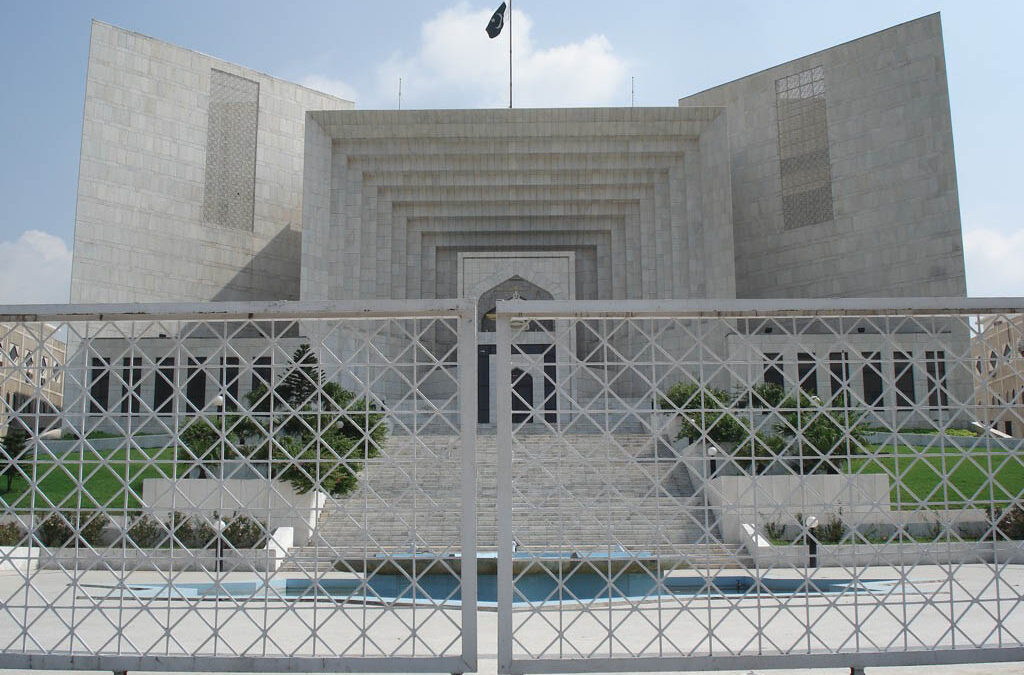
Pakistan’s Supreme Court’s rejection of petitions by families of 16 people sentenced to death who complained of unfair trials in the country’s military courts seriously set back respect for human rights and the rule of law, the ICJ said today.
“The Supreme Court failed to use an important opportunity to show that human rights protect all people, including those who are accused of terrorist acts or other heinous crimes,” said Sam Zarifi, ICJ’s Asia Director. “Pakistan’s very serious problem with terrorism can only be addressed with more respect for human rights and the rule of law, not less, and certainly not through deeply flawed military tribunals that provide neither justice nor truth.”
Families of sixteen civilians sentenced to death by military courts in secret proceedings challenged their convictions and sentences in the Supreme Court on fair trial grounds. In its 182-page judgment, a five-member bench Supreme Court headed by Chief Justice Anwar Zaheer Jamali held the petitioners had failed to prove the military violated their constitutional right to a fair trial. At convicts are now at imminent risk of execution.
The ICJ is calling on the government of Pakistan to desist from executing these or other convicts, and to reinstate a moratorium on the death penalty it held from 2008 to 2014.
“Trial of civilian suspects in military courts is anathema to human rights and international standards are clear that military courts should only have jurisdiction over military officers for military offences,” said Zarifi. “Pakistan’s military tribunals in particular offer nothing like a fair trial and should be immediately dismantled.”
As highlighted by the ICJ in a briefing paper released in June, proceedings before Pakistani military courts fall well short of national and international standards requiring fair trials before independent and impartial courts: judges are part of the executive branch of the State and continue to be subjected to military command; the right to appeal to civilian courts is not available; the right to a public hearing is not guaranteed; and a duly reasoned, written judgment, including the essential findings, evidence and legal reasoning, is denied. In addition, the procedures of military courts, the selection of cases to be referred to them, the location and timing of trial, and details about the alleged offences are kept secret.
“The ICJ supports the pursuit of justice for all victims of terrorism in Pakistan,” added Zarifi. “However, justice will not be done by subverting the foundational pillar of justice: the right to a fair trial for all suspects –regardless of how serious the offence.”
Since January 2015, when Pakistan empowered military courts to try civilians for terrorism-related offences, 11 military courts have been constituted to hear cases related to terrorism.
These 11 military courts have thus far concluded the trials of 128 people, finding the defendants guilty in 104 cases. A hundred people have been sentenced to death and four have been given life sentences. At least 12 people have been hanged after trials that are grossly unfair.
The ICJ has called on the Pakistan government to roll back the system of “military injustice”, and ensure that all terrorism suspects are guaranteed basic fair trial protections.
The ICJ has also urged that Pakistan reinstate a moratorium on executions with a view to abolishing the death penalty in law and practice, reflecting the call of an overwhelming majority of States in repeated UN General Assembly resolutions. The ICJ considers the death penalty to constitute a denial of the right to life and a from of cruel, inhuman and degrading punishment.
Contact:
Sam Zarifi, ICJ Asia Pacific Regional Director (Bangkok), t: +66 807819002; e: sam.zarifi(a)icj.org
Reema Omer, ICJ International Legal Adviser for Pakistan (Lahore), t: +923214968434; e: reema.omer(a)icj.org
Additional information
In January 2015, Pakistan empowered military courts to try civilians for terrorism-related offences as part of its 20-point “National Action Plan”, adopted by the Government following the horrific attack on the Army Public School in Peshawar.
The expansion of military jurisdiction over civilians was accomplished through the 21st Amendment to Pakistan’s Constitution and amendments to the Army Act, 1952. These amendments allow military courts to try offences related to “terrorism” committed by those who claim to, or are known to, belong to a terrorist organization “using the name of religion or a sect”.
Both amendments are set to expire on 6 January 2017 pursuant to a “sunset clause”, after which they will cease to be in effect, although there is a risk that they could be renewed.
In August 2015, the Pakistani Supreme Court upheld the constitutionality of the 21st amendment and the trial of civilians by military courts for terrorism-related offences.

Aug 29, 2016 | News
Tens of thousands of enforced disappearances in South Asia can only be addressed if all the region’s governments immediately criminalize this serious human rights violation, said today lawyers and activists from Bangladesh, India, Nepal, Pakistan and Sri Lanka.
The call came at a Conference on Enforced and Involuntary Disappearances, organized by the ICJ and Human Rights Commission of Pakistan (HRCP) on the eve of the International Day of the Victims of Enforced Disappearances.
South Asia has among the highest number of alleged victims of enforced disappearances in the world: tens of thousands of cases have been documented in Sri Lanka, Nepal, Pakistan and India, and since 2009, there has also been a surge in enforced disappearances in Bangladesh.
“Sri Lanka’s ratification of the Convention on Enforced Disappearance and its pledge to criminalize the practice is a welcome step,” said I. A. Rehman, Secretary General for the Human Rights Commission of Pakistan.
“Other States in the region should now follow suit and show that they are serious about their commitment to human rights by making enforced disappearance a specific crime in their domestic law,” he added.
Under international law, an enforced disappearance is the arrest, abduction or detention by State agents, or by people acting with the authorization, support or acquiescence of the State, followed by a refusal to acknowledge the detention or by concealing the fate or whereabouts of the “disappeared” person which places the person outside the protection of the law.
The UN General Assembly has repeatedly described enforced disappearance as “an offence to human dignity”.
At present, enforced disappearance is not a distinct crime in any South Asian country, which is one of the major hurdles to bringing perpetrators to justice.
In the absence of a legal framework on enforced disappearance, unacknowledged detentions by law enforcement agencies are considered “missing persons” cases.
On the rare occasions where criminal complaints are registered against alleged perpetrators, complainants are forced to categorize the crime as “abduction” or “kidnapping”.
These categories do not recognize the complexity and the particularly serious nature of enforced disappearance, and often do not provide for penalties commensurate to the gravity of the crime.
They also fail to recognize as victims relatives of the “disappeared” person and others suffering harm as a result of the enforced disappearance, as required under international law.
“Despite thousands of cases of enforced disappearance across South Asia, the governments have failed to follow their legal obligation to treat these crimes as the serious human rights violation they are,” said Sam Zarifi, ICJ’s Asia Director.
“South Asian governments have done very little to support the victims and survivors of enforced disappearance, or to ensure the rights of their family members to truth, justice and reparation,” he added.
Other barriers to bringing perpetrators to account are also similar in South Asian countries: military and intelligence agencies have extensive and unaccountable powers, including for arrest and detention; members of law enforcement and security forces enjoy broad legal immunities, shielding them from prosecution; and military courts have jurisdiction over crimes committed by members of the military, even where these crimes are human rights violations.
Victims’ groups, lawyers, and activists who work on enforced disappearance also face security risks including attacks, harassment, surveillance, and intimidation.
A comprehensive set of reforms, both in law and policy, is required to end the entrenched impunity for enforced disappearances in the region – criminalizing the practice would be a significant first step, said ICJ and the HRCP.
Contact
Sam Zarifi, ICJ Asia Pacific Regional Director (Bangkok), t: +66 807819002; e: sam.zarifi(a)icj.org
Read also
ICJ Practitioners’ Guides No. 9 Enforced Disappearance and Extrajudicial Execution: Investigation and Sanction and No. 10 Enforced Disappearance and Extrajudicial Execution: the Right of Family Members, which provide legal practitioners, activists and policy-makers with detailed and practical references on international standards on enforced disappearances and extrajudicial killings.
South Asia-International disappearances day statement-News-2016-ENG (full text in PDF)