Oct 11, 2016 | News
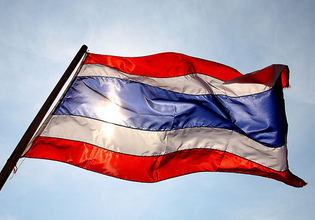
Thailand should immediately end the use of Article 44 of the Interim Constitution which gives the Head of the military junta sweeping, unchecked powers contrary to the rule of law and human rights, said the ICJ today.
Despite widespread international condemnation of Article 44, its use has increased every year since the Interim Constitution was promulgated on 22 July 2014 following the coup d’état of 22 May 2014.
The Head of the National Council for Peace and Order (NCPO), Prayut Chan-o-cha, has issued at least 107 Orders under Article 44 (available in the public domain): at least one in 2014; 44 in 2015; and 62 in 2016 to date – with 37 Orders being issued since June 2016 alone.
“The Head of the NCPO’s increasing willingness to use extraordinary powers to make ad hoc, arbitrary changes to existing laws and regulations without judicial oversight should be alarming to everyone, including the business sector,” said Wilder Tayler, Secretary General of the ICJ.
“Article 44 places law making power in the hands of one man, while Articles 47 and 48 of the Interim Constitution block judicial review or access to remedies and reparation. This is entirely inconsistent with the three fundamental pillars of the rule of law, equality, accountability and predictability, and should be revoked immediately,” he added.
The Article 44 orders range from those restricting the civil rights of all people in Thailand to those aimed at seemingly minor and ordinary bureaucratic processes.
To date, Article 44 has been used to introduce a raft of revisions into existing Thai law without observing proper process or practice, including providing for the acquisition of land for the establishment of Special Economic Zones bypassing the usual environmental and social checks and balances provided for in domestic legislation; granting military officers sweeping powers of investigation, arrest and detention; and prohibiting the gathering of five or more persons for political purposes.
“It is long past time for Thailand to revoke Article 44 and all others laws, orders and announcements issued since the military coup that are inconsistent with the rule of law and human rights,” Tayler said.
“The justifications the military presented for such measures were never valid or credible, and certainly not so after more than two years of direct military rule.”
All Orders issued under Article 44 – and all other NCPO Orders and Announcements – will continue to remain in force under the draft Constitution that was accepted at a public referendum on 7 August 2016, and may only be repealed or amended by an Act.
Last week, Deputy Prime Minister Wissanu Krea-ngam announced that the NCPO was considering converting many of the hundreds of orders issued by the NCPO into legislation, including those issued under Article 44.
thailand-art-44-ncpo-news-press-releases-2016-eng (full text with background, in PDF)
thailand-head-of-ncpo-orders-advocacy-2016-eng (full list of all publicly available Head of NCPO Orders, in PDF)
thailand-art-44-ncpo-news-press-releases-2016-tha (full text in Thai, PDF)

Oct 3, 2016 | News
The government should drop all proceedings against human rights lawyer, Sirikan Charoensiri, including the specious accusation of sedition, which apparently relate to her organization’s representation of 14 student activists peacefully protesting in June 2015, the ICJ and other groups said today.
On 27 September 2016, Sirikan Charoensiri (photo), a lawyer and documentation specialist at Thai Lawyers for Human Rights (TLHR), received a summons from the Thai Police following accusations that she violated Article 12 of the Head of National Council for Peace and Order (NCPO) Order 3/2015, prohibiting the gathering of five or more people for political purposes, and Article 116 of the Thai Criminal Code, a ‘sedition’-type offence.
According to the summons, the accusations are made by an army officer, Lieutenant Colonel Pongsarit Pawangkanan.
Sirikan Charoensiri received the summons, dated 20 September 2016, when she returned to Thailand after attending the 33rd Session of the Human Rights Council in Geneva where she conducted advocacy on the human rights situation in Thailand on behalf of FORUM-ASIA and the ICJ.
Sirikan Charoensiri did not receive an earlier summons, dated 14 September 2016, the police claimed had been sent to her apartment, as she was not home at the time.
Sirikan Charoensiri has already been charged with two offences under the Criminal Code of Thailand: “giving false information regarding a criminal offence” and “refusing to comply with the order of an official” in relation to TLHR’s provision of legal aid to 14 student activists – the new summons appears to relate to the same case.
“The army’s accusation that Sirikan Charoensiri has violated the frequently abused sedition law with its extremely serious penalties and risk of a military trial is indefensible and must be withdrawn immediately,” said Wilder Tayler, Secretary General of the ICJ.
“The fact that the authorities have made these accusations more than one year after TLHR’s clients were charged with sedition in the same case suggest the accusations have been made in retaliation for her high-profile national and international human rights advocacy since the military coup,” he added.
The other groups who signed the statement are: Human Rights Watch, Amnesty International, Asian Forum for Human Rights and Development (FORUM-ASIA), the Observatory for the Protection of Human Rights Defenders (an FIDH–OMCT partnership), Protection International (PI), Lawyers’ Rights Watch Canada (LRWC), Fortify Rights, and the International Service for Human Rights (ISHR).
thailand-sirikan-charoensiri-conviction-news-press-releases-2016-eng (full text in PDF)
thailand-sirikan-charoensiri-conviction-news-press-releases-2016-tha (Thai version, in PDF)
Sep 28, 2016 | News
The conviction of Member of Parliament Tian Chua under the 1948 Sedition Act increases already severe restrictions on freedom of expression in Malaysia, said the ICJ today.
The Malaysian government should drop all charges filed under this law and remove or amend this colonial era law to ensure compliance with international human rights law and standards, the ICJ added.
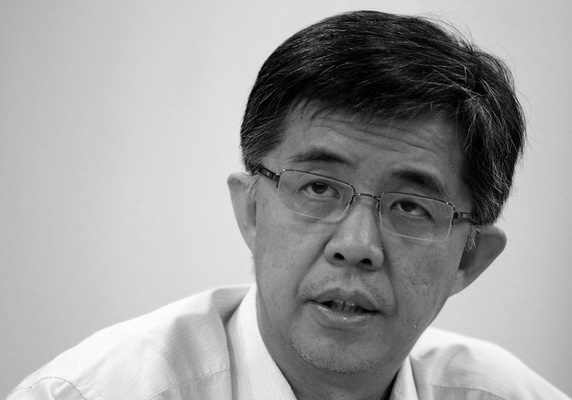
The Sessions Court in Kuala Lumpur convicted Tian Chua (photo) today under Section 4(1)(b) of the 1948 Sedition Act for allegedly uttering “seditious words.”
The allegedly “seditious words” spoken by Tian Chua were calling on Malaysians to “stand up and fight against racism and corruption.”
Tian Chua spoke these words at a public forum on 13 May 2013 at the Kuala Lumpur and Selangor Assembly Hall.
“Prime Minister Najib Razak promised in 2012 to abolish the 1948 Sedition Act, but until now, this promise has not been fulfilled,” said Emerlynne Gil, ICJ’s Senior International Legal Adviser.
“It now appears that the Malaysian government is holding on to this law to silence political opponents and human rights defenders who express critical views about what is happening in the country today,” she added.
Tian Chua received a penalty of three months’ imprisonment plus a fine of RM1,800 (approximately US$435).
Although he will still be entitled to keep his seat as Batu’s representative to the Malaysian Parliament, his conviction sends a clear and dangerous message that politically critical comments or dissenting opinions from anyone, including a Member of Parliament, will not be tolerated by the government, the ICJ says.
Several other people were also charged for sedition for their speeches at the same public forum where Tian Chua spoke: activists Adam Adli, Hishamuddin Md. Rais, Haris Fathillah Mohamed Ibrahim, and Safwan Anang.
All of them have already been convicted in the past few months under the same provision of the Sedition Act.
“By its very terms, the 1948 Sedition Act contemplates restrictions on the exercise of freedom of expression that are grossly overbroad and inconsistent with the basic rule of law and human rights principles,” said Gil.
The lawyers of Tian Chua, Latheefa Koya and N. Surendran, have confirmed that they will be seeking a stay order on the basis that they will be appealing the sentence and conviction.
The ICJ has repeatedly expressed its concerns regarding the restrictive effect the 1948 Sedition Act has on freedom of expression in the country.
The law criminalizes speech and publications considered to have “seditious tendencies”, a term that is very ambiguously and vaguely defined.
Last year, the ICJ expressed alarm over amendments made by the Malaysian Parliament strengthening the law and broadening its scope, making the “promotion” of hatred between religions an offence.
Contact:
Emerlynne Gil, ICJ’s Senior International Legal Adviser for Southeast Asia, t: +66840923575 ; e: emerlynne.gil(a)icj.org
Sep 28, 2016 | Advocacy, Non-legal submissions
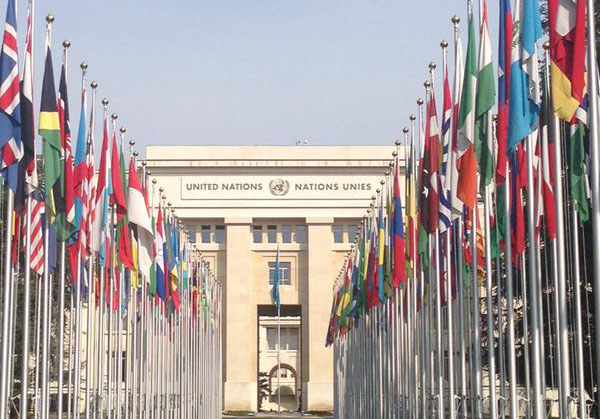
The ICJ today delivered an oral statement to the UN Human Rights Council, during the interactive dialogue with the Special Rapporteur on the situation of human rights in Cambodia.The ICJ welcomed the report of the Special Rapporteur on the situation of human rights in Cambodia, before continuing as follows:
The ICJ concurs with the Special Rapporteur’s observation that “democratic space has been reduced in Cambodia through the application of a range of laws … and the restriction of a range of legitimate activities of non-governmental and civil society organizations.”
Since 2014, Cambodia has adopted laws inconsistent with its international human rights obligations, including undermining the independence of the judiciary, and unduly restricting the work of civil society.
Human rights defenders increasingly face retaliation for their legitimate work, shrinking civil society space.
Last week, the ICJ observed the criminal trial of Ny Chakrya, Deputy Secretary-General of the National Election Committee and former Head of Human Rights Section and Legal Aid at a leading NGO, ADHOC. He was convicted of crimes, including criminal defamation, for raising allegations of human rights violations. Ny Chakrya and four staff-members of ADHOC, all of whom are in detention, also face another investigation with all the hallmarks of being politically motivated.
Indeed, numerous members of the political opposition and human rights defenders are in exile, face legal proceedings, or have been convicted, in cases that also appear to be politically motivated.
Further, the investigation into the July 2016 killing of leading human rights defender, Kem Ley, lacks transparency.
We very much welcome the spotlight the Special Rapporteur placed on such cases by naming them here today.
2016 marks 25 years since the Paris Peace Agreements under which Cambodia undertook to “ensure respect for and observance of human rights and fundamental freedoms in Cambodia.”
We urge Cambodia, the signatories to the Paris Peace Agreements, the Special Rapporteur on Cambodia, the Office of the High Commissioner for Human Rights, and the Human Rights Council, to work to ensure these Agreements are given full effect – particularly as Cambodia prepares for local and national elections scheduled for 2017 and 2018.
The statement may be downloaded in PDF format here: hrc33-srcambodia-2016
Sep 26, 2016
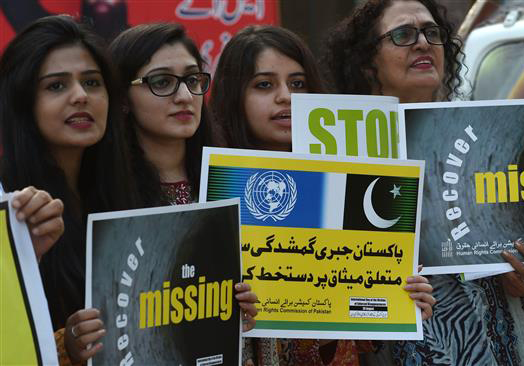
An opinion piece by Reema Omer, ICJ Legal Adviser in Pakistan.
“There is a climate of impunity in Pakistan with regard to enforced disappearances, and the authorities are not sufficiently dedicated to investigate cases of enforced disappearance and hold the perpetrators accountable.”
The UN Working Group on Enforced and Involuntary Disappearances (WGEID) made this scathing assessment of Pakistan’s dismal response to the widespread practice of enforced disappearances in the country in a report presented to the UN Human Rights Council last week.
The report is a follow-up of the recommendations made by the WGEID pursuant to a country visit to Pakistan in 2012.
In the report, the Working Group “regrets that most of the recommendations contained in its country visit report have not been implemented” and also points out that the Government has failed to communicate even a single case “where perpetrators of enforced disappearances have been held accountable.”
The WGEID’s critical assessment of Pakistan’s record in confronting serious human rights violations at the UN Human Rights Council should push the Government to reconsider its perfunctory engagement with UN human rights mechanisms and work towards implementing its recommendations on ending the now nationwide practice of enforced disappearances.
The WGEID reiterated its previous calls that the crime of enforced disappearance be expressly included in Pakistan’s criminal code.
Despite hundreds, if not thousands, of people “missing” in Pakistan following the apparent abduction by or with the complicity of the state, enforced disappearances are still not specifically criminalized.
This is particularly deplorable as Pakistan accepted a recommendation made during its 2012 Universal Periodic Review to make enforced disappearances a distinct crime.
As a result, on the rare occasion where the police register criminal complaints in such cases, “disappearances” are reported as “missing persons” cases or as cases of “abduction” or “kidnapping”.
These categories are inadequate classifications of enforced disappearance cases as they do not recognize the seriousness or complexity of the crime; do not provide for commensurate penalties; and do not address the need to remedy the suffering and grief of families of those “disappeared”, who are not considered “victims” according to the law.
In a conference on enforced disappearances last month, the ICJ and Human Rights Commission of Pakistan (HRCP) also highlighted the Government’s failure to specifically criminalize enforced disappearance as one of the biggest hurdles towards bringing perpetrators to justice.
Furthermore, the WGEID reiterated that “clear rules and dedicated institutions should be created to ensure the oversight and accountability of law enforcement and intelligence agencies” in light of the security agencies’ failure to comply with orders of the courts and the Commission of Inquiry on Enforced Disappearances.
Since the 21st Amendment to the Constitution empowering military courts to try certain terrorism-related cases, Pakistan has moved further from ensuring “oversight and accountability” of security agencies, particularly where alleged excesses and human right violations are in the name of “fighting terrorism”.
Pursuant to the 21st Amendment and amendments to the Army Act, 1952, all personnel associated with military courts –including members of the court, prosecutors, and “any person concerned with court proceedings” – have complete immunity from prosecution for actions taken in “good faith”.
This immunity is retrospective, which means that even if people were arrested and detained before the 21st Amendment was passed, they are considered to be arrested or detained under the authority of the amended law and therefore may benefit from its immunity provisions.
In practice, as feared by human rights activists and criminal justice proponents, this has led to further entrenching impunity for the crime of enforced disappearance.
The WGEID’s report comes just weeks after the Supreme Court dismissed all 16 petitions made by families of people convicted and sentenced to death by military tribunals.
In some cases, the families had alleged people convicted by military courts had been subjected to enforced disappearance by military authorities as far back as 2010 and had been kept in secret detention for many years before their military trials.
In the past, the Supreme Court has acknowledged the unlawfulness of keeping people in secret detention, even calling this practice a “crime against humanity” and urging strict action against those responsible.
In this case, however, the Court refused to even consider the question of the alleged “disappearances”.
Interpreting its jurisdiction to review trials by military courts very narrowly, it held that the circumstances in which people were arrested, even if they were forcibly disappeared and kept in secret detention for years, was not relevant.
What this means is that a conviction by military courts “legitimizes” the act of enforced disappearance, and people abducted by law enforcement agencies years before military courts were even authorized to try cases of civilian terrorism suspects are left with no legal recourse to challenge their “disappearance”.
As the WGEID highlighted in its report, there is no question that Pakistan faces serious security challenges.
However, experience from around the world shows that disregard for human rights fuels cycles of terrorism and counterterrorism, and that respect for human rights must necessarily constitute a part of the solution in situations of conflict and instability.
This means that all suspects, including people suspected of committing terrorism-related crimes, must be given a chance to defend themselves in trials that meets basic standards of fairness.
The cruel practice of forcibly disappearing people and putting them outside the protection of the law must end.