Aug 8, 2016 | News
The ICJ has deplored a suicide attack at a hospital in Quetta, which killed dozens of people today, in the deadliest attack ever on lawyers in Pakistan and among the worst anywhere.
Many of those killed were lawyers, who had been gathered at a hospital in Quetta following the killing of former president of the Balochistan Bar Association, Bilal Anwar Kasi, in a shooting incident earlier in the day.
“This attack targeted mostly lawyers and intellectuals (many of them from the Pashtun community) who had gathered at the hospital to mourn the loss of one of their own,” said Sam Zarifi, ICJ’s Asia Director.
“As such, it constituted a serious loss for the legal community and increases existing pressure on the independence of the bar.”
The ICJ calls on the Pakistani Government to conduct an immediate, impartial and thorough investigation into the attack and to bring those responsible to justice, including anyone who ordered or was otherwise complicit the crime.
The ICJ also urges the Government to take urgent measures to guarantee the security of lawyers, which should include effective measures of protection against attempts on their lives and lives of their family members.
The UN Basic Principles on the Role of Lawyers affirm that“[w]here the security of lawyers is threatened as a result of discharging their functions, they shall be adequately safeguarded by the authorities.”
“If lawyers are under constant fear of violence, they cannot ensure the functioning of an independent and impartial legal profession – an indispensible requirement for rule of law,” Zarifi added.
Contact:
Sam Zarifi, ICJ Asia Pacific Regional Director (Bangkok), t: +66 807819002; e: sam.zarifi(a)icj.org
Reema Omer, ICJ International Legal Adviser for Pakistan (London), t: +44 7889565691; e: reema.omer(a)icj.org
Jul 29, 2016 | News
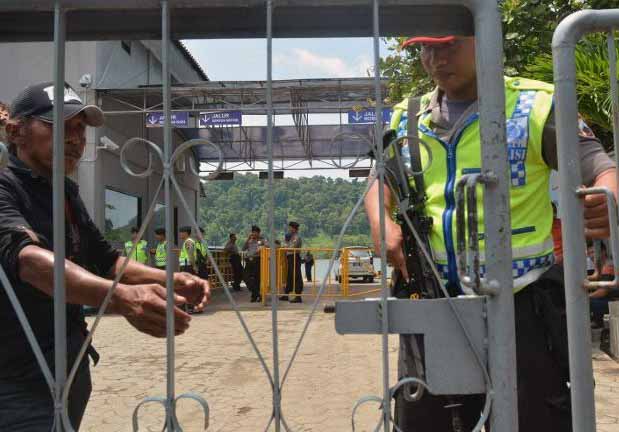
The ICJ condemns the executions of four persons in Indonesia. The ICJ vigorously calls on the Government of Indonesia to impose an immediate moratorium and take steps towards the abolition of the death penalty in the country.
“The execution of these four persons is reprehensible. Indonesia should stop further executions,” said Sam Zarifi, ICJ’s Regional Director for Asia and the Pacific.
“These executions damage Indonesia’s standing in the international community since they go against the growing international consensus around the world to abolish the death penalty,” he added.
The individuals executed shortly after midnight today were Freddy Budiman (Indonesia), Seck Osmane (Nigeria), Michael Titus Igweh (Nigeria), Humphrey Jefferson Ejike Eleweke (Nigeria).
Indonesia is a current member of the United Nations Human Rights Council, having been first elected in 2006.
The General Assembly resolution that created the Council specifically provides that “members elected to the Council shall uphold the highest standards in the promotion and protection of human rights” (res 60/251, 2006, para 9).
According to the ICJ, one of the persons executed – Michael Igweh – was allegedly tortured by law enforcement authorities to extract his confession.
The Geneva-based organization, on several occasions, has called the Government of Indonesia’s attention to its violations of Article 14 of the International Covenant on Civil and Political Rights (ICCPR), which guarantees the right to a fair and public hearing by a competent, independent, and impartial tribunal established by law. Any reliance on confessions extracted by torture would be a gross violation of the fairness of the trials.
“Because of the irreversible nature of the death penalty, trials in capital cases must scrupulously respect all international and regional standards protecting the right to a fair trial,” Zarifi further said.
The ICJ opposes capital punishment without exception and emphasizes the impact of the executions on the families of those who were executed.
The four persons executed were on a list of 14 people set to be executed soon. The other individuals are: Merri Utami (Indonesia), Zulfiqar Ali (Pakistan), Gurdip Singh (India), Frederick Luttar (Zimbabwe), Agus Hadi (Indonesia), Pujo Lestari (Indonesia), Eugene Ape (Nigeria), Okonkwo Nonso Kingsley (Nigeria), Ozias Sibanda (Nigeria) and Obinna Nwajagu (Nigeria).
The ICJ strongly urges the Government of Indonesia to stop any further executions, immediately impose a moratorium, and take steps towards the abolition of the death penalty.
In December 2014, the UN General Assembly adopted resolution 69/189, affirming for the fifth time that the use of the death penalty undermines human dignity and calling for countries that still maintain capital punishment to establish a moratorium on its use with a view to its abolition.
Contact
Emerlynne Gil, Senior International Legal Adviser of the ICJ, t: +66 840923575 ; e: emerlynne.gil(a)icj.org
Jul 27, 2016 | News
Thailand’s government should immediately stop allowing criminal defamation laws to be used to harass victims and human rights defenders who seek justice for alleged incidents of torture, the ICJ said today.
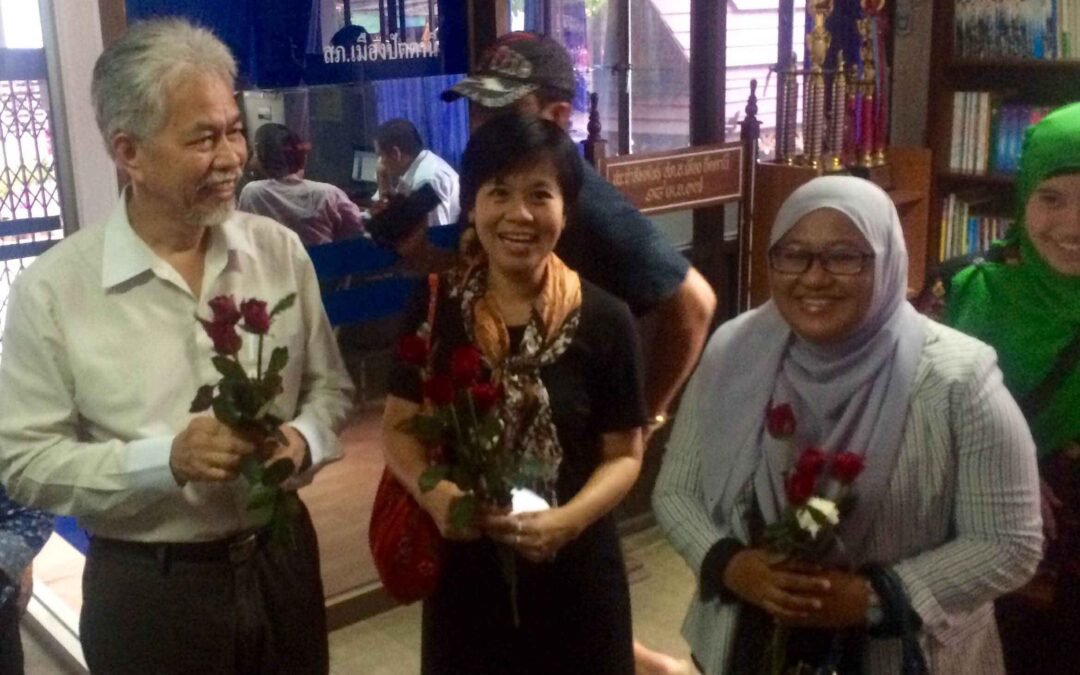
Yesterday, the government charged three human rights defenders (Pornpen Khongkachonkiet, Somchai Homloar and Anchana Heemina, photo) under the criminal defamation provisions of the Penal Code and the Computer Crime Act, for publication of a report that documented 54 cases of alleged torture and other ill-treatment by the Thai authorities in the country’s restive deep South since 2004.
“Thailand must repeal or revise its vague and broad criminal defamation laws to prevent them from being used to silence human rights defenders and journalists working on important public interest issues,” said Wilder Tayler, the ICJ’s Secretary General.
“The imposition of harsh penalties such as imprisonment or large fines under these laws has a chilling effect on the exercise of freedom of expression – a right which is enshrined in treaties to which Thailand is a party and bound to uphold,” he added.
Also yesterday, the government used the same provisions to charge Naritsarawan Kaewnopparat, the niece of an army conscript who was killed after being severely punished by soldiers on a military base.
Although the Thai government has formally acknowledged that the death was caused by torture and compensated the family, none of the perpetrators have been held accountable for the death of Private Wichian Puaksom and have only faced military disciplinary sanctions of 30 days of detention or less, the ICJ reminds.
The case against Ms Kaewnopparat was brought by a military officer who alleges she accused him of being involved in her uncle’s death in the context of the family’s efforts to seek justice.
Last month, Thailand informed the Human Rights Council during its Universal Periodic Review that the Cabinet was considering a draft Act on Prevention and Suppression of Torture and Enforced Disappearance.
It was reported that the Cabinet approved the draft law on 24 May 2016 and would forward it for approval to the National Legislative Assembly.
At the conclusion of the review, Thailand also adopted several recommendations to protect human rights defenders and investigate reported cases of intimidation, harassment and attacks against them.
“Prosecuting people who seek justice for alleged torture goes against the spirit of the proposed legislation,” Tayler said.
“Thai authorities have an obligation to investigate and ensure justice for incidents of torture, but instead they are harassing and intimidating those responsible for exposing these horrendous acts.”
On 17 December 2015, Thailand joined 127 other states at the UN General Assembly in adopting a UN Resolution on human rights defenders.
The Resolution calls upon states to refrain from intimidation or reprisals against human rights defenders.
Contact:
Sam Zarifi, ICJ Asia Pacific Regional Director (Bangkok), t: +66 807819002; e: sam.zarifi(a)icj.org
Thailand-HRDs defamation charges-News-Press releases-2016-ENG (full text of press release in English, PDF)
Thailand-HRDs defamation charges-News-Press releases-2016-THA (full text of press release in Thai, PDF)

Jul 26, 2016
The ICJ and Lawyers Rights Watch Canada (LRWC) today submitted a joint amicus curiae in the criminal defamation proceedings against human rights defender Andy Hall.
The defamation charges have arisen in the context of research he has carried out on allegedly poor labour conditions, and the alleged use of illegal child labour employed in Thailand’s tuna and fruit export industry.
The brief points out that the imposition of harsh penalties such as imprisonment or large fines on a human rights defender risks having a ‘chilling effect’ on the exercise of freedom of expression, which Thailand is bound to protect pursuant to its international legal obligations.
These include international human rights treaties to which Thailand is a party. The brief aims to clarify the nature and scope of these international legal obligations relating to the right of freedom of expression.
Thailand-Amicus Andy Hall-Advocacy-Legal Submission-2016-ENG (full text in English PDF)
Thailand-Amicus Andy Hall-Advocacy-Legal Submission-2016-THA (full text in Thai, PDF)

Jul 26, 2016
The ICJ today submitted to the Human Rights Committee information in preparation for the Committee’s examination of Pakistan’s initial periodic report under the International Covenant on Civil and Political Rights (ICCPR).
During its session in October 2016, the Human Rights Committee will adopt a List of Issues for the examination of the first periodic report of the Pakistan under the ICCPR in July 2017.
In its submission, the ICJ raised issues and suggested questions to be put to the Government of Pakistan concerning:
- The compliance of Pakistan’s counter-terrorism laws with the rights to life, liberty and fair trial, particularly in the context of its “military justice” system and the operation of the Protection of Pakistan Act;
- The continuing practice of enforced disappearances and impunity for law enforcement and military agencies; and
- The compliance of Pakistan’s blasphemy laws with the rights to life; freedom of expression; religion, thought and conscience; and fair trial.
This submission was based on the more detailed findings in recent reports of the ICJ.
PAKISTAN-HRC LOI SUBMISSION-Advocacy-legal submission-2016-ENG (full text in PDF)
Read also:
On Trial: the implementation of Pakistan’s blasphemy laws
Military injustice in Pakistan