Sep 16, 2016 | Advocacy, Non-legal submissions
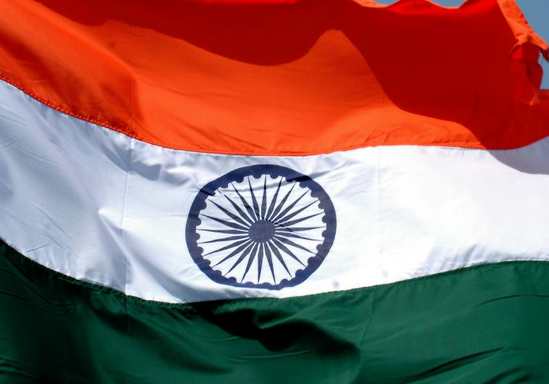
On 16 September 2016, the ICJ made a submission to the Universal Periodic Review of India.
The submission brings to the attention of the members of the Human Rights Council’s Working Group on the UPR issues concerning:
- discrimination and violence based on sexual orientation and gender identity;
- death penalty;
- impunity and accountability;
- freedom of speech, expression and association;
- ratification and implementation of international human rights instruments.
india-icj-upr-submission-advocay-non-legal-submission-2016-eng (full text in PDF)

Sep 15, 2016 | Advocacy, Non-legal submissions
The ICJ, with support of the NGO the Human Rights Commission of Pakistan (HRCP), spoke at the UN Human Rights Council today on the continuing problem of enforced disappearances in Pakistan.
The statement was delivered during an interactive dialogue with the Working Group on Enforced or Involuntary Disappearances.
The ICJ, with support of the Human Rights Commission of Pakistan (HRCP), welcomed the Working Group’s follow-up report on recommendations from its 2012 visit to Pakistan, and stated further as follows:
The practice of enforced disappearance has persisted and expanded since the Working Group’s visit. Previously restricted mainly to Balochistan, the Federally Administered Tribal Areas and Khyber Pakhtunkhwa, enforced disappearances are now a nation-wide phenomenon.
In August 2015, Zeenat Shahzadi, a Pakistani journalist, went “missing” from Lahore, a rare case of alleged enforced disappearance of a woman.
Estimates of the overall number of cases of enforced disappearance vary. The official Commission of Inquiry on Enforced Disappearances has reported nearly 1,400 unresolved cases.
The HRCP, an NGO that documents human rights violations in 60 districts, has reported 370 cases of enforced disappearance since 2014.
Other NGOs claim between 5,000 to 18,000 cases. Even by the most conservative estimates, a significant number of enforced disappearances remain unresolved.
The Government has not brought perpetrators to account in even a single case of enforced disappearance. Rather than effective measures to prevent the practice or to strengthen existing accountability mechanisms, recent legislation actually facilitates enforced disappearances.
In January 2015, Pakistan empowered military courts to try civilians for terrorism-related offences. These courts have since sentenced at least 100 people to death, and at least 12 have been hanged, after grossly unfair trials without possibility of appeal to any civilian courts, including the Supreme Court.
Families allege that some of those tried had been subjected to enforced disappearance by military authorities, and military control over the proceedings leaves the family and victim without effective remedy.
Victims’ groups, lawyers, and activists working on enforced disappearance also continue to face security risks including attacks, harassment, surveillance, and intimidation.
The ICJ and HRCP commend the Working Group for its systematic follow-up, which can have a positive impact, and urge the Working Group to continue to monitor and report on the situation in Pakistan.
The statement may be downloaded in PDF format here: hrc33-oralstatement-disappearances-pakistan-15092016
Sep 12, 2016 | News
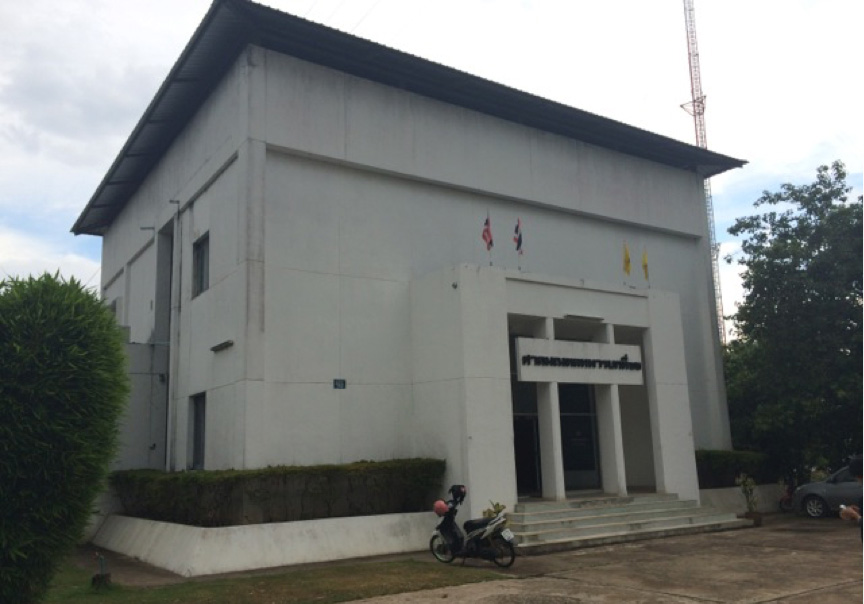
The Thai junta’s Order today phasing out the prosecution of civilians in military courts is a welcome step but the military government must do much more to comply with its international human rights obligations, said the ICJ today.
Head of the National Council for Peace and Order (NCPO) Order 55/2016, dated 12 September 2016 and issued under Article 44 of the Interim Constitution, phases out the heavily criticized practice of prosecuting civilians before military courts for four categories of offences, including offences against internal security; violation of NCPO orders; possession and use of war weapons; and the highly punitive offence of lese majeste.
The Order only applies to offences committed from the date the Order comes into force – today – and not to past or pending cases.
Since the May 2014 coup, at least 1,811 civilians have been tried in Military Courts, based on information the Judge Advocate General’s Department (JAG) provided to Thai Lawyers For Human Rights (TLHR) in July 2016 and covering the period 22 May 2014 to 31 May 2016.
“Almost 2,000 civilians have faced an unjust process and unfair trials before military tribunals, many of whom were prosecuted simply for exercising their rights to freedom of expression and assembly,” said Sam Zarifi, Asia Director at the ICJ. “All pending cases should be transferred to civilian courts and the convictions of all civilians prosecuted in military courts since the 2014 coup should be set aside.”
Head of the NCPO Order 55/2016 also explicitly affirms that the deeply problematic Head of the NCPO Orders 3/2015 (which replaced nationwide Martial Law on 1 April 2015) and 13/2016 shall remain in force.
These Orders prohibit the gathering of more than five people for political purposes; allow for the detention of civilians in military facilities for up to seven days without charge; and provide appointed “Prevention and Suppression Officers” and their assistants, drawn from the commissioned ranks of the Armed Forces, including the paramilitary Ranger Volunteers, with wide-ranging powers to prevent and suppress 27 categories of crimes including against public peace, liberty and reputation, immigration, human trafficking, narcotics, and weapons. The ICJ considers that these orders are not in accordance with Thailand’s international human rights obligations
“Its now crucial for the military to return responsibility for law enforcement to civilian authorities, and ensure they are properly trained and competent,” Zarifi said. “We hope today’s Order is a step toward returning Thailand to the rule of law and respect for human rights.”
Background
Clause 3 of Head of the NCPO Order 55/2016 notes “As appropriate, the Prime Minister may propose to the National Council for Peace and Order to amend this Order.”
Previously, NCPO Announcements 37/2014, 38/2014 and 50/2014 extended the jurisdiction of Thailand’s military courts to four categories of offences, including offences against internal security, violation of NCPO orders, possession and use of war weapons, and lese majeste.
The prosecution of civilians in military courts is inconsistent with Article 14 of the International Covenant on Civil and Political Rights (ICCPR) – to which Thailand is a State Party – which affirms that everyone has the right to a “fair and public hearing by a competent, independent and impartial tribunal established by law.”
The Principles Governing the Administration of Justice through Military Tribunals sets out principles that apply to state use of military tribunals. Principle 5 states “Military courts should, in principle, have no jurisdiction to try civilians. In all circumstances, the State shall ensure that civilians accused of a criminal offence of any nature are tried by civilian courts.”
Contact:
Sam Zarifi, ICJ Asia Pacific Regional Director (Bangkok), t: +66 807819002; e: sam.zarifi(a)icj.org
Kingsley Abbott, ICJ Senior International Legal Adviser, t: +66 9 4470 1345, e: kingsley.abbott(a)icj.org
Download:
thailand-unofficial-translation-head-of-ncpo-order-55_2559-advocacy-2016-eng (full text of Order in English, PDF)
thailand-ncpo-order-55_2559-news-2016-tha (full text of news in Thai, PDF)
Read also:
Thailand: transfer all civilians to civilian courts
Thailand: end prosecution of civilians in military tribunals
Sep 6, 2016
An opinion piece by Emerlynne Gil, ICJ Senior International Legal Adviser in Bangkok, Thailand.
At least 14 people were killed and 71 injured in the bomb blast that rocked Davao City, Philippines, in the late evening of 2 September 2016.
Attacks like the Davao bombing are serious violations of international law, and may constitute crimes under international law.
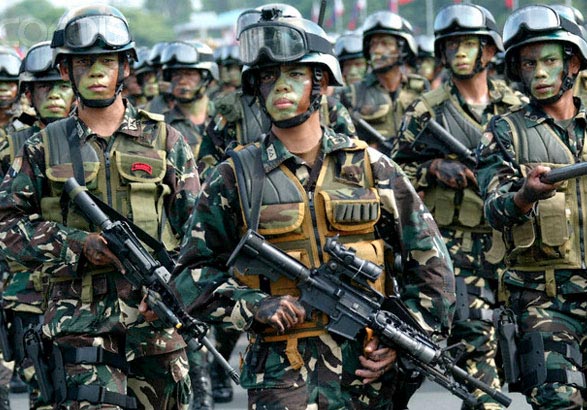
Immediately after the attack, President Rodrigo Duterte announced that he would be using his powers under the Philippine Constitution to deploy the Armed Forces of the Philippines (AFP, photo) “to prevent or suppress lawless violence”.
He used the term “state of lawless violence”, clarifying that the circumstances were such that they would apply to the entire country.
His spokesperson later further clarified that the President would use his Constitutional power to deploy the AFP so that the military could “assist the police to fight crime and violence”.
At this point in time, it is not clear whether the military will be deployed in law enforcement operations solely in the context of countering “terrorism” or whether they will also be used to counter crime and violence in general, including during operations conducted as part of the ongoing “war on drugs” which has killed hundreds of people so far.
Under Article VII Section 18 of the Constitution, President Duterte is empowered to resort to the deployment of the Armed Forces “to prevent or suppress lawless violence”.
President Duterte has vigorously explained that he is not calling for martial law.
Neither does it amount to declaring a state of emergency under Article VI Section 23(2) of the Constitution, a power vested upon Congress.
In any event, even in times of “a public emergency threatening the life of the nation”, there are certain human rights from which no lawful derogation is ever possible, such as the right to life, the right to a fair trial, and the prohibition of torture and cruel and inhuman treatment.
Under international law, it is the duty of the government of the Philippines to take all necessary steps to protect people from acts of terrorism.
In addition, the government has the obligation to bring to justice perpetrators of acts of terrorism, by prosecuting and holding accountable individuals or groups responsible for such acts, not only as a matter of national security, but also to protect the rights and personal security of everyone.
It should be emphasized, however, that whatever measures the Philippine government uses to counter terrorism, they must comply with international law, in particular international human rights and humanitarian law and standards.
Experience from around the world has shown clearly that strengthening the rule of law in line with human rights standards is the most effective and sustainable response to countering terrorism.
Whatever it may be, the announcement that the military would be deployed to assist the police to fight crime and violence is in itself very worrying.
Granting law enforcement powers to the military is always very dangerous, and threatens to breach international standards.
Indeed, a military approach to law enforcement has been proven in many instances to expose the public to a wide variety of serious human rights abuses.
As experienced in many countries, soldiers who have been given policing powers are frequently unable to shed the military paradigm.
This was noted by Christof Heyns, the UN Special Rapporteur on extrajudicial, summary, or arbitrary executions, in his 2013 report on the situation in Mexico where the armed forces were given law enforcement duties as part of the country’s crusade to quash the powerful drug cartels.
The military and police have fundamentally different approaches and roles in discharging their primary tasks.
The military’s raison d’être is subduing the enemy through the use of force, including lethal force.
Law enforcement and policing operations, on the other hand, must take place within and adhere to a human rights framework, where use of lethal force may only be justified when strictly unavoidable to prevent the taking of life.
Any government force engaging in law enforcement operations, regardless of the uniform they wear, are subject to the UN Basic Principles on the Use of Force and Firearms by Law Enforcement Officials—a set of rules that the police are generally trained to follow, but the military are not.
Instead of giving the military a task they are not suited for by involving them in law enforcement, the Philippines may benefit more, especially in the long term, if efforts are focused on strengthening the capacity of the police.
There should be more resources devoted to beefing up the police’s forensic investigation skills and resources, increasing the number of recruits, and giving them sufficient and specialized training in countering organized crime, including countering terrorism.
The capacity of other authorities, such as judges, prosecutors, and other justice officers, should also be strengthened.
Independent courts and prosecutors and a functioning justice system are essential in the context of fighting crime, including terrorism, while simultaneously upholding the rule of law and human rights.
An independent judiciary, most especially, plays a critical role in all of this since it serves as a necessary check on the government as it pursues its own vicious counter-narcotics and counter-terrorism campaign.
President Duterte should know that the duty of the Philippine government to protect people from acts of terrorism does not collide with its obligation to promote and protect human rights.
In fact, the promotion and protection of human rights is a key element in fighting terrorism and is an effective weapon in fostering lasting peace and building a strong democracy.
Aug 31, 2016
An opinion piece by Sean Bain, ICJ Legal Consultant in Myanmar.
In August, Myanmar’s newly elected Government overhauled the senior figures heading the administrative framework for governing Special Economic Zones.
Union Vice-President Henry Van Thio replaces former president Thein Sein as Chairperson of the SEZ Central Body, responsible for determining policies to promote foreign investment and rapid economic growth through the creation of SEZs.
One of his first tasks will be to select members for the SEZ Management Committees.
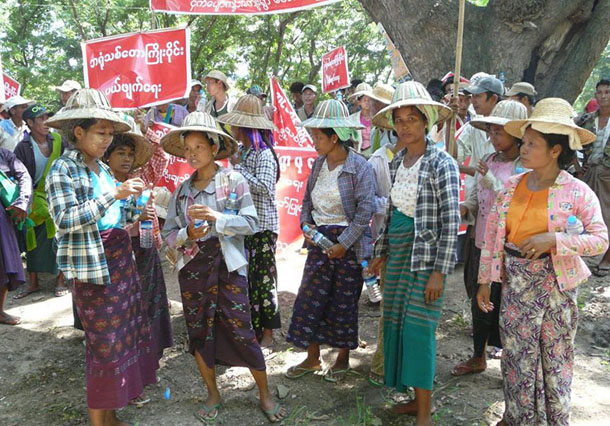
Each SEZ has a Management Committee with an extensive mandate to prepare development plans, propose projects, facilitate investment approvals and, crucially, coordinate resettlement for people displaced by projects in SEZs (picture).
Above these committees is the Central Working Body, where senior officials scrutinise project plans and develop policy advice for implementation. At the top sit the Union Ministers who make up the Central Body.
With the exception of the Thilawa Management Committee, these bodies have been inactive since the change of government in April.
The selection of Management Committees is an opportunity to appoint members who have a good knowledge of human rights law and environmental protection as well as investment law.
And to only select persons who are not tainted by corruption. This will be important to help ensure projects conform to human rights obligations and environmental laws.
And because the legal framework established by the 2014 SEZ Law is not clear enough to be administered in a straightforward manner.
Research by the International Commission of Jurists and others has found that Management Committees implementing SEZs have failed to protect the rights of people whose homes, land and livelihoods have been adversely affected by Myanmar’s three SEZs in Dawei, Thilawa and Kyauk Phyu.
In each SEZ, affected persons have been denied the right to access information about project plans, which the government failed to make transparent.
A lack of meaningful consultation has contributed to poor planning for resettlement, resulting in inadequate arrangements for compensation and livelihoods.
The impact for many has been deterioration in living standards. Under international law, the failure to protect people from deterioration in living standards generally amounts to a violation of rights to food, health and adequate housing.
The human right to an adequate standard of living is enshrined in the International Covenant on Economic, Social and Cultural Rights – which Myanmar has signed and is taking steps to ratify.
International standards, such as the World Bank Policy on Involuntary Resettlement, affirm that people displaced by development projects should be assisted to improve or at least restore their livelihoods to pre-displacement levels.
Management Committees have played a central role in managing the resettlement of communities affected by Myanmar’s SEZs.
But this role is not recognized in law, so there is no formal accountability in cases where committee members fail to protect the rights of affected communities.
Consider for example the provisions guiding the resettlement of people living in the SEZ area.
Article 80 of the SEZ Law requires companies to cover resettlement costs associated with their projects and to ensure that a displaced person’s living standards do not deteriorate.
With the Management Committee, the company should ‘coordinate…as necessary’, but under this Law the responsibility falls on the company, which does not have the protective human rights obligations of the State.
The Management Committee may be directing the process but the company could be held financially liable for substandard implementation.
Article 82 of the SEZ Law requires the Ministry of Home Affairs to take responsibility for land acquisition – another critical stage of any resettlement process.
But the Law does not clarify how the Ministry is to interact with the Management Committee and companies.
Overlapping duties among these actors has meant that duty-bearers are unsure of their duties while rights-holders are largely unaware of their rights.
To add to the confusion, the Law does not specify which of Myanmar’s more than 50 overlapping and conflicting land laws, each with different compensation arrangements, shall apply in SEZs.
This gives rise to inconsistent application of the law both within and across SEZs. A new land law based on the 2016 National Land Use Policy would help clarify this messy legal framework.
The lack of clarity regarding the role of the Management Committees reflects the general problem of uncertainty in many aspects of the SEZ Law, which is often vague, creating uncertainty about the roles and duties of different parties and worrying some investors.
Of particular concern to local residents is that the Law contains three chapters on investor’s benefits but does not mention human rights at all.
By assigning vague powers to authorities while omitting protections for affected communities, the Law codifies power imbalances in Myanmar.
This imbalance is aggravated by the general lack of accountability and access to justice for victims of human rights abuses in Myanmar.
The SEZ Law should be amended to clarify the duties of Management Committees including its obligations to respect, protect and fulfil human rights.
Investment revenues from SEZs should finance increased resources for the commissions and departments responsible for enforcing human rights and environmental standards.
These amendments are consistent with the government’s priorities of economic development in line with land rights, and should be considered before approving new investments in SEZs.
Reforming the SEZ Law would be a critical step toward ensuring that rights violations in SEZs are not repeated under the NLD’s watch.
In the meantime, the performance of SEZ Management Committees will significantly impact upon the ability of the Government to uphold its State duty to protect human rights and provide access to remedy for those living in the SEZ areas.
The Central Body must choose Management Committee members carefully.