May 13, 2016 | News
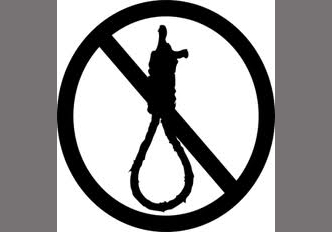
The ICJ and other human rights organizations condemn the imminent executions of Kho Jabing in Singapore and at least 15 individuals which apparently includes, 4 Chinese nationals, 2 Nigerians, 2 Zimbabweans, 1 Senegalese, 1 Pakistani and 5 Indonesian nationals in Indonesia.
The organizations call on the authorities of the two countries to halt the impending executions.
On 12 May 2016, the family of Kho Jabing, a Malaysian national on death row in Singapore, received a letter from the Singapore Prisons informing them that he would be executed on 20 May 2016. Kho Jabing was convicted of murder in 2011.
Of particular concern is the fact that there was a lack of unanimity in sentencing Kho Jabing to death, which demonstrates that reasonable doubt exists as to whether he deserved the death penalty.
As regards the imminent executions that will be taking place in Indonesia, Indonesia would contravene her own international obligations under the International Covenant on Civil and Political Right by executing these individuals.
The Association of South East Asian Nations Member States (“ASEAN”), including Singapore and Indonesia, have continuously emphasized the importance of the rule of law and the protection of rights.
The death penalty therefore stands out as an aberration.
In December 2014, the United Nations General Assembly adopted its latest resolutions calling on all States to adopt a moratorium on the use of the death penalty, with a view towards abolition.
A record number of 117 Member States supported the Resolution.
Regrettably, Indonesia abstained and Singapore voted against the Resolution.
The ASEAN Member States must use the opportunity presented by this Resolution to align themselves with the global movement towards abolition.
Singapore has recently undergone its second Universal Periodic Review in January 2016.
The continued use of the death penalty was one of the key highlights of the review, with Singapore receiving over 30 recommendations related to the death penalty, including recommendations to abolish the death penalty.
In 2015, Indonesia, a United Nations Human Rights Council Member until 2017, executed 14 individuals convicted of drug-related offences amid strong international opposition.
The imminent executions would further damage Indonesia’s human rights record and erode her standing in the international community.
The death penalty has no place in the 21st Century.
Not only is there a real possibility of wrongful executions, it deprives inmates of their life and dignity, and creates new classes of victims.
We strongly urge the governments of Singapore and Indonesia to halt the upcoming executions, immediately impose a moratorium on the use of the death penalty and take meaningful steps towards its eventual abolition.
List of signatories:
Anti-Death Penalty Network Asia (ADPAN)
Center for Prisoner’s Rights Japan (CPR)
Community Action Network (CAN, Singapore)
Free Community Church (Singapore)
Function 8 (Singapore)
MADPET (Malaysians Against Death Penalty and Torture)
Maruah (Singapore)
International Commission of Jurists (ICJ)
Journey of Hope
Legal Aid Community (LBH Masyarakat, Indonesia)
Murder Victims’ Families for Human Rights (MVFHR)
Ocean
Pusat Studi Hukum dan Kebijakan Indonesia (The Indonesian Center for Law and Policy Studies)
Reprieve Australia
Sayoni (Singapore)
Singapore Anti-Death Penalty Campaign (SADPC)
Suara Rakyat Malaysia (SUARAM)
Taiwan Alliance to End the Death Penalty (TAEDP)
The Commission for the Disappeared and Victims of Violence (KontraS, Indonesia)
The Indonesian Center for Law and Policy Studies (PSHK, Indonesia)
The Institute for Criminal Justice Reform (ICJR, Indonesia)
The Institute for Policy Research and Advocacy of Indonesia (ELSAM)
The National Human Rights Society, Malaysia (HAKAM)
Think Centre Singapore
We Believe in Second Chances (WBSC, Singapore)
Contact:
Sam Zarifi, ICJ Asia-Pacific Director, t: +66-807-819-002; e: sam.zarifi(a)icj.org

May 9, 2016 | News
Bangladesh President Abdul Hamid must stay the execution of opposition political leader Motiur Rahman Nizami, said the ICJ today.
On 5 May 2016, the Supreme Court of Bangladesh dismissed a petition by Motiur Rahman Nizami to review its previous decision confirming his death sentence.
He is now at imminent risk of execution.
“Bangladesh must stay this execution, and end its continued and unlawful use of the death penalty,” said Sam Zarifi, ICJ’s Asia-Pacific Director. “The death penalty is not justice and is the ultimate form of cruel and inhuman punishment.”
Motiur Rahman Nizami, a leader of the Jamaat-e-Islami party, was found guilty of crimes committed during the 1971 war for independence in Bangladesh, including genocide, torture, and the murder of intellectuals, and sentenced to death by the International Crimes Tribunal (ICT) in October 2014.
The Supreme Court confirmed this decision and sentence on appeal earlier this year, following which Motiur Rahman Nizami filed his review petition.
Thus far, four individuals have been executed based on convictions by the Bangladesh International Crimes Tribunal: Salahuddin Quader Chowdhury and Ali Ahsan Mohammad Mujahid were executed in November 2015; Muhammad Kamaruzzaman was executed in April 2015; and Abdul Qader Mollah was executed in 2013. Several others have been sentenced to death.
“The perpetrators of the atrocities committed during the 1971 war for independence must be brought to justice and held to account for their crimes,” said Zarifi.
“However, another execution on the basis of a flawed trial that is inconsistent with international human rights standards undermines justice, and must be stopped,” he added.
Bangladesh is party to most of the principal human rights treaties, including the International Covenant on Civil and Political Rights, which obliges it to respect the right to a fair trial.
The ICJ has previously raised concerns that trials before the ICT are not in compliance with Bangladesh’s international legal obligations, and international standards for fair trials.
According to the ICJ, there are serious procedural flaws at all stages: pre-trial release has been routinely and arbitrarily denied; witnesses have been abducted and intimidated; and there have been credible allegations of collusion between the Government, prosecutors and judges.
Background information
In a statement on 8 April 2016, the UN Office of the High Commission of Human Rights reaffirmed that trials before the ICT in Bangladesh did not met international standards of fair trial and due process, and that the imposition of a death sentence in such circumstances constitutes a violation of the right to life.
The ICJ opposes capital punishment in all cases without exception. The death penalty constitutes a violation of the right to life and the right not to be subjected to cruel, inhuman or degrading punishment.
In December 2014, the UN General Assembly adopted a resolution, for the fifth time since 2007, emphasizing that that the use of the death penalty undermines human dignity and calling on those countries that maintain the death penalty to establish a moratorium on its use with a view to its abolition.
A majority of 117 UN Member States voted in favor of a worldwide moratorium on executions as a step towards abolition of the death penalty.
May 9, 2016
The ICJ and other organizations urge the Thai authorities and several mining companies to drop legal proceedings against community-based human rights defenders and to strengthen mechanisms to protect human rights defenders and ensure accountability for human rights abuses.
Thailand-Joint Statement Accountability-Advocacy-open letters-2016-ENG (full text in PDF, English)
Thailand-Joint Statement Accountability-Advocacy-open letters-2016-THA (full text in PDF, Thai)

May 9, 2016 | News
The ICJ is deeply concerned at the recent legal harassment of several Cambodian human rights defenders and perceived political opponents, which raises serious questions as to the impartiality of the investigators, prosecutors and judges involved.
The ICJ calls on the Government to immediately conduct an independent review of the decision to pursue these cases, to end the prosecution of those who have been charged if the allegations are found to be groundless or the proceedings to have been unlawful or abusive, to cease the use of judicial and prosecutorial processes to harass and intimidate human rights defenders and perceived political opponents, and to respect its international obligations under the Convention on the Privileges and Immunities of the United Nations.
“The decision to proceed with these cases should be subject to a careful and independent review and any charges that have resulted must be dropped if the allegations are found to be without merit or have been carried through unlawful or abusive procedures,” said Kingsley Abbott, International Legal Adviser for Southeast Asia with the ICJ.
“The strong appearance of bias present in these cases flies in the face of the absolute right of all accused to have their case considered by independent and impartial prosecutors and judges at every stage of the process,” he added.
The different proceedings all stem from allegations centered on an alleged affair between Khom Chandaraty (also known as Srey Mom) and Kem Sokha, acting leader of the opposition Cambodia National Rescue Party (CNRP).
After a voice recording appeared on social media, allegedly of a conversation between them, the Cambodian Counter-Terrorism Directorate of the Government’s Central Directorate for Security “invited” Srey Mom for questioning, which prompted her to seek human rights assistance from a leading Cambodian NGO, the Cambodian Human Rights and Development Association (ADHOC).
On 11 March 2016, the Counter-Terrorism Directorate questioned Srey Mom. She denied the suggestions she had a relationship with Kem Sokha and that she was the female voice on the recording.
On 19 April 2016, after having met with ADHOC on a number of further occasions, Srey Mom was asked in a closed session with a prosecutor at the Phnom Penh Municipal Court to answer allegations of having provided false testimony and of having engaged in prostitution.
On this occasion, Srey Mom admitted to a relationship with Kem Sokha.
On 22 April 2016, Srey Mom alleged in an open letter that ADHOC staff had attempted to persuade her to lie to the authorities.
On 2 May 2016, an Investigating Judge in Phnom Penh charged four staff members of ADHOC, Nay Vanda, Ny Sokha, Yi Soksan, and Lem Mony, with “bribery of a witness”.
A former staff member of ADHOC, Ny Chakrya, and a staff member of the Cambodia Office of the High Commissioner for Human Rights (OHCHR), Sally Soen, were also charged with being accomplices, notwithstanding Sally Soen’s immunity from prosecution under the Convention on the Privileges and Immunities of the United Nations.
The allegation of bribery appears to relate to the fact that ADHOC reportedly provided Srey Mom with a small sum of money to cover food and transport costs, including to attend questioning by judicial authorities.
“While Cambodia has a positive legal duty under international law to protect human rights defenders from attacks arising out of their work, these proceedings appear to be aimed at intimidating and silencing Cambodian civil society and are the latest in a series of laws and actions directed against them,” said Abbott.
Last year, the Government passed the Law on Associations and NGOs (LANGO), which Abbott stated would “severely restrict the ability of members of civil society to exercise their rights to freedom of association and expression which Cambodia has a duty to protect under its international obligations.” Abbott further stated that the Governments intention was to “…weaken the impact of NGOs, including human rights defenders.”
Under Article 12 of the United Nations Declaration on Human Rights Defenders, States have an obligation to take all necessary measures to ensure the protection of human rights defenders, including against any threats, pressure, retaliation or arbitrary action as a consequence of the legitimate exercise of their rights under the Declaration.
In other proceedings, the Phnom Penh Municipal Court summoned Kem Sokha to answer allegations of criminal defamation and two other members of the CNRP, Pin Ratana and Tok Vanchan, have been questioned about allegations of prostitution.
Political commentator, Ou Virak, has been summoned to appear in the Phnom Penh Municipal Court on 12 May 2016 to answer allegations of criminal defamation for expressing the view that the ruling Cambodian Peoples Party (CPP) was exploiting the alleged affair between Kem Sokha and Srey Mom.
On 24 April 2016, a CNRP commune chief, Seang Chet, was arrested and detained on charges of bribery after Srey Mom alleged Seang Chet had attempted to pay her mother US $500 to encourage her to deny the affair.
Read also:
Cambodia: the ICJ condemns Senate’s approval of draft Law on Associations and NGOs
Cambodia: approved NGO law poised to hobble the work of civil society
Cambodia: withdraw draft law on associations and non-governmental organizations – joint letter
Cambodia: ICJ and other rights groups urge end to NGO law
Contact
Kingsley Abbott, ICJ’s International Legal Adviser, t: +66 94 470 1345, e: kingsley.abbott(a)icj.org

May 6, 2016
The ICJ, Lawyers’ Rights Watch Canada (LRWC) and Lawyers for Lawyers (L4L), wrote a joint-letter today to the Lawyers Council of Thailand (LCT) – the country’s representative body of lawyers – expressing concern over two cases of intimidation and harassment against human rights lawyers.
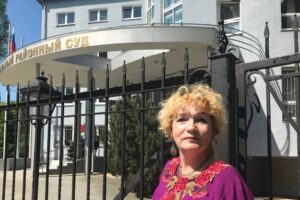
Lawyers, Sirikan Charoensiri (photo) and Benjarat Meethien, both face criminal proceedings – seemingly as a result of the legal representation they have provided in so-called ‘political’ cases.
The letter draws attention to the UN Basic Principles on the Role of Lawyers which specifically call on governments to ensure that lawyers are protected from ‘intimidation, harassment or improper interference’ (Principle 16).
It also reminds the LCT of their express mandate to ‘promote the unity and integrity of the Members; and promote and manage [their] welfare’.
The ICJ, LRWC and L4L urgently called on the LCT to take action and investigate the circumstances in these cases.
Thailand-Letter to LCT-Advocacy-Open letters-2016-ENG (full text in PDF, English)
Thailand-Letter to LCT-Advocacy-Open letters-2016-THA (full text in PDF, Thai)