Nov 5, 2012
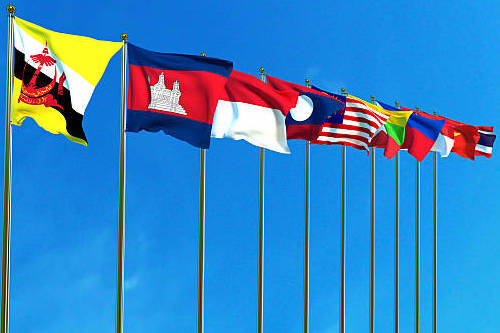
 In a letter sent today to ASEAN Heads of State, the ICJ and other leading international human rights organizations called for the postponement of the adoption of the ASEAN Human Rights Declaration.
The groups are pointing out that in its current form, the Declaration falls short of existing international human rights standards and risks creating a sub-standard level of human rights protection in the region.
Of particular concern are the General Principles in the Declaration. Under General Principles 6,7, and 8 of the current draft, enjoyment of rights is to be “balanced with the performance of duties”, subjected to “national and regional contexts” and to considerations of “different cultural, religious and historical backgrounds.” Also, all the rights in the Declaration may be restricted on a wide array of grounds including “national security” and “public morality”.
“The idea that all human rights are to be ‘balanced’ against individual responsibilities contradicts the very idea of human rights agreed upon in the 1948 Universal Declaration of Human Rights, which was affirmed by all States, including ASEAN Member States, in 1993 in the Vienna Declaration and Programme of Action,” said Wilder Tayler, Secretary General of the International Commission of Jurists. “Balancing human rights with responsibilities turns on its head the entire raison d’être of human rights,” he further emphasized.
Furthermore, international law prohibits governments from derogating under any circumstances from a broad set of rights. Other rights can only be subject to specific, narrow, and clearly defined restrictions in certain circumstances. Finally, international law imposes on all ASEAN Member States the duty, regardless of their political, economic and cultural systems, to respect and protect all human rights and fundamental freedoms.
“It is clear that in its current form the Declaration purports to make a significant and worrying departure from existing international human rights law and standards, including those found in other regional human rights instruments, in Europe, the Americas, and Africa,” said Souhayr Belhassen, President of the International Federation for Human Rights.
“Unless significant changes are made to the text, ASEAN will be adopting in 2012 a Human Rights Declaration that grants ASEAN Member States additional powers to violate human rights instead of providing the region’s people with additional safeguards against such violations”, said Michael Bochenek, Director of Amnesty International’s Law and Policy Programme.
The organizations strongly urged in their letter that ASEAN leaders should return the draft text to the ASEAN Intergovernmental Commission on Human Rights and send clear instructions to redraft it, in a transparent, deliberate and inclusive process, in full consultation with all stakeholders, so that it does not fall below internationally recognized human rights law and standards.
Contact:
Emerlynne Gil, International Legal Advisor, International Commission of Jurists, Bangkok Office; m: +66 840923575, email: emerlynne.gil@icj.org

Nov 1, 2012 | News, Publications, Reports
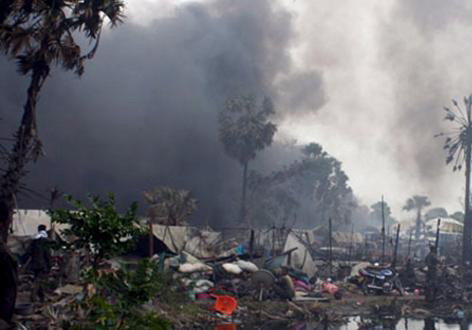 The Sri Lankan government must immediately cease its assault on the independence of the judiciary, the ICJ said in a new report.

Oct 31, 2012
 The ICJ has brought to the attention of the Universal Periodic Review (UPR) mechanism issues concerning the independence and impartiality of the judiciary in Bangladesh, as well as other key issues to be addressed in the review of Bangladesh’s compliance with international human rights.
From 22 April to 3 May 2013, the Human Rights Council’s Working Group on the UPR will consider the situation of human rights in Bangladesh. Ahead of the Working Group’s review of Bangladesh, the ICJ has made a submission in which it has made suggested recommendations concerning:
- Independence and impartiality of the judiciary;
- Lack of transparent appointment procedures for public prosecutors;
- Use of the Presidential pardon in cases concerning allegations of gross human rights violations; and
- Bangladesh’s engagement with international human rights instruments and mechanisms.
Bangladesh-UPR16-StakeholderSubmission-legal submission (2012) (download full submission in PDF)
Bangladesh-UPR16-AdvocacyNote-NonLegalSubmission-2013 (download advocacy note in PDF)
Bangladesh-UPR16-ComparisonChart-NonLegalSubmission-2013 (download comparison with first cycle UPR of Bangladesh)

Oct 31, 2012
At the invitation of the Government of Taiwan and Covenant Watch, a coalition of NGOs in Taiwan, the ICJ led a three-day training programme in Taipei, Taiwan, on the UN treaty body periodic reporting process.
As a territory not recognised by the international community as a sovereign state, Taiwan is not a member of the United Nations in its own right. The UN Secretary General has consequently been unable to accept Taiwan’s deposit of instruments of accession to the International Covenant on Civil and Political Rights (ICCPR) and the International Covenant on Economic, Social and Cultural Rights (ICESCR). The UN Human Rights Committee and Committee on Economic, Social and Cultural Rights have similarly been unable to review Taiwan’s initial reports under the ICCPR and ICESCR.
Taiwan has therefore initiated a parallel review process, whereby two Committees of Independent Experts will review the implementation of the provisions of the ICCPR and ICESCR in Taiwan. The ICJ delivered training in Taipei from 29 to 31 October 2012 on the treaty body review process and the way that Taiwanese civil society and the Government may engage in this parallel review process.
Taiwan-TBReviewProcess-TrainingAgenda (2012) (download training agenda in PDF)
Oct 11, 2012
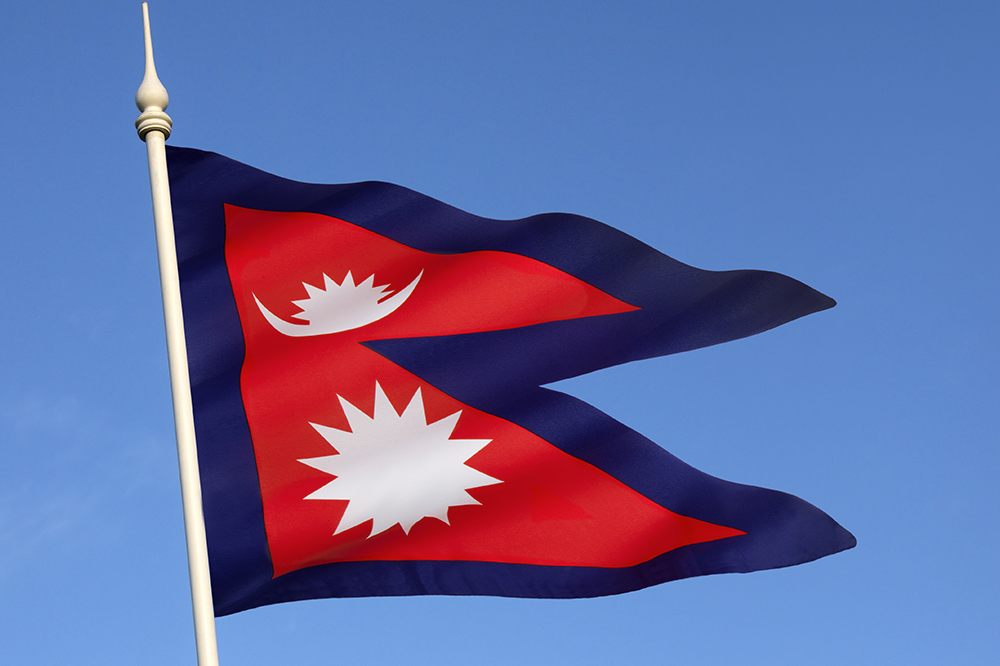
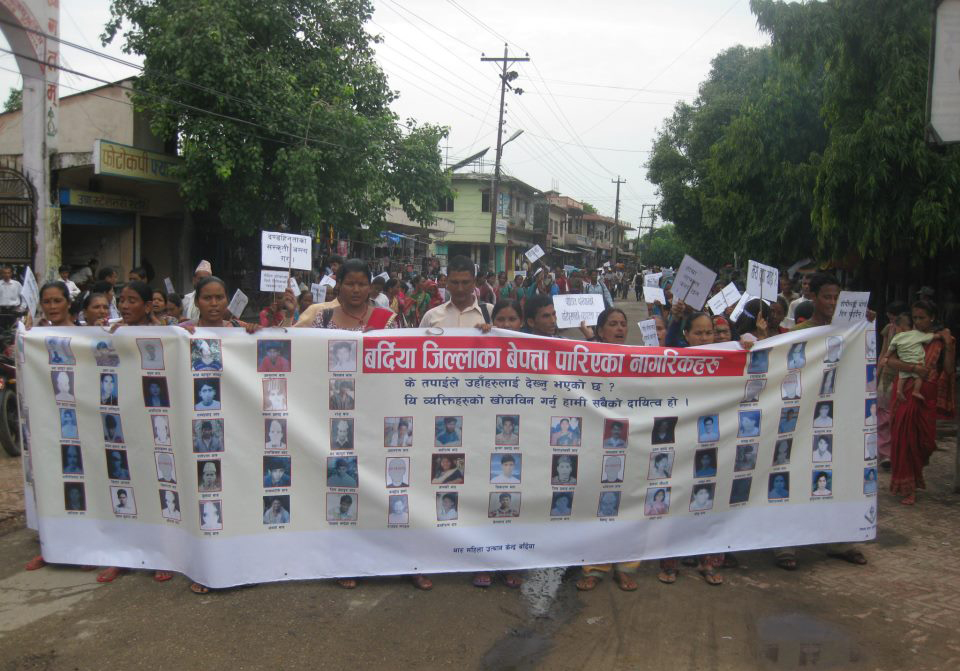 Nepal’s government must ensure accountability for the thousands of violations perpetrated by security forces and Maoists during the country’s civil war, as documented in a new report by the UN, the ICJ said today.
In a Briefing Paper “ Compromising Justice: Nepal’s Proposed Ordinance on Commission on Disappeared Persons, Truth and Reconciliation (2012)” issued today, the ICJ highlighted recent efforts by the Nepali government to undermine accountability by weakening proposed transitional justice mechanisms and promoting suspected violators.
The ICJ also welcomed the report by the Office of the High Commissioner on Human Rights (OHCHR) conflict-era human rights violations, released against the direct protest of the Government of Prime Minister Baburam Bhattarai. The “OHCHR Conflict Report” documents approximately 9000 violations, with responsibility pointing to both the State and the Maoists.
“This sobering report chronicles the devastating human impact of the human rights and humanitarian law violations that continue to burden the victims and their families,” said Sam Zarifi, ICJ’s Asia director. “We applaud the OHCHR but also urge it and the international community to not relegate this report to the shelf, but to ensure that it is introduced at all levels as a basis for advocating for truth, justice, and reparations.”
“This report is all the more important as it comes against the backdrop of systematic efforts by Nepal’s government to avoid accountability and in fact to reward some of those suspected of serious violations,” Zarifi said.
ICJ’s Briefing Paper “ Compromising Justice: Nepal’s Proposed Ordinance on Commission on Disappeared Persons, Truth and Reconciliation (2012)” highlighted the serious shortcomings of a proposed Ordinance issued by the Cabinet that backtracks on previous commitments to justice included in the country’s 2006 Comprehensive Peace Accord, the 2007 Constitution, as well as decisions of the Supreme Court.
ICJ reiterated its strong condemnation of the promotion of Kuber Singh Rana to IGP of the Nepal Police 13 September 2012, and of Raju Basnet to Brigadier General 4 October 2012. Both men have been implicated by the country’s Supreme Court in decisions ordering full investigations of their culpability.
“Instead of supporting the Nepali criminal justice system and the promised transitional justice mechanisms, the Nepali government is actively reneging on its promises to the Nepali people to provide truth, accountability and reconciliation,” Zarifi said.
As reaction has mounted against the promotions by national and international actors, the ICJ also noted with concern the growing climate of intimidation faced by judges, lawyers and human rights defenders.
There are credible reports of intimidating phone calls against those contesting the promotions.
Public demonstrations on 7 and 9 October 2012 were met with unnecessary use of force by the police, including lathi charges resulting in over a dozen injuries.
“Nepal’s international supporters should press the government to meet its commitments and its obligations under international law,” Zarifi said. “Meanwhile, all countries have an obligation to cooperate in investigation and prosecution of any individuals facing credible allegations of serious violations of international human rights law and humanitarian law, including prosecution of suspected perpetrators under the doctrine of universal jurisdiction.”
Contact:
In Kathmandu, for ICJ, Govinda Sharma: t +977-985-106-1167
In Bangkok, for ICJ Asia-Pacific, Sam Zarifi: t +66-807-819-002
Nepal-TJ Ordinance accountability-analysis brief-2012