Mar 10, 2020 | Advocacy, Non-legal submissions
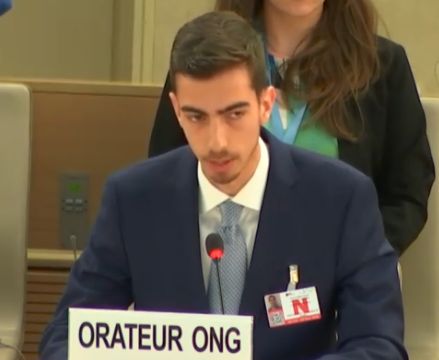
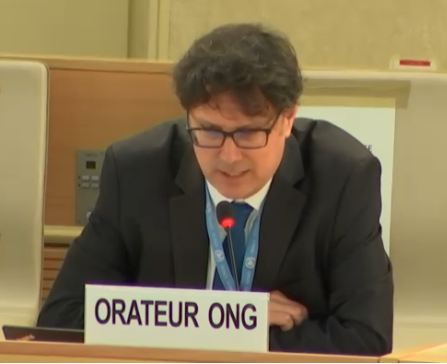
The ICJ today spoke in the final interactive dialogue with the current UN Special Rapporteur on human rights in Myanmar, at the Human Rights Council in Geneva.
The statement read as follows:
“The ICJ salutes what the current Special Rapporteur has achieved in the mandate despite withdrawal of cooperation by the Government, and shares the concerns expressed in this final report (A/HRC/43/59), particularly the urgent need to establish peace and security in Rakhine State without compromising human rights law and international criminal accountability for gross human rights violations.
The ICJ recalls the obligations of Myanmar under international human rights law. The Government must ensure that human rights are not violated in the context of conflict with the Arakan Army. The longstanding internet shutdown in Rakhine and Chin States must be ended. Due process rights of persons arrested must be respected.
The ICJ also welcomes the Order of provisional measures in the case brought by The Gambia at the International Court of Justice. Myanmar must comply and prevent further acts of genocide.
The Myanmar Government must also ensure accountability for mass atrocities. In a briefing paper last year, the ICJ proposed Constitutional, legislative and institutional reform of Myanmar’s National Human Rights Commission to enable it to independently and effectively investigate allegations of human rights violations. The Myanmar Government should also cooperate with the Independent Investigative Mechanism for Myanmar and the International Criminal Court.
The ICJ would like to ask: based on your experience in the mandate, how can States best strengthen support for the mandate and the various international accountability initiatives underway?”
Mar 9, 2020 | News
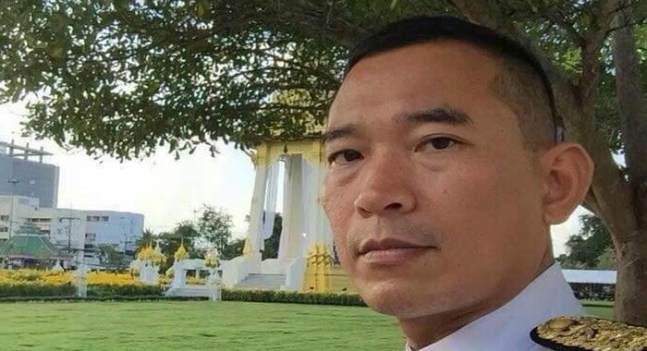
The ICJ today expressed regret at the death of Judge Khanakorn Pianchana, who committed suicide on 7 March 2020. Judge Khanakorn was widely known after an attempted suicide in October 2019 following the delivery of a verdict which he claimed was interfered by a senior judge.
Judge Khanakorn previously served as Vice Presiding Judge of the Yala Provincial Court in Thailand’s restive southern region. He passed away on 7 March 2020 at his home in Chiang Mai province.
Background
Before the suicide, Judge Khanakorn posted a two-page letter on his Facebook page, in which he claimed that he had been subject to disciplinary proceeding and had criminal charge brought against him after he had publicized his concerns about interference by a superior judge into certain rulings. These involved five individuals detained and interrogated under special security laws in southern Thailand.
In October 2019, Judge Khanakorn claimed in a public letter that he had been ordered by a senior judge to rewrite a ruling in which he exonerated the five individuals charged with murder, for lack of evidence. Following his delivery of the verdict, he shot himself in the chest in a courtroom at Yala Provincial Court.
After his first suicide attempt, according to the Office of the Judiciary’s Press Release dated 18 November 2019, the Judicial Commission initiated an investigation against him for violations of provisions on discipline of judicial officials. He was subsequently transferred to the Court of Appeal Region 5 in Chiang Mai, at which time he was further investigated for committing criminal offences under the Firearms, Ammunition, Explosives, Fireworks and Imitation Firearms Act.
On 7 March 2020, according to the interview gave by Secretary-General of Office of the Judiciary, an initial investigation of the Judicial Commission found that there had been no improper interference, and the disciplinary actions and the criminal charges that are brought against Judge Khanakorn were based on his actions for carrying a gun into court and using the gun to attempt suicide.
Contact
Frederick Rawski, ICJ Asia-Pacific Director, t: +66 64 478 1121; e: frederick.rawski(a)icj.org
Download
To download the statement in Thai, click here.
Mar 9, 2020 | Advocacy, Non-legal submissions
The ICJ today urged the UN to more effectively protect and promote human rights in Myanmar, and the Human Rights Council to monitor implementation of the Rosenthal Inquiry recommendations to this end.
The statement, delivered in a discussion of the Secretary-General’s oral update on the involvement of the United Nations in Myanmar, read as follows:
“The ICJ welcomes the report of Mr. Gert Rosenthal entitled, ‘A Brief and Independent Inquiry into the Involvement of the United Nations in Myanmar from 2010 to 2018.’
The ICJ concurs with the conclusions, including that the UN suffered from ‘systemic and structural failures’ that effectively prevented it from stopping or mitigating the atrocities in Rakhine State in 2016 and 2017.
We welcome the initiative to brief the Council on the report, which the ICJ and other non-governmental organizations recommended to the Secretary-General in a letter last year.
The ICJ further urges that concrete steps be taken to:
1) improve coordination at all levels of the UN, including the adoption of a common strategy and agenda among agencies at the country level to promote accountability for human rights violations, which would also advance the Call to Action by the Secretary General;
2) hold UN officials responsible for failures to mitigate or prevent acts of violence constituting crimes under international law; and
3) publish annual progress reports until the recommendations are fully implemented.
The need for a concerted and system-wide commitment to promote and protect human rights in Myanmar is as urgent as ever given the intensification of armed conflict in Rakhine State and the potential for conflict as national elections approach.
We urge the Council to monitor implementation of the reforms identified in the Rosenthal report.”
Mar 6, 2020 | Advocacy, Non-legal submissions
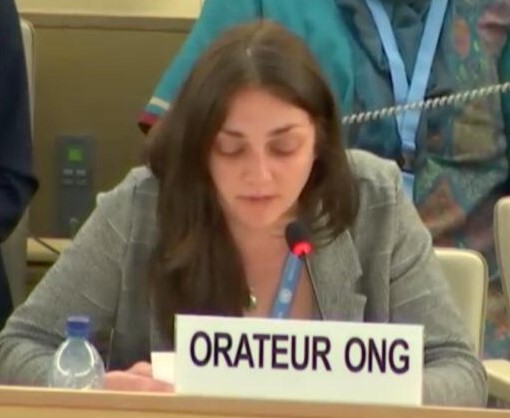
Speaking at the UN Human Rights Council, the ICJ today urged States to decriminalize consensual sexual relations, including between people of the same sex.
The statement, delivered during an interactive dialogue with the UN Special Rapporteur on the Right to Privacy, read as follows:
“The ICJ welcomes the report of the Special Rapporteur on privacy, particularly the recommendation to repeal laws criminalizing consensual sexual activity, cluding between people of the same sex.
The ICJ agrees that criminalization of consensual same-sex relations violates international law and standards, including the rights to privacy, non-discrimination and equal protection.
The ICJ advocates for the abolition of laws that criminalize consensual sexual relations – including between people of the same sex – that still exist in many countries around the world.
In Indonesia, for example, a draft Penal Code currently includes a provision that would criminalize “extramarital” sexual acts between consenting persons, including persons of the same sex. We note that the draft provision may superficially appear to be gender neutral because it would penalize both men and women, but studies have shown that, in practice, criminalization of “adultery” and extramarital sexual relations typically results in disparate, discriminatory impacts against women and girls. Malaysia and other States that are former British colonies in Asia, likewise, have similar provisions in their criminal laws penalizing consensual sexual relations.
Like the Special Rapporteur, the ICJ in urges States to repeal laws that criminalize consensual sexual activity – including between people of the same sex.”

Mar 4, 2020 | News
Today the ICJ called on the Malaysian authorities to cease investigations of human rights defenders engaging in peaceful protest.
The ICJ further said that the investigations pose a threat to the exercise of the right to expression and peaceful assembly, which is protected under international law and the Malaysian Federal Constitution.
“These investigations have the effect of harassing and intimidating human rights defenders and pro-democracy activists and look worryingly like a new crackdown on dissent,” said Frederick Rawski, ICJ Asia Pacific Director.
Malaysian law enforcement authorities have opened investigations against Dato’ Ambiga Sreenevasan, an ICJ Commissioner, and nineteen (19) other individuals including human rights defenders Fadiah Nadwa Fikri, Dobby Chew, Amir Abd. Hadi and Nalini Elumalai. They are being investigated for violations of the deeply problematic Sedition Act 1948 and the Peaceful Assembly Act 2012, in connection with wholly peaceful gatherings held over the past few days that were called attention to the recent, sudden political changes in Malaysia.
The ICJ raised concerns that the laws pursuant to which the investigations are being conducted are inconsistent with international and constitutional human rights law and standards. The Peaceful Assembly Act 2012 imposes onerous requirements to organize a peaceful assembly. Meanwhile, the Sedition Act 1948 contains wide, overbroad definitions of what amounts to a ‘seditious tendency’, placing critical voices at risk.
“International law protects the right to hold peaceful assemblies, with limited exceptions not applicable here,” said Emerlynne Gil, ICJ Senior International Legal Adviser. “The ICJ has repeatedly called on Malaysia to abolish these laws, which impose unjustifiably burdensome restrictions and disproportionate penalties on the exercise of freedom of expression and assembly.”
The UN Special Rapporteur on the rights to freedom of peaceful assembly and of association and other international legal authorities has also said that while some regulation can be appropriate concerning places of protest, “no authorization should be required to assemble peacefully.”
Previous governments have promised to abolish the Sedition Act, including the Pakatan Harapan coalition which pledged to scrap both the Sedition Act and reform the Peaceful Assembly Act as part of their election manifesto in 2018. To date, no such reforms has been undertaken.
The ICJ reiterated its call on the government to abolish the Sedition Act and abolish or reform the Peaceful Assembly Act 2012. The ICJ also called on the Malaysian government to end the use of these laws to harass and investigate persons solely for participation in peaceful protest.
Contact
Emerlynne Gil, Senior International Legal Adviser, International Commission of Jurists, t: +66 2 619 8477 local 203; e: emerlynne.gil(a)icj.org
Background
Malaysian human rights defenders and civil society groups have been organizing peaceful assemblies to express concern over the current political developments. On 2 March 2020, Malaysian police opened investigations into several individuals for alleged violation of the Sedition Act.
Section 4(1) of the Act reads “[a]ny person who… does or attempts to do, or makes any preparation to do, or conspires with any person to do, any act which has or which would, if done, have seditious tendency… shall be guilty of an offence and shall, on conviction, be liable for a first offence to a fine not exceeding five thousand ringgits or to imprisonment for a term not exceeding three years or to both.”
The Peaceful Assembly Act 2012 sets down onerous requirements that must be met in order to carry out a peaceful assembly, including: restrictions on the right to organize or participate in an assembly (Section 4) which includes non-citizens; requirements for a ten day notice of an assembly to the Officer in Charge of the Police District, failure to do so will be punished by a fine not exceeding ten thousand ringgit (Section 9(5)); and broad restrictions and conditions that may be imposed by the Officer in Charge of the Police District at their discretion (Section 15).