Apr 16, 2018 | Advocacy, News, Non-legal submissions
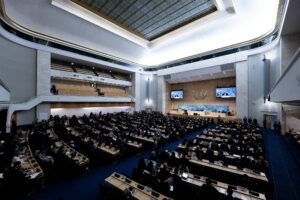
The ICJ and ECRE have presented today to the United Nations Special Rapporteur on the human rights of migrants a submission on access to justice for migrants in Europe.
The submission is an input for the forthcoming report of the UN Special Rapporteur on access to justice for migrants to the UN General Assembly.
The International Commission of Jurists (ICJ) and the European Council on Refugees and Exiles (ECRE) have provided a brief overview of aspects of access to justice for migrants, with a particular focus on asylum seekers and migrant children, in European countries.
The issues dealt with include:
- obstructions to access to justice in relation to access to the territory;
- the undue use of national security exceptions to weaken access to justice in immigration procedures;
- concerns with access to justice in expulsion and detention procedures;
- specific obstacles to access to justice for asylum seekers, including when appealing the rejection of their claims by first instance asylum authorities before a judicial or administrative appeal body;
- specific obstacles to access to justice for undocumented minors.
ICJECRE-NonLegalSubmission-SRMigrants-Access2JusticeEurope4Migrants-2018-ENG (download the submission)
Apr 5, 2018
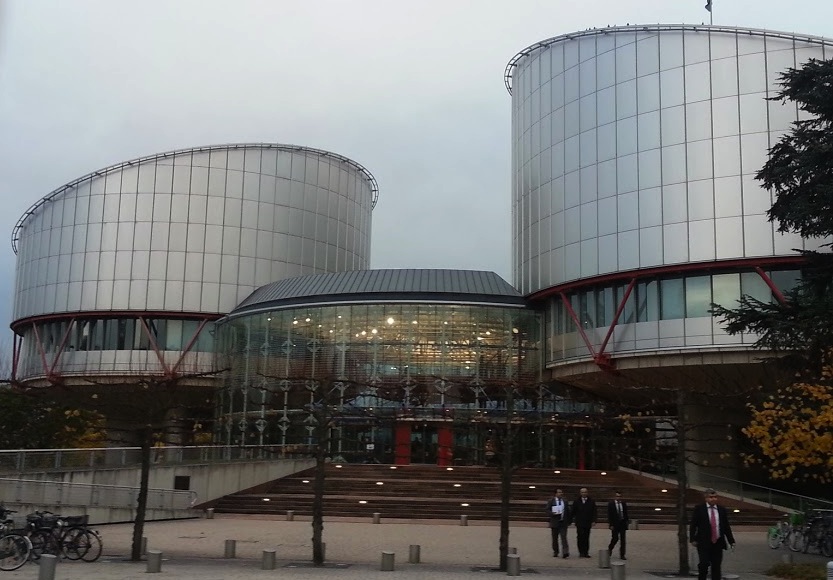
The ICJ, together with other NGOs, has responded to a consultation on how classified documents are taken into consideration before the European Court of Human Rights.
In the submission, the AIRE Centre, Amnesty International, the International Commission of Jurists, REDRESS and the World Organisation Against Torture (OMCT) respond to the Court’s Standing Committee on the Rules of Court’s proposal to amend the Court’s Rules of Procedure by introducing a new Rule 44F.
The organisations urge the Court not to adopt a mechanism whereby the Court could receive and rely on or otherwise take into consideration information not disclosed to the applicant and his or her representative of choice.
The organisations emphasise that the right to an effective remedy for claims of human rights violations incorporates the right of access to a fair procedure and the right of victims and the public to the truth about human rights violations, including serious violations such as torture, enforced disappearances and extra-judicial executions or other unlawful killings.
In cases before the Court, the applicant victim’s interest in disclosure of evidence regarding violations of Convention rights should always outweigh any purported national security or other similar public interests in its non-disclosure.
The submission also analyses and makes recommendations on the specific wording of the proposed new Rule 44 F.
JointSubmission-ECtHR-Rule44F-LegalSubmission-2018-ENG (download the submission)
Mar 28, 2018 | Advocacy, Non-legal submissions
The ICJ today submitted a report to the UN Committee against Torture, calling for recommendations to be made on prevention of and accountability for continued recourse to torture and ill-treatment in Tajikistan.
The ICJ’s submission is made ahead of consideration by the Committee against Torture in April to May 2018 of Tajikistan’s third periodic report on the implementation of its obligations under the Convention against Torture and Other Forms of Cruel, Inhuman or Degrading Treatment or Punishment.
The ICJ’s report draws from an earlier study on Achieving Justice for Gross Human Rights Violations in Tajikistan and calls on the Committee against Torture to make recommendations concerning:
- The obligation to adequately sanction torture;
- The obligation to prevent torture and other forms of ill-treatment, including in places of detention;
- The obligation to investigate allegations of torture and ill-treatment;
- The use of amnesties and pardons for torture;
- The prohibition against the use of evidence obtained by torture;
- The right to complain about torture and ill-treatment; and
- The right of victims to effective remedies and reparation.
Tajikistan-CAT-Advocacy-AlternativeReport-2018ENG (download the ICJ’s submission, in PDF)
Mar 28, 2018 | Адвокаси, Неюридические заявления
Сегодня МКЮ представила доклад Комитету ООН против пыток, в котором содержится призыв к рекомендациям по предотвращению и подотчетности для дальнейшего применения пыток и жестокого обращения в Таджикистане.
Представление МКЮ проводится до рассмотрения Комитетом против пыток в апреле-мае 2018 года третьего периодического доклада Таджикистана о выполнении его обязательств по Конвенции против пыток и других форм жестокого, бесчеловечного или унижающего достоинства обращения или наказания.
В докладе МКЮ говорится о более раннем исследовании, «Обеспечение правосудия в случаях грубых нарушений прав человека в Таджикистане», и призывает Комитет против пыток вынести рекомендации относительно:
- Обязательство адекватно санкционировать пытки;
- Обязательство предотвращать пытки и другие формы жестокого обращения, в том числе в местах содержания под стражей;
- Обязательство расследовать утверждения о пытках и жестоком обращении;
- Использование амнистий и помилований лицами, совершившими пытки;
- Запрет на использование доказательств, полученных в результате пыток;
- Право жаловаться на пытки и жестокое обращение; а также
- Право жертв на эффективные средства правовой защиты и возмещение.
Tajikistan-CAT-Advocacy-AlternativeReport-2018ENG (скачайте представление МКЮ на английском, PDF)

Mar 22, 2018 | Advocacy, Non-legal submissions
Today, the ICJ together with Forum for Human Rights submitted written information to the Committee against Torture ahead of its examination of the periodic report of the Czech Republic.
The two organisations argue that the Czech Republic violates Articles 2, 14 and 16 of the Convention Against Torture, by not ensuring access to a lawyer for children below the age of 15 (the age of criminal responsibility) in the pre-trial stage of juvenile justice proceedings.
1273 children younger than 15 were part of these pre-trial stage proceedings in the Czech Republic in 2017 without access to procedural guarantees, including legal counsel, unlike children aged 15-18 have under national legislation.
Children below the age of criminal responsibility do not benefit from such procedural rights and therefore, during the police questioning, they are typically left without any legal assistance and presence of a lawyer who neither can deter the police from resorting to ill-treatment or other abuses, nor work as a protection for police officers in case they face unfounded allegations of ill-treatment.
This situation constitutes a violation of the obligation to prevent torture or acts of cruel, inhuman or degrading treatment or punishment which do not amount to torture under Articles 2 and 16 of the CAT. Additionally, the Czech Republic fails to ensure access legal counsel for the purposes of an effective remedy under Article 14 of the CAT.
The joint submission aims to inform the 63rd session of the Committee Against Torture in April-May 2018 during which the Sixth periodic report of the Czech Republic will be examined.
Read the full joint submission here:
Czech-Republic-Joint-writteninformation- against-torture-2018-ENG (Full text in ENG, PDF)