Jun 18, 2018 | Адвокаси
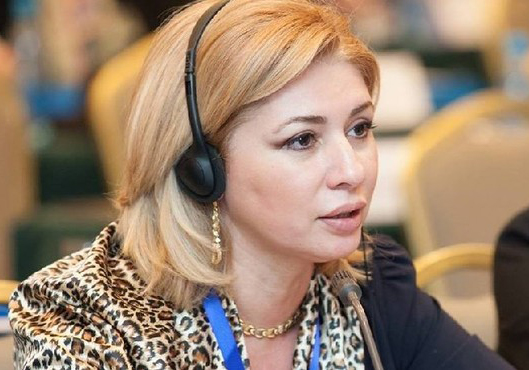
Сегодня МКЮ выразила обеспокоенность в связи с недавним лишением лицензии Ирады Джавадовой, выдающегося адвоката в Азербайджане и бывшего члена Совета Ассоциации юристов Азербайджана.
МКЮ призвала Ассоциацию адвокатов возобновить дисциплинарное производство, чтобы предоставить Ираде Джавадовой возможность полностью представить свое дело в порядке справедливого разбирательства.
МКЮ также призвала Ассоциацию адвокатов реформировать свои дисциплинарные процедуры и практику в целях обеспечения справедливости.
Дисциплинарное разбирательство не должно использоваться в качестве средства преследования адвокатов или репрессий за защиту адвокатов прав человека своих клиентов.
11 июня 2018 года Президиум коллегии адвокатов решил лешить Ираду Джавадову ее лицензии на основании информации, предоставленной лицом, обратившимся за ее юридической помощью (К.М.). Согласно заявлению К.М., Джавадова сделала заявления в средствах массовой информации по делу К.М. без ее согласия и без нотариально заверенной доверенности.
Получив просьбу от матери К.М. спросить о местонахождении ее дочери, в открытом письме Джавадова выступила с озабоченностью по поводу возможного произвольного задержания К.М. Это вызвало дисциплинарные меры против адвоката.
МКЮ отмечает, что в отличие от процедуры, установленной Законом о деятельности юристов и адвокатов, Ирада Джавадова не имела возможности представить свое дело на итоговых дисциплинарных слушаниях в Президиуме.
Она не получила копию мнения Дисциплинарной комиссии, представленной в Президиум, и доказательства, которые она предоставила ему, не рассматривались или не оценивались.
Ирада Джавадова является последним из нескольких азербайджанских адвокатов, которые будут лишены свободы после публичного беспокойства о возможных нарушениях прав человека своих клиентов. Такие отстранения представляют собой тревожную тенденцию и оказывают повреждающее влияние на работу адвокатов по защите прав человека, в том числе путем оказания помощи родственникам пропавших без вести.
В своем докладе о независимости адвокатов в Азербайджане МКЮ пришла к выводу, что дисциплинарные процедуры для юристов «страдают от отсутствия объективных критериев, предсказуемости и прозрачности. Существуют также опасения по поводу отсутствия четких критериев в законодательстве, практике или руководстве, в отношении установления наиболее строгих дисциплинарных взысканий, лишения свободы. Эти пробелы в стандартах приводят к проблемам на практике, открывая путь для … произвольной виктимизации адвокатов посредством дисциплинарных разбирательств ».
МКЮ подчеркивает, что в соответствии с правом на справедливое судебное разбирательство и с международными стандартами роли юристов дисциплинарное разбирательство в отношении адвокатов должно быть справедливым, должно защищать от произвола и обеспечивать гарантии независимости адвокатов.
Адвокаты должны быть в состоянии представить свое дело и должны иметь возможность представить доказательства, которые должны быть рассмотрены и оценены добросовестно.
В соответствии с этими принципами МКЮ призывает Ассоциацию адвокатов Азербайджана обеспечить, чтобы адвокаты, подлежащие дисциплинарному разбирательству, получали копии всех соответствующих документов в ходе разбирательства, с тем чтобы они могли подготовить свои доводы до слушания в Президиуме.
Дополнительная информация
Ирада Джавадова является адвокатом, базирующимся в Баку. Она уже 13 лет является членом Ассоциации юристов Азербайджана. С 2012 по 2017 год она была членом Президиума Ассоциации адвокатов и известна своей работой в качестве адвоката по правам человека.
Ирада Джавадова представляла К.М. которая была подозреваемой в случае мошенничества. К.М. заключила контракт с Джавадовой и собиралась его заверять. После того, как К.М. покинула адвокатскую контору, она была задержанна людьми в штатском и доставлена в Главное управление по борьбе с организованной преступностью Министерства внутренних дел.
Впоследствии мать К.М. связалась с Джавадовой с просьбой рассмотреть дело и узнать о местонахождении ее дочери.
Действуя по просьбе матери К.M., Ирада Джавадова обратилась в ответственные государственные органы с просьбой предоставить информацию о ее клиенте. Не получив ответа, Джавадова опубликовала открытое письмо на имя министра внутренних дел. После того, как открытое письмо было опубликовано, К.М. была выпущена.
Однако позже К.М. жаловалась на действия своего адвоката, заявив, что у нее нет доверенности представлять ее, и что заявление, сделанное Ирадой Джавадовой в средствах массовой информации, было ложным и клеветническим.
Ирада Джавадова, в свою очередь, отрицает заявления К.М. и утверждает, что у нее есть все доказательства, подтверждающие, что она действовала на основании контракта, подписанного с К.М. и в интересах ее клиента. 12 июня Джавадова встретилась с представителями Президиума коллегии адвокатов, чтобы представить свои доказательства.
Ей сообщили, что в Бакинском административном хозяйственном суде № 1 будет подана апелляция и что она может защитить свои требования в суде.
Jun 12, 2018 | Advocacy, Cases, Legal submissions
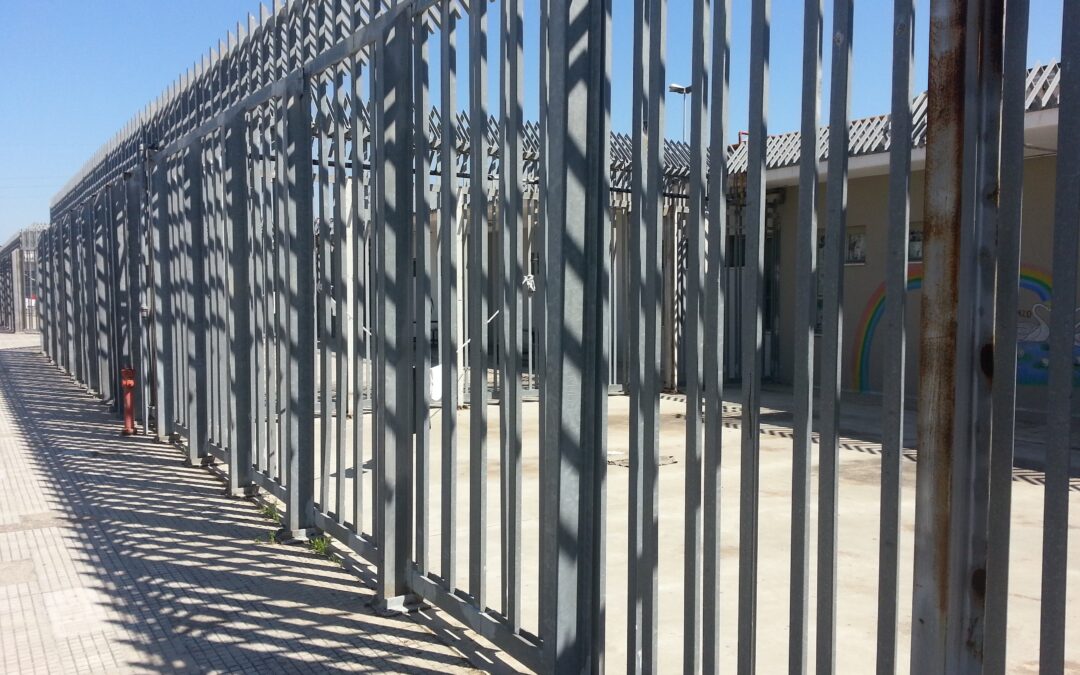
The ICJ and others intervened before the European Court of Human Rights in a case of thirteen undocumented children held in a hotspot in Italy.
The International Commission of Jurists (ICJ), the European Council on Refugees and Exiles (ECRE), the Dutch Council for Refugees and the AIRE Centre jointly intervened in the case of Trawalli and others v. Italy.
In this case, the European Court of Human Rights is called to rule, among other issues, on whether their detention and reception conditions were lawful and/or constituted an inhuman or degrading treatment under the European Convention on Human Rights.
In their third party intervention, the three human rights organizations submitted the following arguments:
a) Taking into consideration migrant children’s status as persons in situations of vulnerability and the principle of the best interests of the child, article 5 ECHR should be read in light of the rising consensus in international law towards a prohibition of detention of children on immigration grounds, in particular based on the consolidated and clear position of the UN Committee on the Rights of the Child. This applies to all instances of deprivation of liberty irrespective of their classification under domestic law.
b) In addition to the above, detention under article 5.1 ECHR will in any event be unlawful and arbitrary where it lacks a clear and accessible legal basis, outlining the permissible grounds of detention as well as the relevant procedural guarantees and remedies available to detainees, including judicial review and access to legal advice and assistance. In light of the obligations of EU Member States under EU law, the interveners submit that detention of asylum seeking children falling within the scope of the recast Reception Conditions Directive will result in a breach of the Convention standards also where it is not used as a measure of last resort, but rather is imposed without consideration of less onerous alternative measures and where the child’s best interests assessment has not been carried out and reflected in this decision.
c) Due to children’s extreme vulnerability, their detention for immigration purposes risks leading to a violation of Article 3 ECHR because of inadequate living conditions and/or to a violation of Article 8 ECHR because of a disproportionate and unnecessary interference with their development and personal autonomy, as protected under Article 8. In this sense, Article 8 must be regarded as affording protection from conditions of detention which would not reach the level of severity required to engage Article 3.
d) When the authorities deprive or seek to deprive a child of her or his liberty, they must ensure that he/she effectively benefits from an enhanced set of guarantees in addition to undertaking the diligent assessment of her/his best interest noted above. The guarantees include: prompt identification and appointment of a competent guardian; a child-sensitive due process framework, including the child’s rights to receive information in a child-friendly language, the right to be heard and have her/his views taken into due consideration depending on his/her age and maturity, to have access to justice and to challenge the detention conditions and lawfulness before a judge; free legal assistance and representation, interpretation and translation. The Contracting Parties must also immediately provide the child access to an effective remedy.
e) In order to fully comply with their obligations under the Convention, Contracting Parties must guarantee that asylum seeking children are accommodated in reception facilities which are adapted to their specific needs and provide adequate material conditions adapted to their age, condition of dependency and enhanced vulnerability. To do otherwise results in a failure by States to comply with their obligations under Article 3 ECHR and their specific obligations under EU law.
Italy-icj&others-Trawalli&others-Advocacy-legal submission-2018-ENG (download the intervention)
May 31, 2018 | News
The European Court of Human Rights has found that Romania and Lithuania violated the human rights of Abd al-Rahim al-Nashiri and Zayn al-Abidin Muhammad Husayn, also known as Abu Zubaydah.
The court underlined both countries’ complicity in the ill-treatment of the pair while they were held in US secret detention facilities in these countries.
The judgments are a key milestone in holding European governments accountable for their involvement in illegal CIA activities in the aftermath of the 11 September 2001 attacks.
“The US could not have operated the rendition and secret detention programme without its European allies. Today’s landmark rulings break the conspiracy of silence that has surrounded the presence of these secret sites in Lithuania and Romania, and publicly underlines European governments’ widespread complicity,” said Julia Hall, Amnesty International’s expert on counter-terrorism and human rights.
“The rulings are an important milestone of accountability for victims of these flagrantly illegal practices.”
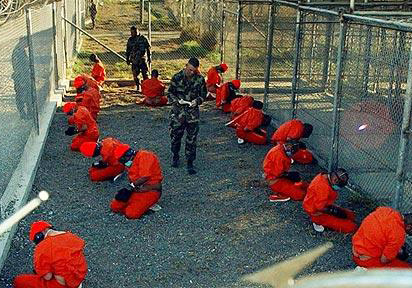
Al-Nashiri and Abu Zubaydah, currently in the US Guantánamo Bay detention facility, were subjected to enforced disappearance and torture as part of the rendition programme.
The European Court held that both governments are responsible for the men’s unlawful detention and ill-treatment in CIA ‘black sites’.
A December 2014 report by the US Senate Select Committee on Intelligence included details of al-Nashiri and Abu Zubaydah’s torture, but the names of the countries where people were held in secret sites were redacted. Courts in the USA have declined to hear cases related to the CIA operations deferring to US government claims that information about the sites should be protected as “state secrets”. There has been virtually no accountability for such abuses in the US.
“These rulings are a further step towards establishing the truth about European complicity in renditions and secret detentions, and holding European states accountable for their involvement. But the Lithuanian and Romanian governments were not alone. Many other European governments colluded with the US to illegally transfer, ‘disappear’ and torture people during rendition operations and must also be held accountable,” said Róisín Pillay, Director of the International Commission of Jurists’ (ICJ’s) Europe and Central Asia Programme.
Amnesty International and ICJ intervened in both proceedings (see Al-Nashiri and Abu Zubaydah). The organizations submitted evidence, context and expert opinion in light of precedents within the court and elsewhere.
On 13 March 2018, at the US naval base in Guantánamo Bay, Abd al-Rahim al-Nashiri began his 800th week in US custody. Abu Zubaydah is also imprisoned there, but has not been charged with any crime.
Amnesty International and ICJ have repeatedly called for the closure of the facility and the fair trial or release of those detained.
The judgments follow previous rulings against Poland, Italy, and the former Yugoslav Republic of Macedonia for their roles in the illegal rendition, torture, including waterboarding and mock execution, and enforced disappearance of alleged suspects at the hands of the CIA.
The Judgment
Based on numerous expert opinions and a 2014 US Senate Select Committee on Intelligence report on the CIA programme, the Court identified detention facilities “Detention Site Black” in Romania and “Detention Site Violet” in Lithuania.
The Court also held that both governments violated the prohibition on non-refoulement by allowing the men’s unlawful rendition to other countries despite the risk of further violations of the prohibition on torture and other ill-treatment.
In addition to the complicity in their unlawful detention and ill-treatment while detained in their respective countries, the Court held that both governments violated the prohibition on non-refoulement, which obliges states not to return anyone to a territory where they would be at risk of persecution or other serious human rights violations, by allowing the men’s unlawful rendition to other countries.
It found that Romania had violated its human rights obligations by assisting Al-Nashiri’s transfer out of Romania, despite the risk that he would face a flagrant denial of justice upon prosecution in a US Military Commission trial at Guantanamo Bay.
It also found that Romania violated Al-Nashiri’s right to life by facilitating his transfer despite the substantial and foreseeable risk that he would be facing the death penalty.
In both cases, the court held that neither state satisfied their obligation to carry out an effective investigation.
Contact
Olivier van Bogaert, Director Media & Communications at ICJ, t: +41 22 979 38 08 ; e: olivier.vanbogaert(a)icj.org
Europe-Renditions Rom & Lit-News-press release-2018-ENG (full story in PDF)
May 31, 2018
The ICJ together with ECRE, the AIRE Center and the Dutch Council for Refugees submitted a third party intervention to the UN Committee on the Rights of the Child in case D.D. v Spain 4/2016 pending in front of the Committee.
The case concerns a collective expulsion of a child from a Spanish enclave of Melilla to Morocco. The case has been declared admissible by the Committee in June 2017.
The UN CRC allows for individual complaints since April 2014 for children against countries that ratified its Third Optional Protocol on a Communications Procedure.
The current submission of the ICJ and partner organisations is focusing in particular on State’s jurisdiction (CRC article 2.1), access to the territory and non-refoulement (CRC articles 3.1, 6, 20, 37), specific safeguards for children (CRC articles 3.1, 12 and 22) and collective expulsions (CRC articles 3.1, 20 and 22).
The intervention analyses the legal principles and jurisprudence related to scope and content of States Parties’ obligations, without reference to the particular facts of the case before the Committee.
The submission will also be considered by the Committee when examining the case. It is also now being transmitted to both parties for comments, in accordance with Rule 23.2 of the Committee’s Rules of procedure on the OPIC.
The intervening organisations argue that:
- A State has jurisdiction over children who are subject to its authority or effective control on or at its land border, whether within or outside its territory. When a State Party exercises its jurisdiction over a child, its responsibility is engaged and it is required to comply with its international obligations of human rights protection, including under the Convention on the Rights of the Child (CRC), particularly as regards the assessment of the best interests of the child and the child’s right to be heard. Where a State Party is an EU Member State, it is additionally obliged to ensure the respect of the child’s best interests, protection and care necessary for the child’s well-being as well as the other child-specific guarantees under EU law.
- Children who are subject to the authority or effective control of a State on or at its land border must be granted access to the territory as a prerequisite to the initial assessment process and further afforded the opportunity to meaningfully raise objections to their transfer, as the principle of non-refoulementand the prohibition on collective expulsions require. The prohibition of refoulement on certain grounds is of an absolute nature in international human rights law and entails positive duties on the part of States, including to grant children the possibility to present the reasons against their return, to ensure their access to legal assistance and to a guardian, and to perform an individualized assessment to verify and evaluate the risk of refoulement.
- The prohibition of collective expulsion requires a thorough and rigorous assessment, including the examination of the particular circumstances of those forming part of the group of non-nationals concerned by the measure. This obligation also entails their effective identification and registration as well as information about, and access to applicable protection procedures and remedies where relevant. These safeguards apply whenever the individuals concerned fall within State Parties’ jurisdiction, including in circumstances when jurisdiction is exercised extraterritorially and irrespective of their migration status.
- When children are involved, the prohibition of collective expulsion additionally requires compliance with child-specific rights and corresponding tailored procedural safeguards. Collective expulsion entails a violation of the primary obligation to assess the best interest of the child in each individual case, which must be carried out prior to any decision to return or refuse entry or any other decision affecting children and must be adequately reflected in this decision.
UN-Third-party-intervention-DD-v-Spain-Rights-of-the-Child-May-2018-ENG(full PDF in Eng)

May 20, 2018
The ICJ has published today a set of training materials on access to justice for migrant children that were developed as part of the FAIR (Fostering Access to Immigrant children’s Rights) project.
These training modules should help lawyers when representing migrant children to increase their knowledge of the rights of the migrant children, to increase their understanding of the use of international redress mechanisms for violations of human rights of migrant children and give some advice on how to effectively communicate with child clients.
The materials include the following training modules:
0. Guiding principles and definitions,
I. Access to fair procedures including the right to be heard and to participate in proceedings,
II. Access to justice in detention,
III. Access to justice for economic, social and cultural rights,
IV. Access to justice in the protection of their right to private and family life,
V. Redress through international human rights bodies and mechanisms,
VI. Practical handbook for lawyers when representing a child.
These materials have been used in national trainings for lawyers organised by the ICJ-EI in Spain, Italy, Greece, Malta, Bulgaria, Ireland and Germany and include also practical training tools, such as case studies and warm-up questionnaires to guide possible future trainings.
They will be translated into five other languages: Spanish, Greek, Bulgarian, German and Italian.
You can download the materials here:
In English
Europe-FAIR module 0-Training modules-2018-ENG
Europe-FAIR module 1-Training modules-2018-ENG
Europe-FAIR module 2-Training modules-2018-ENG
Europe-FAIR module 3-Training modules-2018-ENG
Europe-FAIR module 4-Training modules-2018-ENG
Europe-FAIR module 5-Training modules-2018-ENG
Europe-FAIR module 6-Training modules-2018-ENG
In Bulgarian
Europe-FAIR module 0-Training modules-2018-BUL
Europe-FAIR module 1-Training modules-2018-BUL
Europe-FAIR module 2-Training modules-2018-BUL
Europe-FAIR module 3-Training modules-2018-BUL
Europe-FAIR module 4-Training modules-2018-BUL
Europe-FAIR module 5-Training modules-2018-BUL
Europe-FAIR module 6-Training modules-2018-BUL
In German
Europe-FAIR module 0-Training modules-2018-GER
Europe-FAIR module 1-Training modules-2018-GER
Europe-FAIR module 2-Training modules-2018-GER
Europe-FAIR module 3-Training modules-2018-GER
Europe-FAIR module 4-Training modules-2018-GER
Europe-FAIR module 5-Training modules-2018-GER
Europe-FAIR module 6-Training modules-2018-GER
In Greek
Europe-FAIR module 0-Training modules-2018-GRE
Europe-FAIR module 1-Training modules-2018-GRE
Europe-FAIR module 2-Training modules-2018-GRE
Europe-FAIR module 3-Training modules-2018-GRE
Europe-FAIR module 4-Training modules-2018-GRE
Europe-FAIR module 5-Training modules-2018-GRE
Europe-FAIR module 6-Training modules-2018-GRE
In Italian
Europe-FAIR module 0-Training modules-2018-ITA
Europe-FAIR module 1-Training modules-2018-ITA
Europe-FAIR module 2-Training modules-2018-ITA
Europe-FAIR module 3-Training modules-2018-ITA
Europe-FAIR module 4-Training modules-2018-ITA
Europe-FAIR module 5-Training modules-2018-ITA
Europe-FAIR module 6-Training modules-2018-ITA
In Spanish
Download here