Jun 20, 2018 | Advocacy, Non-legal submissions
The ICJ issued a statement today on the occasion of an interactive dialogue with the UN Special Rapporteur on the human rights of migrants, on an effective accountability mechanism for the European Border and Coast Guard Agency.The ICJ was not able to read the statement during the interactive dialogue due to the limited time provided for NGO statements. The statement was as follows:
“The International Commission of Jurists (ICJ) welcomes that the report (A/HRC/38/41) of the Special Rapporteur on the human rights of migrants recognizes the importance of monitoring mechanisms, access to justice, and accountability in the context of returns (para 78).
The ICJ, which is a member of the Frontex Consultative Forum on Fundamental Rights, shares the conclusion of the Special Rapporteur that the current implementation of an individual complaints mechanism for Frontex is “rather ineffective, since it largely relies on the discretionary powers of internal oversight bodies” and deficient in its follow-up procedure (para 84).
Furthermore, the ICJ considers that giving the Executive Director of Frontex competence to decide the merits of complaints creates a reasonable perception of bias. This, together with the lack of any requirement to publish its decisions, mean the existing complaint mechanism cannot constitute an effective remedy for human rights violations.
The ICJ is particularly concerned at these shortcomings in light of, as the Special Rapporteur noted, the “externalization of States’ obligations through the actions of international or regional organizations during return procedure” (para. 82). Such externalisation prevents victims of human rights violations from accessing effective remedies.
Finally, the ICJ notes that actions such as the closure of harbours to ships rescuing migrants, including refugees, are in clear breach of the international law of the sea and effectively prevent any access to legal remedies. Such actions should be condemned by this Council.
The ICJ supports the Special Rapporteur’s recommendation that States and international and regional organisations must ensure accountability for human rights violations and invites him to explore further such organisations’ responsibility in this regard under human rights law.”
Jun 19, 2018 | Адвокаси
МКЮ приветствует предложение Парламентской ассамблеи Совета Европы (ПАСЕ) в своей Рекомендации 2121 (2018), в которой содержится призыв к разработке Конвенции Совета Европы о профессии юриста.
МКЮ считает, что такая Конвенция может внести важный вклад в укрепление верховенства права и защиты прав человека в регионе Совета Европы, основываясь на существующих стандартах Совета Европы и юриспруденцией Европейского суда по правам человека.
МКЮ особенно приветствует призыв ПАСЕ к созданию эффективного механизма контроля, который будет создан в соответствии с новой Конвенцией, поскольку недавние события в ряде государств-членов Совета Европы показывают значительный пробел в осуществлении стандартов Совета Европы в отношении независимости и безопасности юристы.
Юристы, наряду с судьями и прокурорами, являются одним из столпов, на которых опирается защита верховенства права и прав человека через систему правосудия.
Признавая это, МКЮ с момента своего основания в 1952 году работала над защитой находящихся под угрозой юристов и разрабатывала международные стандарты независимости, роли и целостности профессии.
Последовательные заявления МКЮ, принятые ведущими юристами из всех регионов мира, подтвердили, что роль юридической профессии является «первостепенной задачей в защите прав человека и верховенства закона» (Декларация МКЮ 2008 года о закреплении верховенства закона, роли судей и юристов во времена кризиса.
В любой правовой системе юридическая профессия играет ключевую роль в обеспечении доступа к правосудию и эффективных средствах правовой защиты и ответственности за нарушения прав человека, а также отстаивании права на справедливое судебное разбирательство, права на свободу и права на свободу от пыток и других видов жестокого обращения в процессе уголовного правосудия.
Защищая уголовные дела, консультируя и представляя жертв нарушений прав человека и их родственников или оспаривая в суде национальное законодательство или политику, противоречащие правам человека, юристы оказывают практическое воздействие на гарантии прав человека и принципы верховенства права.
Важность этой роли была признана международными стандартами, а также судебной практикой Европейского суда по правам человека, в которой подчеркивается «особый статус юристов [имеющих] центральную позицию в отправлении правосудия в качестве посредников между обществом и судами”.
Таким образом, принципиально важно, чтобы адвокаты могли выполнять свои профессиональные обязанности без вмешательства. Как отметил Европейский суд по правам человека, «преследование и домогательство членов юридической профессии наносят удары по самой сути системы Конвенции».
Полный текст на английском, PDF: Europe-Drafting-a-EU-Convention-on-the-Profession-of-Lawyer-2018-ENG
Jun 19, 2018 | Advocacy
The ICJ welcomes the proposal of the Parliamentary Assembly of the Council of Europe (PACE) in its Recommendation 2121(2018) calling for the development of a Council of Europe Convention on the Profession of Lawyer.
The ICJ believes that such a Convention could make an important contribution to strengthening the rule of law and the protection of human rights in the Council of Europe region, building on existing Council of Europe standards and jurisprudence of the European Court of Human Rights.
The ICJ particularly welcomes PACE’s call for an effective control mechanism to be put in place under a new Convention, as recent developments in a number of Council of Europe Member States show a significant gap in implementation of Council of Europe standards on the independence and security of lawyers.
Lawyers, along with judges and prosecutors, are one of the pillars on which protection of the rule of law and human rights through the justice system rests.
Recognizing this, the ICJ, since its foundation in 1952, has worked to protect lawyers under threat and to develop international standards for the independence, role and integrity of the profession.
Successive ICJ Declarations, adopted by leading jurists from all regions of the world, have affirmed that the role of the legal profession is “paramount in safeguarding human rights and the Rule of Law” (2008 Declaration on Upholding the Rule of Law and the Role of Judges and Lawyers in Times of Crisis (ICJ 2008 Declaration).
In any legal system, the legal profession plays a pivotal role in ensuring access to justice and effective remedies and accountability for violations of human rights, as well as upholding the right to fair trial, right to liberty and freedom from torture and other ill-treatment in the criminal justice process.
In defending criminal cases, in advising and representing victims of human rights violations and their relatives or in challenging before the courts national legislation or policy that is contrary to human rights , lawyers give practical effect to human rights guarantees and rule of law principles.
The importance of this role has been recognized by international standards as well as in the jurisprudence of the European Court of Human Rights, which has emphasized the “specific status of lawyers [having] a central position in the administration of justice as intermediaries between the public and the courts”.
It is thus of fundamental importance that lawyers are able to fulfill their professional duties without interference. As the European Court of Human Rights has held, “persecution and harassment of members of the legal profession strikes at the very heart of the Convention system.”
Full text in ENG (PDF): Europe-Drafting-a-EU-Convention-on-the-Profession-of-Lawyer-2018-ENG
Jun 18, 2018 | News
The ICJ today called on the Hungarian National Assembly to reject Bill No. T/333 that, if approved, would risk criminalizing the work of civil society, lawyers and other human rights defenders and lead to violations of the rights of migrants, especially refugees.
The National Assembly of Hungary is considering today Bill No. T/333 tabled by the Hungarian Government that amends immigration and criminal law.
“This draft law would effectively punish activities that aim to apply legal procedures” said Massimo Frigo. “This attack on the work of lawyers and human rights defenders does not constitute a legitimate aim that would allow for a permissible restriction on the rights of freedom of expression, assembly and association consistent with international human rights law.”
The ICJ warned that the draft law, if approved, would, in contravention of international standards, open the way to arrest, prosecute and convict lawyers or representatives of civil society who assist asylum seekers in filing their application for international protection. It would also make funding of such activities a crime.
The law would effectively prevent lawyers and civil society organizations, under threat of criminal punishment, from providing assistance to asylum-seekers unless they can verify that the person is entitled to international protection, even before the person has begun the refugee status determination procedure.
It would further criminalize any activity aimed at regularizing the position of an irregular migrant who had, for example, married a Hungarian citizen or became a parent of Hungarian children.
“This draft law should be rejected because it could in practice deny legal assistance to any asylum seeker, preventing them from defending their rights, ” said Massimo Frigo.
Bill T/333 has been criticized by UNHCR, the Council of Europe Commissioner for Human Rights and several national and international civil society organisations. An opinion of the Venice Commission on the law is expected to be published shortly.
Background
If approved in the current form, section 11 of the draft law would insert in the Criminal Code the offence of “facilitating illegal immigration”, as new section 353/A. This provision, if approved, would make it a criminal offence to carry out organized activities to facilitate the initiation of an asylum procedure for persons “who are not persecuted” in their country of origin or in a third country that they passed through, or “do not have a well-founded reason to fear direct persecution.”
This provision would also make it a criminal offence to carry out these activities to assist a person entering illegaly or residing illegally in Hungary to obtain a residence permit.
The draft law would also make it a criminal offence to provide financial means to carry out these activities.
Full Document in English (PDF): Hungary-Statement-National-Assembly-Criminalizing-Assistance-to-Migrants-Law-2018-ENG
Jun 18, 2018
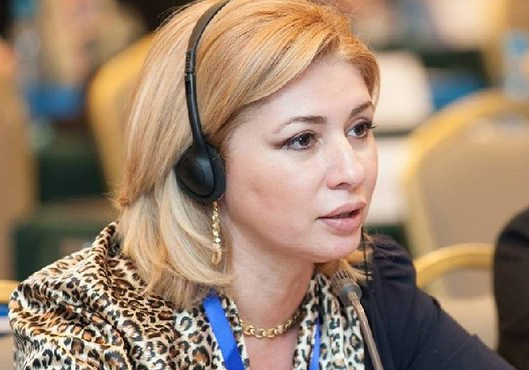
Today, the ICJ expressed concern at the recent disbarment of Irada Javadova, a high-profile lawyer in Azerbaijan and a former member of the Board of the Azerbaijan Bar Association.
The ICJ called on the Bar Association to reopen the disciplinary proceedings to afford Irada Javadova a chance to fully present her case in fair proceedings.
The ICJ also called on the Bar Association to reform their disciplinary procedures and practice with a view to ensuring fairness.
Disciplinary proceedings should not be used as a means of harassment of lawyers or as reprisals for lawyers’ defence of the human rights of their clients.
On June 11 2018, the Presidium of the Bar Association decided to disbar Irada Javadova, based on the information provided by a person who sought her legal assistance (K.M.). According to K.M.’s submission, Javadova made statements in the media concerning K.M.’s case, without her consent and without having a notarized power of attorney.
After receiving a request from K.M’s mother to inquire about the whereabouts of her daughter, in an open letter, Javadova had raised concerns at the possible arbitrary detention of K.M. This triggered disciplinary action against the lawyer.
The ICJ notes that contrary to the procedure established by the Law on Lawyers and Advocates Activities, Irada Javadova had no opportunity to present her case at the summary disciplinary hearing before the Presidium.
She did not receive a copy of the opinion of the Disciplinary Commission submitted to the Presidium, and evidence that she provided to it not considered or evaluated.
Irada Javadova is the latest of several Azerbaijan lawyers to be disbarred after publically raising concerns about possible human rights violations of their clients. Such disbarments represent an alarming trend and have a chilling effect on lawyers’ work to defend human rights, including by attempting to assist relatives of missing persons.
In its report on the independence of lawyers in Azerbaijan, the ICJ concluded that disciplinary procedures for lawyers “suffer from a lack of objective criteria, predictability and transparency. There are also concerns regarding the lack of clear criteria in law, practice or guidance, for the imposition of the most severe disciplinary penalty, disbarment. These gaps in standards lead to problems in practice, opening the way for … arbitrary victimization of lawyers through disciplinary proceedings.”
The ICJ stresses that, in accordance with the right to a fair hearing and with international standards on the role of lawyers, disciplinary proceedings against lawyers must be fair, must protect against arbitrariness, and must provide guarantees for the independence of lawyers.
Lawyers should be able to present their case and should be able to introduce evidence to be considered and evaluated in good faith.
In accordance with these principles, the ICJ calls on the Azerbaijan Bar Association to ensure that lawyers subject to disciplinary proceedings obtain copies of all relevant documents in the proceedings, in order to be able to prepare their arguments prior to the hearing in the Presidium.
Background information
Irada Javadova is a lawyer based in Baku. She has been a member of the Azerbaijan Bar Association for 13 years. From 2012-2017 she was a member of the Presidium of the Bar Association and is known for her work as a human rights lawyer.
Irada Javadova represented K.M. who was a suspect in a fraud-related case. K.M. concluded a contract with Javadova and was on her way to notarize it. After K.M. had left the lawyer’s office she was apprehended by people in plain clothes and was brought to the Main Organized Crime Department of the Ministry of Interior.
Subsequently, K.M.’s mother contacted Javadova asking her to take up the case and find out about the whereabouts of her daughter.
Acting upon the request of K.M.’s mother, Irada Javadova applied to the responsible State authorities urging them to provide information about her client. Having obtained no response, Javadova published an open letter addressed to the Minister of Internal Affairs. After the open letter had been published, K.M. was released.
However, later K.M. complained about the actions of her lawyer, stating that she did not have a power of attorney to represent her and that the statement made by Irada Javadova in the media was false and slanderous.
Irada Javadova, in turn, denies the allegations and states that she has all the evidence to prove that she acted based on a contract signed with K.M. and in the best interest of her client. On 12 June, Javadova met with representatives of the Presidium of the Bar Association to submit her evidence.
She was informed that there would be an appeal to Baku Administrative Economic Court No. 1 and that she could defend her claims in court.




