Aug 7, 2017
An Opinion Editorial by Karolína Babická, Legal Adviser, ICJ Europe Programme.
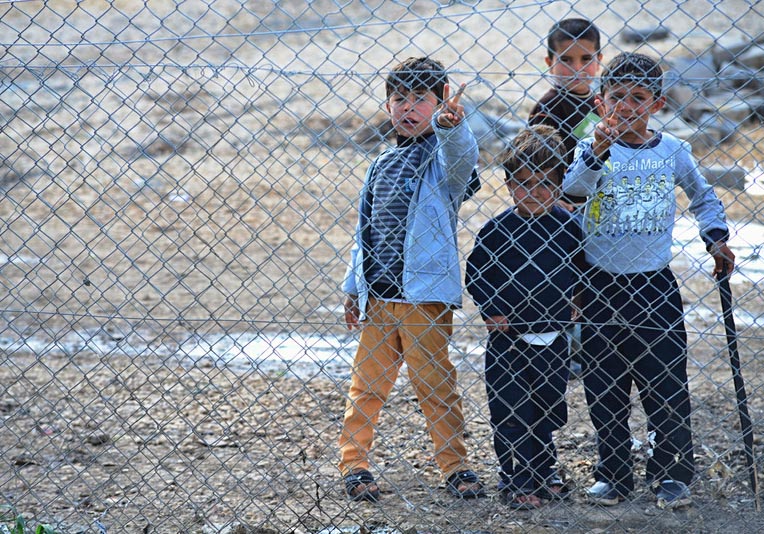
At this very moment, some children in Spain are being held in adult immigration detention centres, pending return to their home countries.
Other migrant children are living on the streets in Madrid and other Spanish cities, suffering from serious illnesses, or are prevented from applying for asylum.
This is happening because they are not Spanish nationals and the authorities have not recognized them as children, but consider them to be adults.
During our capacity and coalition building activities with lawyers and civil society organizations to better defend migrant children’s rights in various European countries, our Spanish partner, Fundación Raíces, raised attention to the dire situation of migrant children in Spain.
In seven cases concerning migrant children in vulnerable circumstances, Fundación Raíces and other Spanish lawyers requested the United Nations Committee on the Rights of the Child to issue interim measures, i.e. orders to the Spanish authorities, with a view to avoiding irreversible harm to these children.
In States that, like Spain, are parties to the Optional Protocol to the Convention on the Rights of the Child on a Communications Procedure, the Committee on the Rights of the Child is empowered to examine individual communications by or on behalf of a child or group of children claiming that there has been a violation of their rights under the Convention.
Pending its determination on the merits, the Committee may request the State party to take interim measures as may be necessary to avoid possible irreversible damage to the victim or victims of the alleged violations.
In one of the seven cases mentioned above, A.D. is a 17-year-old child from Mali that arrived in Spain in March 2017. He was transferred to the immigration detention centre for adults in Madrid as he was considered adult by the public prosecutor, while ignoring the official and original documents A.D. has from his country of origin.
The UN Committee reacted swiftly to the lawyers’ demands and during the past 7 months requested the Spanish government in those seven cases to take interim measures.
Under international law, respect for interim measures is essential for the protection of human rights.
Existing international law and jurisprudence affirm that any State party’s non-compliance with a request for interim measures constitutes a breach of its legal obligations under international law.
The binding nature of interim measures has been reaffirmed by the Human Rights Committee in its General Comment 33 on the individual complaints procedure.
However, the Spanish government has ignored these requests and failed to comply with any of the requested interim measures.
The Spanish government is thus in violation of international obligation it has voluntarily undertaken; more significantly, the lives and well being of dozens of highly vulnerable children are at risk.
The UN Convention on the Rights of the Child obliges States to consider the best interests of the child as a primary consideration above any other.
However, the Spanish authorities claim that the individuals in these cases are not children but adults.
Yet, in the event of any remaining uncertainty, international law affirms that States must accord the individual the benefit of the doubt and treat him or her as a child, until effectively proven otherwise.
Moreover, the Spanish Supreme Court has already expressed concern about the age-assessment procedure used by the Spanish authorities, in more than 10 judgments, as did the Spanish Ombudsman and the United Nations High Commissioner for Human Rights.
Recently, six civil society organizations in Spain (Amnesty International, Fundación Raíces, the General Council of Spanish Lawyers, the Jesuit Mission for Migrants, Noves Vies and Save the Children) have called on the Spanish Government to immediately implement the Committee’s request for interim measures in each case.
The ICJ is training lawyers in seven EU countries, including Spain, and supporting them in bringing their cases to international human rights mechanisms, such as the UN Committee on the Rights of the Child, when no effective remedy is available domestically.
The Spanish government is failing these children and is failing to respect its international law obligations.
Respecting one’s international obligations and ensuring that no harm is caused to children in violation of their rights should be high priorities for any States that are parties to the UN Convention on the Rights of the Child.
The Spanish Government should live up to its obligations, and implement immediately the Committee on the Rights of the Child’s request for interim measures in these cases.
Photo credit: Plan International
Jul 28, 2017 | Multimedia items, News, Video clips
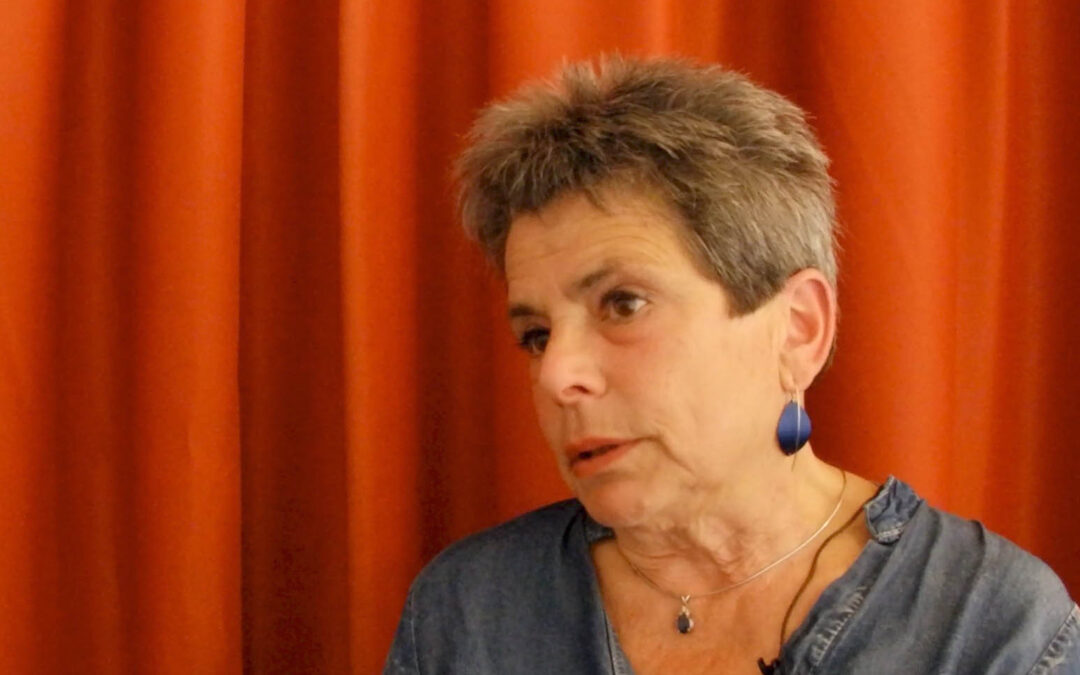
The ICJ continues its series of profiles of its women Commissioners with an interview with Prof. Jenny E. Goldschmidt, who is currently serving her third term as an ICJ Commissioner.
She was first elected to the Commission in 2003 and re-elected in 2008 and 2013.
She is a Member of the Advisory Board of Nederlands Juristen Comité voor de Mensenrechten (NJCM), and NJCM Public Interest Litigation Group. The NJCM is the ICJ’s National Section in the Netherlands.
In this wide-ranging interview, Jenny describes how she started out her career as a lawyer by studying Constitutional law; how her interests began to focus on the haves and the have nots and from there her interest in human rights developed.
She explains how she has always combined academic research and teaching with practical work, particularly during her years as the President of the Equal Treatment Commission in the Netherlands. She also stresses the importance of working in an inter-disciplinarian manner.
For example, she explained that after academics had developed concepts of direct discrimination, indirect discrimination, and systemic discrimination, these concepts were taken on board by lawyers and have been incorporated into case law.
She gave the example of how the European Court of Human Rights and the European Court of Justice are now incorporating this type of stereotyping into their equality concept.
She emphasized human rights law must protect women and that this protection must be embodied in law.
She considered that it is vital to take cases to the Treaty Bodies and courts everywhere to establish severe measures against discrimination and domestic violence.
But human rights lawyers also need sociologists to help find the arguments that convince people and how we can influence their behavior.
“Sometimes soft law and mediation can be effective and you need other disciplines to show in which cases which instruments are most effective,” she said.
She explained that because women are not a homogenous group and because of migration and all the divisions in society, inter-sectionality has become one of the crucial challenges for women’s rights.
She believes in combining a focus on the general problems which all women face as well as taking into account that some women are even less equal than others – that women who belong to minorities, that women who are disabled, that girls are more vulnerable than the majority of women.
“I think one of the things that the disability convention tries to do by giving a specific provision for women and girls rights is that it forces the authorities, the Treaty Bodies, the national and international institutions to be aware of the fact that we are talking about women and disabled people and that we have to take two perspectives at the same time into account,” she added.
When asked what advice she would give a woman who wants to pursue a career in human rights she said: “Don’t give up! And don’t think it will be easy. Human rights world still is a man’s world.”
Jenny Goldsmith is currently Emeritus Professor of Human Rights Law, and was from 2007-2014 Director of the Netherland Institute of Human Rights at the University of Utrecht.
From 1994-2003 she was President of the Equal Treatment Commission of the Netherlands.
She is on the board of Disability Studies in the Netherlands and involved in several NGOs of disability rights, democracy, and human rights.
Watch the interview:
The series of profiles introducing the work of ICJ Commissioners and Honorary Members on women’s rights was launched on 25 November 2016 to coincide with the International Day to Eliminate Violence against Women and the first day of the 16 Days of Activism Against Gender-Based Violence Campaign.
Jul 25, 2017 | Новости, Статьи
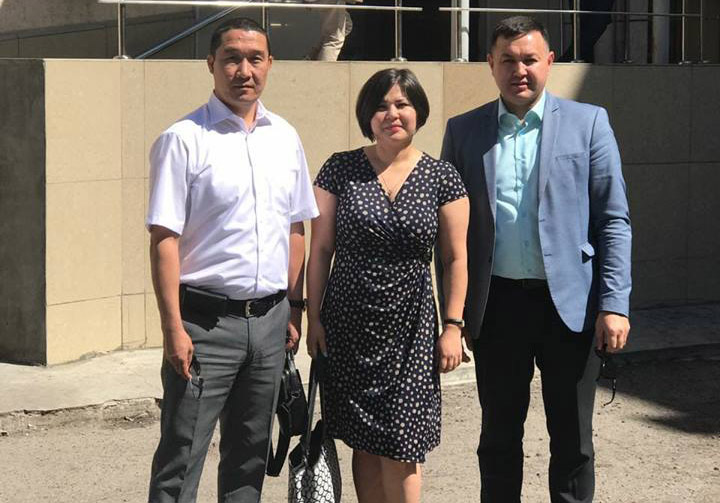
Сегодня МКЮ выразила обеспокоенность в связи с реальной угрозой уголовного преследования адвокатов Ерлана Газымжанова, Аманжола Мухамедьярова и Асель Токаевой в Казахстане.
МКЮ заявила о том, что возможность уголовного преследования адвокатов связана с осуществлением ими своей профессиональной деятельности в защиту клиентов, а не с действительным совершением ими уголовно наказуемых деяний.
МКЮ призывает компетентные власти Казахстана прекратить преследование адвокатов в нарушение международного права и стандартов, касающихся роли юристов, а также принципа законности при отправлении правосудия.
22 июня в ходе рассмотрения уголовного дела судья Убашева вынесла частные постановления в отношении адвокатов о принятии к ним мер за совершение ряда действий, которые по формальным признакам не являются уголовно наказуемыми деяниями. К ним относится обращение с жалобой на неэтичное поведение судьи в Комиссию по судейской этике и Судебное Жюри Верховного суда Республики Казахстан, заявление ходатайства об отводе судьи, заявление о том, что преступление было совершено другим подзащитным, а также участие в международной конференции вместо явки в судебное заседание для защиты своих доверителей.
Закон не запрещает использовать различные процессуальные механизмы, к которым прибегли адвокаты, включая жалобу на действия судьи и ходатайство о ее отводе. Напротив, такие действия, как заявление ходатайств об отводе, обращение с жалобами на неэтичное поведение в соответствии с официально установленными процедурами, а также осуществление стандартных функций защиты в рамках уголовного процесса являются обычными процессуальными мерами, предусмотренными законодательством Казахстана. Кроме того, они имеют основополагающее значение для целей отправления правосудия в соответствии с принципом законности.
В частных постановлениях суда отсутствует анализ статей, предположительно нарушенных адвокатами. Судья обвинила некоторых адвокатов в «демонстрации превосходства над другими участниками процесса». Кроме того, по мнению суда, один из адвокатов разместил на «фэйсбуке» не соответствующие действительности сведения о процессе, в котором он участвовал. При этом в частном постановлении не приводятся факты, которые бы описывали конкретные действия адвокатов, позволившие судье прийти к данным выводам.
Обвинение двух адвокатов в том, что они приняли участие в международной конференции вместо того, чтобы явиться в судебное заседание, в крайнем случае может подпадать под действие дисциплинарных норм, регулирующих поведение адвокатов, но не уголовного закона. МКЮ отмечает, что данное обвинение, как правило, следует адресовать дисциплинарному органу – Коллегии адвокатов, а не Министерству юстиции.
Наряду с возбуждением уголовного расследования в отношении адвокатов судья Убашева поставила перед Министром юстиции вопрос о привлечении адвокатов к установленной законом ответственности за нарушение норм профессионального поведения, необоснованного затягивания уголовного дела в суде и проявления неуважения к суду, и перед Министерством внутренних дел – о проведении проверки на предмет наличия в действиях адвокатов признаков правонарушения по статье 407 Уголовного кодекса Республики Казахстан – воспрепятствование правосудию.
20-21 июля 2017 года Судебная апелляционная коллегия по уголовным делам рассмотрела апелляционные жалобы на приговор суда и частные жалобы адвокатов в отношении частных постановлений суда.
Гулнора Ишанханова, комиссар МКЮ, присутствовала на слушании дела в Суде города Астаны в качестве наблюдателя МКЮ.
Kazhakstan-Trial observation 3 lawyers-News-web story-2017-RUS (полный текст на русском, PDF)
Jul 25, 2017 | News
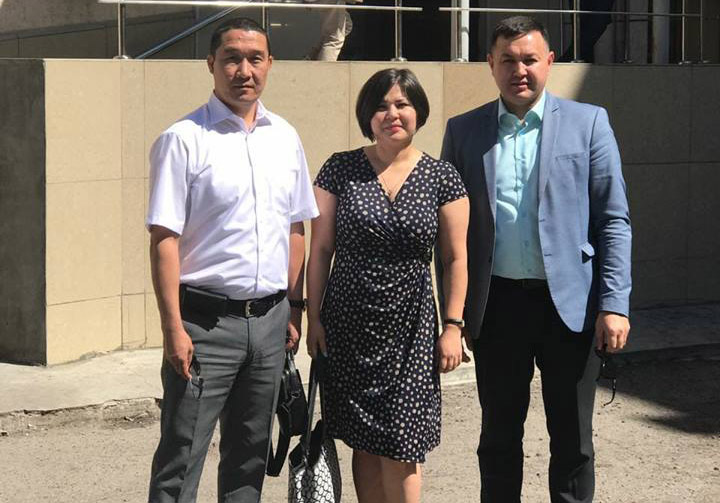
Today the ICJ expressed concern about the real threat of criminal prosecution against lawyers Yerlan Gazimzhanov, Amanzhol Mukhamedyarov and Assel Tokayeva (photo) in Kazakhstan.
The ICJ said the action against lawyers was aimed at their discharging of their professional functions on behalf of clients, and not for any genuine criminal misconduct.
The ICJ called on the responsible authorities of Kazakhstan to discontinue the proceedings against the lawyers, which are contrary to international law and standards on the role of lawyers and the rule of law in the administration of justice.
On 22 June, in a court hearing in the criminal case, judge Ubasheva issued interim rulings against the lawyers seeking their prosecution for a number of acts, which on their face do not consist of criminal misconduct. The conduct for which prosecution is sought includes lodging a complaint alleging unethical conduct by the judge with the Commission on Judicial Ethics and Judicial Jury of the Supreme Court of the Republic; filing a motion for recusal of the judge; stating that the crime for which their clients had been accused had in fact been committed by another defendant; and participating in an international conference, rather than attending a court hearing to defend clients.
The various legal procedures used by the lawyers, including their complaint against the judge and the request for the judge’s recusal, are not prohibited by law. On the contrary, acts such as filing motions for recusal, lodging ethics complaints through officially prescribed channels, and performing standard criminal defence functions they constitute regular procedures prescribed in legislation Kazakhstan. They are also fundamental pursuant to the proper administration of justice under the rule of law.
The interim rulings of the court did not provide an analysis of the legal provisions allegedly violated by the lawyers. Certain of the lawyers were said by the court to have “demonstrated superiority over other actors in criminal proceedings.” It was also alleged that the information posted on a Facebook page about the proceedings in which one of the lawyers took part was false. However, the ruling failed to cite any specific details or conduct of the lawyers which would support these conclusions.
Regarding the charge that two of the lawyers had chosen to participate in an international conference rather than appear at the court hearing, this at most would fall under disciplinary procedures governing the conduct of members of the bar, and not the criminal law. The ICJ notes these charges should normally be made to competent disciplinary body, the Collegium of Lawyers, and not the Ministry of Justice through the request of the judge.
In addition to the criminal prosecution, judge Ubasheva asked the Ministry of Justice to take measures against the lawyers for a breach of professional ethics, causing unjustified delays in criminal trial, and contempt of court, and asked the Ministry of Interior to undertake an inquiry to determine whether the conduct of the lawyers constituted an offence punishable under Article 407 of the Criminal Code of Kazakhstan (obstruction of justice).
On 20-21 July 2017, the Criminal Chamber of Appeals examined the lawyers’ appeals against the conviction and interim appeals against the interim rulings.
The appeal proceedings before the Astana City Court were attended by Gulnora Ishankhanova, ICJ Commissioner acting as an ICJ observer.
Kazhakstan-Trial observation 3 lawyers-News-web story-2017-RUS (story in Russian, PDF)

Jul 24, 2017
In a report published today, Judges for Judges and the ICJ analyze disciplinary proceedings against Bulgarian Judge Miroslava Todorova in relation to international standards on judicial independence and accountability.
On 12 July 2012, the Supreme Judicial Council of Bulgaria dismissed Judge Miroslava Todorova, at that time a judge of the Sofia City Court and Chairperson of the Bulgarian Judges Association, on the grounds that she was responsible for delays in a number of cases.
Subsequently, Judges for Judges and the ICJ followed the disciplinary proceedings against Todorova and sent trial observers to Sofia on two occasions, in May 2013 and November 2014.
In their findings, the ICJ and Judges for Judges do not address whether, and if so which, disciplinary sanctions may have been appropriate in this case.
They note, however, that the disciplinary proceedings concerned delays, constituting judicial misconduct, in a context where according to many internal and external observers the workload between the courts is divided unevenly and may be very high for some.
The two organizations also note that, as the second three-judge panel pointed out, the overall organization of the workflow was never properly considered in considering and reaching a determination n the disciplinary case.
With the quashing of the second three-judge panel’s decision, likewise other relevant circumstances were not taken into account.
Furthermore, the report finds, disciplinary practice in Bulgaria is deficient in respect of its lack of predictability and consistency, and doubts expressed by many observers as to the independence of the Judicial Service Council muddy the waters further.
The 2013 amendments to the legal framework only partially served to remedy the disciplinary practice’s deficiencies.
In particular, a full right of defence that includes the opportunity for the defendant to address all arguments and evidence remained wanting at the time of the Todorova proceedings.
In the report, the ICJ and Judges for Judges also note the animosity towards Todorova from certain quarters in the Executive and SJC for her activities as the chair of the BJA in defence of judicial independence.
Under the circumstances, there is an appearance that the disciplinary proceedings against Todorova were instituted and pursued selectively, and the system of the disciplinary proceedings in Bulgaria does not provide sufficient safeguards to dispel this appearance.
The disciplinary proceedings against Todorova demonstrate why it is crucial that accountability mechanisms be independent not only in theory but in practice, and for such mechanisms to be in some way themselves publicly accountable.
Bulgaria-The Todorova Case-Publications-Reports-Trial observation reports (full report, in PDF)
For additional background, see:
ICJ Practitioners Guide no 13, Judicial Accountability (2016, in PDF)
and more generally:
ICJ Practitioners Guide No 1, International Principles on the Independence and Accountability of Judges, Lawyers and Prosecutors (2007, in PDF)