Nov 14, 2016
In a new report published today in three languages, the ICJ finds systemic weaknesses in the legal profession in Azerbaijan have undermined its independence, leading to harassment of independent lawyers and preventing them from playing their role in the protection of human rights.
The report Defenseless Defenders: Systemic Problems in the Legal Profession of Azerbaijan concludes that the internal problems in the organization of the legal profession undermine its independence.
It finds that the Bar Association does not act as a self-governing institution of lawyers that protects the independence of the profession or upholds high ethical standards.
Its subsidiary bodies are not elected in a timely manner and the Bar Association does not use the tools of self-regulation which it has at its disposal.
There are serious failings of transparency and accountability to its members.
The report identifies problems in the qualification procedure for lawyers which suffers from a lack of objective criteria for evaluation and has resulted in an acute shortage of lawyers in the country.
The disciplinary procedure is a particularly weak point for the legal profession and is abused as a means of harassment of lawyers.
The report documents multiple cases of harassment of lawyers, contrary to international law and international standards on the independence of the legal profession.
It makes recommendations to address these problems, based on an analysis of international human rights law and standards.
It also emphasizes that the independence and role of lawyers must be respected by all institutions of government: executive, legislative and judicial, and by all public authorities.
The report recommends that the Bar Association should reconsider its role of the governance of the profession, and should initiate, through a consultation process, a reform based on the principle of independence and high ethical standards of the profession.
The qualification process should ensure that there is a sufficient number of lawyers to uphold the principle of access to justice and an effective remedy for violations of human rights.
In regard to the disciplinary procedure it must be fair, objective and should aim to support the independence of lawyers in Azerbaijan; it should not be used for any purposes other than ensuring high professional standards, integrity and independence of lawyers.
The report is available in Azeri, English and Russian and can be downloaded below.
azerbaijan-systemic-problems-legal-prof-publications-reports-mission-reports-2016-eng (English, PDF)
azerbaijan-systemic-problems-legal-prof-publications-reports-mission-reports-2016-rus (Russian, PDF)
azerbaijan-systemic-problems-legal-prof-publications-reports-mission-reports-2016-aze (Azeri, PDF)
Nov 14, 2016
The ICJ has published a translation of its Practitioner’s Guide N°1 International Principles on the Independence and Accountability of Judges, Lawyers and Prosecutors.
This is the first comprehensive analysis of the existing standards and compilation of universal and regional instruments published in Turkmen.
The Guide outlines the roles to be played by a strong legal profession, an independent judiciary and an impartial and objective prosecuting authority.
Part one of this guide provides an analysis of the law and concrete examples drawn from international practice. Part two includes relevant global and regional standards on the topic.
References to international decisions, reports, texts of treaties and other international standards allow the Guide to be used as a reference book by legal practitioners and policy makers.
Turkmenistan-PG N°1-Publications-Practitioners’ Guide Series-2016-TKM (full guide in Turkmen, PDF)
Nov 11, 2016 | Agendas, Events
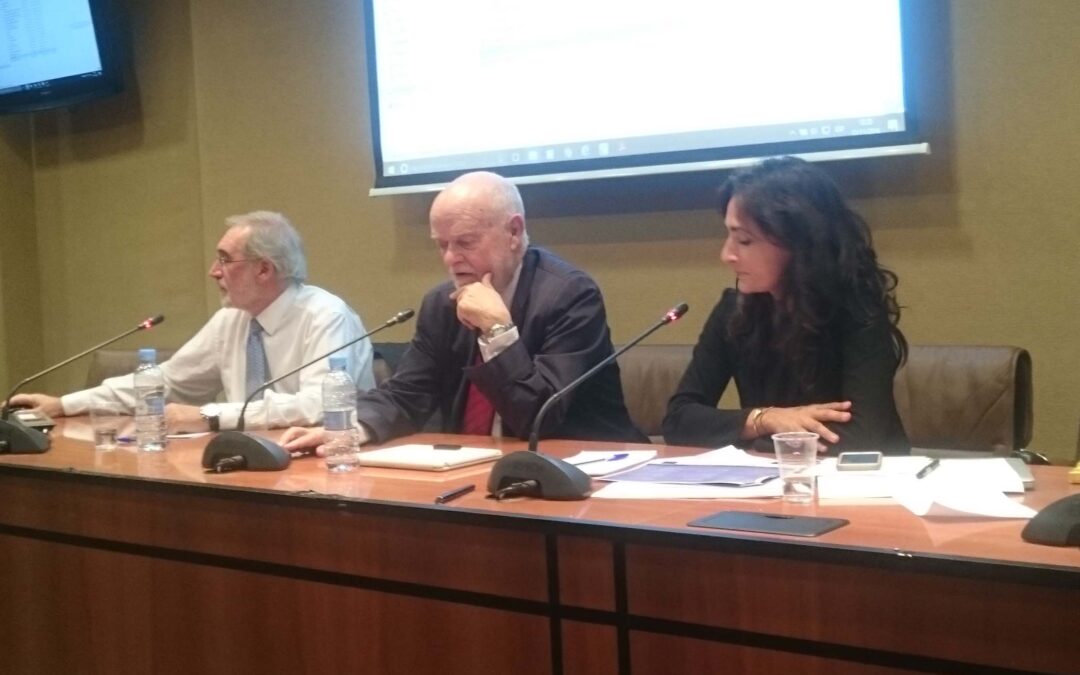
The ICJ and Foundation Raices are holding a training on the rights of migrant children and on accessing international human rights mechanisms from 11 to 12 November in Madrid (Spain).
The training aims to support the strategic use of national and international mechanisms to foster children’s access to justice.
The training will focus on accessing the international mechanisms in order to protect and promote the rights of migrant children, the child’s right to be heard and related procedural rights, the best interests of the child, age assessment and the presumption of minority.
Trainers will include representatives of the ICJ and Foundation Raices, as well as experts from the Committee on the Rights of the Child, the Spanish Constitutional Court and the office of the Spanish Ombudsman.
The training is based on draft training materials prepared by the ICJ (to be published in the second half of 2017) and the ICJ Practitioners Guide no. 6: Migration and International Human Rights Law.
The training is organized as part of the FAIR project co-funded by the Justice and Equality Programme of the EU and OSIFE.
Download the agenda of the training here:
spain-fair-training-events-agenda-2016-eng (in PDF)
Nov 9, 2016 | News
The ICJ welcomes the judgment of the European Court of Human Rights in Schukurov v Azerbaijan, finding that the right to petition the Court had been violated by the search of a lawyer’s premises and seizure of documents.
The ICJ submitted a third party intervention in the case, outlining international law and standards relevant to legal professional privilege and the seizure of legal documents.
The case files were seized as part of a criminal investigation opened against the lawyer, Intigam Aliyev, who was representing the applicants in the case. The Court found that the search and seizure by the Azeri authorities had violated article 34 of the Convention, which stipulates that States must not hinder in any way the effective exercise of the right of individual application to the Court.
The ICJ notes that the Court’s judgment follows its earlier finding of a violation of article 34 in the case of Annagi Hajibeyli v Azerbaijan, which arose from the same incident.
The ICJ stresses that these searches of lawyers’ premises are contrary to international standards on the role of lawyers. It is particularly worrying that they form part of a pattern of harassment of lawyers in Azerbaijan, including abusive disciplinary proceedings and criminal prosecutions. Such harassment damages the ability of lawyers to protect human rights through the judicial process, and undermines the independence of the legal profession.
The decision of the Court should now be fully and promptly executed, the ICJ said.
Nov 8, 2016
The ICJ intervened today before the European Court of Human Rights in the cases of three human rights lawyers who had been denied Bar membership because of their human rights activity.
The cases concern the compliance of the procedures of admission to and disbarment from the Bar Association of Azerbaijan of human rights lawyers Annagi Hajibeyli, Khalid Bagirov and Intigam Aliyev.
In its submissions, the ICJ stressed that, while lawyers have to perform their professional functions in conformity with ethical standards, the legal profession’s systems of admission and discipline must not enforce such obligations in a way that impairs the exercise of human rights by lawyers or their capacity to effectively represent their clients.
Based on the jurisprudence of the European Court of Human Rights, as well as international standards governing the legal profession, the ICJ submission addresses:
- permissible restrictions of lawyers’ rights to respect for private (including professional) life under article 8 ECHR and to freedom of expression under article 10 ECHR,
- procedural safeguards required to apply such restrictions under article 6 ECHR.
- key findings of a recent ICJ fact-finding mission to assess the compliance of the governance of the legal profession in Azerbaijan with international law and standards.
icj-bagirovothers-amicusbrief-azerbaijan-2016-final (download the third party intervention)