Jun 8, 2015
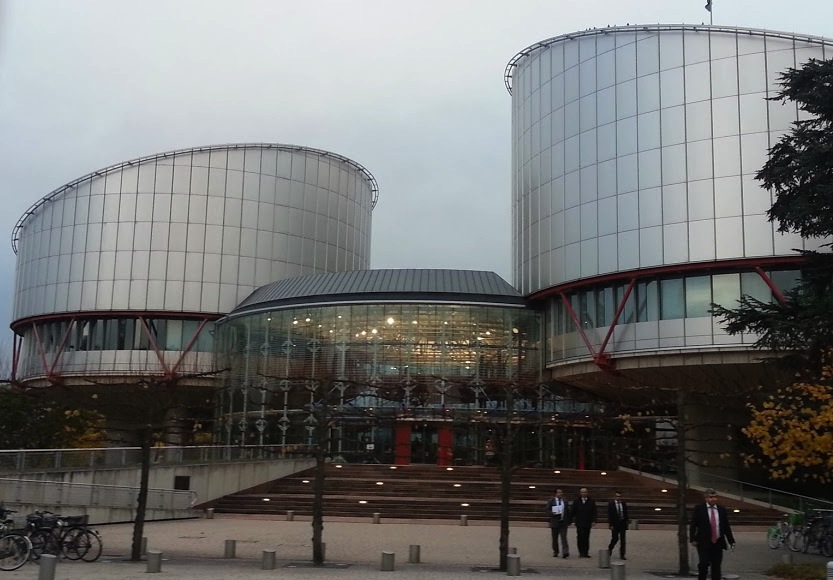
Today, the ICJ jointly with the AIRE Centre and ILGA-Europe submitted written submissions in the case of Klobučar v. Croatia (Application no. 28416/14) before the European Court of Human Rights.
The case, which concerns alleged ill-treatment at the hands of state officials motivated by homophobia, provides the Court with an important opportunity to identify the scope of the State Parties’ procedural obligations under the European Convention on Human Rights in such cases. These include the duty to take all reasonable steps to identify whether there has been any discriminatory motive behind the treatment said to be in violation of the Convention based on animus or prejudice against one’s real or imputed same-sex sexual orientation and/or gender identity or expression.
The submissions focus on:
- The nature and scope of the positive obligations of Contracting Parties under the Convention in respect of allegations disclosing credible evidence of treatment prohibited under Article 3;
- Same-sex sexual orientation and/or gender identity as a ground of discrimination; and
- The duty to take all reasonable steps to identify any discriminatory motive in connection with allegations of ill-treatment.
CROATIA-AMICUS in KLOBUCAR ECtHR-LEGAL SUBMISSION-2015-ENG
May 29, 2015 | Advocacy, News, Non-legal submissions, Position papers
The ICJ called today on the EU institutions to bridge the final implementation gaps to ensure an effective access to justice to victims of violent hate crimes.
The contribution of the ICJ was submitted as input for the European Commission’s first annual fundamental rights colloquium to be held next October and focused on “Tolerance and respect: preventing and combating antisemitic and anti-Muslim hatred in Europe”.
In its submission, the ICJ finds that the greatest weakness in addressing violent hate crime currently lies primarily in the failure of effective national implementation, which has meant that, despite development of the law, and despite authoritative recommendations from international and EU human rights bodies, the frequency of commission of violent hate crimes appears to have increased, and impunity for such crimes has persisted.
The ICJ considers that there are two main reasons for this lack of implementation: 1) lack of political or institutional will in Member States; 2) lack of implementation tools tailored to the laws, legal institutions and culture of the single national legal system.
The ICJ concluds, in its contribution, that it is the time for the European Union institutions to take up the opportunity to unite the efforts of all those concerned in the administration of justice – judges, court administrators, lawyers, civil society, judicial organizations, bar associations and government officers – throughout the EU to work together on the detailed technical assistance needed for an effective implementation of the right to an effective remedy for victims of crimes motivated by discrimination.
EU-Colloquium2015-ICJContribution-ViolentHateCrimes-Advocacy-non legal submission-2015-eng (download the submission)
May 19, 2015
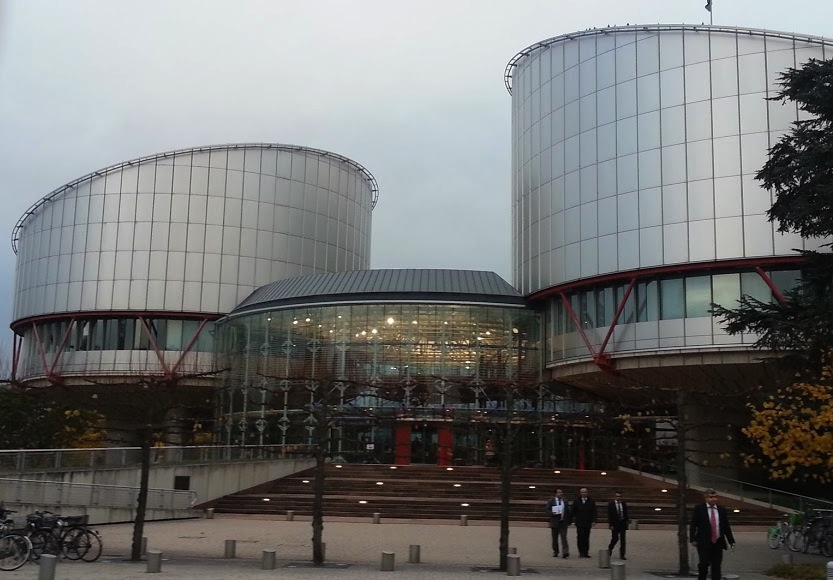
Today, the ICJ and other rights groups presented joint written submissions to the European Court of Human Rights in the case of A.T. v. Sweden (Application No. 78701/14).

May 18, 2015 | News
From 18 to 22 May, the ICJ will carry out a mission to the Russian Federation to examine questions related to the independence and integrity of the legal profession, access to an independent lawyer and the right to an effective defence.
The mission will address the role of Bar Associations in protecting the independence of lawyers, as well as obstacles faced by individual lawyers in protecting the rights of their clients.
The ICJ mission, led by Wilder Tyler, the ICJ Secretary General, will hold meetings with leading Russian experts in the field.
The mission will also meet with the representatives of the Federal Chamber of Lawyers, government officials, and independent lawyers and will take part in two round table discussion with legal scholars and practicing lawyers.
A comprehensive report analyzing the main findings will follow the mission and will present recommendations for reform of law and practice in light of international law and standards on the role of lawyers.
Contact:
Róisín Pillay, Director, Europe Programme, roisin.pillay(a)icj.org
Temur Shakirov, Legal Adviser, Europe Programme, temur.shakirov(a)icj.org

May 8, 2015
Today, the ICJ and the Center for Reproductive Rights made a submission to the UN Committee on Economic, Social and Cultural Rights in view of its examination of Ireland’s Third Periodic Report.
The submission highlights concerns regarding Ireland’s compliance with its obligations under the International Covenant on Economic, Social and Cultural Rights as a result of its highly restrictive legislative framework on abortion.
The Center and the ICJ consider that Ireland’s laws on abortion undermine women’s enjoyment of a number of rights under the ICESCR, and in particular the right to the highest attainable standard of health.
The submission briefly describes the current regulation of abortion in Ireland. It then summarizes the way in which previous treaty monitoring bodies’ conclusions and recommendations have addressed women’s access to safe and legal abortion, including specifically in Ireland.
The submission concludes with a number of number of recommendations.
Ireland-ICJ CESCR submission-Advocacy-non legal submission-2015-ENG (full text in PDF)