Aug 19, 2015
Today the ICJ joined a number of human rights organizations in an appeal to the Prosecutor General of the Republic of Kazakhstan regarding a recent case of obstruction of work of lawyer Snezhanna Kim, practicing in the country.
The incident took place on 24 July 2015, when lawyer Snezhanna Kim was having a meeting with a client in detention facility no. 161/1 in the city of Kostanay.
The signatories called on the Prosecutor to ensure that Snezhanna Kim and other lawyers are able to freely carry out their professional activities, including by visiting clients held in places of detention without hindrance and communicating with them based on full respect for the confidentiality of the lawyer-client relationship and without pressure of any kind.
Kazakhstan-Violations Lawyer’s rights-Advocacy-Open letters-2015-ENG (full text in PDF, English)
Kazakhstan-Violations Lawyer’s rights-Advocacy-Open letters-2015-RUS (full text in PDF, Russian)

Aug 19, 2015 | Адвокаси, Открытые письма
Сегодня МКЮ присоединился к ряду правозащитных организаций в обращении к Генеральному прокурору Республики Казахстан по поводу недавнего дела об отказе от работы адвоката Снежанны Ким, практикующей в стране.
Инцидент произошел 24 июля 2015 года, когда адвокат Снежанна Ким встретилась с клиентом в здании следственного изолятора №. 161/1 в городе Костанай.
Подписавшие стороны обратились к Прокурору с просьбой обеспечить, чтобы Снежанна Ким и другие юристы могли свободно осуществлять свою профессиональную деятельность, в том числе путем беспрепятственного посещения клиентов, содержащихся в местах задержания под стражей, и общения с ними на основе полного уважения конфиденциальности адвоката- клиентских отношений и без какого-либо давления.
Kazakhstan-Violations Lawyer’s rights-Advocacy-Open letters-2015-RUS (полный текст на русском, PDF)
Jul 13, 2015 | News
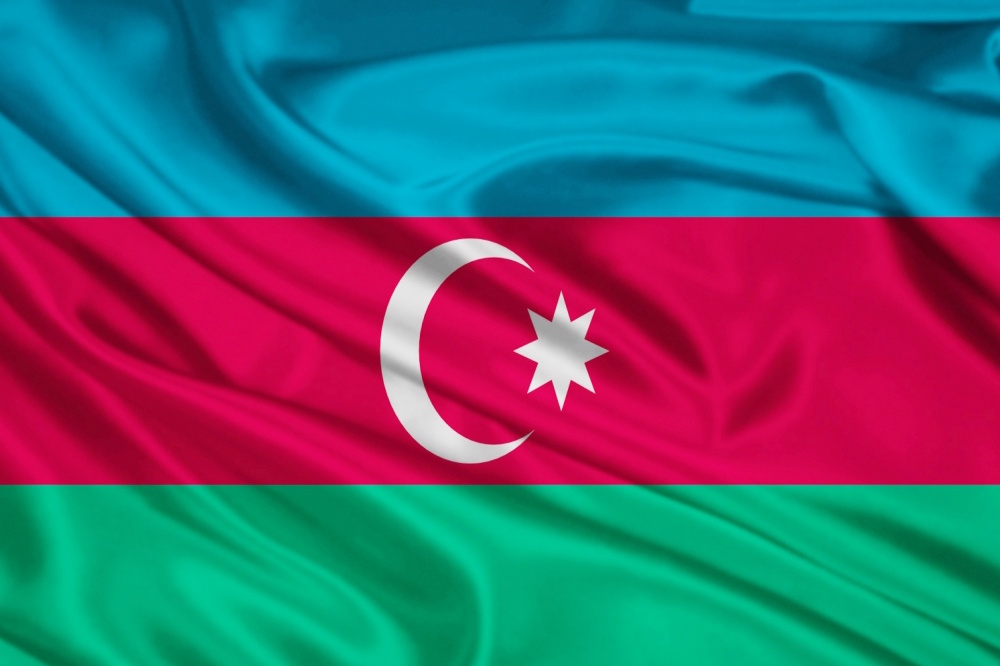
The ICJ expresses concern at the recent decision of the Nizami District Court of Baku to disbar Khalid Baghirov, a prominent lawyer who litigates before national and international jurisdictions including the European Court of Human Rights.
Khalid Baghirov had been accused of the use of improper expressions and inappropriate behaviour, following statements he made in a hearing before Sheki Appeal Court, alleging that the judge in the case was biased.
On 2 February 2015, the ICJ observed the disciplinary hearing in the case of Khalid Baghirov before the Nizami District Court of Baku.
The Court’s decision, on 10 July 2015, follows the disbarment earlier this month of lawyer Alaif Ghasanov, for making a public statement about the conditions of detention of one of his clients, Leyla Yunus, a prominent human rights defender currently held in detention.
There are grounds to believe that Khalid Baghirov’s disbarment is in retaliation for his representation of clients in high profile cases, including prominent human rights defenders.
“Disbarments such as this have a chilling effect on the work of other lawyers, sending a signal that they may be penalized for discharging their functions independently and in accordance with international standards on the role and duties of the legal profession,” said Róisín Pillay, Director of the ICJ Europe Programme.
“Without independent legal representation, those who come before the courts cannot receive a fair trial and the system’s capacity to fairly administer justice under the rule of law is undermined,” she added.
Access to effective and independent legal assistance is an indispensable element of the right to a fair trial, guaranteed under the European Convention on Human Rights and the International Covenant on Civil and Political rights, to which Azerbaijan is a party.
The ICJ affirms that freedom of expression of lawyers constitutes an essential requirement for the proper functioning of the legal profession.
Article 23 of the UN Basic Principles on the Role of Lawyers states that lawyers: “[…] have the right to take part in public discussion of matters concerning the law, the administration of justice and the promotion and protection of human rights and to join or form local, national or international organizations and attend their meetings, without suffering professional restrictions by reason of their lawful action or their membership in a lawful organization.”
The European Court of Human Rights commented in its recent decision in Moris v France that where a lawyer makes statements regarding the functioning the judiciary, a matter of public interest, little room is left for restrictions on such comments which are protected pursuant to the right to freedom of expression.
In particular, the Court held that “[…] a lawyer should be able to draw the public’s attention to potential shortcomings in the justice system; the judiciary may benefit from constructive criticism”.
The ICJ calls on the public authorities of Azerbaijan as well as the Azerbaijan Collegium of Lawyers to ensure that lawyers, including those representing opposition leaders or human rights defenders, are not identified with their clients’ causes and are able to discharge their functions freely without any fear of persecution, harassment or improper interference.
Background:
Khalid Baghirov, an Azerbaijani lawyer, has represented a number of clients in high-profile cases, including Ilgar Mammadov, Leyla and Arif Yunus and Rasul Djafarov.
He has filed over 40 applications to the European Court of Human Rights, thirteen of which are pending communication.
On 17 March, 2014, Sheki Court convicted Ilgar Mammadov, leader of the “Republican Alternative” movement and former presidential candidate, and sentenced him to seven years of imprisonment.
The case was appealed to Sheki Appeal Court, and a hearing in the appeal was held on 12 August 2014.
On 25 September 2014, judge of Sheki Appeal Court Rashid Huseynov filed a complaint (1 (107)-90/2014) before the Collegium of Advocates requesting disciplinary measures against Khalid Baghirov for a breach of the Law of the Republic of Azerbaijan “On Advocates and Advocates’ Activity”, which included a failure to wear “lawyers’ outfit” in the court room, and use of improper expressions and behaviour incompatible with standards of lawyer’s conduct.
According to the complaint, on 12 August 2014, at the appeal hearing of Mammadov’s case by the Sheki Appeal Court, Khalid Baghivov was alleged to have said: “… like a state, like a court… If there were justice in Azerbaijan, neither the judge Rashid Huseynov would make unjust and biased decision, nor the person like him would be a judge”. He allegedly did not wear a lawyer’s gown during the appeal herrings on 12 and 13 August as well as on 3 and 4 September 2014 hearings.
On 19 November 2014, the Disciplinary Commission of the Advocates’ Collegium issued an opinion, finding that the applicant’s speech aimed to defame the State and was in breach of lawyer’s ethical standards.
On 10 December 2014, the Presidium of the Collegium of Lawyers suspended Khalid Baghirov’s practice, stating inter alia as follows: “The fact that advocate Khalid Baghirov stated the expression ‘like a state, like a court’ in the open court session casts a shadow not only on judiciary branch of Azerbaijan, more importantly, on our state that is considered to be holy for each citizen of Azerbaijan. […] Moreover, by using expression ‘If there were justice in Azerbaijan, neither the judge Rashid Huseynov would make unjust and preconceived decision, nor the person like him would be a judge’ Khalid Baghirov humiliated authority of the whole Justice System of Azerbaijan”.
At the same time, the Presidium applied to the Nizami District Court seeking complete termination of his right to practice law.
Contact:
Róisín Pillay, Director, Europe Programme, roisin.pillay(a)icj.org
Temur Shakirov, Legal Adviser, Europe Programme, temur.shakirov(a)icj.org

Jul 8, 2015
Today, the ICJ presented its written submissions to the European Court of Human Rights in the case of A.N. v. France (Application No. 12956/15).
The case arises from the French authorities’ dismissal of an asylum application.
The ICJ’s submissions focus on:
- the obligation to ensure that the risk upon removal be assessed so as to guarantee that the protection of the Convention for the Protection of Human Rights and Fundamental Freedoms (‘the Convention’) be practical and effective;
- whether requiring coerced, including self-enforced, suppression of a fundamental aspect of one’s identity — as enforced concealment of one’s same-sex sexual orientation entails — is compatible with the Convention, in particular, Article 3;
- whether the criminalization of consensual same-sex sexual conduct gives rise to a real risk of Article 3 prohibited treatment, thus triggering non-refoulement obligations under that provision of the Convention; and
- the significance of the EU asylum acquis and the case-law of the Court of Justice of the European Union (CJEU), including the joined cases Minister voor Immigratie en Asiel v X, Y and Z v Minister voor Immigratie en Asiel.
In its observations, the ICJ also drew the Court’s attention to the CJEU’s judgment in A, B, and C v Staatssecretaris van Veiligheid en Justitie, as well as to recent Belgian and Italian superior courts’ reported decisions that have found in favour of Senegalese homosexual applicants based on, inter alia, the risk to the individuals concerned arising from Senegal’s criminalization of consensual same-sex relations and of becoming victim of homophobic crimes, including at the hands of family members, from which there is no effective state protection.
France-A.N.v.FRANCE AMICUS-Advocacy-legal submissions-2015-ENG (full text in PDF)