Dec 18, 2014 | News
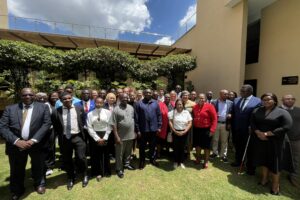
Today’s Opinion by the Court of Justice of the European Union (CJEU) in Luxembourg on the European Union’s (EU) accession to the European Convention on Human Rights (ECHR) is a regrettable setback for human rights in Europe, said Amnesty International, the ICJ and the AIRE Centre.
Dec 2, 2014 | News
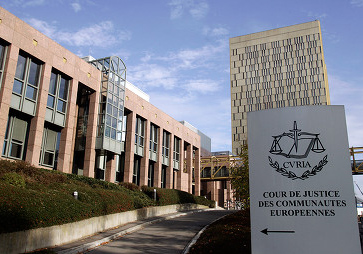
Today, the Court of Justice of the European Union (CJEU) delivered its judgment in the joint cases of A, B and C v. Staatssecretaris van Veiligheid en Justitie.
It affirms the need for national authorities to undertake individualized credibility assessments in asylum cases involving claims of persecution based on sexual orientation.
The ruling concerned a request for a preliminary ruling from the Netherlands, through its Council of State, to the CJEU.
The cases arose from three applications for asylum in the Netherlands by three men claiming a well-founded fear of persecution in their countries of origin based on their alleged same-sex sexual orientation.
The Dutch authorities rejected each asylum claim on the basis that each applicant had failed to prove his same-sex sexual orientation.
The Council of State asked the CJEU what limits the EU Qualification Directive and the Charter of Fundamental Rights, and in particular article 3 (right to the integrity of the person) and article 7 (respect for private and family life), impose on the method of assessing the credibility of a declared sexual orientation, and whether these limits are different from those applying to the assessment of credibility in asylum claims based on other grounds.
Interpreting the Qualification Directive in light of articles 3 and 7 of the Charter, as well as article 1, i.e. human dignity, the Court held that EU law does impose certain requirements on refugee status determination authorities.
The ICJ welcomes the Court’s determination that the competent domestic authorities must ensure that any credibility assessment method must allow for an individualized consideration of each applicant’s claim, having regard to its specific features, and that it is the duty of the State to cooperate with the applicant in the context of the assessment of all the relevant elements of her or his claim.
The ICJ welcomes a number of other aspects of the ruling, including:
- The emphasis on the Netherland’s need to comply with the Charter of Fundamental Rights;
- The fact that the Court firmly came down against seemingly intrusive and lewd questioning of an applicant’s sexual practices and proclivities, which it held to be contrary to respect for private and family life; and,
- The Court’s awareness of the particular challenges relating to the disclosure of one’s sexuality. The court noted that an applicant may be understandably reticent in revealing intimate aspects of his or her life and that therefore late disclosure of same-sex sexual orientation should not necessarily undermine the applicant’s credibility.
See also the ICJ’s commentary on the CJEU judgment in X, Y and Z v. Minister voor Immigratie en Asiel.

Nov 28, 2014 | Доклад миссии установления фактов, Доклады, Новости, Публикации, Статьи
В докладе МКЮ делается вывод о том, что для обеспечения независимости судебных органов в России и их способности стать на страже Верховенства закона необходимо провести всестороннюю реформу системы назначения судей и их продвижения по службе, а также иных аспектов судебной системы.
В докладе, подготовленном по итогам ее миссии в Российскую Федерацию, рассматриваются вопросы отбора судей, их назначения и продвижения по службе, а также анализируются институциональные, процессуальные и практические аспекты назначения и продвижения судей.
Также в докладе освещено объединение Верховного Суда РФ и Высшего Арбитражного Суда РФ и процесс переназначения судей в новый состав Верховного Суда, крайне актуальные с точки зрения более общего предмета миссии – процедуры назначения судей.
В докладе делается вывод о том, что слабые стороны процедуры назначения судей порождают недостатки с точки зрения независимости российских судебных органов, на которые МКЮ обратила внимание в своих предшествующих докладах: «Состояние судебной системы в России» 2010 года и «Защита правосудия: дисциплинарное производство в отношении судей в Российской Федерации» 2012 года.
Расхождения между законом и практикой в процессе отбора судей, а также «внепроцессуальные» рычаги влияния и «обходные пути», к которым прибегают лица, руководящие комплексным многоэтапным процессом отбора и назначения судей, относятся к основным недостаткам процедуры.
В докладе предложен ряд конкретных рекомендаций, затрагивающих различные аспекты процедуры отбора, органы, которые играют главную роль в данном процессе, а также необходимую судебную реформу.
В основу доклада легли выводы миссии, проведенной в мае 2014 г., участники которой встретились с рядом заинтересованных сторон в г. Москве, включая судей, независимых экспертов и НКО.
В ходе миссии были проведены два круглых стола с участием ряда экспертов.
Данные обсуждения были организованы при поддержке Института права и публичной политики и Независимого экспертно-правового совета.
В проведении миссии приняли участие: Азар Качалия (судья Апелляционного Суда ЮАР и Председатель Исполнительного комитета МКЮ), Джолин Шуккинг (судья Административного высокого торгово-промышленного суда Нидерландов), Видар Штрёмме (председатель норвежского отделения МКЮ), Роушин Пиллей (директор Европейской программы МКЮ), Тимур Шакиров (правовой советник Европейской программы МКЮ) и Мари Гьефсен (член норвежского отделения МКЮ). Проведению миссии содействовали консультации Тамары Морщаковой, комиссара МКЮ и судьи Конституционного Суда РФ в отставке.
Контакты:
Роушин Пиллей, директор Региональной программы МКЮ по Европе, roisin.pillay(a)icj.org
Тимур Шакиров, правовой советник Региональной программы МКЮ по Европе, temur.shakirov(a)icj.org
RUSSIA-Selecting the judges-News-2014-Rus (полный текст на русском, PDF)
RUSSIA-Selecting the judges-Publications-Reports-2014-Rus (полный доклад на русском, PDF)

Nov 28, 2014
A new ICJ report concludes that a comprehensive reform of the system judicial appointments and promotions, as well as of other aspects of the judicial system, is essential to ensure that the judiciary in Russia is independent and able to be an effective guardian of the Rule of Law.
Following a mission to the Russian Federation, the report examines issues of judicial selection, the appointment and promotion of judges, considers the institutional, procedural and practical aspects of judicial appointments and promotions.
The Supreme Court and the High Arbitration Court of the Russian Federation merger and a process of re-appointment of judges to the new Supreme Court, which was highly relevant to the mission’s more general concern with judicial appointments, are addressed in the report.
The report concluded that weaknesses in the judicial appointments process have contributed to shortcomings in the independence of the Russian judiciary, which the ICJ has highlighted in previous reports of 2010, the State of the Judiciary in Russia and of 2012 Securing Justice: the Disciplinary system for judges in the Russian Federation.
A gap between law and practice in the selection process and “extra procedural” influences and “shortcuts” used by those tasked with navigating the complex multistage process of selection and appointment of judges are mentioned among main problems in the procedure.
The report offers a number of specific recommendations regarding different aspects of the selection procedure, institutions that play a major role in the process and the judicial reform which needs to be undertaken.
The report was based on the findings of the Mission in May 2014, which met with a number of stakeholders in Moscow, including judges, independent experts and NGOs.
Two expert round-table discussions were held during the mission.
The round-table discussions were organized in cooperation with the Institute of Law and Public Policy and the Independent Council for Legal Expertise.
The Mission included Justice Azhar Cachalia, Judge of the South African Court of Appeal and Chair of the ICJ Executive Committee, Judge Jolien Schukking, Judge of the Administrative High Court for Trade and Industry of the Netherlands, Vidar Stromme, Chair of the ICJ-Norway, Róisín Pillay, Director of the ICJ Europe Programme, Temur Shakirov, Legal Adviser of the ICJ Europe Programme and Mari Gjefsen, member of the ICJ-Norway. The mission benefited from the advice of Justice Tamara Morshakova, ICJ Commissioner and former justice of the Constitutional Court of the Russian Federation.
Contact:
Róisín Pillay, Director, Europe Programme, roisin.pillay(a)icj.org
Temur Shakirov, Legal Adviser, Europe Programme, temur.shakirov(a)icj.org
RUSSIA-Selecting the judges-News-2014-Rus (full text in PDF)
RUSSIA-Selecting the judges-Publications-Reports-2014-Eng (full text in PDF)
RUSSIA-Selecting the judges-Publications-Reports-2014-Rus (full text in PDF)
Nov 27, 2014 | News
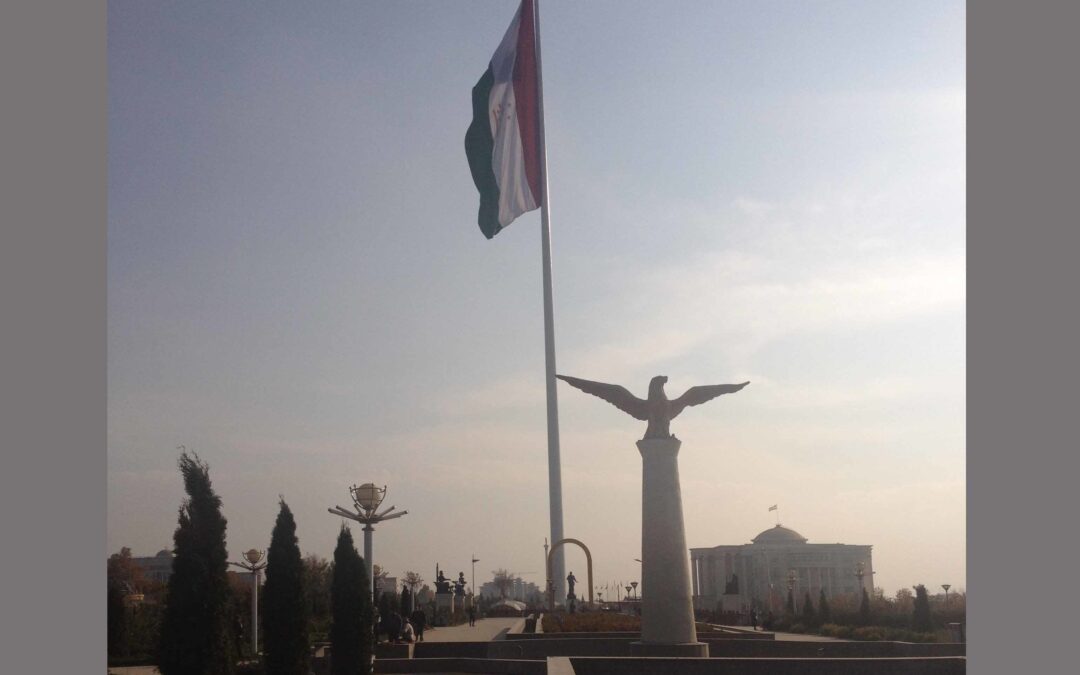
Following a visit to the country from 15 to 19 November, the ICJ called on the government of Tajikistan to take meaningful steps to ensure that the institutional independence of the legal profession and the personal integrity of individual lawyers are secured.
The ICJ expressed concern at the continued detention of lawyer Shukhrat Kudratov, on criminal charges. It welcomed the release of another lawyer, Fakhriddin Zokirov, who had been on trial on charges that appeared to constitute an act of retaliation for his work as a defence lawyer. He was released on 3 November as a result of an amnesty.
“While the release of Fakhriddin Zokirov is a positive step, we are concerned that Shukhrat Kudratov remains in detention pending trial on similar criminal charges. We have received credible information that the charges against him are linked to his representation of a client, contrary to international standards on the independence of lawyers”, said Róisín Pillay, Director of the Europe and CIS programme at the ICJ.
The ICJ reiterated its concern at aspects of the reform of the legal profession presently under consideration under the draft law on Advokatura.
Following a mission to Tajikistan in 2013, the ICJ expressed concerns that the independence of the legal profession would be undermined by requirements in the draft law that all lawyers go through a new qualification process, administered by a body in which the Ministry of Justice would play a prominent role.
Amendments recently introduced to the draft law have not altered the inappropriate role which the Ministry of Justice would play in regulating the profession.
Under the draft law, the Deputy Minister of Justice would serve as an ex officio Chair of the Qualification Commission which determines who may be accredited as a lawyer.
This significant role by a member of the executive would jeopardize the independence of the profession.
The ICJ also remains concerned that the draft law would still require requalification of many lawyers, with exemptions only for those with at least 15 years of professional experience as defence lawyers.
Such provisions are contrary to international standards on the independence of the legal profession, including the UN Basic Principles on the Role of Lawyers.
The ICJ recalls Tajikistan’s earlier commitment during the UN Human Rights Committee’s session of 2013 that the Qualification Commission would be placed under the Ministry of Justice only for a short transitional period. A provision to this effect has not yet been introduced in the draft law.
Contact:
Róisín Pillay, Director, ICJ Europe Programme, roisin.pillay(a)icj.org
Temur Shakirov, Legal Adviser, ICJ Europe Programme, temur.shakirov(a)icj.org
Notes:
From 15 to 19 November, an ICJ legal expert, Dr Stefan Strobl, visited Tajikistan and held meetings with a number of international and local civil society organizations and lawyers to discuss recent progress on the reform of the legal profession and the wide ranging challenges it faces.
The visit followed an ICJ mission to Tajikistan in November 2013.
Tajikistan-Independence of legal profession-News-webstory-2014-RUS (full text in PDF)