
Feb 21, 2014 | Advocacy, News, Non-legal submissions
The ICJ and other human rights organizations issued a public statement calling on Spanish lawmakers not to pass draft legislation that, if approved, would seriously limit Spanish courts’ ability to investigate and prosecute serious crimes under international law.
The draft legislation, tabled in Parliament by the Popular Party (PP), provides that, for cases involving allegations of genocide, crimes against humanity and war crimes not occurring on Spanish territory to be investigated and prosecuted in Spain, the suspect must either be a Spanish national or a foreigner habitually resident in Spain or a foreigner who is in Spain, whose extradition has been denied by Spanish authorities.
For case of torture and enforced disappearance, the proposed legislation requires that the suspect be a Spanish national or, alternatively, that the victim be a Spanish national at the time when the crime was committed and that the suspect be present in Spain when jurisdiction is assumed.
Where these conditions are not met, the proposal would allow Spanish courts to hear cases for those crimes for which prosecution is required by international treaties where the suspect is a foreigner on Spanish soil, so long as Spain has received and denied an extradition request.
The ICJ and other organizations stressed in their statement that if enacted, this legislation would close the doors of Spanish courts to certain victims of gross human rights violations who are unlikely otherwise to be able to obtain justice, particularly within their own jurisdictions.
Spain-Universaljurisdiction-NGOsJointStatement-2014-eng (download the joint statement in English)
Spain-Universaljurisdiction-NGOsJointStatement-2014-SPA (download the joint statement in Spanish)

Feb 17, 2014 | News
The ICJ today expressed concern at a ruling of the Italian Constitutional Court which denies full accountability of Italian officials in the case of the 2003 unlawful rendition, enforced disappearance and torture of Osama Mustafa Hassan Nasr, also known as Abu Omar.
In a ruling making no mention of the international human rights law obligations of Italy, the Court agreed with the contention of the Italian Government that it may protect from disclosure and use in court what it considers to be “secrets of state” even if to do so would prevent the revelation of the truth about serious crimes and human rights violations and the holding of those responsible to account.
The Court ruled that, under the Italian Constitution and the law on secrets of state, it is the sole prerogative of the President of the Council of Ministers, exercising “a wide discretionary power”, to establish the width of application of the secret of state doctrine.
The Court affirmed that such decisions cannot be questioned by ordinary courts.
A number of Italian and United States intelligence agents, including the former Director of the Italian Military Secret Service, Nicolò Pollari, had been found guilty of criminal offences in connection with the rendition.
The Constitutional Court’s ruling is likely to effectively annul the convictions of the top Italian secret agents involved in the rendition.
“This ruling constitutes a serious blow to the fight against impunity for some of the most serious crimes under international law”, said Massimo Frigo, Legal Adviser for the Europe Programme. “It disregards fundamental pillars of international human rights law, including the right to truth and the duty to investigate, prosecute and ensure accountability for gross violations of human rights”.
“The doctrine of “secret of state” must never be used as a means to cover up responsibility for crimes under international law or gross violations of human rights,” Frigo added. “The United States, which is primarily responsible, deplorably has abdicated its responsibility to meaningfully investigate and hold officials to account for gross human rights violations in its rendition and secret detention programme. Italy, by contrast, had been the only country in which the courts had imposed convictions for the US-led renditions. After this judgment, there is a real risk that the Italian complicity in this crime will never be fully ascertained and accounted for.”
The ICJ is concerned at reports that time limits for the conclusion of criminal proceedings in this case could expire in two months, despite the fact that, under international standards, limitation periods should not be imposed in respect of serious of crimes such as torture and enforced disappearance.
The expiry may foreclose any further investigation or criminal trial on Italian involvement in this rendition, which should occur irrespective the obstacles caused by the secret of state doctrine.
The ICJ is particularly concerned that successive Italian governments since 2007 have either proposed or refused to withdraw government applications before the Constitutional Court affirming that the executive prerogative on secret of state takes precedence over the fight against impunity.
The ICJ considers that the law and practice regarding the “secret of state” must be reformed to be into compliance with Italy’s duty to investigate crimes under international law and gross human rights violations.
While States may protected a limited amount of information when strictly necessary for legitimate national security purposes, they may not do so with respect to information concerning gross violations of human rights.
Background
Hassan Mustafa Osama Nasr, also known as Abu Omar, was been kidnapped in 2003 in the streets of Milan by CIA operatives and subject to rendition to Egypt where he had been subject to enforced disappearance, arbitrary detention and torture.
The case of Abu Omar was one of at least 136 known cases in the rendition and secret detention carried out since 2001 by the United States, with the participation of some 54 other States, which typically involved multiple human rights violations, including torture and ill-treatment, enforced disappearance, and arbitrary detention.
The Constitutional Court judgment effectively reversed the ruling of the Court of Cassation that ordered the reopening of the trial against the former Director of the Italian Military Secret Service, Nicolò Pollari, his deputy, Marci Mancini, and other Italian military secret services operatives for their alleged complicity in the operation.
The Court of Cassation had held that the doctrine of “secret of state”, which barred their conviction, would not apply to them, because the Italian secret services have no authority to conduct such illegal operations and they had therefore effectively acted in private capacity.
Following that judgment, the Court of Appeal convicted, among others, for complicity in the kidnapping Nicolò Pollari to ten years of imprisonment and Marco Mancini to nine years.
The Court of Cassation upheld in absentia the convictions and sentences of 23 US agents involved for the offence of kidnapping.
On 5 April 2013, the President of the Italian Republic, Giorgio Napolitano, granted a pardon for US Colonel Joseph L. Romano III, who had been convicted by Italian courts of the offence of complicity with the US in kidnapping for his role in the rendition of the Milan cleric Abu Omar in 2003.
Contact:
Massimo Frigo, Legal Adviser, ICJ Europe Programme, massimo.frigo(a)icj.org

Feb 11, 2014
An ICJ report published today raises concerns at the effect that the recent reform is having on the organization and effective functioning of the legal profession in the country.
The report casts light on a conflict in the legal profession, which has led to apparently arbitrary disciplinary action against a significant number of lawyers.
The report, Ukraine: conflict, disbarments and suspensions in the legal profession, reveals the escalating dispute in the legal profession following the implementation of a new law, signed by the President on 5 July 2012, which significantly changed the organization of the profession and provides for the establishment of a new bar association.
The law, which provided an opportunity to strengthen the independence of the profession, in practice has led to a serious split between rival groups of lawyers and to the abuse of the disciplinary process.
The conflict in the profession came to a head when a number of lawyers were prevented from taking part in the founding Constituent Congress for the establishment of the new bar association, in November 2012.
This led to those lawyers forming a parallel Congress and to the establishment of two rival National Associations of Lawyers.
“The fact that approximately half of the delegates were unable to take part in the main founding Congress of the National Association of Lawyers points to a worrying fracturing and weakness in the institutions and procedures of the profession,” Temur Shakirov, Legal Adviser of the Europe Programme, said today. “More generally, the way in which the reform was implemented has led to instances of abuse of powers within the legal profession, through for example imposing disciplinary sanctions.”
After the conclusion of the Congress, seemingly unwarranted disciplinary action was taken against lawyers who were active in one of the two rival National Bar Associations.
The report finds a consistent pattern in the decisions to initiate such disciplinary proceedings, suggesting reasons other than those related the lawyers’ professional conduct.
These disciplinary proceedings raise serious concerns in regard to possible violations of rights to freedom of association and the right to participate in the governance of the legal profession.
The ICJ noted that the UN Basic Principles on the Role of Lawyers, require the State to ensure that disciplinary sanctions are not unfairly or arbitrarily imposed on lawyers for action taken in accordance with the legitimate exercise of their professional duties, and in accordance with accepted standards of professional conduct.
“We call on the authorities to investigate the conflict in the profession and subsequent disciplinary action,” said Temur Shakirov. “They must ensure that lawyers are able to carry out their duties in an atmosphere free of intimidation, hindrance, harassment or improper interference.”
Contact:
Róisín Pillay, Director, ICJ Europe Programme, roisin.pillay(a)icj.org
Temur Shakirov, Legal Adviser, ICJ Europe Programme, temur.shakirov(a)icj.org
Ukraine – Conflict, Disbarments And Suspensions In The Legal Profession – publications-report-2014-eng (full text in pdf)
Ukraine – Conflict, Disbarments And Suspensions In The Legal Profession – publications-report-2014-ukr (full text in pdf)
Feb 3, 2014
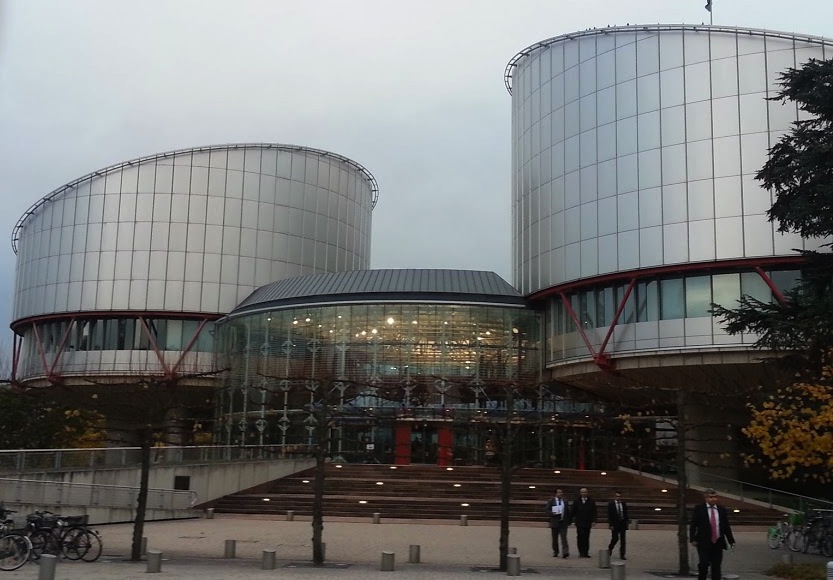
The ICJ, together with Amnesty International, has responded to a Council of Europe consultation on the long-term future of the European Convention on Human Rights and European Court of Human Rights system.
In their response, the ICJ and Amnesty International stress that the guiding principles in any new reforms of the Convention system must be that they serve to enhance the protection of human rights, and in particular to ensure better implementation of the Convention at national level; that they enhance access of individuals to justice for violations of the full range of Convention rights; that that they ensure more effective reparation for violation of the rights guaranteed under the Convention. The success of the Convention system in the long-term requires:
- respect by all Member States for the Convention institutions, and acknowledgment of the shared responsibility for the protection of Convention rights;
- enhanced national implementation of the Convention, including by states bringing their law and policy into line with judgments of the Court regarding other Member States;
- adequate powers and jurisdiction of the Court to ensure consistency in standards, and to ensure effective protection to individuals, preserving the system of individual petition in its current form;
- measures to address systemic human rights problems leading to numerous similar applications to the Court;
- further reforms to execution of judgments and supervision of execution procedures, in particular for systemic violations, making Article 46(4) operational and giving further consideration to financial penalties.
Europe-long-term future of EU Convention-advocay-position paper-2014 (full text in pdf)