
Oct 21, 2013 | News
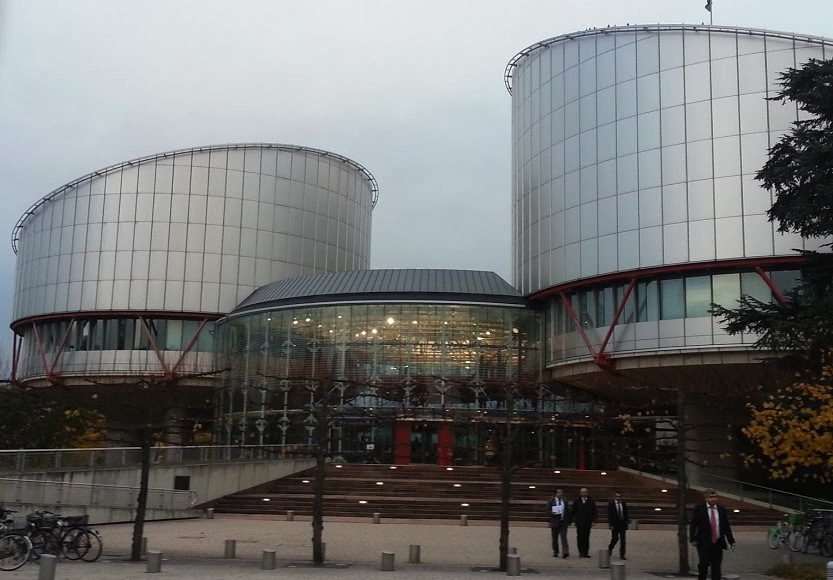
The ICJ welcomes today’s ruling by the Grand Chamber of the European Court of Human Rights in the case of Inés Del Rio Prada, affirming that changes made retroactively to the remission of her sentence violated her rights.
The ICJ, which intervened as third-party in the case, says the judgment reinforces and makes effective the principle of non-retroactivity of criminal law, an essential element of the rule of law.
“This is a highly significant judgment that affirms and strengthens the rule of law in criminal sentencing,” said Róisín Pillay, Director of the ICJ Europe Programme. “Rules and practices that have a significant impact on the calculation and remission of sentences must not be applied retroactively to the detriment of a convicted person.”
“The key principle that the Grand Chamber has upheld today is that the rules that apply to the calculation of the sentence to be served, must be clear and foreseeable under the law at the time of conviction. Subsequent re-interpretation by the courts cannot fundamentally revise the principles that apply to a sentence already handed down. While States have the responsibility for setting sentencing rules for crimes, any changes to those rules which would result in an increased penalty must not applied retroactively in breach of (Article 7 of) the European Convention on Human Rights,” she added.
BACKGROUND:
Inés Del Rio Prada had been convicted of terrorism offences and sentenced to a total of over 3,000 years of imprisonment.
According to Spanish sentencing rules in force at the time, this theoretical sentence was tantamount to an effective sentence of 30 years imprisonment.
While at that time, the benefit of sentence reduction for work performed in prison was applied to the 30-year period, in 2008 the Spanish courts decided to deduct such benefits from the 3,000 years of nominal imprisonment instead, thereby significantly reducing their impact, and leading to a considerably longer sentence in the case of the applicant.
In its judgment, the Grand Chamber held that the application of changes to Spanish sentencing rules as applied to applicant Inés Del Rio Prada had violated the prohibition on retroactive penalties guaranteed in Article 7 of the European Convention on Human Rights.
It held that a 2006 decision of the Spanish Supreme Court, which altered the system of calculation of maximum terms of sentences, leading to reduced remission of sentences for work done in prison, constituted a retroactive redefinition of the sentence previously imposed, which could not have been foreseen.
As such, the Court held that Spain had violated its obligations under article 7 of the European Convention on Human Rights (ECHR).
The Court also found that the applicant’s continued detention violated the right to liberty under Article 5(1) ECHR, and required her release at the earliest possible date.
Contact:
Róisín Pillay, Director, ICJ Europe Programme, t +32 2 734 8446; e-mail : roísín.pillay(a)icj.org
Read also:
Third Party Intervention in Del Rio Prada v. Spain
Oct 17, 2013
The ICJ and Amnesty International presented a third party intervention in the case Abu Zubaydah v. Poland before the European Court of Human Rights.
In the third party intervention in this case on the alleged complicity of Polish authorities in the US-led operation that led to the rendition, secret detention and torture of Abu Zubaydah, the ICJ and AI outlined developments on the relevant knowledge imputable to Contracting Parties at the relevant time; the obligation to investigate and bring to justice the alleged perpetrators of gross violations of Convention Rights; the right to truth; and the right of the general public to know the truth and the application of the State secrets doctrine.
AbuZubaydah_v_Poland-AIICJThirdPartyIntervention-ECtHR-Final (download the third party intervention)

Oct 17, 2013 | Events
The ICJ participated in a meeting of experts within the Council of Europe’s Steering Committee on Human Rights (CDDH) in Strasbourg on 14-16 October 2013.
The Drafting Group on Human Rights and Business of the Steering Committee on Human Rights (CDDH-CORP) has drafted a Declaration of support to the Guiding Principles on Human Rights and Business for consideration by the Committee of Ministers. The ICJ expresses satisfaction at the progress made during the meeting and hopes that the draft declaration will be finally approved by Ministers and that this expert group will be able to move on to drafting a non-binding instrument on access to justice in the context of business activities.
Steering Committee meeting page (for agenda and report, including the draft Declaration)
Photo credit: © notfrancois (the author has no involvement in nor does support this submission)

Oct 14, 2013
The ICJ has submitted to the Committee against Torture comments in advance of its consideration of the Second Periodic Report of Kyrgyzstan under the Convention against Torture and Other Cruel, Inhuman or Degrading Treatment or Punishment (CAT).
The ICJ submission focuses on concerns about the implementation by Kyrgyzstan of Articles 1, 2, 3, 4, 11, 12, 14, 15 and 16 of the CAT concerning:
a) failure to prevent torture and other ill-treatment of persons in detention;
b) application of the definition of the crime of torture and its implications;
c) failure to ensure and respect the right of detainees of access to a lawyer;
d) failure to ensure independent, impartial and thorough investigation of acts of torture and other ill-treatment; and
e) failure to respect the prohibition of the use of evidence obtained under torture or other ill-treatment.
Finally, the submission addresses the failure of the authorities to ensure reparation to victims of torture and other ill-treatment, including that which should result from findings of violations by UN treaty bodies.
Kyrgyzstan- CAT51-Legal submission-2013 (download the submission in pdf)
Oct 10, 2013
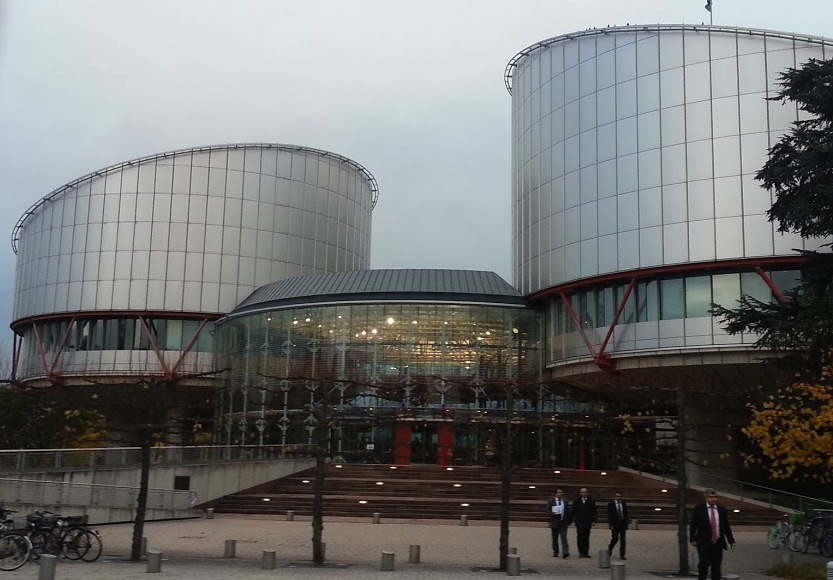
Today, the International Commission of Jurists and the Open Society Justice Initiative submitted a third party intervention before the European Court of Human Rights in the case of Gîrleanu v. Romania.
Marian Gîrleanu was journalist fined for having been in information considered confidential by the Romania state authorities concerning international involvement in the Iraq and Afghanistan wars. The information was never published. In their intervention, the ICJ and OSJI submit that sanctions for unauthorized possession or disclosure of information by journalists and other similarly protected persons may seriously impair their rights under Article 10 of the European Convention on Human Rights right to receive and impart information, and may only be applied in very exceptional circumstances. The two human rights organizations stress that it is the State, not journalists, that is responsible for the protection of government information. Journalists and other who perform a public watchdog function that is fundamental to a democratic to a democratic society may not be subject to sanctions for possession or disclosure in the public interest of information.
ECtHR-ThirdPartyIntervention-Girlenau-Romania-2013 (Read the third party intervention)