Dec 6, 2013 | Новости, Статьи
6 декабря МКЮ завершила миссию по наблюдению дела в Казахстане о лишении лицензии адвоката Полины Жуковой.
Адвокаты Любовь Агушевич и Полина Жукова были лишены их адвокатских лицензий после дисциплинарного разбирательства, инициированного Министерством юстиции в отношении их защиты клиента в судебных разбирательствах.
Предполагаемое неправомерное поведение, приводящее к лишению лицензии, включало среди прочего, заявление о невиновности их клиента, представление ходатайств в суд, представление просьб об отводах, один адвокат «задающий вопрос, на который она знала ответ», чтение страницы из документа дела и подачи ходатайства об осмотре свидетелей, присутствовавших на слушании.
Эти действия были истолкованы председательствующим судьей по уголовному делу, в котором адвокаты представляли обвиняемого, как нарушения профессиональной этики, и впоследствии были использованы в качестве основания для лишения их лицензий на практику права.
Наблюдатели МКЮ, судья Кетил Лунд, комиссар МКЮ и бывший судья Верховного суда Норвегии, и адвокат из Таджикистана Зульфикор Замонов наблюдали за апелляционным слушанием Верховного суда по делу 5 декабря.
Верховный суд поддержал ходатайство адвоката Жуковой о возобновлении разбирательства по ее делу и пересмотре вопроса о законности ее лишения лицензии.
«МКЮ приветствует решение рассмотреть дело против адвоката и будет продолжать следить за этим делом», – сказал Темур Шакиров, юрисконсульт Программы МКЮ Европы.
Также читайте:
Процедуры лишения статуса адвокатов в Казахстане
Дисциплинарное производство в отношении адвокатов в странах СНГ: анализ международного права и стандартов
Контакт:
Роушин Пиллей, директор Региональной программы МКЮ по Европе, roisin.pillay(a)icj.org
Тимур Шакиров, правовой советник Региональной программы МКЮ по Европе, temur.shakirov(a)icj.org
Dec 6, 2013 | News
On 6 December, the ICJ concluded a trial observation mission to Kazakhstan on the case of the disbarment of lawyer Polina Zhukova.
Lawyers Lyubov Agushevich and Polina Zhukova were disbarred following disciplinary proceedings initiated by the Ministry of Justice regarding their defence of a client in court proceedings.
The alleged misconduct, which lead to the disbarment of the lawyers, included inter alia a statement of innocence of their client, submitting motions to the court, submitting requests for recusals, one lawyer “putting a question which she knew the answer to”, reading a page out of the case file, and filing a motion for an examination of the witnesses who attended the hearing.
These actions were interpreted by the presiding judge in the criminal case in which the lawyers represented the defendant as violations of professional ethics, and were later used as grounds for the termination of their licenses to practice law.
ICJ observers, Justice Ketil Lund, an ICJ Commissioner and a former Justice of the Supreme Court of Norway, and Zulfikor Zamonov, a lawyer from Tajikistan, observed the Supreme Court appeal hearing in the case on 5 December.
The Supreme Court upheld the motion of lawyer Zhukova to resume proceedings in her case and reconsider the issue of the lawfulness of her disbarment.
“The ICJ welcomes the decision to review the case against the lawyer and will continue following the case,” said Temur Shakirov, Legal Adviser of the ICJ Europe Programme.
Read also:
Disbarment proceedings against lawyers in Kazakhstan
Disciplinary action against lawyers in CIS countries: analysis of international law and standards
Contact:
Róisín Pillay, Director, ICJ Europe Programme, roisin.pillay(a)icj.org
Temur Shakirov, LegalAdviser, ICJ Europe Programme, temur.shakirov(a)icj.org
Dec 3, 2013 | Новости, Статьи
Сегодня МКЮ рассмотрела слушание по делу Зинаиды Мухортовой, адвоката, задержанной до недавнего времени в психиатрическом учреждении, предположительно из за выполнения своих профессиональных обязанностей, но выпущенной 1 ноября.
На слушании 2 декабря Карагандинский областной суд подтвердил законность ее задержания, поддерживая ранее принятое решение Балхашского городского суда 20 августа 2013 года о предоставлении ходатайства прокуратуры о задержании адвоката.
«Вероятность ее повторного задержания для законного осуществления ее профессии поднялась после этого решения», – прокомментировала Альмаза Османова, наблюдатель МКЮ, присутствовавшая на слушании.
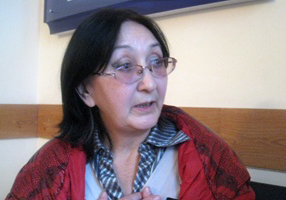
Заместитель начальника медицинского учреждения, в котором была задержана Зинаида Мухортова (фото), доктор Р.Р. Искаxaков присутствовал на слушании и настаивал на законности ее задержания.
МКЮ ранее сообщала об отказе доктора Искахакова освободить адвоката Мухортову до завершения всех судебных процессов.
Миссия МКЮ по наблюдению за судом состояла из двух наблюдателей: Альмазы Османовой, практикующего юриста из Кыргызстана и Каюма Юсуфова, практикующего юриста из Таджикистана.
МКЮ прежде уже делала заявления после задержания адвоката Мухортовой и последующего освобождения из психиатрического учреждения:
Казахстан: МКЮ приветствует освобождение адвоката, содержавшейся в психиатрическом учреждении
Казахстан: Содержание адвоката в психиатрической лечебнице должно быть прекращено
Контакты:
Роушин Пиллей, директор Региональной программы МКЮ по Европе, roisin.pillay(a)icj.org
Тимур Шакиров, правовой советник Региональной программы МКЮ по Европе, temur.shakirov(a)icj.org
Dec 3, 2013 | News
Today, the ICJ observed a hearing in a case concerning Zinaida Mukhortova, a lawyer detained until recently in a psychiatric facility, allegedly for carrying out her professional duties, but released on 1 November.
At the hearing on 2 December, the Karaganda Regional Court confirmed the lawfulness of her detention, upholding the earlier decision of the Balkhash City Court of 20 August 2013, to grant the motion of the Prosecutor’s Office to detain the lawyer.
“The likelihood of her repeated detention for the lawful exercise of her profession has risen following this decision,” Almaza Osmanova, an ICJ observer present at the hearing, commented.
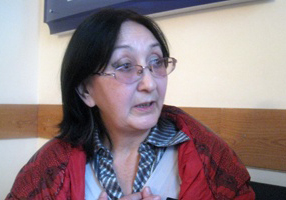
The deputy Head of the Medical Facility in which Zinaida Mukhortova (photo) was detained, Doctor R.R. Iskahakov was present at the hearing and insisted on the lawfulness of her detention.
The ICJ previously reported Doctor Iskahakov’s refusal to release lawyer Mukhortova until all the court proceedings had been completed.
The ICJ trial observation mission consisted of two observers: Almaza Osmanova, a practicing lawyer from Kyrgyzstan and Kayum Yusufov, a practicing lawyer from Tajikistan.
The ICJ has previously made statements following lawyer Mukhortova’s detention and subsequent release from the psychiatric facility:
Kazakhstan: ICJ welcomes release of a lawyer from psychiatric detention
Kazakhstan: psychiatric detention of lawyer must be ended
Contact:
Róisín Pillay, Director, ICJ Europe Programme, roisin.pillay(a)icj.org
Temur Shakirov, LegalAdviser, ICJ Europe Programme, temur.shakirov(a)icj.org
Nov 18, 2013 | News
Following its mission to Tajikistan on 10-13 November, the ICJ called on the Tajikistan authorities to reconsider provisions of a draft law which could undermine the independence of the legal profession.
The draft Law on Lawyers’ Activities and Advokatura would allow the Ministry of Justice a significant role in regulating entry to the profession.
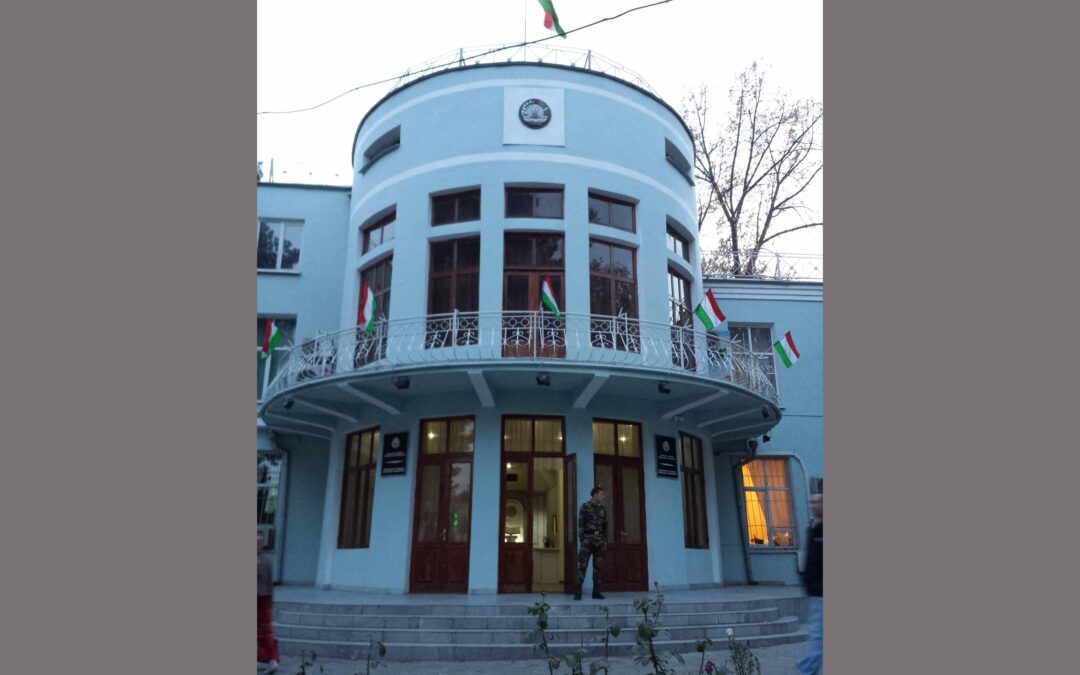
In particular, the Qualification Commission for lawyers, which would be responsible for access to the profession, would operate under the Ministry of Justice (picture).
It would be chaired by a deputy Minister, and would also include five lawyers, one representative of Parliament, one legal academic, and one other representative of the Ministry of Justice.
It is particularly worrying that all lawyers would be required to go through a new qualification process, carried out by this Commission, within one year of the new law coming into force.
“The draft law would bring welcome reforms, unifying a divided profession under a single, independent, Union of Lawyers. However, the value of these reforms would be undermined, since every lawyer would have to go through a new qualification process, the nature of which is not yet clear, administered by a body under the Ministry of Justice,” said Judge Egbert Myjer, Commissioner of the ICJ.
“The procedure would risk cleansing the profession of independent lawyers and leading to de facto domination of the profession by the Ministry of Justice, contrary to the UN Basic Principles on the Role of Lawyers,” he added.
Under international standards on the role of lawyers, independent self-governing professional associations of lawyers should be established, and should have sufficient powers to regulate the profession, including control of the qualification of lawyers.
The ICJ emphasized that at present there is a lack of consistency in the varied qualification procedures in the different sections of the legal profession in Tajikistan, which impedes high professional standards.
This should be addressed through a unified, independent and rigorous qualification process administered by the profession itself, in line with international standards, and as recommended by the UN Human Rights Committee, the International Bar Association and the ICJ.
The ICJ heard consensus from lawyers’ associations in Tajikistan that the proposed role of the Ministry of Justice would impair the effective and independent work of lawyers.
The lawyers’ associations added that these concerns were not taken into account in the drafting process.
In response to criticism by the UN Human Rights Committee earlier this year, the Minister of Justice stated that the Qualification Commission would only be placed under the Ministry for Justice for a transitional period.
This is not reflected in the current draft law. However, the authorities reassured the ICJ that the role of the Ministry of Justice in qualification was not intended to be permanent.
The ICJ mission to Tajikistan took place from 10 to 13 November. It was led by Justice Egbert Myjer, an ICJ Commissioner and former judge of the European Court of Human Rights, and also included ICJ staff members Róisín Pillay, Director of the Europe Programme of the ICJ, and Temur Shakirov, Legal Advisor of the Europe Programme.
The mission included a roundtable discussion with lawyers’ associations of Tajikistan, as well as meetings with representatives of the judiciary, the Ombudsman, and the National Legislative Centre and NGOs.
On 14 November, ICJ staff members met with the first deputy Minister of Justice.
The ICJ mission followed its report on the Independence of the Legal Profession in Central Asia, which analysed the law and practice of each of the five Central Asian states, including Tajikistan, in light of international law and standards, and made recommendations on the principles that should guide reform of the legal profession.
Contact:
Róisín Pillay, Director, ICJ Europe Programme, roisin.pillay(a)icj.org
Temur Shakirov, Legal Adviser, ICJ Europe Programme, temur.shakirov(a)icj.org
Tajikistan-ICJ Mission-news-web story-2013 (full text in pdf)
Tajikistan-ICJ Mission-news-webs story-2013-rus (full text in pdf)