Nov 18, 2013 | Новости, Статьи
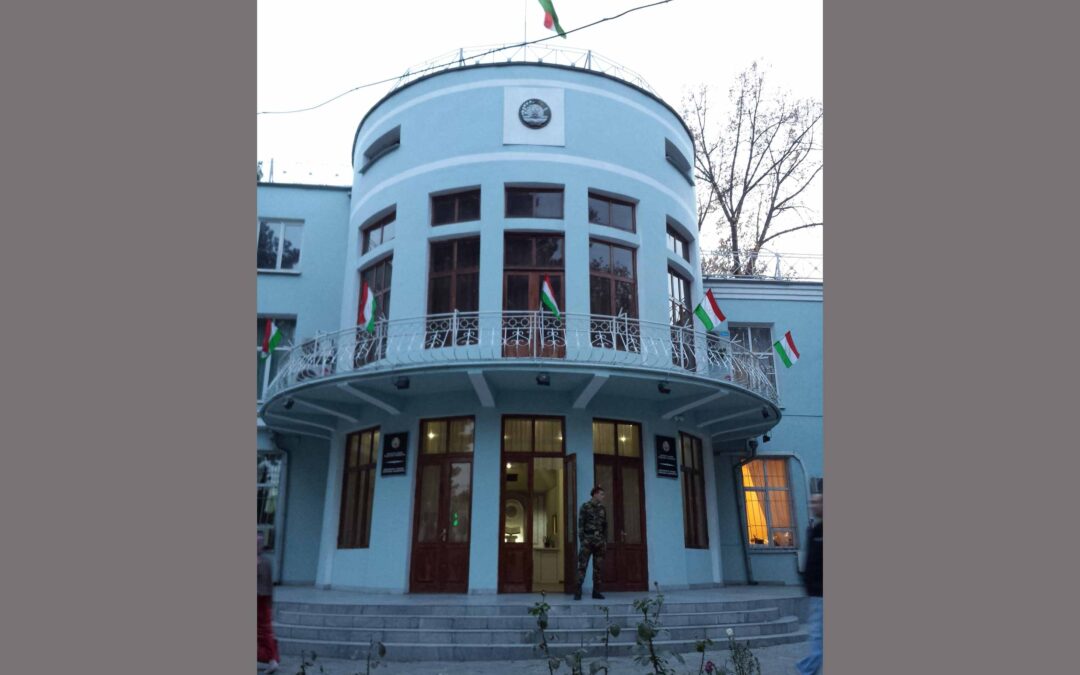
По завершении своей миссии в Таджикистан, проведённой с 10 по 13 ноября, МКЮ призвала власти Таджикистана пересмотреть положения законопроекта, которые способны подорвать независимость юридической профессии.
Проект закона «Об адвокатской деятельности и адвокатуре» предоставит Министерству юстиции значительную роль в регулировании доступа к профессии.
В частности, Квалификационная комиссия, орган ответственный за доступ к профессии, будет действовать при Министерстве юстиции.
Комиссия будет осуществлять свою деятельность под председательством заместителя Министра, также будет включать пять адвокатов, одного представителя парламента, одного учёного-правоведа, а также ещё одного представителя Министерства юстиции.
Вызывает особое беспокойство тот факт, что все адвокаты должны будут заново пройти процедуру квалификации, осуществляемую данной Комиссией, в течение одного года после вступления закона в силу.
«Проект закона даст начало желаемым реформам, которые объединят разобщённую профессию в единый, независимый Союз адвокатов. Однако значение этих реформ может быть подорвано, в связи с тем, что каждому адвокату необходимо пройти через новый, до сих пор не разработанный процесс квалификации, осуществляемый органом при Министерстве юстиции», – сказал судья Эгберт Мейер, комиссар Международной комиссии юристов.
«Данная процедура создаёт риск «очищения» профессии от независимых адвокатов и фактическому главенствованию над адвокатами Министерства юстиции, вопреки требованиям Основных принципов ООН, касающихся роли юристов», – добавил он.
В соответствии с международными стандартами о роли юристов, необходимо создание независимых самостоятельных профессиональных объединений адвокатов, и они должны иметь достаточные полномочия для регулирования профессии, включая и контроль над квалификацией адвокатов.
МКЮ подчеркнула, что в настоящее время отсутствует последовательность в различающихся процедурах квалификации в разных сегментах юридической профессии в Таджикистане, что препятствует существованию высоких профессиональных стандартов.
Эту проблему необходимо решать через единый, независимый и строгий процесс квалификации, находящийся в ведении самих адвокатов, в соответствии с международными стандартами, и рекомендациями Комитета ООН по правам человека, Международной ассоциации юристов и МКЮ.
МКЮ слышала консенсусное мнение коллегий адвокатов в Таджикистане о том, что предлагаемая роль Министерства юстиции умаляет эффективную и независимую работу адвокатов. Коллегии адвокатов добавили, что эта озабоченность не была принята во внимание в процессе разработки законопроекта.
В ответ на критику со стороны Комитета ООН по правам человека ранее в этом году, министр юстиции заявил, что Квалификационная комиссия будет находиться в ведении министерства юстиции лишь в течение переходного периода. Это не отражено в текущем законопроекте.
Однако власти заверили МКЮ в отсутствии намерений делать роль Министерства юстиции в квалификации постоянной. Миссия МКЮ в Таджикистан проходила с 10 по 13 ноября.
Её возглавил судья Эгберт Мейер, комиссар МКЮ и бывший судья Европейского суда по правам человека, в миссию также входили сотрудники МКЮ Роушин Пиллей, директор программы МКЮ по Европе, и Тимур Шакиров, правовой советник Программы МКЮ по Европе.
Во время миссии был проведён круглый стол с коллегиями адвокатов Таджикистана, а также встречи с представителями судебной системы, омбудсменом, Национальным центром по законодательству и неправительственными организациями.
14 ноября сотрудники МКЮ встретились с первым заместителем министра юстиции.
Миссия МКЮ была проведена вслед за опубликованием доклада «О независимости юридической профессии в Центральной Азии», в котором был представлен анализ законодательства и практики каждого из пяти государств Центральной Азии, включая Таджикистан, в свете международного права и стандартов, а также были сделаны рекомендации относительно принципов, которыми следует руководствоваться при проведении реформы юридической профессии.
Контакты:
Роушин Пиллей, директор Региональной программы МКЮ по Европе, roisin.pillay(a)icj.org
Тимур Шакиров, правовой советник Региональной программы МКЮ по Европе, temur.shakirov(a)icj.org
Tajikistan-ICJ Mission-news-webs story-2013-rus (полный текст)
Nov 7, 2013 | News
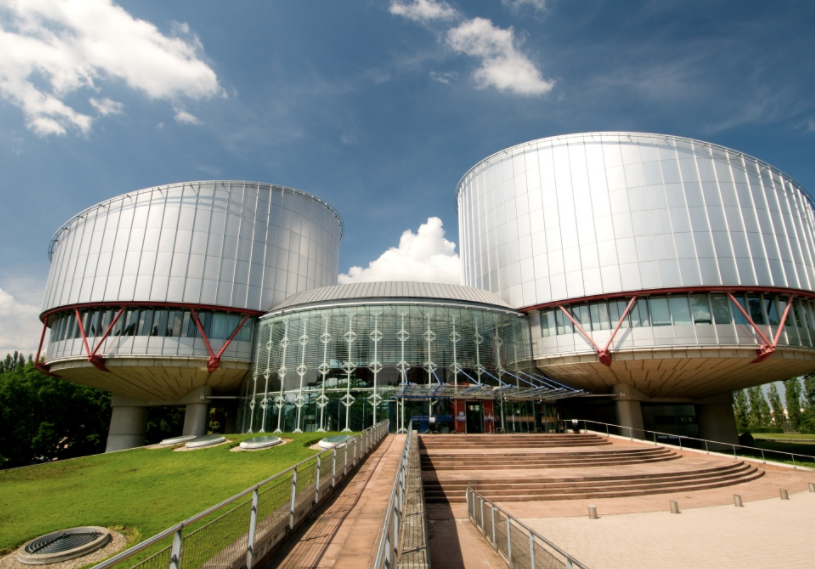
The Court of Justice of the European Union (CJEU) today declined to hold that the criminalisation of consensual same-sex activity necessarily constitutes “persecution” for the purposes of EU asylum law.
This ruling is out of step with international human rights and refugee law, the ICJ and Amnesty International said.
In X, Y and Z v Minister voor Immigratie, Integratie en Asiel the Luxembourg-based CJEU considered three joined cases arising from asylum requests lodged in the Netherlands by nationals of Senegal, Sierra Leone and Uganda.
The three men claimed that they have a well-founded fear of persecution based on their – undisputed – same-sex sexual orientation and the fact that sex between men is criminalised in their home countries.
“The Court skirted around the real issue in this case and missed a key opportunity to state clearly that to criminalise consensual same-sex conduct ultimately amounts to criminalising people for who they are and, therefore, amounts to persecution per se, regardless of how often sentences of imprisonment are enforced,” said Sherif Elsayed-Ali, Amnesty International’s Head of Refugee and Migrants’ Rights.
A key question facing the Court was whether “the criminalisation of homosexual activities and the threat of imprisonment” for the same constitute “persecution” under EU asylum law.
The Court did affirm that the prosecution and imprisonment of a person for such conduct would constitute persecution.
However, according to the two organizations, the mere existence of laws that criminalise consensual same-sex sexual activities – and which thus effectively criminalise individuals for their sexual orientation and who they are – also runs contrary to international human rights law and jurisprudence, as well as a growing raft of national court decisions.
“The Court should have found that these laws, even when they have not recently been applied in practice are capable of giving rise to a well-founded fear of persecution in lesbian, gay, bisexual transgender and intersex people, and who accordingly should be recognised as refugees when they apply for asylum,” said Livio Zilli, Senior Legal Adviser at the International Commission of Jurists.
Amnesty International has extensively documented how these laws provide state actors with the means to perpetrate human rights violations and contribute to an atmosphere of state-supported homophobia.
They enable harassment and abuse, and deny lesbian, gay, bisexual, transgender and intersex (LGBTI) individuals – or those perceived to be LGBTI – effective state protection to which they are entitled under international human rights law.
Contact:
Livio Zilli, Senior Legal Adviser, ICJ, t + 41 22 979 38 23 ; e-mail: livio.zilli(a)icj.org
Notes:
In its request to the CJEU, the Dutch Council of State asked the Luxembourg-based CJEU to answer the following questions:
1) “Do foreign nationals with a homosexual orientation form a particular social group as referred to in Article 10(1)(d)” of the Qualification Directive?
2) “Which homosexual activities fall within the scope of the Directive”; “how should national authorities assess what constitutes persecution in this context” and “whether applicants for refugee status should be expected to conceal, or exercise restraint in expressing, their sexual orientation in their country of origin” in order to avoid persecution?
3) Do the criminalisation of same-sex sexual activity and the possibility of imprisonment upon conviction constitute persecution within the meaning of the Qualification Directive?
Read also:
Criminalization of same-sex acts and the threat of imprisonment give rise to a well-founded fear of persecution

Nov 7, 2013 | News
FIDH, ILGA-Europe, ICJ, AIRE-Centre and HLHR welcome this important decision. The organizations had submitted written comments about the case to the Court in June 2011.
In a judgment in the joint cases of Vallianatos and Mylonas v. Greece and C.S. and others v. Greece delivered today, the Grand Chamber of the European Court of Human Rights ruled that Greece had violated the European Convention on Human Rights by excluding same-sex couples from a “civil union”, restricted in Greece to heterosexual couples.
“All Member States of the Council of Europe must condemn any form of discrimination against homosexuals. Homosexual couples, as heterosexual couples, involved in a stable relationship, should benefit from a legal recognition”, said Karim Lahidji, FIDH President. He added: “Twenty-two of the Member States of the Council of Europe have created a legal form of recognition for same-sex couples. Greece must change its law to comply with the European Convention on Human Rights”.
Evelyne Paradis, Executive Director of ILGA-Europe, said: “The European Court of Human Rights reaffirmed already established principle that sexual orientation discrimination is in breach of the European Convention. Now the Court took yet another step to say that if a country provides legal recognition to unmarried heterosexual couples in a form of civil unions, same-sex couples also must be able to benefit from such legal recognition. European consensus on the legal recognition of same-sex partnership is constantly growing and we welcome the fact the Court is taking it into account and reflect in its jurisprudence.”
Livio Zilli, Senior Legal Adviser at the International Commission of Jurists, said: “The Court reiterated that the Convention was a living instrument to be interpreted in the present-day conditions and that the state was obliged under the Convention to take account of societal developments, as well as the fact that there is no single way or choice when it came to people’s exercise and enjoyment of their right to family or private life.”
In its decision, the Court ruled that Greece had failed to provide a convincing justification for excluding same-sex couples.
The Government’s argument, according to which the law’s main purpose was to protect children of unmarried parents, did not constitute a valid reason, because the law’s real objective was the legal recognition of a new form of family life.
Therefore, exclusion of same-sex couples breaches the Convention.
In November 2008, Greece adopted a law creating the “civil unions”, an alternative to marriage.
However, the first article restricts such unions to “two physical individuals of different sex who have reached the age of majority”. An animated debate relating to the inclusion of same-sex couples took place before the adoption of this law.
During the debate before the Hellenic Parliament, the Minister of Justice at the time, declared: “We mustn’t include same sex couples. We are indeed convinced that the needs and demands of the Hellenic society do not cross this line; as a legislator, the political party in power is accountable to the Greek people; we have our own beliefs and negotiations are over; I believe it is the way to go”.
In their written comments, FIDH, ILGA-Europe, ICJ and AIRE-Centre recalled that the European Court has repeatedly condemned direct discrimination based on sexual orientation as a violation of protected rights.
The Court’s case-law reiterates that when it comes to a difference in treatment based on sex or sexual orientation, the principle of proportionality does not merely require that the measure chosen is in principle suited for realising the aim sought.
It must also be shown that the discriminatory treatment is necessary in order to achieve that aim, otherwise the measure will be in violation of the Convention. Creating a “civil union” only for unmarried different-sex couples amounts to direct discrimination and therefore violates the Convention.
Today’s decision follows recent jurisprudence of the Court against discrimination of same-sex couples. On February 2013, in the X. and others v. Austria case, the European Court condemned Austria for banning a homosexual person to adopt the biological child of his/her partner. It decided that the ban of unmarried same-sex couples, which are in the same situation than unmarried different-sex couples, was not justified and violated article 14 of the Convention in conjunction with article 8.
Contact:
Livio Zilli, Senior Legal Adviser, ICJ, e-mail: livio.zilli(a)icj.org
Additional information:
- Judgement of the European Court of Human Rights in the case of Vallianatos and Mylonas v. Greece and C.S. and others v. Greece
- According to the Rainbow Europe’s Index (May 2013), Greece came 25th among 49 European countries in terms of laws and policies affecting the human rights of LGBTI people.
Greece-Vallianatos_CEDH-news-press release-2013-FR (full French text in pdf)

Nov 7, 2013 | Публикации
Множество женщин в Казахстане сталкиваются с рядом серьезных правовых и процессуальных проблем и препятствий в попытках добиться справедливости после случаев дискриминации и гендернообусловленного насилия, говорится в новом докладе МКЮ.
Опубликованный сегодня доклад «Доступ женщин к правосудию в Казахстане: определение препятствий и потребности в переменах» оценивает некоторые из существующих проблем и недостаточной правовой защиты [и доступа к средствам правовой защиты при нарушениях] в ситуациях дискриминации, а также сексуального и бытового насилия .
Он подчеркивает, что существенные недостатки и пробелы материального и процессуального права в Казахстане, касающихся дискриминации и насилия в отношении женщин, подрывают возможность женщин добиться правовой защиты .
«Содействие гендерному равенству и предотвращение насилия и дискриминации в отношении женщин требуют постоянного участия и долгосрочных обязательств. В этом процессе необходимы длительные усилия. Казахстан должен принять серьезные меры по решению вопросов, указанных в настоящем докладе, с тем, чтобы обеспечить соответствие его законов и процедур потребностям женщин и защите их прав на практике», – заявила Лея Хоктор, юрист Программы МКЮ по правам женщин.
В докладе подробно описывается, каким образом международное право прав человека обязывает Казахстан принять эффективные и значимые шаги для обеспечения того, чтобы его законодательство адекватно регулировало вопросы дискриминации и насилия в отношении женщин.
«Настоящий доклад предоставляет государственным структурам, представителям гражданского общества и адвокатам важные ориентиры в отношении содержания международных обязательств Казахстана по продвижению доступа женщин к правосудию», – сказал Тимур Шакиров, юрист Европейской программы МКЮ.
Контакты:
Лиа Хоктор: leah.hoctor(a)icj.org
Тимур Шакиров: temur.shakirov(a)icj.org
Kazakhstan-Women’s Access to Justice-press release-2013-RUS (полный текст)
Kazakhstan-Women’s Access to Justice-Publications-Report-2013-RUS (доклад)

Nov 7, 2013
Many women in Kazakhstan face a range of serious legal and procedural challenges and obstacles when seeking justice for discrimination and gender-based violence, a new ICJ report says.
Launched today, the report Women’s Access to Justice in Kazakhstan: Identifying the Obstacles and Need for Change assesses some of these challenges and the deficits of legal protection, and access to remedy for violations, in situations of discrimination and sexual and domestic violence.
The report also underlines that significant flaws and gaps in Kazakhstan’s legal and procedural framework dealing with discrimination and violence against women undermine the ability of women to seek legal redress.
“Advancing gender equality and preventing violence and discrimination against women requires sustained engagement and long-term commitment, it is not a static process,” said Leah Hoctor, Senior Legal Adviser for ICJ’s Women’s Human Rights Programme. “Kazakhstan should take serious measures to address the issues identified in this report so as to ensure its laws and procedures address women’s needs and protect their rights in practice.”
The report details the way in which international human rights law obliges Kazakhstan to take effective and meaningful steps to ensure its legal framework adequately deals with discrimination and violence against women.
“This report provides both government actors, civil society representatives and the legal profession with important guidance as to the content of Kazakhstan’s international obligations to advance women’s access to justice,” said Temur Shakirov, Legal Adviser for ICJ’s Europe Programme.
Contacts:
Leah Hoctor: leah.hoctor(a)icj.org
Temur Shakirov: temur.shakirov(a)icj.org
Kazakhstan-Women’s Access to Justice-Publications-Report-2013 (full text in pdf)
Kazakhstan-Women’s Access to Justice-press release-2013-RUS (full text in pdf)
Kazakhstan-Women’s Access to Justice-Publications-Report-2013-RUS (full text in pdf)