Nov 5, 2013 | Новости, Статьи
Международная комиссия юристов (МКЮ) сегодня приветствовала освобождение 1-го ноября адвоката Зинаиды Мухторовой из психиатрической лечебницы в Астане, Казахстан.
Адвокат принудительно содержалась в психиатрическом учреждении «Медицинский центр проблем психиатрического здоровья» в течение неполных трех месяцев.
Не смотря на освобождение, сообщается, что в данный момент отсутствуют результаты психиатрической экспертизы.
«В то время как освобождение адвоката можно только приветствовать, МКЮ по-прежнему обеспокоена тем, что задержание Зинаиды Мухторовой представляло собой ответную меру на законное осуществления ею своих профессиональных обязанностей адвоката в нарушение ее права на свободу, а также Основных принципов ООН, касающихся роли юристов», – сказала Роушин Пиллей , директор программы МКЮ по Европе.
«В данный момент необходимо обеспечить, чтобы Зинаида Мухторова могла оспорить законность ее лишения свободы на основе справедливой процедуры, и получить соответствующие возмещение за любое нарушение ее прав человека», – добавила она.
Зинаида Мухторова была помещена в психиатрическую лечебницу 9 августа после того как ее силой увезли из своего дома несколько сотрудников полиции и медицинского персонала.
Среди причин для ее содержания в психиатрической лечебнице были ее «возможное возникновение кверулянтской» деятельности и «сутяжничество».
МКЮ ранее выражала обеспокоенность тем, что ее содержание психиатрическом учреждении строилось на основаниях, состоящих в осуществлении законной профессиональной деятельности в качестве адвоката.
МКЮ продолжает следить за этим делом, в том числе за текущими обжалованиями в судах Казахстана законности содержания Зинаиды Мухторовой в психиатрических учреждениях в данном и предыдущем случаях.
В этой связи МКЮ призывает правительство обеспечить справедливость судебных процедур, обжалующих ее содержание под стражей.
Контакты:
Роушин Пиллей, директор Региональной программы МКЮ по Европе, roisin.pillay(a)icj.org
Тимур Шакиров, правовой советник Региональной программы МКЮ по Европе, temur.shakirov(a)icj.org
Kazakhstan-Mukhtorova statement-news-webstory-2013-Rus (полный текст, PDF)

Nov 5, 2013 | News
The ICJ welcomes the release on 1 November of lawyer Zinaida Mukhotorova, from a psychiatric facility in Astana, Kazakhstan.
The lawyer was forcibly detained in the psychiatric facility, the “Medical Centre of the Problems of Psychiatric Health”, for almost three months.
Despite her release, the results of the psychiatric examination were said to be pending.
“While this release is welcome, the ICJ remains concerned that Zinaida Mukhotorova’s detention represented a reprisal for her legitimate exercise of her professional duties as a lawyer, in violation of her right to liberty as well as the UN Basic Principles on the Role of Lawyers,” said Róisín Pillay, Director of the ICJ Europe Regional Programme. “It must now be ensured that Zinaida Mukhotorova can challenge the legality of her detention through fair procedures, and receive appropriate measures of reparation for any violation of her human rights” she added.
Zinaida Mukhtorova was placed in the psychiatric facility on 9 August after she was forcibly taken from her house by several police officers and medical personnel.
Among the reasons given for her detention were her “possibly querulous” and “litigious” activity.
The ICJ previously raised concern that her psychiatric detention was being justified on grounds consisting in the exercise of her legitimate professional functions as a lawyer.
The ICJ continues to monitor the case, including ongoing legal challenges in the Kazakhstan courts to the lawfulness of Zinaida Mukhtorova’s detention in psychiatric facilities on this and another previous occasion.
In this regard, the ICJ calls on the government to ensure fairness of the proceedings challenging her detention.
Contact:
Róisín Pillay, Director, ICJ Europe Programme, roisin.pillay(a)icj.org
Temur Shakirov, Legal Adviser, ICJ Europe Programme, temur.shakirov(a)icj.org
Kazakhstan-Mukhtorova statement-news-webstory-2013-Rus (full text in pdf)

Oct 21, 2013 | News
The ICJ welcomes today’s ruling by the Grand Chamber of the European Court of Human Rights in the case of Inés Del Rio Prada, affirming that changes made retroactively to the remission of her sentence violated her rights.
The ICJ, which intervened as third-party in the case, says the judgment reinforces and makes effective the principle of non-retroactivity of criminal law, an essential element of the rule of law.
“This is a highly significant judgment that affirms and strengthens the rule of law in criminal sentencing,” said Róisín Pillay, Director of the ICJ Europe Programme. “Rules and practices that have a significant impact on the calculation and remission of sentences must not be applied retroactively to the detriment of a convicted person.”
“The key principle that the Grand Chamber has upheld today is that the rules that apply to the calculation of the sentence to be served, must be clear and foreseeable under the law at the time of conviction. Subsequent re-interpretation by the courts cannot fundamentally revise the principles that apply to a sentence already handed down. While States have the responsibility for setting sentencing rules for crimes, any changes to those rules which would result in an increased penalty must not applied retroactively in breach of (Article 7 of) the European Convention on Human Rights,” she added.
BACKGROUND:
Inés Del Rio Prada had been convicted of terrorism offences and sentenced to a total of over 3,000 years of imprisonment.
According to Spanish sentencing rules in force at the time, this theoretical sentence was tantamount to an effective sentence of 30 years imprisonment.
While at that time, the benefit of sentence reduction for work performed in prison was applied to the 30-year period, in 2008 the Spanish courts decided to deduct such benefits from the 3,000 years of nominal imprisonment instead, thereby significantly reducing their impact, and leading to a considerably longer sentence in the case of the applicant.
In its judgment, the Grand Chamber held that the application of changes to Spanish sentencing rules as applied to applicant Inés Del Rio Prada had violated the prohibition on retroactive penalties guaranteed in Article 7 of the European Convention on Human Rights.
It held that a 2006 decision of the Spanish Supreme Court, which altered the system of calculation of maximum terms of sentences, leading to reduced remission of sentences for work done in prison, constituted a retroactive redefinition of the sentence previously imposed, which could not have been foreseen.
As such, the Court held that Spain had violated its obligations under article 7 of the European Convention on Human Rights (ECHR).
The Court also found that the applicant’s continued detention violated the right to liberty under Article 5(1) ECHR, and required her release at the earliest possible date.
Contact:
Róisín Pillay, Director, ICJ Europe Programme, t +32 2 734 8446; e-mail : roísín.pillay(a)icj.org
Read also:
Third Party Intervention in Del Rio Prada v. Spain
Oct 17, 2013
The ICJ and Amnesty International presented a third party intervention in the case Abu Zubaydah v. Poland before the European Court of Human Rights.
In the third party intervention in this case on the alleged complicity of Polish authorities in the US-led operation that led to the rendition, secret detention and torture of Abu Zubaydah, the ICJ and AI outlined developments on the relevant knowledge imputable to Contracting Parties at the relevant time; the obligation to investigate and bring to justice the alleged perpetrators of gross violations of Convention Rights; the right to truth; and the right of the general public to know the truth and the application of the State secrets doctrine.
AbuZubaydah_v_Poland-AIICJThirdPartyIntervention-ECtHR-Final (download the third party intervention)

Oct 17, 2013 | Events
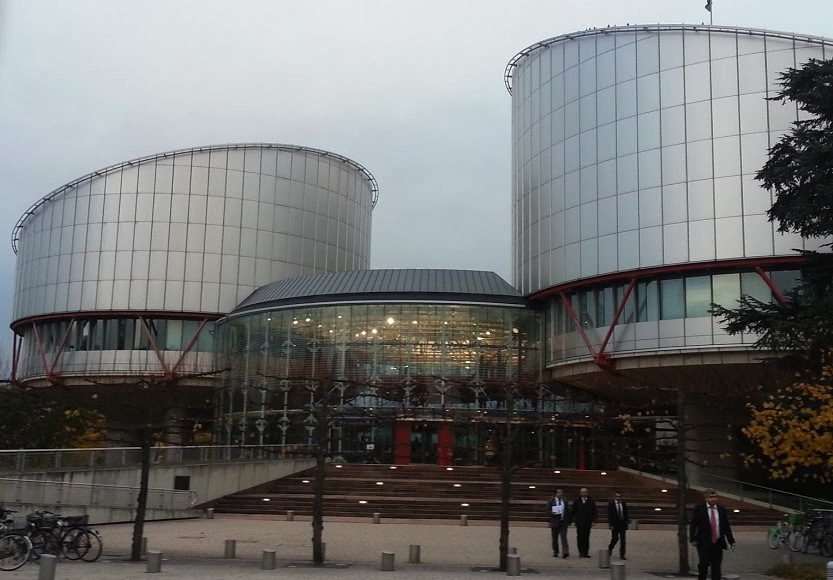
The ICJ participated in a meeting of experts within the Council of Europe’s Steering Committee on Human Rights (CDDH) in Strasbourg on 14-16 October 2013.
The Drafting Group on Human Rights and Business of the Steering Committee on Human Rights (CDDH-CORP) has drafted a Declaration of support to the Guiding Principles on Human Rights and Business for consideration by the Committee of Ministers. The ICJ expresses satisfaction at the progress made during the meeting and hopes that the draft declaration will be finally approved by Ministers and that this expert group will be able to move on to drafting a non-binding instrument on access to justice in the context of business activities.
Steering Committee meeting page (for agenda and report, including the draft Declaration)
Photo credit: © notfrancois (the author has no involvement in nor does support this submission)