Feb 8, 2013
The ICJ has intervened before the European Court of Human Rights in the case of Suso Musa v Malta, concerning the detention of asylum seekers.
Europe-Suso Musa v Malta-legal submission-2012 (full text in pdf)

Jan 15, 2013 | News
In particular, the Court recognizes that preventing sexual orientation discrimination is an important and legitimate purpose that justifies restrictions on freedom of religion.
In its judgment in Eweida and Others v. United Kingdom, issued on 15 January, the European Court of Human Rights affirmed that the right to act in accordance with one’s religion may be limited in order to protect others from discrimination based on sexual orientation. The ICJ, the European Region of the International Lesbian, Gay, Bisexual, Trans and Intersex Association (ILGA-Europe) and the International Federation for Human Rights (FIDH) welcome this decision.
Two of the four applications that were considered jointly in Eweida and Others concerned employees who refused to provide services to same-sex couples because of their personal religious beliefs.
The other two applications concerned employer-imposed restrictions on wearing visible crosses at work.
Lillian Ladele was employed by the London Borough of Islington as a marriage registrar.
She had refused to perform same-sex civil partnership ceremonies as part of her job because she believed that civil partnerships were equivalent to marriage and that same-sex unions were contrary to God’s will.
Following her refusal, she was disciplined and ultimately dismissed.
The Court held that Ladele’s employer’s decision not to make an exception for her religious beliefs was both legitimate and proportionate, in light of the Court’s own case-law concerning the right to be free from discrimination on the basis of sexual orientation and the need for same-sex couples to have legal recognition and protection of their relationships.
There was thus no violation of her right to be free from discrimination on the basis of religion.
Gary McFarlane was employed by Relate Federation, a private organisation providing sex therapy and relationship counselling.
He objected to treating same-sex couples and was dismissed.
The Court found that the right balance had been struck between McFarlane’s right to manifest his religious belief and “the employer’s interest in securing the rights of others.”
There was no violation of his right to freedom of religion, either separately or in conjunction with the right to be free from discrimination.
“Article 9 of the European Convention protects the right to manifest one’s religion in public, but this right is not unlimited,” stated Alli Jernow, Senior Legal Advisor of the International Commission of Jurists. “With today’s judgment, the Court upholds the importance of protecting others from discrimination.”
“This is a very timely decision, and particularly important in view of the fact that similar refusals to perform marriages and partnerships of same-sex or refusal to provide services to same-sex couples is a frequent occurrence in other European jurisdictions. This decision should help to guide national governments on the balance between freedom of religion and the right to non-discrimination on the ground of sexual orientation,” stated Evelyne Paradis, ILGA-Europe’s Executive Director.
“The Court’s reaffirmation that same–sex couples are in a similar situation to different-sex couples as regards their need to recognition and protection is an important step forward; that fundamental human right principle should guide all European states in the future,” concluded Souhayr Belhassen, FIDH President.
The ICJ, ILGA-Europe and FIDH had submitted a joint third-party intervention
See also:
European Court of Human Rights’ press release
European Court of Human Rights’ judgment in the case of Eweida and Others v. United Kingdom (Applications nos. 48420/10, 59842/10, 51671/10 and 36516/10) 15 January 2013

Dec 13, 2012 | News
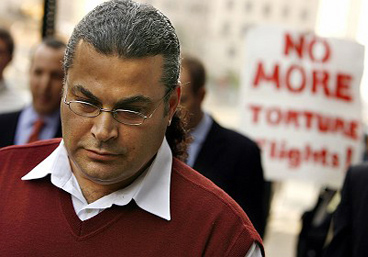 Today’s ruling on the CIA’s detention and rendition of Khaled El-Masri is a historic moment because for the first time it holds a European state accountable for its involvement in the secret US-led programmes.
It is also a milestone in the fight against impunity, Amnesty International and the International Commission of Jurists (ICJ) said.
The European Court of Human Rights held unanimously that the former Yugoslav Republic of Macedonia (Macedonia) was responsible for the German national Khaled El-Masri’s unlawful detention, enforced disappearance, torture and other ill-treatment, and for his transfer out of Macedonia to locations where he suffered further serious violations of his human rights.
Further, that Macedonia did not satisfy its obligation to carry out an effective investigation.
“This judgment confirms the role Macedonia played in the Central Intelligence Agency (CIA) rendition and secret detention programmes, and is an important step towards accountability for European complicity in rendition and torture,” said Julia Hall, Amnesty International’s expert on counter-terrorism and human rights.
“Macedonia is not alone. Many other European governments colluded with the USA to abduct, transfer, ‘disappear’ and torture people in the course of rendition operations. This judgment represents progress, but much more needs to be done to ensure accountability across Europe.”
“This ruling is historic. It recognises that the CIA rendition and secret detention system involved torture and enforced disappearances. It emphasises that both the victims and the public have the right to know the truth about these serious violations. It affirms without doubt that Europe cannot be an area of impunity but it must be a place of redress and accountability where international human rights law obligations are not bypassed but fulfilled,” said Wilder Tayler, Secretary General of the ICJ.
“Other European governments – such as Poland, Lithuania, and Romania, against which cases are also pending with the Court – should note today’s European Court judgment and take measures to ensure that the truth is told, thorough, effective, independent and impartial investigations are carried out and those responsible are held accountable.”
The Court’s ruling also serves to highlight the absence of accountability and remedy in the USA, noting that the claim filed against the CIA by Khaled El-Masri was dismissed by the US courts after the US administration invoked the “state secrets privilege”.
On 31 December 2003, the Macedonian authorities arrested El-Masri, who is of Lebanese descent, after he entered Macedonia from Serbia.
They held him incommunicado, subjecting him to enforced disappearance, repeated interrogations and to ill-treatment, until 23 January 2004 when they handed him over to Central Intelligence Agency (CIA) agents.
As part of the covert, US-led rendition and secret detention programme, the CIA transferred El-Masri to a secret detention facility in Afghanistan.
There he was held unlawfully in secret, not charged with any crime and his detention was not subject to judicial review. He did not have access to a lawyer. His whereabouts were not acknowledged and he was held incommunicado.
As a result he was subjected to enforced disappearance for over four months. While in Afghanistan, he was subjected to torture and other ill-treatment.
On 28 May 2004, El-Masri was put on a plane and flown to Albania where he was released.
Contact:
Róisín Pillay, Director, ICJ Europe Programme, t +41 22 979 38 30; e-mail: roisin.pillay(at)icj.org
For the ICJ/AI third party intervention, click here
Europe-Joint public statement El Masri-2012

Dec 4, 2012 | Доклад миссии установления фактов, Доклады, Новости, Пресс-релизы, Публикации
В опубликованном сегодня докладе Международная комиссия юристов призывала к проведению комплексных реформ дисциплинарной системы в отношении судей в Российской Федерации, как средства обеспечения независимой судебной власти, являющейся реальным блюстителем верховенства права.
Доклад МКЮ «Защита правосудия: дисциплинарное производство в отношении судей в Российской Федерации» описывает дисциплинарные меры в отношении судей, в частности, прекращение полномочий судей.
В докладе рассматривается, как увольнения и дисциплинарная система влияют на независимость судей, имеющей ключевое значение для верховенства права и права на справедливое судебное разбирательство.
Число судей, чьи полномочия ежегодно прекращаются в России необычно высоко, говорится в докладе.
«Угроза прекращения судейских полномочий, и неопределенность оснований, по которым судейские полномочия могут быть прекращены, влияет на способность всех судей действовать независимо», – сказала Роушин Пиллей, директор программы МКЮ по Европе. «Угроза дисциплинарного взыскания может «висеть» над судьей в течение многих лет, так как нет срока давности для таких деяний. Это делает судью восприимчивым к давлению со стороны судебной иерархии или исполнительной власти».
При принятии дисциплинарных мер, не обеспечиваются в достаточной степени гарантии справедливых процедур в отношении судей, отмечается далее в докладе.
В докладе содержатся рекомендации по реформе российского законодательства и процедур, касающихся судебного дисциплиного производства, направленные на укрепление гарантий для судей от злоупотреблений.
Кроме того, подчеркивается, что более глубокая и универсальная культура уважения к судебной власти, ее независимость, а также ощущение автономности и реальной судейской власти в рамках самой судебной системы, необходимы для предотвращения злоупотреблений в судебном дисциплинарном производстве.
“Такая реформа должна проводиться на основе консультаций с представителями гражданского общества, академических кругов и правовых экспертов, а также с органами судебной власти”, добавила Роушин Пиллей.
Настоящий доклад составлен по результатам миссии МКЮ в Российскую Федерацию в апреле 2012 г. для оценки гарантий в отношении дисциплинарной процедуры, оснований для дисциплинарного производства и прекращения полномочий судей и их потенциального эффекта на гарантии пребывания в должности судьи и независимость судебной власти.
В состав миссии вошли: Азар Качалия, судья Высшего апелляционного суда ЮАР и комиссар МКЮ; Алехандро Салинас, чилийский юрист и член Консультативного совета Центра независимости судей и адвокатов; Роушин Пиллей, директор Региональной программы МКЮ по Европе, и Тимур Шакиров, правовой советник Региональной программы МКЮ по Европе.
Участники миссии встретились с Председателем Верховного Суда; с судьями Высшего Арбитражного Суда, в том числе членами Дисциплинарного судебного присутствия и Комиссии по этике Совета судей; с Судебным департаментов при Верховном Суде; с членами Совета по развитию гражданского общества правам человека при Президенте Российской Федерации и его главой, Советником Президента РФ; с рядом бывших судей, которые были уволены или ушли в отставку; с учеными-экспертами по вопросам дисциплинарной ответственности судей и судебной системы; а также с адвокатами и правозащитными НПО.
Контакты:
Роушин Пиллей, директор Региональной программы МКЮ по Европе, roisin.pillay(a)icj.org
Тимур Шакиров, правовой советник Региональной программы МКЮ по Европе, temur.shakirov(a)icj.org
Russia-ICJ Mission-Press release-2012-rus (full text in pdf)
Russia-ICJ Mission Reprot-Publications-2012-rus (full text in pdf)

Dec 4, 2012
In a report published today, the ICJ calls for comprehensive reforms of the disciplinary system for judges in Russia as a means to ensure an independent judiciary that is an effective guardian of the rule of law.
The ICJ report Securing Justice: the Disciplinary System for Judges in the Russian Federation focuses on disciplinary action against judges, in particular on dismissals.
It considers how dismissals and the disciplinary system affect the independence of judges, which is essential to the Rule of Law and the right to a fair trial.
An unusually high number of judges are dismissed each year in the Russian Federation, the report says.
“The threat of dismissal, and the uncertainty of the grounds on which a judge can be dismissed, affects the capacity of all judges to act independently,” said Róisín Pillay, Director of the ICJ Europe Programme. “The threat of disciplinary action may hang over a judge for many years, since there is no limitation period for such action. This makes the judge susceptible to pressure from within the judicial hierarchy or from the executive.”
When disciplinary action is taken, there is a lack of guarantees to ensure fair procedures for the judges concerned, the report further notes.
The report makes recommendations for the reform of laws and procedures on judicial discipline in the Russian Federation to strengthen the safeguards for judges against abuse.
It also stresses that a deeper and more universal culture of respect for the judiciary and its independence, as well as a sense of autonomy and empowerment within the judiciary itself, are necessary to prevent abuses of the judicial disciplinary process.
“Such reform should be conducted through consultation with civil society, academic and legal experts, as well as with the judiciary,” Róisín Pillay added.
The Report follows an ICJ mission to the Russian Federation in April 2012, to assess the guarantees in regard to disciplinary procedure, grounds for disciplining and dismissals of judges and their potential effect on the security of tenure and the independence of the judiciary.
The mission included Azhar Cachalia, Judge of the Supreme Court of Appeals of South Africa and Commissioner of the ICJ; Alejandro Salinas, lawyer from Chile and a member of the CIJL Advisory Committee; Róisín Pillay, Director of the ICJ Europe Programme, and Temur Shakirov, Legal Adviser at the ICJ Europe Programme.
The mission held meetings with the President of the Supreme Court; with judges of the High Arbitration Court, including members of the Disciplinary Judicial Presence and the Judicial Commission on Ethics of the Judicial Council; with the Judicial Department under the Supreme Court; with members of the Human Rights Council under the President of the Russian Federation and its Head, the Human Rights Adviser to the Russian Federation President; with a number of former judges who had been dismissed or resigned; with academic experts on matters of judicial discipline and the judicial system; and with lawyers and human rights NGOs.
Contact:
Róisín Pillay, Director, ICJ Europe Programme, roisin.pillay(at)icj.org
Temur Shakirov, Legal Adviser, ICJ Europe Programme, temur.shakirov(at)icj.org
Russia-ICJ Mission-Press release-2012-rus (full text in pdf)
Russia-ICJ Mission Report-Publications-2012 (full text in pdf)
Russia-ICJ Mission Reprot-Publications-2012-rus (full text in pdf)