Mar 12, 2020 | Advocacy, Non-legal submissions
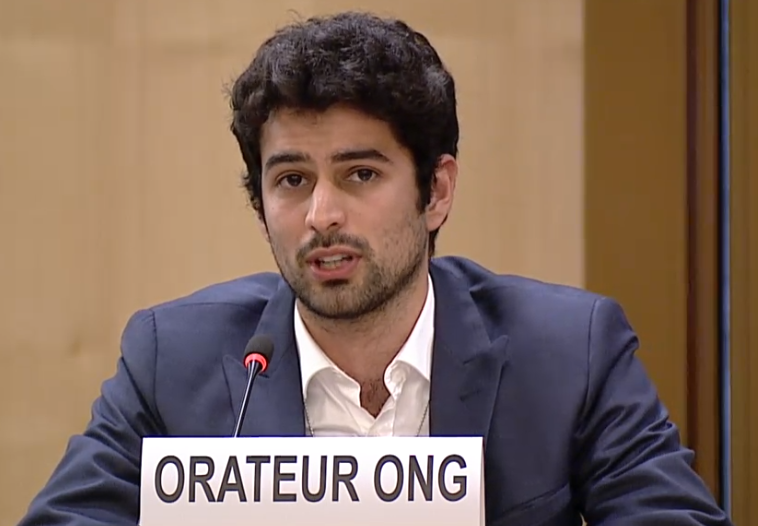
At the UN, the ICJ today highlighted the need for Kazakhstan to ensure the independence of the legal profession and the judiciary, in particular by ending the arbitrary disbarment of lawyers.
The statement, delivered during the adoption of the outcome of the Universal Periodic Review of Kazakhstan by the Human Rights Council in Geneva. The statement read as follows:
“The International Commission of Jurists (ICJ) welcomes the acceptance by Kazakhstan of the recommendations by Denmark (138.83), France (139.85), Mexico (139.86) and Austria (139.113) to uphold the rule of law and to protect the independence of the legal profession and the judiciary.
The ICJ however regrets that Kazakhstan only noted and did not explicitly support the recommendation by Czechia to “take immediate measures to ensure the effective protection of lawyers, media workers, bloggers and human rights defenders against any form of harassment” (139.114).
Furthermore, based on ICJ research, we regret to report that Kazakhstan’s assertion that the accepted recommendations are “in the process of implementation” (A/HRC/43/10/Add.1, para. 4) is simply not correct.
On the contrary, the ICJ considers that the independence of the legal profession is being actively undermined in the country.
The ICJ expresses particular concern at disbarment proceedings initiated by the Ministry of Justice, including the recent disbarment of Amanzhol Mukhamediarov and Yerlan Gazymzhanov.[1]
Finally, the situation is exacerbated by a Law on Advokatura that does not require the Bar Association’s authorisation to initiate disbarment proceedings.
To actually implement the recommendations accepted by Kazakhstan, ICJ calls on Kazakh authorities to stop all harassment of lawyers through disciplinary proceedings, readmit the lawyers unduly disbarred and reform its Law on Advokatura in line with international standards on independence of the legal profession.”
[1] See ICJ statement at https://www.icj.org/kazakhstan-disbarment-of-erlan-gazymzhanov-and-amanzhol-mukhamediarov-undermines-the-independence-of-the-legal-profession-icj-says/ .
Mar 6, 2020 | Advocacy, Non-legal submissions
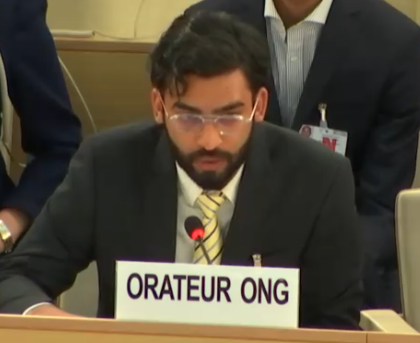
The ICJ, speaking in a general debate at the UN Human Rights Council in Geneva, urged all States to work together towards adoption of a treaty on business and human rights, and highlighted threats to the independence of the judiciary in Europe.
The statement, delivered in the general thematic debate at the Council, read as follows:
“The International Commission of Jurists (ICJ) welcomes the report of the 5th session of the Intergovernmental Working Group (A/HRC/43/55) in charge of the elaboration of a treaty on business and human rights and notes the consensual nature of its conclusions and recommendations. Abuses of human rights and environmental degradation caused with the involvement of business enterprises have so far been met with very limited action by businesses and States.
The ICJ considers that the revised draft treaty is a serious and advanced proposal that is suitable for negotiations and thanks the Chair-Rapporteur for its efforts and leadership in this process.
The ICJ urges States that are not yet actively involved in the negotiations to join the growing number of States that are active for a final push.
The ICJ also draws the attention of the Council to serious threats to independence of judges and lawyers in European countries.
In Poland, judges are being disciplined merely for applying EU law, under legislation curtailing their freedom of expression and independence.
In Turkey, independence of lawyers and judges continues to be seriously compromised, as demonstrated by the disciplinary proceedings against the Gezi trial judges launched after critical comments by the President of Turkey.
The ICJ urges the Council to give attention to these developments of extreme concern.”
Mar 5, 2020 | Новости, Статьи
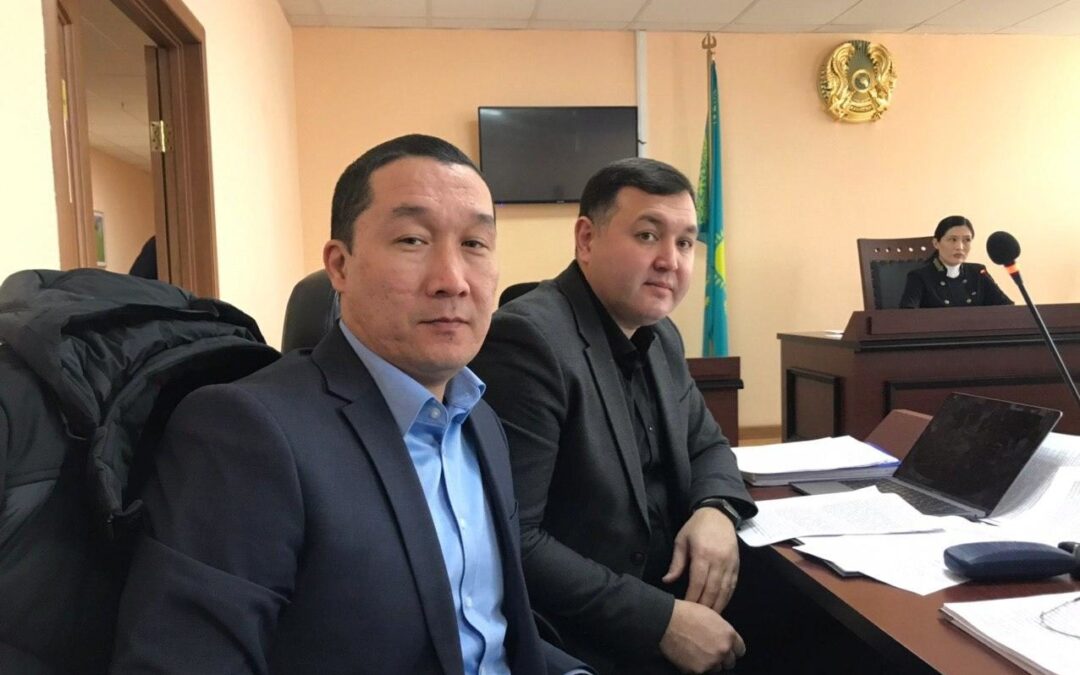
МКЮ выражает обеспокоенность в связи с решениями Есильского и Сарыаркинского районных судов г. Нур-Султан от 26 февраля о лишении лицензии двух адвокатов, Ерлана Газымжанова и Аманжола Мухамедьярова, по иску Министерства юстиции.
Данные меры наносят удар по способности адвокатов независимо осуществлять свою профессию.
Непосредственным основанием для иска Минюста стало размещение адвокатами в социальной сети фрагментов видеозаписи судебного заседания по уголовному делу, где они выступали в качестве защитников, на которых зафиксировано ненадлежащее поведение судьи. Видео было опубликовано после окончания судебного процесса по делу.
После опубликования видео специализированный судейский орган привлек судью к дисциплинарной ответственности за ее поведение в ходе судебного заседания. В то же время, судебные органы обратились в Министерство юстиции с требованием принять меры в отношении адвокатов за размещение фрагментов видео на их страницах в социальных сетях.
МКЮ осуществляла наблюдение за судебными заседаниями по вопросу о лишении адвокатской лицензии по каждому делу. Оба заседания проходили в надлежащем порядке. Тем не менее, МКЮ была встревожена тем, что пресс-служба Верховного Суда непосредственно в ходе заседания опубликовала комментарий в социальной сети, который вызывает сомнения относительно беспристрастности производства. Более того, председатели Есильского и Сарыаркинского районных судов г. Нур-Султан опубликовали идентичные комментарии, в том числе с точки зрения обоснования решений судей, рассматривавших указанные дела. Это произошло сразу же после оглашения решений сторонам. При этом устные разъяснения решений судьями, председательствующими по делу, отличались от комментариев, размещенных председателями соответствующих судов. В результате производства оба адвоката были лишены лицензии.
МКЮ с обеспокоенностью отмечает, что данные суровые меры в отношении адвокатов не предусмотрены законодательством, устанавливающим ответственность за предположительно совершенные нарушения. МКЮ подчеркивает, что принцип законности требует, помимо прочего, чтобы мера, предусматривающая ограничение прав человека, применялась исключительно в порядке, предусмотренном законом, который должен быть выражен четким и недвусмысленным образом. Требование о том, что подобная мера должна быть предусмотрена законом, отсылает не только к наличию закона как такового, но и к его качеству, т.е. закон должен быть предсказуемым, поскольку норма не может считаться законом, если она не сформулирована достаточно точно, чтобы позволить гражданам регулировать свое поведение: граждане должны иметь возможность предвидеть (насколько это объективно позволяют обстоятельства) возможные последствия своих действий.
Законодательство Казахстана не содержит запрета на опубликование видеозаписи судебного заседания в сети Интернет, не говоря уже о том, чтобы карать подобные действия лишением адвокатской лицензии. Единственным документом, нарушение которого составили действия адвокатов, является внутриведомственный приказ Департамента по обеспечению деятельности судов при Верховном Суде, который не имеет статуса закона и не предусматривает, прямо или косвенно, лишение адвокатской лицензии за опубликование видеозаписи. Ни законодательство, ни Кодекс профессиональной этики адвокатов не устанавливают какого-либо наказания за опубликование видеозаписи судебного заседания в сети Интернет. Таким образом, МКЮ обеспокоена тем, что примененная санкция не была надлежащим образом предусмотрена национальным законом и как таковая является непредсказуемой и нарушает принцип законности.
На основании иска Министерства юстиции о применении конкретной санкции по отношению к адвокатам – лишении адвокатской лицензии – суды рассматривали вопрос о применении только этой санкции. Данная санкция назначается пожизненно. Принимая во внимание правовую неопределенность характера нарушений и серьезные последствия, к которым они привели, данная санкция представляется непропорциональной.
Учитывая наличие механизма обычного дисциплинарного производства в Республиканской коллегии адвокатов, который был введен в действие новым законом об адвокатуре 2018 г., МКЮ обеспокоена тем, что данная процедура не была использована в случае адвокатов, так как иски в их отношении были поданы непосредственно в районные суды. Министерство юстиции не обращалось в дисциплинарные органы коллегии адвокатов, что придает указанным органам адвокатуры бутафорский характер.
«В ходе судебного заседания мы не услышали убедительных доводов по вопросу о том, почему не использовалось обычное дисциплинарное производство в коллегии адвокатов, в том числе в связи с предположительным нарушением адвокатской этики», – заявил Тимур Шакиров, старший правовой советник МКЮ.
«В данных обстоятельствах полномочия коллегии адвокатов по оценке поведения ее члена приобретают решающий характер с точки зрения обеспечения независимости юридической профессии, как этого требует международное право и соответствующие стандарты», – добавил Шакиров.
МКЮ призывает компетентные органы восстановить адвокатские лицензии Аманжола Мухамедьярова и Ерлана Газымжанова. Кроме того, необходимо усилить полномочия коллегии адвокатов с точки зрения различных аспектов ее независимого функционирования, в том числе в рамках дисциплинарного производства, в особенности когда адвокатам грозит лишение лицензии. С этой целью МКЮ призывает Парламент Казахстана пересмотреть действующее законодательство и устранить возможность любого органа исполнительной власти действовать в обход полномочий коллегии адвокатов по оценке профессионального поведения ее членов, в том числе в случае лишения адвокатской лицензии и иного дисциплинарного производства.
Disbarment-of-Mukhamediaov-and-Gazymzhanov-2020-ENG (полный текст документа в формате PDF с общим описанием дела, на англ.)
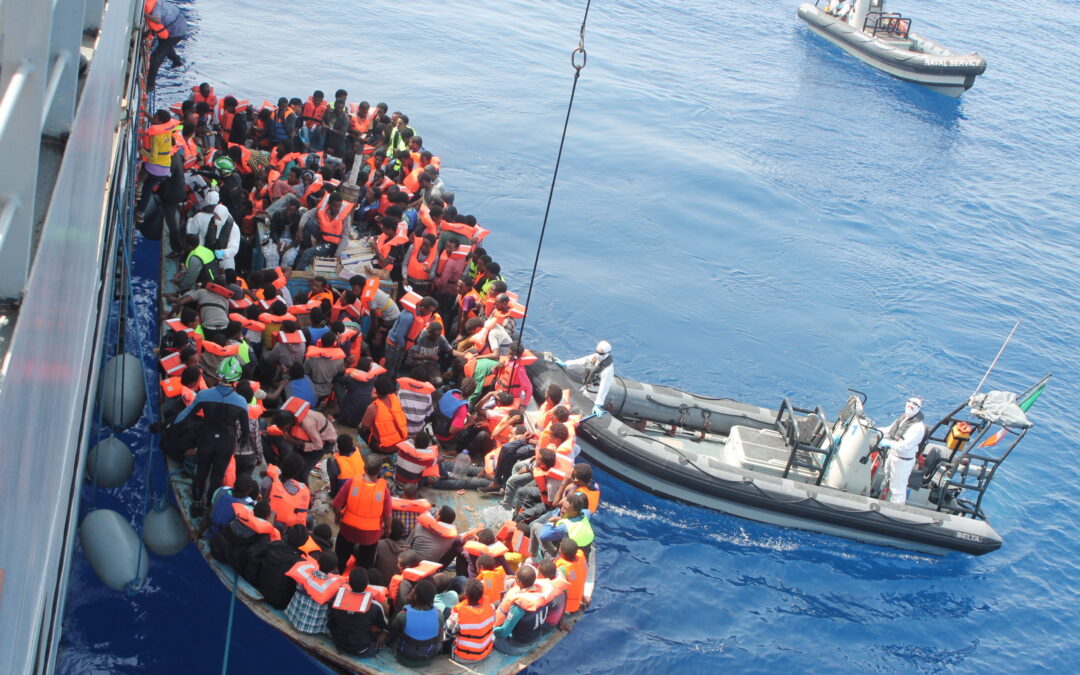
Mar 3, 2020 | News
The ICJ today called on the Greek authorities to withdraw their decision to close its border with Turkey for “national security” reasons as it constitutes a clear breach of the country’s obligations under international refugee and human rights law as well as EU law.
Prime Minister Kyriakos Mitsotakis has ordered the closure of the border with Turkey for “national security” reasons as thousands of refugees have been arriving at the border with Greece.
The ICJ said that the decision to close the border to migrants and refugees coming from Turkey breaches their right to seek asylum, the principle of non-refoulement and the prohibition of collective expulsion, which Greece must uphold under international human rights and refugee law and the EU Charter.
“Any violence and push-backs occurring at the border and at sea must stop and the persons responsible for acts of violence must be duly investigated and prosecuted. Respect for human rights principles that form part of the EU’s founding values require that refugees are not pushed back at the borded,” said Massimo Frigo, Senior Legal Adviser for the ICJ Europe and Central Asia Programme.
“Assistance should be centred on fostering access to asylum and not on strengthening border control where, in the current situation, EU authorities, such as Frontex, risk assisting in human rights violations,” he added.
The ICJ calls on the European Union to immediately set up a relocation plan with the Greek authorities to allow them to properly process asylum applications without placing refugees in dire reception conditions, such as those existing for refugees on the Greek islands.
The ICJ, together with ECRE and the Greek Refugee Council has launched a complaint against Greece before the European Committee of Social Rights on the degrading conditions of migrant children in Greece (ICJ and ECRE v. Greece).
Background
The movement of refugees comes after the declaration by President Recep Tayip Erdogan not to continue to retain on its territory Syrian refugees under the so-called “EU-Turkey statement”, following the armed conflict in Idlib (Syria).
Under this “statement”, Turkey had previously agreed to retain Syrian refugees on its territory and to accept Syrian refugees that reached Greek territory without their request of international protection being examined by the Greek authorities.
On the basis of the same “statement”, the EU had agreed to resettle some of the Syrian refugees in its Member States.
Contact
Massimo Frigo, Senior Legal Adviser, ICJ’s Europe and Central Asia Programme, t: +41 22 979 3805; e: massimo.frigo(a)icj.org

Feb 28, 2020 | Advocacy, Cases, Legal submissions
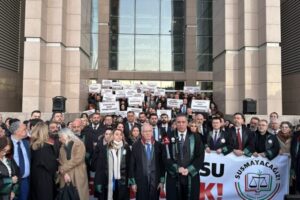
The ICJ has intervened with an expert opinion to support the board members of the Turkish Medial Association in the appeal against their conviction for hate speech offences. The conviction raises significant concerns for freedom of expression.
The case before the Appeal Court concerns 11 defendants, all members of the Council of the Turkish Medical Association: Mehmet Raşit Tükel, Taner Gören, Sinan Adıyaman, Mehmet Sezai Berber, Selma Güngör, Bülent Nazım Yılmaz, Funda Barlık Obuz, Dursun Yaşar Ulutaş, Ayfer Horasan, Şeyhmus Gökalp and Hande Arpat.
On 3 May 2019, the defendants were convicted at first instance by the Ankara 32 Assize Court for having issued statements opposing the war during Turkey’s Operation Olive Branch in Syria.
The Assize Court concluded that the members of the Council publicly provoked hatred or hostility in one section of the public against another section which has a different characteristic based on social class, race, religion, sect or regional difference, in a way that creates an explicit and imminent danger to public security. The Court sentenced each defendant to two terms of 10 months’ imprisonment for provoking the public to hatred and hostility in two separate statements.
Hande Arpat was additionally convicted of “disseminating propaganda in support of a terrorist organization” to 18 months and 22 days in prison concerning her three Facebook posts.
The ICJ expert opinion presented before the Court of Appeal examines international law standards relevant to the criminalization and prosecution of crimes of expression.
Turkey-AssDoctors-ExpertOpinion-2020-ENG (download the expert opinion in English)
Turkey-AssDoctors-ExpertOpinion-2020-TUR (download the expert opinion in Turkish)