
Apr 9, 2020 | Advocacy, News
A joint statement signed by the ICJ and 102 other organizations.
The COVID-19 pandemic and public health crisis is presenting grave challenges for health care systems across Europe.
As European countries work to address the pandemic, protect their populations, and meet the increased demand on health care workers and health care facilities it is vital that they adopt measures to safeguard the health, human dignity, physical and mental integrity, and reproductive autonomy of women and girls in the region.
In many countries the lack of government measures to guarantee individuals’ safe and timely access to essential sexual and reproductive health services, goods, and information during the pandemic is of particular concern.
Women and girls – this statement refers to women and girls, as the majority of individuals who are needing abortion care identify as such but it equally applies to all individuals who may become pregnant and need abortion care or other sexual and reproductive health care – are facing significant restrictions in safely accessing essential sexual and reproductive health services, particularly timely abortion care, post abortion care, and emergency contraception.
Such restrictions disproportionately impact individuals belonging to marginalized groups, including women living in poverty, women with disabilities, Roma women, undocumented migrant women, adolescents, and women at risk or who are survivors of domestic and sexual violence.
These restrictions also create unnecessary risks of exposure to COVID-19 for women and girls and their families as well as for health care providers.
Particularly grave barriers are arising for women and girls living in European countries where abortion care is illegal or severely restricted, and where as a result they must travel to other countries to access legal care or must obtain abortion medication from outside their own jurisdiction.
These issues can also arise in those European countries where individuals are forced to go through burdensome or harmful administrative processes to access abortion care or where they may have difficulty finding doctors in their country willing to provide care.
We applaud those governments that have moved swiftly to safeguard access to essential time- sensitive sexual and reproductive health care during this time, in particular through ensuring access to telehealth and early medical abortion from home.
We call on all other European governments to follow suit and to follow the guidance of medical and public health experts.
We call on the six European countries (Andorra, Liechtenstein, Malta, Monaco, Poland and San Marino) where abortion is illegal or severely restricted to urgently reform these laws, which place women’s health and lives at risk.
Limitations on travel and transport now compound the impact of these highly restrictive laws. Individuals in these countries may no longer be able to travel abroad or to obtain medication for abortion sent by post from medical providers in other countries. As a result, they face heightened risks to their health and wellbeing.
We call on those countries where abortion is legal but where clinical services are unavailable or difficult to access due to a range of barriers, including medically unnecessary requirements that oblige individuals to take multiple or unneeded trips to health care facilities or undergo mandatory hospitalization, to urgently eradicate those barriers and ensure access to services.
Urgent steps should also be taken to ensure that refusals of care because of private beliefs by doctors do not jeopardize timely access to legal abortion care.
In accordance with human rights obligations3 and the recommendations of medical experts4 the following measures should be adopted, and at a minimum remain in place for the duration of the COVID-19 pandemic:
- Ensure that abortion is treated as essential and time-sensitive health care and guarantee access to care in a timely manner.
- Authorize and make available in a timely manner telehealth consultations for anyone who is seeking abortion care or information. Specific measures should be adopted to ensure that telehealth consultations are free or low cost and easily accessible for marginalized groups.
- Guarantee timely access to early medical abortion throughout each jurisdiction and allow doctors to prescribe the necessary medication via telehealth consultation.
- Allow individuals to take all abortion medication at home. Requirements in some European countries that one pill must be taken in the physical presence of a doctor or in a health care facility should be removed.
- Remove mandatory waiting periods prior to abortion as well as mandatory counselling requirements or ensure counselling can be conducted through telehealth consultation.
- Authorize primary care doctors and midwives to provide early medical abortion.
- Adopt health system safeguards to guarantee access to care in cases where early medical abortion is not possible or is contraindicated, for individuals who need abortion care later in pregnancy or post-abortion care, or who may need to visit a health care facility for other reasons. Travel in such cases should be deemed essential and permitted even where governments have otherwise restricted free movement.
- Where a doctor’s authorization is required, this should be limited to one doctor. Requirements for multiple doctors’ approval of an abortion should be removed.
- Guarantee timely access to prenatal testing and psychosocial support where requested.
- Guarantee an adequate number of providers willing and able to provide abortion care throughout the country and widely publicize information on how women can identify health care professionals willing and available to provide abortion care. Urgently ensure that refusals of care by doctors do not jeopardize access to abortion care in a time of crisis.
- Widely disseminate information on those changes to SRHR policies and health care services that are being made in the context of COVID-19 responses.
- Ensure access to contraception including emergency contraception, including through authorizing telehealth consultations and provision of emergency contraception over the counter in pharmacies without a prescription.
Finally, we call on all policy makers across the European region to reject proposals that purport to restrict access to safe abortion care during the COVID-19 pandemic. These disingenuous proposals simply serve to exacerbate the current public health crisis and have negative effects on the health, lives, and wellbeing of women and girls.
Download the full statement with additional information and the list of signatories

Mar 30, 2020 | News
The ICJ is calling on the Turkish Parliament to extend the planned provision of alternatives to detention in response to the COVID-19 crisis to all those imprisoned for non-violent crimes who do not pose a current threat to members of the public, regardless of the nature of the offences for which they have been charged.
In particular, alternatives to detention should apply to all those detainees who are particularly at risk at losing their life or suffering severe health effects from COVID-19.
Measures to protect the right to life, the right to health and other human rights must apply equally and without discrimination in line with Turkey’s international legal obligations.
The government have announced the tabling of a draft law to reduce the prison population that has been under discussion in recent months. The process has been accelerated with the purported aim of addressing the serious health risk that an outbreak of COVID-19 contagion would pose to the prison population. However, the draft law has not been adapted to address the health crisis and contains several shortcomings.
The new measures would grant alternatives to detention, including house arrest or early parole to an estimated one-third of the prison population.
This welcome move is however limited by the exclusion of those convicted or under trial for terrorism offences or offences against the State.
“In Turkey, terrorism offences and offences against the State have long been abused to arrest, try and jail human rights defenders, lawyers, judges and political opponents,” said Massimo Frigo, Senior Legal Adviser for the ICJ Europe and Central Asia Programme. “The rights to life and health of these groups are now at particular risk.”
The ICJ considers that it is also essential that all detainees who are members of a group whose life or health may be at risk because of COVID-19 have either access to alternatives to detention, if they do not pose a current threat to public safety, or, otherwise, to detention conditions that may preserve them as far as possible from such risk.
“The State has a non-derogable obligation to protect the right to life of all its prison population, without discrimination of any sort,” Massimo Frigo added.
Mar 26, 2020 | Новости, Пресс-релизы
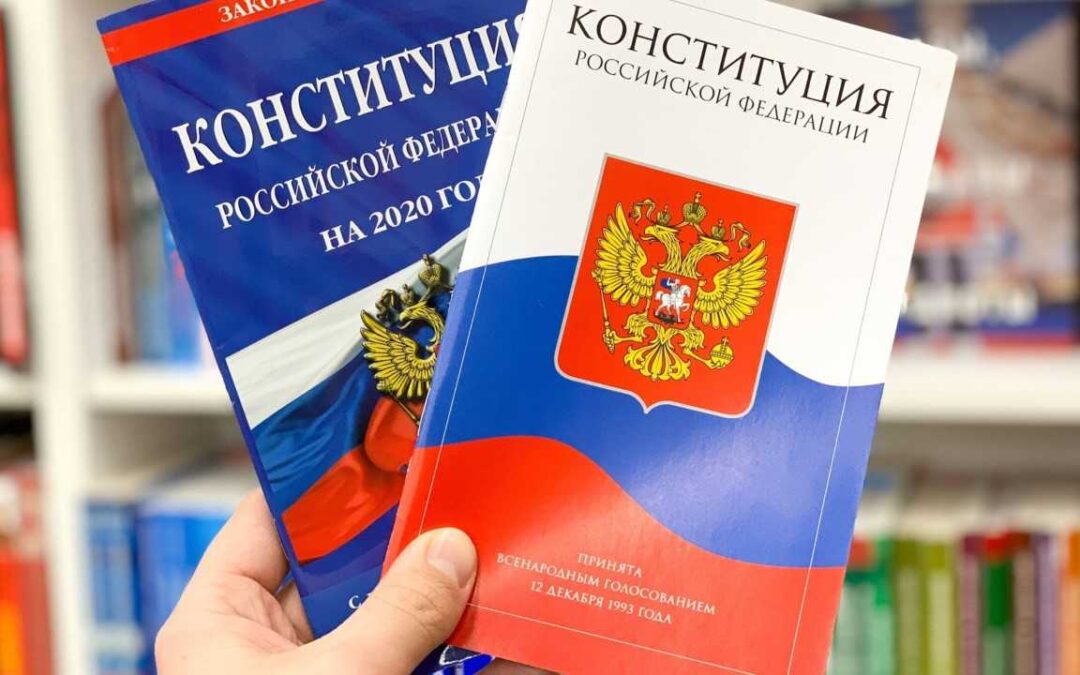
После решения российских властей о переносе даты голосования по поправкам к российской Конституции Международная комиссия юристов (МКЮ) призывает воздержаться от принятия поправок и пересмотреть те из них, которые наносят ущерб принципу верховенства закона и защите прав человека.
«Среди многочисленных поправок есть те, которые ограничивают имплементацию международного права в области прав человека и, в частности, решений международных судов по правам человека в Российской Федерации, – заявила Роушин Пиллей, директор Региональной программы МКЮ по Европе и Центральной Азии. – Другие же поправки наносят ущерб независимости российских судебных органов, так как предусматривают поправки в порядок назначения и отстранения судей».
МКЮ обращает внимание на эти вопросы в аналитической записке по отдельным поправкам к Конституции Российской Федерации, которая была опубликована сегодня.
«Мы призываем российские власти воспользоваться возможностью, которая представилась им в связи с переносом голосования, чтобы пересмотреть поправки, которые окажут пагубное воздействие на способность системы правосудия предоставлять эффективное средство правовой защиты гражданам, права человека которых были нарушены», – подытожила г-жа Пиллей.
Общие сведения
15 января 2020 г. Президент Российской Федерации объявил о решении внести более сорока поправок в текст Конституции, принятой в 1993 г. Поправки будут приняты в рамках нестандартной процедуры, предусматривающей общероссийское голосование, организованное специально для их принятия.
Поправки затрагивают широкий спектр вопросов, при этом не все из них связаны друг с другом. В частности, уменьшают роль международного права и судов, а также ослабляют независимость национальных судебных органов.
25 марта Президент Российской Федерации Владимир Путин объявил, что запланированное голосование по поправкам к Конституции переносится в связи с распространением новой коронавирусной инфекции (COVID-19).
В аналитической записке МКЮ исследуется вопрос о том, каким образом данные поправки могут противоречить международно-правовым обязательствам Российской Федерации и еще больше ограничивать независимость судебных органов. В записке рассматриваются три отдельные поправки, предложенные к Конституции 1993 г.:
- Роль международного права и решений международных судов и других механизмов (статья 125 Конституции)
- Назначение судей (статья 83 Конституции)
- Порядок назначения и отстранения судей (статьи 83, 102 и 128 Конституции).
Russia-constitution changes-Advocacy-Analysis Brief-2020-RUS
Mar 26, 2020 | News
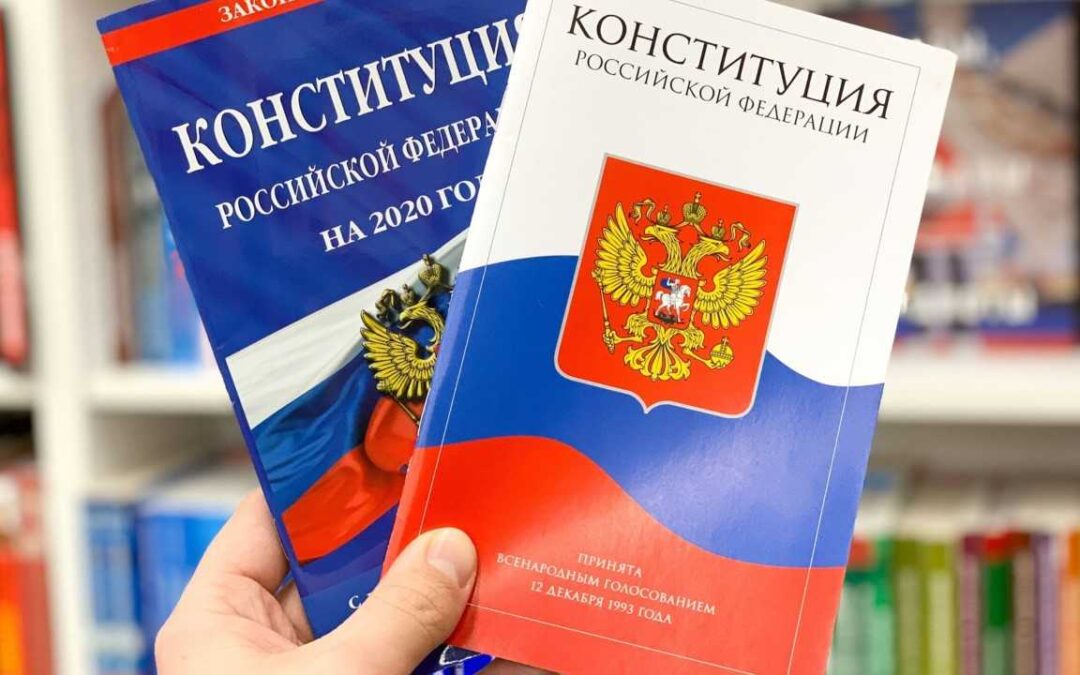
Following the decision to postpone a referendum on amendments to the Russian Constitution, the ICJ calls on the authorities of the Russian Federation to refrain from adoption of the amendments or revise those amendments which are likely to have a detrimental effect on the rule of law and human rights protection.
“Amongst the wide range of amendments proposed, are some that would restrict the implementation of international human rights law, and in particular the decisions of international human rights courts, in the Russian Federation,” said Róisín Pillay, Director of the Europe and Central Asia Programme of the ICJ.
“Other amendments would damage the independence of the Russian judiciary through changes to judicial appointments and dismissal procedures.”
The ICJ draws attention to these issues in a briefing paper on certain amendments to the Constitution of the Russian Federation, published today.
“We urge the Russian authorities to use the opportunity presented by the postponement of the referendum, to reconsider amendments that would damage the ability of the justice system to provide an effective remedy to people whose human rights have been violated,” added Pillay.
Background
On 15 January 2020 the President of the Russian Federation announced a decision to introduce more than forty amendments to the Constitution adopted in 1993. They are to be adopted through an extraordinary procedure which includes public vote, organised specifically for these amendments.
The amendments touch upon a range of issues not necessarily connected with each other. They among other things erode the role of international law and tribunals as well as weaken the independence of the national judiciary.
On 25 March, Russian Federation President Vladimir Putin announced that a planned referendum on the constitutional amendments would be postponed due to COVID-19.
This ICJ briefing paper analyses how these amendments may run contrary to international commitments of the Russian Federation and further impede the judicial independence. The briefing paper addresses three particular changes proposed to the 1993 Constitution:
- The role of international law and of decisions of international courts or other mechanisms (Article 125 of the Constitution)
- Appointment of judges (Article 83 of the Constitution)
- Procedures of appointment and removal for judges (Articles 83, 102 and 128 of the Constitution).
Full Briefing Paper (in PDF): Russia-constitution changes-Advocacy-Analysis Brief-2020-ENG
Mar 23, 2020 | News
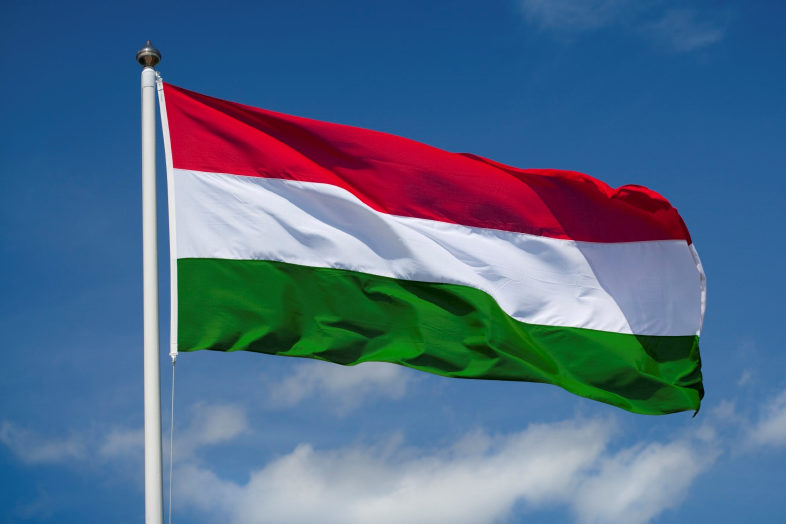
The ICJ called today on the Parliament of Hungary not to approve a Government bill that would extend indefinitely the emergency powers of the executive to counter the Covid-19 pandemic.
The proposed legislation would enable executive rule by decree, without parliamentary approval, and would impose harsh restrictions on freedom of expression.
“States of emergency, whatever the reason to invoke them, must never be allowed to become permanent,” said Róisín Pillay, Director of the ICJ Europe and Central Asia Programme.
“Emergency measures that restrict human rights must be constantly reassessed to ensure that they remain necessary and proportionate. And even where measures are temporarily necessary, they should be subject to a “sunset clause” that ensure that it can be reviewed and will lapse if no longer justified ”.
The Hungarian emergency legislation includes offences of publishing false or distorted facts that interfere with protection of the public or cause public alarm – offences which have the potential to significantly and unduly restrict freedom of expression.
International human rights law requires that any interference with freedom of expression must be in sufficiently clear terms to be adequately prescribed by law and must be necessary and proportionate to the legitimate aim that it serves.
“This legislation is particularly worrying in a context where the Hungarian government has systematically undermined the rule of law and protection of human rights, including freedom of the media and civil society, and the independence of the judiciary in recent years,” Róisín Pillay added.
“The emergency powers are therefore particularly open to arbitrary or abusive application, without effective scrutiny by parliament or an independent judiciary.”
Background
The Bill on Protection against the Coronavirus (Bill T/9790) in the form of tabled by the Government will extend the state of danger that it had ordered by government decree from 11 March 2020.
The ICJ understands that the Bill will allow the government to rule by decree without Parliamentary scrutiny. The legislation would make it a criminal offence, punishable by imprisonment, to publish false or distorted facts that interfere with protection of the public or that alarm or agitate the public, or to interfere with a quarantine or isolation order.
Under international treaties to which Hungary is a party, including the European Convention on Human Rights and the International Covenant on Civil and Political Rights, States may take emergency measures to derogate from their international human rights law obligations in times of crisis, only the extent strictly necessary to protect the life of the nation. Derogating measures may only limit the scope of certain rights to the extent strictly necessary to meet a threat to the life of the nation, but they do not entirely suspend the applicability of any right in its entirety.
This necessity must be continually re-assessed so that the derogating measures apply for the shortest time possible. Certain human rights, including the right to life, the prohibition of torture or ill-treatment, and the essential elements of arbitrary deprivation of liberty and to a fair trial and the right to an effective remedy can never be restricted even in a state of emergency.