Feb 5, 2020 | Advocacy, News, Open letters
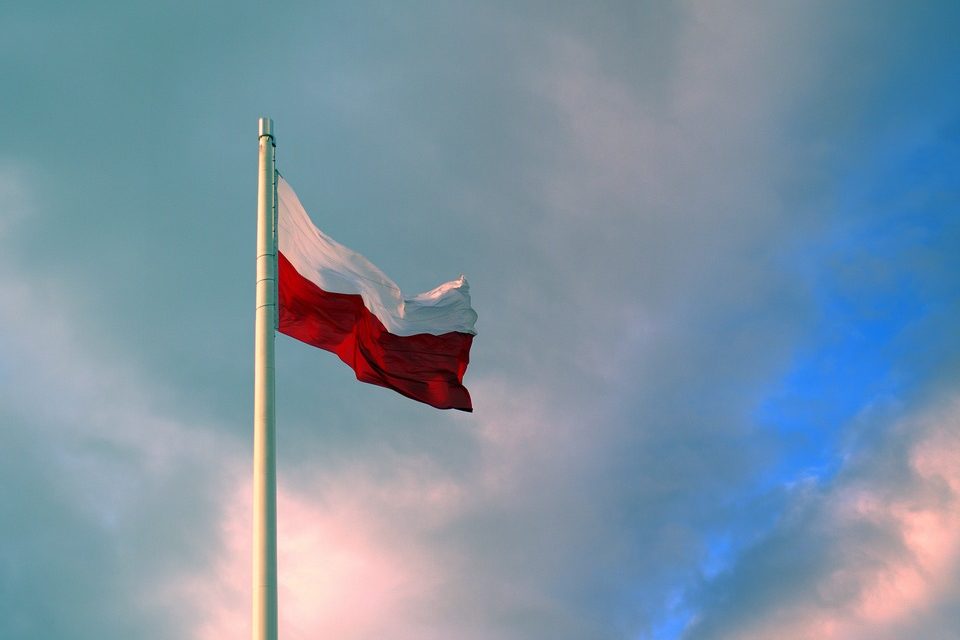
ICJ Commissioners and Honorary Members today denounced the rapidly escalating rule of law crisis in Poland, after a new law was passed that would result in harassment of judges upholding the independence of the judiciary.
A group of 44 ICJ Commissioners and Honorary Members, including senior judges, lawyers and legal scholars from around the world said in their statement “it is clear that the separation of powers, the independence of the judiciary, and the capacity of Polish judges to uphold the rule of law are now severely compromised. Judges’ freedom of expression, association and assembly are under immediate threat.”
The statement
The International Commission of Jurists (ICJ), its Centre for the Independence of Judges and Lawyers (CIJL) and the undersigned Commissioners and Honorary Members of the ICJ are alarmed at the rapidly escalating rule of law crisis in Poland.
It is clear that the separation of powers, the independence of the judiciary, and the capacity of Polish judges to uphold the rule of law are now severely compromised. Judges’ freedom of expression, association and assembly are under immediate threat.
The passing by the Sejm on 23 January of the amendments to the laws on the judiciary, and their signing into law on 4 February, means that judges will be prohibited from questioning the legitimacy or institutional independence of any Polish court, even where its members have been appointed through a politically controlled process, in violation of EU and international law. Judges will face disciplinary action for denying the validity of any judicial appointment.
This law is an attempt to prevent any Polish court from upholding the independence of the judiciary, in the face of repeated legislative and government attacks on judicial independence in recent years.
This is directly contrary to the obligations of judges under the EU treaties to apply EU law, and would therefore lead to violations of Poland’s EU law obligations. It would also lead to violations of Poland’s obligations under international human rights law, since it would require judges to act contrary to their duty to uphold the right to a fair hearing before an independent and impartial tribunal.
As the Venice Commission noted in its recent opinion on the amendments, they are clearly “designed to have a nullifying effect” on recent judgments and resolutions of the Court of Justice of the EU and the Polish Supreme Court, which have called into question the validity of recent judicial appointments. As such, they do severe damage to the rule of law in Poland.
These developments follow recent legislation which has politicised the National Council of the Judiciary (NCJ) and imposed executive control of the appointment process for judges of the Supreme Court, court presidents and other judges. A powerful new Extraordinary Chamber as well as a Disciplinary Chamber of the Supreme Court, appointed under this new system, has further entrenched political control of the judiciary.
The ICJ, its undersigned Commissioners and Honorary Members, applaud the continued resolute defence of the rule of law by sections of the Polish judiciary. This has been evident in the resolution of the Supreme Court (Civil, Criminal, Labour and Social Security Divisions) of 23 January which found that recent judicial appointments meant that some Polish courts were not sufficiently independent to be legitimately constituted.
We deplore the response by President Adrzej Duda in which he suggested that judges opposing the judicial reforms on the judiciary acted out of improper self-interest.
The undersigned ICJ Commissioners and Honorary Members affirm their solidarity with Polish judges, in particular those who are currently facing abusive disciplinary or criminal proceedings for carrying out their judicial functions in accordance with the principle of judicial independence, or for exercising their freedom of expression, association or assembly as a means to defend the rule of law.
We recall that international human rights law and international standards on the judiciary require all branches of government to respect the independence of the judiciary. Furthermore, they recognise that judges have rights to freedom of expression and association and that they have a particularly important role in contributing to discussions on issues of the functioning of the judicial system and the rule of law, especially in defending the independence of the judiciary.
We call on the international community to respond to the Polish rule of law crisis in a manner appropriate to the gravity of the situation, before the damage to the Polish legal system becomes further entrenched.
In particular, we call on the European Union to urgently advance proceedings concerning Poland under Article 7 TEU, in light of the clear breach of EU law and EU fundamental values entailed by the new law, in conjunction with previous reforms, and by the government’s open defiance of decisions of the Court of Justice of the EU and the Polish Supreme Court.
Poland-Commissioners-Statement-Advocacy-Open-Letter-2020-ENG, (full text with all signatories, PDF)
Feb 4, 2020 | News
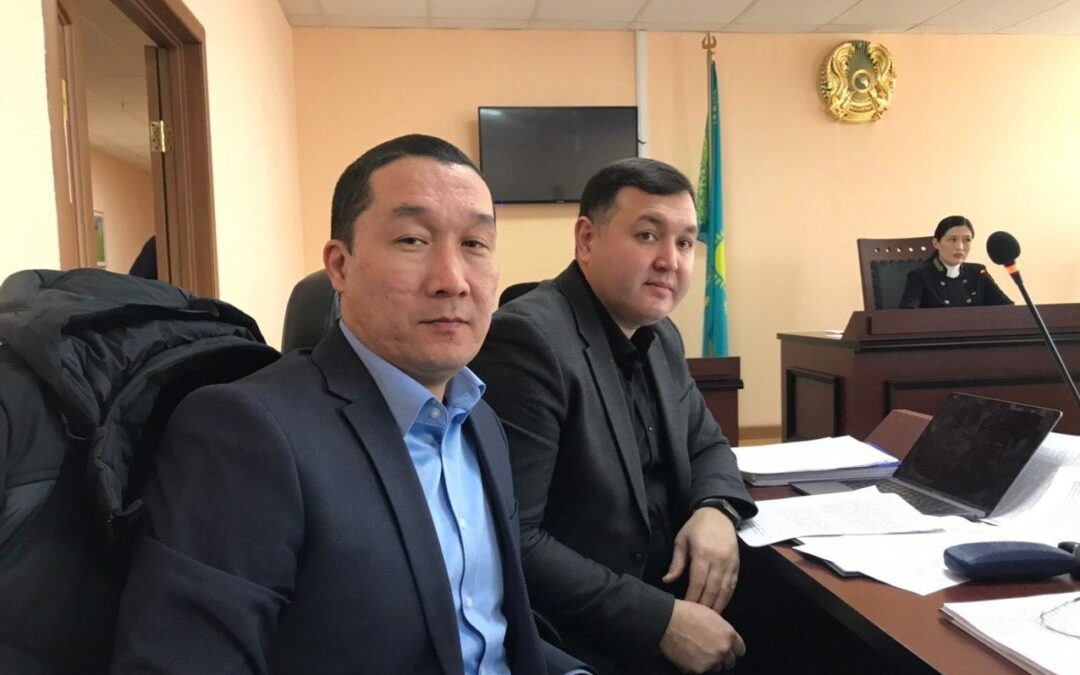
Today, the ICJ has observed the trial in court proceedings against lawyer Amanzhol Mukhamediarov before the Yesil District Court in Nur-Sultan. Mukhamediarov, Chair of the Committee on the rights of lawyers of the Kazakhstan Bar Association, is facing disbarment following a lawsuit of by the Ministry of Justice of Kazakhstan.
Along with the case against Erlan Gazhymzhanov, who faces disbarment on the same set of facts, this case may raise issues of interference with freedom of expression of lawyers and possible interference in their work. This prompted ICJ to send a mission to observe court proceedings.
This hearing is observed on behalf of the ICJ by a lawyer from the Geneva Bar Association (Switzerland), Ms Xeniya Rivkin, as part of the International Cooperation Initiative project between the ICJ and the Geneva Bar Association.
The observer will carry out an assessment of the case based on the observation of the hearing in light of the materials of the case and the international law and standards on the role and independence of lawyers.
Read also
ICJ trial observation manual
Kazakhstan: ICJ observes hearing in lawyer’s disbarment case
Kazakhstan: frivolous disbarment proceedings against prominent lawyer Sergey Sizintsev should be immediately dropped, ICJ says
Kazakhstan: ICJ alarmed at government interference in legal profession
Jan 24, 2020 | News
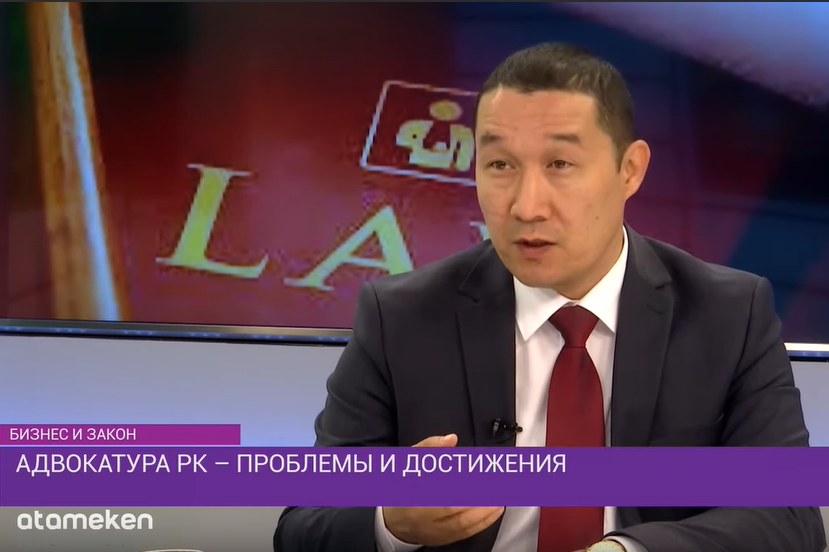
Today, the ICJ has conducted a trial observation in disbarment proceedings against lawyer Yerlan Gazymzhanov before the Saryarkyn Court of Nur-Sultan.
Erlan Gazymzhanov is facing disbarment following a lawsuit brought by the Ministry of Justice of the Republic of Kazakhstan.
The lawyer is accused of violating court rules by publishing on a social network an archive video from the hearing in a case in which he alleged inappropriate behaviour by the judge.
The case raises issues of the lawyer’s freedom of expression and possible improper interference in his work.
The ICJ will carry out an assessment of the case and its compliance with international standards following its observation of the proceedings.
Another lawyer, Amanzhol Mukhamedyarov is facing a disbarment lawsuit on the same allegations.
Mukhamedyarov’s case will be heard in separate proceedings on 4 February in Esil district court of Nursultan.
Dr Stefan Stobl, a lawyer from Munich (Germany) and a member of the ICJ Section Germany, observed today’s hearing on behalf of the ICJ.
Additional information:
Read ICJ’s trial observation manual
The ICJ has previously expressed concern about increasing restrictions on the independence of lawyers in Kazakhstan:
Kazakhstan: frivolous disbarment proceedings against prominent lawyer Sergey Sizintsev should be immediately dropped, ICJ says
Kazakhstan: ICJ alarmed at government interference in legal profession
Kazakhstan: the ICJ calls to immediately drop prosecution of lawyer Bauyrzhan Azanov
Jan 9, 2020 | Agendas, Events, News
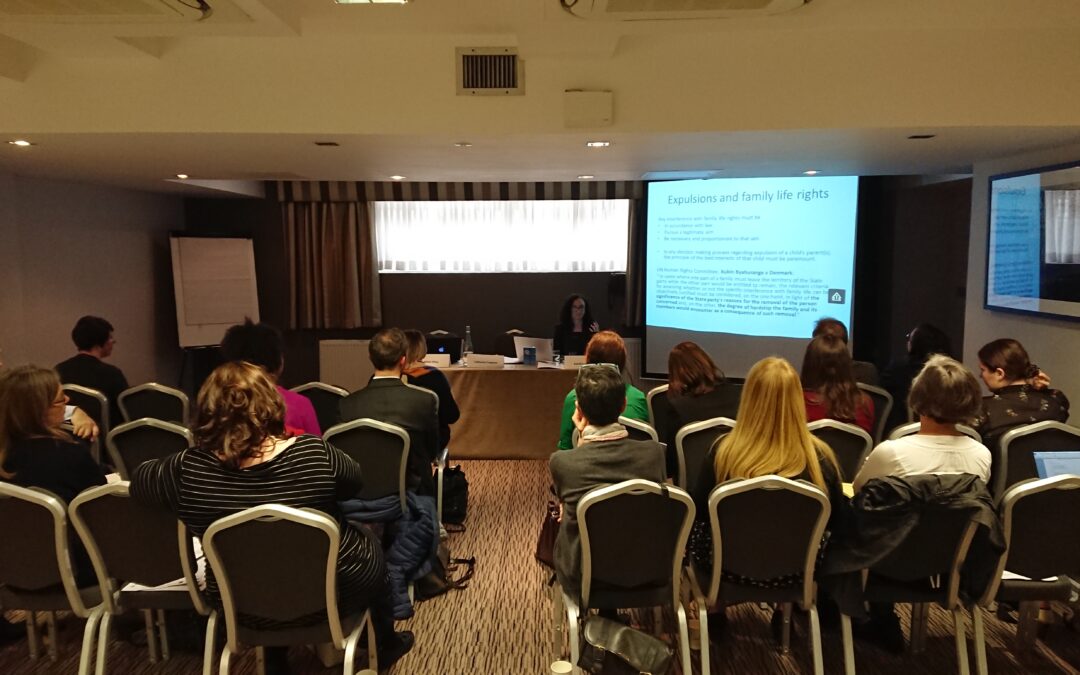
Today, the ICJ and Immigrant Council of Ireland (ICI) are holding a 2-day training seminar for judges and lawyers in Dublin, Ireland, on the rights of migrants, in particular the right to family life and due process in asylum proceedings.
The participants consist of about 30 judges and judicial assistants from the International Protection Appeals Tribunal (IPAT) administrative decision makers (IPO/INIS), and legal professionals.
During the two days of training, experts from the European Court of Human Rights, the UK Immigration Tribunal, Trinity College Dublin, the Immigrant Council of Ireland and the ICJ will deliver the training, bringing international human rights and EU law perspectives to the discussion on the Irish context.
Among the issues discussed will be – on day 1 – the right to private and family life in migration, including, and recent developments at the ECtHR, and right to private and family life in the national context as well as best interests of the child determination and family life rights in return decisions. On day 2 discussion will focus on procedural rights and remedies in the context of international protection,. Issues discussed will include due process rights in asylum procedures, safe third country concept, and credibitity assesments and vulnerability in international protection applications.
In parallel, a training for 20 social care professionals working with migrant children is being delivered.
This is the second national training under the FAIR PLUS project, following the first training held last December in Pisa.
See the full agenda here.
This training is a part of FAIR PLUS project. It was carried out with the financial support of the European Union. Its contents are the sole responsibility of ICJ and do not necessarily reflect the views of the European Union.
Dec 20, 2019 | Advocacy
Today, the ICJ published a compilation of cases (read the full document here) decided by the UN Human Rights Committee (HRC) concerning allegations of torture and other forms of ill-treatment (articles 7 and 10).
This compilation draws together the views of the HRC in all individual communications adjudicated on the merits in respect of Tajikistan, concerning Article 7 and Article 10 of the ICCPR from 1999 to 2019.
This compilation provides a resource for lawyers, judges, civil society and other stakeholders working to protect against torture and ill-treatment in Tajikistan. The cases in this volume demonstrate how the UN Human Rights Committee has applied the principles of its jurisprudence on torture and other ill-treatment to the particular legal and factual context of Tajikistan. These authoritative interpretations of the ICCPR by the Committee can help to inform consideration of these issues in the national courts, as well as in legislative reform and policy making.
In addition, by drawing together and analysing the facts of individual communications to the Committee from Tajikistan, this compilation also serves to identify underlying systemic issues which Tajik authorities and the national justice system fail to address. An introduction to the compilation highlight of the main issues which have been identified by the Committee in almost 20 years of its practice on Tajikistan. Several patterns regarding the actual functioning of the Tajik criminal justice system can be drawn from the Committee’s decisions. Together they represent an important evidentiary source to determine where the justice system fails in practice to protect human rights that are guaranteed by the ICCPR and often by Tajikistan law and procedure.
While the freedom from torture and other cruel, inhuman or degrading treatment or punishment under Article 7 is the central point of this review, it logically includes some reference to other relevant Articles of the ICCPR, including Article 2(3) (the right to an effective remedy for violations of the Covenant rights) Article 6 (right to life), Article 10 (conditions of detention), Article 9 (the right to liberty) and Article 14 (fair trial rights). These rights are analysed only where they are pleaded by applicants in cases also involving allegations of violations of rights under Article 7 or 10 ICCPR.
This compilation of cases is published as part of ICJ’s Global Redress and Accountability Initiative, with a view to rendering accessible the cases of the Human Rights Committee related to torture and other ill-treatment to a wide range of different actors within and engaging with the justice system. It should be useful both for independent practitioners such as lawyers, human rights defenders and civil society organizations, and for the judiciary, but also the Ministry of Justice, the Ministry of Health or the Ministry of Interior, under whose competence some of the issues may fall. The publication should be of equal interest to IGOs working in or with an interest in Tajikistan.