Dec 18, 2019 | News
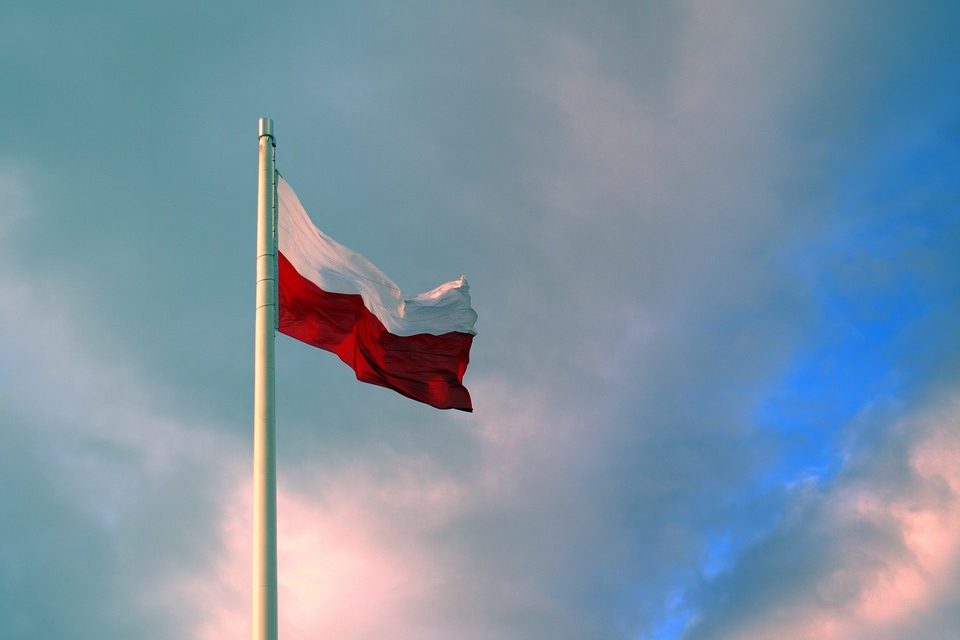
The ICJ called today on the Polish House of Representatives (Sejm) to drop a draft law that would put judges at risk of disciplinary action for their interpretation and application of the law, including EU and international law.
The draft law would also mean that judges would face disciplinary penalties for legitimate criticism of judicial reforms.
“The Polish Parliament should reject these proposals which would place intolerable constraints on judges in interpreting and applying the law and would undermine their freedom to speak out on vital issues of judicial independence,” said Róisín Pillay, Director of the ICJ Europe and Central Asia Programme.
“Elements of the proposals appear designed to prevent judges from fulfilling their obligation under the EU treaties to apply EU law, which is an attack on the independent exercise of their judicial function” she added.
Under the proposals, judges would face disciplinary action and possible dismissal for refusing to apply a legal provision, unless it had been deemed unconstitutional by the Constitutional Tribunal.
This proposal appears to be a direct reaction to a recent decision of the Labour Chamber of the Supreme Court which, applying a ruling of the Court of Justice of the EU, held that the Supreme Court’s Disciplinary Chamber was not an independent court. The Labour Chamber found that that the Disciplinary Chamber is not independent since its judges are appointed by the National Council of the Judiciary (NCJ). Following a recent constitutional reform, the NCJ is composed predominantly of members elected by Parliament and the executive, contrary to international standards on the independence of the judiciary.
New disciplinary offences for judges under the draft law would also include questioning the status of Polish judges, and “political engagement”. Judges would be prohibited from questioning the status of Polish courts or tribunals or constitutional organs. Futhermore, the draft law would prevent judges’ associations from adopting resolutions “expressing hostility towards other powers of the Republic of Poland and its constitutional organs”.
These provisions would hamper judges’ capacity to criticize reforms which have led to questionable judicial appointments by the NCJ and have seriously damaged the independence of the judiciary as a whole. International human rights law and international standards on the judiciary recognise that judges have a right to freedom of expression and that they have a particularly important role in contributing to discussions on issues of the functioning of the judicial system and the rule of law.
Background
On 19 November, the Court of Justice of the European Union (CJEU) delivered a ruling in the case A.K. and others (C-585/18, C-624/18, C-625/18), on a preliminary question by the Supreme Court of Poland. The preliminary question asked whether the recently established Disciplinary and Extraordinary Chambers of the Supreme Court could be considered to be independent.
The CJEU ruled that a court cannot be considered independent “where the objective circumstances in which that court was formed, its characteristics and the means by which its members have been appointed are capable of giving rise to legitimate doubts, in the minds of subjects of the law, as to the imperviousness of that court to external factors, in particular, as to the direct or indirect influence of the legislature and the executive and its neutrality with respect to the interests before it and, thus, may lead to that court not being seen to be independent or impartial with the consequence of prejudicing the trust which justice in a democratic society must inspire in subjects of the law.”
The UN Basic Principles on the Independence of the Judiciary clarify that all governmental and other institutions must respect and observe the independence of the judiciary (Principle 1), and that judges must decide all matters before them impartially, on the basis of facts and in accordance with the law, without any restrictions, improper influences, inducements, pressures, threats or interferences, direct or indirect (Principle 2). Judges can be subject to suspension or removal only following fair procedures (Principle 17) and only for reasons of incapacity or behaviour that renders them unfit to discharge their duties (Principle 18).
The UN Basic Principles, also affirm the freedom of expression and association of judges (Principle 8) in line with protections under international human rights law, and their right to form and join associations of judges to represent their interests (Principle 9).
In recent years, the Polish executive and legislative authorities have systematically undermined the independence of the judiciary in the country, including through laws that have sought to force the dismissal of judges by lowering the mandatory retirement age. In addition, they have brought the appointment of judges under political control by re-structuring the National Council of the Judiciary (NCJ), with a majority of its members selected by the Polish Parliament. (see ICJ statement)
This move has also politicized the Disciplinary Chamber of the Supreme Court, whose members are selected by the NCJ, and the disciplinary court of first instance. In October 2019, the European Commission referred Poland to the CJEU on the grounds that the new disciplinary regime for judges undermines their independence.
In June 2019, the Court of Justice of the European Union (CJEU) held that the Polish Law on the Supreme Court lowering the retirement age of judges of the Supreme Court and providing discretionary power to the President to allow a judge to remain in office following the mandatory retirement date was contrary to the principle of effective judicial protection and therefore in violation of EU law. In November 2019, the CJEU held that Poland violated the independence of the judiciary by lowering in 2017 the pension age of Polish judges and giving the power to maintain them in office to the Minister of Justice.
The ICJ has documented, and the UN Special Rapporteur on independence of judges and lawyers has affirmed, that the right of judges to freedom of expression is particularly protected when in situations where the rule of law or constitutional order is under threat, they speak out in defence of the independence of the judiciary.
Contacts:
Róisín Pillay, Director for Europe and Central Asia Proramme, t: +32 2 734 84 46; e: roisin.pillay(a)icj.org
Massimo Frigo, Senior Legal Adviser of the ICJ Europe and Central Asia Programme, t: +41 22 979 3805 ; e: massimo.frigo(a)icj.org
Dec 16, 2019 | Events, News
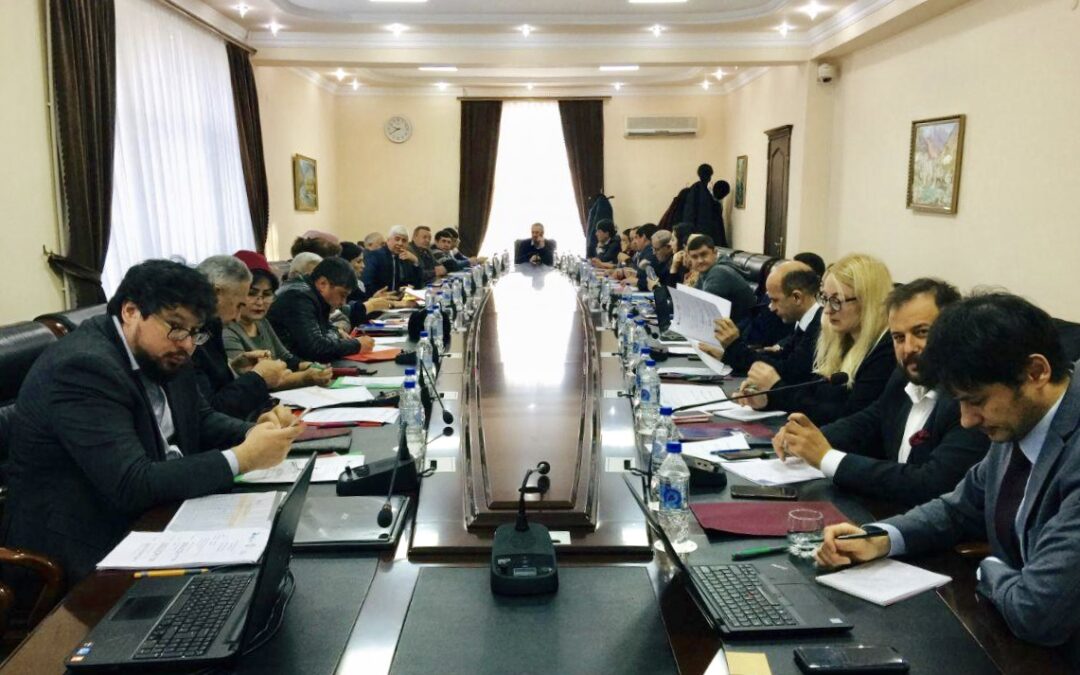
On 16 and 17 December, the International Commission of Jurists (ICJ) in cooperation with the Tajikistan Bar Association (Tajikistan Union of Lawyers) and the Legal Policy Research Centre (LPRC) is organising a seminar “The Role of the Bar Association in ensuring security of lawyers”.
During the two-day event, lawyers from across Tajikistan as well as members of the specialised bodies on the rights of lawyers of bar associations Kazakhstan and Ukraine will discuss key main challenges lawyers face in their countries when defending their clients.
Regular attacks on independent lawyers as well as effective ways of addressing cases of harassment, intimidation and other interference by the Bar Association and its specialised bodies will be discussed during the first day of the event. During the second day, the participants will elaborate a strategy of development for protection of lawyers in Tajikistan.
The president of the Bar Association of Tajikistan as well as all members of the Commission on the Professional Rights of Lawyers of the Bar Association of Tajikistan will take part in the event.
The ICJ expresses appreciation to the Ukrainian National Bar Association for the participation in the event.
The agenda of the event here.

Dec 16, 2019 | Agendas, Events, News
Today begins in Ankara (Turkey) a one-day workshop for lawyers and CSO practitioners to discuss and brainstorm on an alternative Justice Reform Strategy.
This event is organized by ICJ, in cooperation with its partners Kapasite Geliştirme Derneği and Human Rights Joint Platform, as part of a EU co-financed project Rebuilding and Ensuring Access to justice with civil society in Turkey.
The workshop aims at discussing the key reforms proposed by the Government of Turkey in its Judicial Reform Strategy and provide with an assessment and an alternative plan for reform based on international standards and jurisprudence on access to justice and the independence of the judiciary.
The workshop will provide presentations on international standards on the judiciary as well as on access to justice for human rights violations. It will produce a ten point strategy document to propose reforms that will uphold the independence of the judiciary and access to justice in Turkey.
The project is funded by the European Instrument for Democracy and Human Rights (EIDHR) of the European Union.
Turkey-Workshop-Agenda-AltJRS-Ankara-2019-eng (download the agenda)

Dec 10, 2019 | News
Today’s decision from the European Court of Human Rights in the case of Turkish human rights defender Osman Kavala must be immediately complied with by releasing him from detention, the International Bar Association Human Rights Institute (IBAHRI) and the ICJ said today.
In the case of Kavala v Turkey, the European Court of Human Rights held that the detention of Mr Kavala, in connection with his role in the Gezi Park protests of 2013, violated the right to liberty (Article 5.1) and the right to a speedy judicial review of detention (Article 5.4) under the European Convention on Human Rights (ECHR). The Court also found that his detention involves a restriction on rights for an improper purpose (Article 18). As a consequence of these findings, the Court specifically held that ‘the government must take every measure to put an end to the applicant’s detention and to secure his immediate release’.
The Turkish government has a legal obligation to comply with the judgment of the European Court of Human Rights. The IBAHRI and ICJ urge the authorities to abide by their obligations under the ECHR by immediately releasing Mr Kavala.
Mr Kavala has been in detention since 18 October 2017 pending trial on charges connected to the Gezi Park protests. The Gezi Park protests began in May 2013 as an effort by a group of environmentalists to save a park in central Istanbul from being rezoned, but soon grew into nationwide demonstrations. Police quelled the protest in Taksim Square with the use of tear gas and water cannons.
Mr Kavala’s trial, along with 15 other defendants, is ongoing before Istanbul 30th Assize Court. The defendants are charged under Article 312 of the Turkish Criminal Code (an attempt to overthrow the Turkish government or an attempt to prevent it from fulfilling its duties), Article 151 (damage to property), Article 152 (qualified damage to property), Article 174 (possession or exchange of hazardous substances without permission), Article 153 (damaging places of worship and cemeteries), Article 149 (qualified robbery), Article 86 (intentional injury), crimes under the Law on Firearms, Knives and Other Tools no. 6136, and crimes under the Law on Protection of Cultural and Natural Assets no. 2863.
The IBAHRI and the ICJ have jointly sent international observers to attend all hearings of the trial. The organisations will jointly release a trial observation report upon conclusion of the trial.
Contact:
Róisín Pillay, Director, Europe and Central Asia Programme, t: +32 2 734 84 46 ; e: roisin.pillay(a)icj.org
Dec 6, 2019 | News
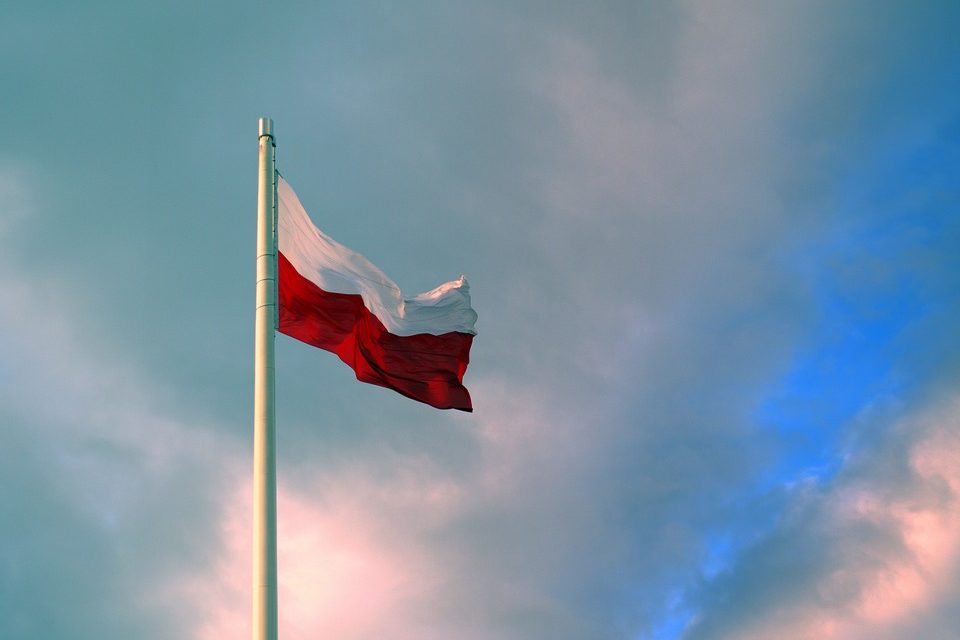
The ICJ calls on the Polish authorities to put an immediate end to unjustified disciplinary proceedings initiated against judges, including Krystian Markiewicz, Chairperson of the Polish Judges’ Association “Iustitia”.
The ICJ considers that the disciplinary action against Judge Markiewicz’ was initiated because of his questioning of the Polish government’s “reforms” that have severely eroded the independence of the judiciary in Poland.
“The disciplinary action taken against Judge Markiewicz for his criticism of the government’s attack on judicial independence violates international standards on the independence of the judiciary and should be ended immediately”, said Róisín Pillay, Director of the ICJ Europe and Central Asia Programme.
“Judges have a right to freedom of expression and to form and take part in associations of judges. They have a particularly important role in speaking up to defend the rule of law and the independence of the judiciary, which is undermined by arbitrary disciplinary proceedings such as those against Judge Markiewicz”, she added.
By order of the Deputy Disciplinary Commissioner of the ordinary court judges, on 4 December, disciplinary proceedings alleging 55 instances of misconduct were initiated against Judge Krystian Markiewicz. These include: inciting disrespect for Poland’s legal order by questioning the independence and legality of the National Council of the Judiciary (NCJ), and the constitutionality of the Disciplinary Chamber of the Supreme Court; and calling for appeals to the Disciplinary Chamber to be suspended.
The disciplinary action against Judge Markiewicz comes within a week of the decision to suspend with immediate effect district Judge Paweł Juszczyszyn, who, in presiding over an appeal, questioned the impartiality of the judge who had delivered the original verdict as a result of being elected by the National Council for the Judiciary. On 1 December 2019, the Polish Judges’ Association Iustitia organized rallies in support of Judge Juszczyszyn.
The ICJ stresses that such actions taken against judges are inconsistent with the duties of all branches of the State to respect and protect the independence of the judiciary. The ICJ calls for Judge Juszczyszyn to be immediately re-instated in his post.
On 4 December 2019, the labour law chamber of the Supreme Court, in implementation of a recent ruling of the Court of Justice of the UE, held that the NCJ is not an impartial and independent body, and that the disciplinary chamber of the Supreme Court is not a “court” under EU or Polish law, thereby confirming the concerns raised by both Judge Juszczyszyn and Judge Markiewicz.
Background
The UN Basic Principles on the Independence of the Judiciary clarify that all governmental and other institutions must respect and observe the independence of the judiciary (Principle 1), and that judges must decide all matters before them impartially, on the basis of facts and in accordance with the law, without any restrictions, improper influences, inducements, pressures, threats or interferences, direct or indirect (Principle 2). Judges can be subject to suspension or removal only following fair procedures (Principle 17) and only for reasons of incapacity or behaviour that renders them unfit to discharge their duties (Principle 18).
In recent years, the Polish executive and legislative authorities have systematically undermined the independence of the judiciary in the country, including through laws that have sought to force the dismissal of judges by lowering the mandatory retirement age. In addition, they have brought the appointment of judges under political control by re-structuring the National Council of the Judiciary (NCJ), with a majority of its members selected by the Polish Parliament. (see ICJ statement)
This move has also politicized the Disciplinary Chamber of the Supreme Court, whose members are selected by the NCJ, and the disciplinary court of first instance. In October 2019, the European Commission referred Poland to the CJEU on the grounds that the new disciplinary regime for judges undermines their independence.
In June 2019, the Court of Justice of the European Union (CJEU) held that the Polish Law on the Supreme Court lowering the retirement age of judges of the Supreme Court and providing discretionary power to the President to allow a judge to remain in office following the mandatory retirement date was contrary to the principle of effective judicial protection and therefore in violation of EU law. In November 2019, the CJEU held that Poland violated the independence of the judiciary by lowering in 2017 the pension age of Polish judges and giving the power to maintain them in office to the Minister of Justice.