Oct 18, 2019 | News
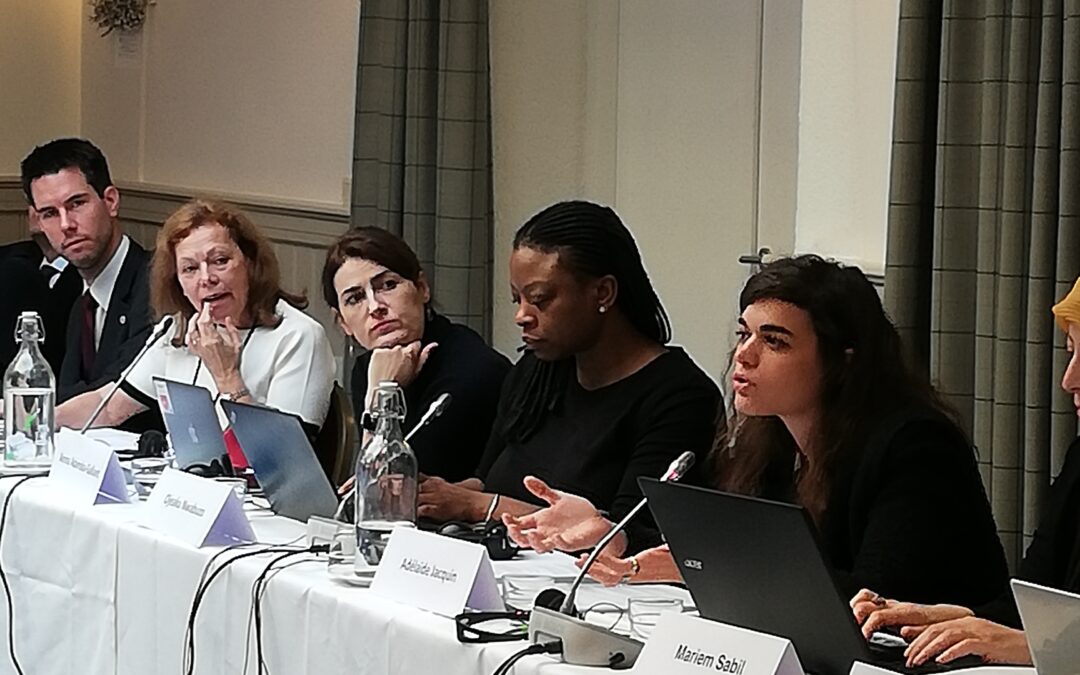
The ICJ and the International Bar Association’s Human Rights Institute (IBAHRI) have jointly sent an international observer to attend the third hearing of the criminal trial on the “Gezi Park” protest at the Silivri Prison Courthouse in Istanbul, scheduled to take place on 18 October 2019.
The ICJ and IBAHRI observer will be monitoring a trial hearing before İstanbul 30th Assize Court with prinicipal defendant Osman Kavala, and 15 others; Ali Hakan Altınay, Ayşe Mücella Yapıcı, Ayşe Pınar Alabora, Can Dündar, Çiğdem Mater Utku, Gökçe Yılmaz, Handan Meltem Arıkan, Hanzade Hikmet Germiyanoğlu, İnanç Ekmekci, Memet Ali Alabora, Mine Özerden, Şerafettin Can Atalay, Tayfun Kahraman, Yiğit Aksakoğlu and Yiğit Ali Ekmekçi.
The observer will report directly to the IBAHRI and ICJ Secretariats on the proceedings following the mission.
The Gezi Park protests began in May 2013 as an effort by a group of environmentalists to save a park in central Istanbul from being rezoned, but soon turned into nationwide demonstrations.
The protest was quelled by police with the use of tear gas and water cannons against the protesters in Taksim Square. Following a six-year investigation into the events, the 657-page indictment issued by the Istanbul Chief Public Prosecutor’s Office was accepted by the 30th A Court in Istanbul on 4 March 2019.
The defendants are to be charged under Turkish Criminal Code Article 312 (attempt to overthrow the Turkish Government or attempt to prevent it from fulfilling its duties), Article 151 (damage to property), Article 152 (qualified damage to property), Article 174 (possession or exchange of hazardous substances without permission), Article 153 (damaging places of worship and cemeteries), Article 149 (qualified robbery), Article 86 (intentional injury); crimes under the Law on Firearms, Knives and Other Tools no. 6136, and crimes under the Law on Protection of Cultural and Natural Assets no. 2863.
Contact:
Massimo Frigo, Senior Legal Adviser, t: +41 22 979 38 05 – e: massimo.frigo(a)icj.org
Oct 15, 2019
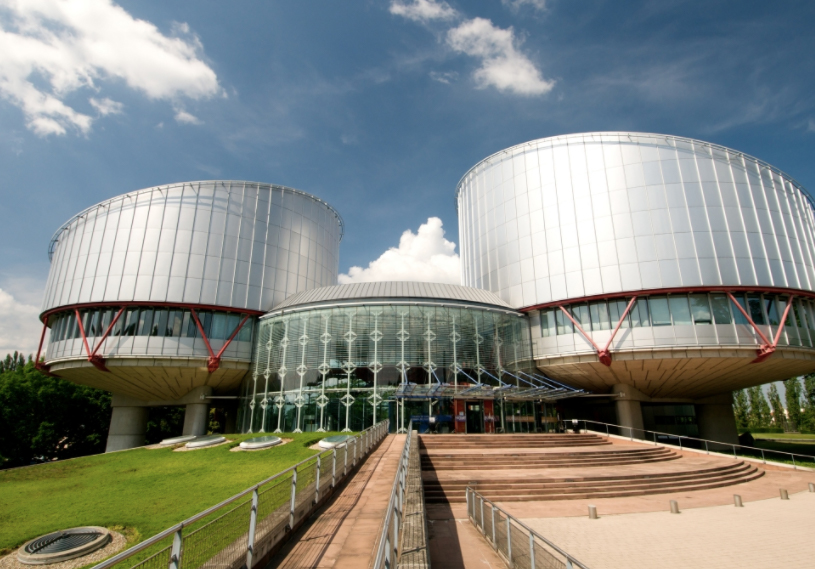
Today the ICJ, together with ILGA-Europe, the AIRE Centre and Human Rights Watch, submitted a joint third-party intervention to the European Court of Human Rights in the case of Oganezova v. Armenia (Application nos. 71367/12 and 72961/12).
In their written submissions to the Court, the interveners addressed the following issues:
(a)
under European and international human rights jurisprudence, the victim’s identity as an lesbian, gay, bisexual or transgender (LGBT) person is relevant to the assessment of whether the threshold for torture and other ill-treatment under Article 3 of the European Convention of Human Rights (ECHR) has been met. Specifically, the discrimination directed towards LGBT persons may indicate a particular motive and intent that may meet the threshold of Article 3 ECHR;
(b)
the Contracting States have a positive obligation to protect persons in their jurisdiction from violence and harassment based on their real or imputed sexual orientation and/or gender identity or expression, including the obligation to prevent, investigate, prosecute, punish and remedy such acts. In particular, Contracting States have the additional procedural obligation to take all reasonable steps to establish whether any hatred or prejudice connected to a protected characteristic may have played a role in the violent attack, where acts of violence are motivated in whole or in part by prejudice against an individual’s real or imputed sexual orientation and/or gender identity or expression; and
(c)
That the attitudes and practices in responding to violence and harassment against LGBT people in Armenia provide important contextual information in analyzing the case.”
Europe-Oganezova v. Armenia-Advocacy-Legal Submission-2019-ENG (full text of submission, in PDF)
Oct 14, 2019 | Communiqués de presse, Multimédia, Nouvelles
La condamnation ce jour de dirigeants séparatistes catalans du chef de sédition restreint de façon indue le droit aux libertés d’expression, de réunion pacifique et d’association, déclare la CIJ.
« Ces condamnations représentent une atteinte grave à l’exercice des libertés d’expression, de réunion pacifique et d’association des dirigeants politiques. Le recours à la loi sur la sédition dans le but de restreindre l’exercice de ces droits n’était ni nécessaire, ni proportionné et, partant, injustifiable, » a déclaré Massimo Frigo, Conseiller juridique principal pour le programme Europe et Asie Centrale de la CIJ.
La CIJ souligne également le fait que la définition excessivement étendue du crime de sédition appliquée dans le cas présent crée un risque élevé d’arbitraire.
« Nous sommes inquiets de constater que la Cour Suprême ne respecte pas les obligations internationales de l’Espagne en matière des droits de l’homme dans l’examen des accusations visant les prévenus, ce qui affaiblit fortement les condamnations en découlant, » a-t-il ajouté.
Neuf des douze leaders politiques jugés – parmi lesquels des membres haut placés du gouvernement catalan – ont été déclarés coupables de sédition en lien avec leur participation à l’organisation, le 1er octobre 2017, du référendum sur la question de l’indépendance de la Catalogne. Le référendum fut conduit bien que la Cour Constitutionnelle ait prononcé son illégalité.
Le processus de vote référendaire a été interrompu de force à de multiples endroits par la police, laquelle aurait, selon plusieurs signalements sérieux, recouru de façon excessive à la force en violation des obligations internationales incombant à l’Espagne.
« L’ingérence dans l’expression pacifique de volontés politiques ou de manifestations est inacceptable, sauf dans de rares circonstances où elle s’avère strictement nécessaire et proportionnée pour des motifs impérieux tels que la sécurité nationale,» a précisé Massimo Frigo.
Contact
Massimo Frigo, Conseiller juridique principal, Programme Europe et Asie Centrale de la CIJ, t : + 41 22 979 38 05 ; e : massimo.frigo(a)icj.org
Contexte
Les 12 individus condamnés en lien avec le référendum d’octobre 2017 incluent Oriol Junqueras (photo), ancien vice-président catalan; Carme Forcadell, ancienne parlementaire catalane; huit ancient ministres du gouvernement catalan – Jordi Turull, Raül Romeva, Joaquim Forn, Santi Vila, Meritxel Borràs, Dolors Bassa, Josep Rull, Carles Mundó –; Jordi Sànchez, l’ancien dirigeant de l’Assemblée Nationale Catalane (ANC); et Jordi Cuixart, ancien dirigeant de l’organisation indépendantiste Òmnium Cultural.
L’Espagne a pour obligation de garantir la liberté d’expression, y compris l’expression politique, telle que protégée par l’article 10 de la Convention Européenne des droits de l’Homme (CEDH) et l’article 19 du Pacte international relatif aux droits civils et politiques de l’ONU (Pacte I) ; et la liberté de réunion pacifique et d’association protégée par l’article 11 CEDH et les articles 21 et 22 du Pacte I.
Le Comité des Droits de l’Homme de l’ONU, dans son Commentaire Général relatif à la liberté d’expression a déclaré : « les Etats parties doivent prendre les plus grandes précautions pour que toute législation relative à la trahison et toutes dispositions analogues relatives à la sécurité nationale, qu’elles se présentent sous la forme de lois sur les secrets d’État, de lois sur la sédition ou sous d’autres formes, soient conçues et appliquées d’une façon qui garantisse la compatibilité avec les conditions strictes énoncées au paragraphe 3 » de l’article 19 du Pacte I, lequel prévoit que les restrictions à la liberté d’expression doivent être fixées par la loi et nécessaires à la sauvegarde de la sécurité nationale ou de l’ordre public. Le droit de prendre part à la vie publique est protégé par l’article 25 du Pacte I.
Oct 14, 2019 | Multimedia items, News, Video clips
The conviction today of Catalan separatist leaders of broadly defined offences of sedition unduly restricts rights of freedom of expression, assembly and association, the ICJ said today.
“These convictions represent a serious interference with the exercise of freedom of expression, association and assembly of the leaders. The resort to the law of sedition to restrict the exercise of these rights is unnecessary, disproportionate and ultimately unjustifiable” said Massimo Frigo, ICJ Europe and Central Asia Senior Legal Adviser.
The ICJ also stressed that the overly broad definition of the crime of sedition applied in this case creates a high risk of arbitrariness.
“We are concerned that the Supreme Court does not comply with Spain’s obligations under international human rights law in the consideration of the charges against these defendants and this seriously undermines these convictions,” he added.
Nine of the twelve leaders on trial – including high-ranking Catalan government officials –were convicted of sedition in connection with their part in the administration on 1 October 2017 of a referendum on Catalonian independence. The referendum was conducted despite having been declared illegal by the Constitutional Court.
The voting process during the referendum was forcibly suppressed in many locations by the police, with credible reports of the use of unnecessary and disproportionate force in breach of Spain’s international law obligations.
“Interference with peaceful political expression and protest is not acceptable, save in limited circumstances where it is strictly necessary and proportionate for compelling purposes such as national security .” Frigo said.
Contact
Massimo Frigo, Senior Legal Adviser, ICJ Europe Programme, t: +41 22 979 38 05 ; e: massimo.frigo(a)icj.org
Background
The 12 people convicted in connection with the October 2017 referendum include Oriol Junqueras (13 years of imprisonment for sedition and abuse of power), former Catalan vice-president; Carme Forcadell, former Catalan parliament speaker (11 years and six months of imprisonment for sedition); eight former ministers in the Catalan government – Jordi Turull (12 years of imprisonment for sedition and abuse of power), Raül Romeva (12 years of imprisonment for sedition and abuse of power), Joaquim Forn (10 years and six months of imprisonment for sedition), Santiago Vila (10 months for disobedience), Meritxel Borràs (10 months for disobedience), Dolors Bassa (12 years of imprisonment for sedition and abuse of power), Josep Rull (10 years and six months of imprisonment for sedition), Carles Mundó (10 months for disobedience); Jordi Sànchez (9 years of imprisonment for sedition) the former leader of the Catalan National Assembly (ANC); and Jordi Cuixart (9 years of imprisonment for sedition), former head of the independence organisation Òmnium Cultural.
Spain has obligations to protect freedom of expression, including political expression, under Article 10 of the European Convention on Human Rights (ECHR) and Article 19 of the International Covenant on Civil and Political Rights (ICCPR); and freedom of peaceful assembly and association under Article 11 ECHR and Article 21 and 22 ICCPR.
The Human Rights Committee in its General Comment on freedom of expression has affirmed that: “extreme care must be taken by States parties to ensure that treason laws and similar provisions relating to national security, whether described as official secrets or sedition laws or otherwise, are crafted and applied in a manner that conforms to the strict requirements of paragraph 3” of article 19 ICCPR, which requires that restrictions on freedom of expression be provided for by law and must be necessary for a legitimate purpose, such as national security or public order .) Rights to participate in public life are protected under Article 25 ICCPR.
Oct 14, 2019 | Comunicados de prensa, Multimedia, Noticias
La condena impuesta hoy a los líderes independentistas catalanes por una amplia definición del delito de sedición restringe excesivamente e ilegalmente los derechos de libertad de expresión, asamblea y asociación, dijo hoy la CIJ.
“Estas condenas representan una grave interferencia con el ejercicio de la libertad de expresión, asociación y asamblea de los líderes catalanes. El recurso a la ley de sedición para restringir el ejercicio de estos derechos es innecesaria, desproporcionada e injustificable” dijo Massimo Frigo, asesor legal senior para la CIJ en Europa y Asia Central.
La CIJ también puntualizó que la excesivamente amplia definición del delito de sedición aplicada en este caso crea un alto riesgo de arbitrariedad.
“Nos preocupa que el Tribunal Supremo no haya tenido totalmente en cuenta las obligaciones de España bajo el derecho internacional de los derechos humanos en su consideración de los cargos contra estos acusados lo cual mina seriamente sus condenas” añadió.
Nueve de los doce líderes politicos procesados – incluyendo altos cargos del gobierno catalán – han sido condenados por sedición en conexión con su contribución a la administración el 1 de octubre de 2017 de un referéndum sobre la independencia de Cataluña. El referéndum se llevó acabo pese haber sido declarado ilegal por el Tribunal Constitucional.
El proceso de voto durante el referéndum fue reprimido por la fuerza en muchas localidades por la policía, con informes creíbles de uso innecesario y desproporcionado de la fuerza en violación de las obligaciones de España en derecho internacional.
“La intereferencia con la expresión y protesta política pacífica es inacceptable, salvo en limitadas circunstancias en las que sea estrictamente necesario y proporcionado por razones convincentes como la seguridad nacional.” dijo Frigo.
Contacto
Massimo Frigo, asesor legal senior, Programa Europeo de la CIJ, t: +41 22 979 38 05 ; e:massimo.frigo(a)icj.org
Antecedentes
Las doce personas que han sido condenadas en conexión con el referéndum de Octubre de 2017 incluyen a Oriol Junqueras, ex-vicepresidente de la Generalitat catalana; Carme Forcadell, ex-presidenta del Parlament catalán; ocho ex-consejeros del Gobierno catalán – Jordi Turull, Raül Romeva, Joaquim Forn, Santi Vila, Meritxel Borràs, Dolors Bassa, Josep Rull, Carles Mundó -; Jordi Sànchez, ex-líder de la Asamblea Nacional Catalana (ANC), y Jordi Cuixart, ex-líder de la organización independentista Òmnium Cultural.
España tiene obligación de proteger la libertad de expresión, incluyendo la expresión política, bajo el artículo 10 de la Convención Europea de Derechos Humanos (ECHR, por sus siglas en inglés) y el artículo 19 del Pacto Internacional de Derechos Civiles y Políticos (ICCPR, por sus siglas en inglés), y la libertad de asamblea y asociación pacíficas bajo el artículo 11 de ECHR y los artículos 21 y 22 de ICCPR.
El Comentario General sobre libertad de expresión del Comité de Derechos Humanos afirma que Los Estados partes deben procurar con el mayor cuidado que las leyes sobre traición y las disposiciones similares que se refieren a la seguridad nacional, tanto si se califican de leyes sobre secretos de Estado o sobre sedición, o de otra manera, estén redactadas y se apliquen de conformidad con las condiciones estrictas del párrafo 3 del artículo 19 del ICCPR, lo cual requiere que las restricciones en la libertad de expresión estén legisladas y que sean necesarias en base a propósito legítimo, como la seguridad nacional o el orden público. El derecho a participar en la vida pública está protegido bajo el artículo 25 de ICCPR.