Aug 27, 2019 | News
The ICJ welcomes yesterday’s ratification by Uzbekistan of the CIS Convention on Legal Assistance and Legal Relations in Civil, Family and Criminal Matters 2002, also called the Chisinau Convention. The law on ratification was signed by President Shavkat Mirziyoyev.
The ICJ calls on the Uzbek authorities to take measures to make the Convention’s protective guarantees effective.
“This is a major step forward by Uzbekistan to get its extradition system up to standard with the rest of the world”, said Massimo Frigo, ICJ Senior Legal Adviser. “. “Its ratification of this treaty considerably steps up human rights guarantees in extradition.”
The Chisinau Convention enshrines several human rights guarantees to protect against extraditions that may breach the human rights of the transferred person, including the prohibition to transfer persons where they risk the death penalty or torture or cruel, inhuman and degrading treatment.
“The ratification of the Convention is a very important first step. An effective implementation of these guarantees in the legal and law enforcement systems is necessary now.” said Dmitry Nurumov, ICJ Central Asia Legal Consultant.
Background
Last May, the ICJ held, together with the General Prosecutor’s Office of Uzbekistan, UNODC Regional Office for Central Asia and the Regional Office for Central Asia of OHCHR, a regional and a national seminar on comparative practices in extradition in the CIS and European legal systems, including with regard to human rights guarantees in these procedures.
In 2017, the ICJ issued a report documenting the shortcomings in the Russian Federation, Central Asia and European countries in their extradition systems and other transfer procedures.
The ratification by Uzbekistan of the Chisinau Convention meets part of the recommendations formulated by the ICJ in these occasions.
Contact:
Massimo Frigo, Senior Legal Adviser, e: massimo.frigo(a)icj.org , t: +41229793805

Aug 22, 2019 | News
The ICJ calls on the Ukrainian authorities to investigate the murder of lawyer Olexandr Ivanov, killed today with an automatic weapon near SIZO (Pre-trial Dentention Centre) №6 in Kropyvnytskyi.
The shooting was carried out from a car by unknown persons. The lawyer died on the spot. Another person injured in the incident was hospitalized in critical condition.
“The killing of lawyer Oleksandr Ivanov must be independently, promptly, and thoroughly investigated and the perpetrators brought to justice,” said Temur Shakirov, ICJ Senior Legal Adviser.
“Such crimes strip any legal reforms of their positive impact if lawyers’ life is always in danger when exercising their functions,” he added.
The police have confirmed the occurrence of the killing and initiated an investigation preliminarily qualified as intentional murder under article 115-2 of the Criminal Code of Ukraine.
The Ukrainian National Bar Association (UNBA) is planning to convene an emergency meeting of the Committee on Protection of Lawyers Rights and Professional Guarantees. The UNBA has also referred to the leadership of regional prosecution and police authorities to bring the case under personal control.
“During its recent mission to Ukraine the ICJ heard of cases of killings of lawyers and this case demonstrates that little progress has been achieved in addressing the security of lawyers in Ukraine,” said Shakirov.
Additional information:
International human rights law, including the European Convention on Human Rights to which Ukraine is a party, requires that states take steps to protect the life and physical integrity of persons who they know or ought to know are at real risk of violence.
According to the UN Basic Principles on the Role of Lawyers, governments must ensure that lawyers are able to perform all of their professional functions without intimidation, hindrance, harassment or improper interference (principle 16). The UN Basic Principles specify that “[w]here the security of lawyers is threatened as a result of discharging their functions, they shall be adequately safeguarded by the authorities” (principle 17).
Aug 20, 2019
An opinion piece by Massimo Frigo, ICJ’s Senior Legal Adviser for Europe and Central Asia. This Op-ed was first published in the EU Observer.
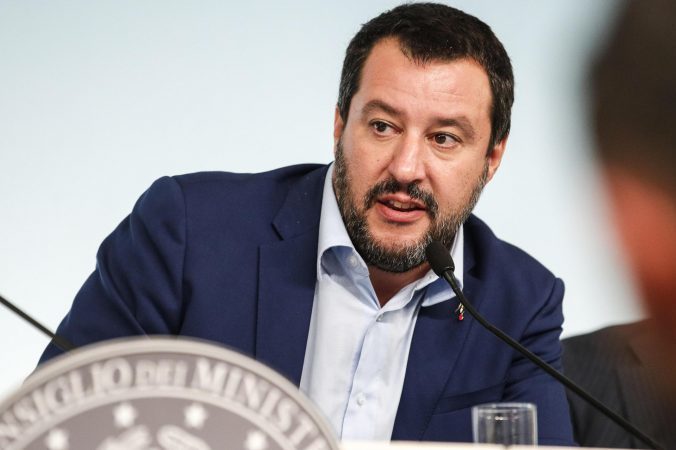
Since he became Minister of Interior, Matteo Salvini has repeatedly vowed to close Italian harbours to migrants, including refugees, and NGOs, making it the central objective of his migration policy.
The latest attempt has been the issuance by the Government of a Law Decree called “Security Decree bis”. converted into law at the beginning of August by Parliament.
The Decree gives exceedingly wide power to the Minister of Interior “to restrict or prohibit the entry, transit or stop of any vessel in the territorial sea”.
The restriction or denial order may be issued for “reasons of public order and security or when the conditions arise under article 19.2.g of the UN Convention on the Law of the Sea.” Article 19.2 is about lack of respect of national immigration laws.
The same Decree affirms that the vessel’s captain must observe international law and the prohibition of entry, if ordered, by the Minister of Interior.
In case of breach of the prohibition of entry, the captain and the owner of the boat are sanctioned with an administrative fine between 150.000 and 1.000.000 EUR and the seizure of the boat.
As is evident from its express wording, the Decree itself recognizes that its terms are conditioned by the requirements international law. This limitation was highlighted as well by the President of the Republic, Sergio Mattarella, in his message accompanying the promulgation of the law that reinforced the duty of rescue upon any boat’s captain under the UN Convention on the Law of the Sea.
This was also a mandatory condition, since article 117 of the Italian Constitutions holds that the laws must respect “the constraints deriving from EU legislation and international obligations”.
The law strikes back
It is for this reason that, since the promulgation of the Law Decree and its approval by Parliament, judicial decisions have hampered the purported aim of the Decree to close the Italian harbours.
The Judge of Preliminary Investigations of Agrigento, who, on 2 July, ordered the release from detention of Captain Carola Rackete of the Sea Watch 3, did so because she considered that her entry in breach of the prohibition under the Security Decree bis could not be unlawful, since it was done during a rescue operation, that is an obligation under international law.
A similar reasoning was followed, by the Administrative Tribunal of the Lazio Region, which on 14 August issued an injunction to the Government to let the boat Open Arms to enter Italian territorial waters so as to allow immediate assistance to persons in need.
According to media accounts, the Juvenile Court of Palermo has similarly questioned the Government on the situation of the several children aboard the Open Arms defining the situation of the boat as that of a push-back by Italian authorities.
The Open Arms is still at large and hosts more than 130 people, including a number of children. The ICJ and several other organizations have called on Italy and Malta to allow for the disembarkment of the passengers of the Open Arms for the last days.
The attacks on the Rule of Law
Matteo Salvini, who, in the meantime, has withdrawn his support for the Government – while remaining in charge as Minister of Interior – and called for new elections in the next autumn, has relentlessly attacked the judges and the judiciary in general for issuing “political decisions” in opposition to the “will of the Italian people” and of not respecting the law.
He has often called for a reform of the judiciary whenever an unfavourable decision has been issued.
More recently, he openly challenged the order of the Administrative Tribunal of Lazio by attempting to issue a new decree of prohibition of access to Italian waters for the Open Arms.
This move was blocked by the refusal of countersigning the order by the Minister of Defence and the Minister of Transports and Infrastructures.
However, it did not stop Salvini from openly criticizing the ruling of the Tribunal and hinting that there is a “plan to come back and open Italian harbours to make Italy be again the reception centre of Europe.”
These attacks by Matteo Salvini have been by UN independent experts, including the UN Special Rapporteur on Judges and Lawyers and by the International Commission of Jurists (ICJ) that emphasized that fundamental principles regarding the independence of the judiciary forbid such inappropriate interference with judicial process by the executive.
What is really at stake?
So, what is at stake in the cases of Sea Watch 3, Open Arms, and more generally in the role of courts?
It is not only the immigration policy of Italy or the EU, or the protection of migrants, including refugees, in extremely vulnerable and often life-threatening conditions that are stake.
It is the respect and protection of the Rule of Law, in particular of the independence of the judiciary and of the separation of powers that are at stake.
The attacks to Italian judges and the judiciary by Minister Salvini concern every person because an independent judiciary is an essential guarantee for the respect, protection and fulfilment of the human rights of everyone, and once it is undermined it is undermined for everyone.
In the cases noted above, the judges have done nothing more than reaffirm basic legal rules and principles.
And, thankfully, this means that thousands of people that find themselves wretched in dangerous conditions may be protected from abuse and, in many cases, death, because they have rights under international law as any other human being.
And this is what is the duty of judges and the Rule of Law to uphold.
Aug 19, 2019 | Advocacy, Cases, Legal submissions
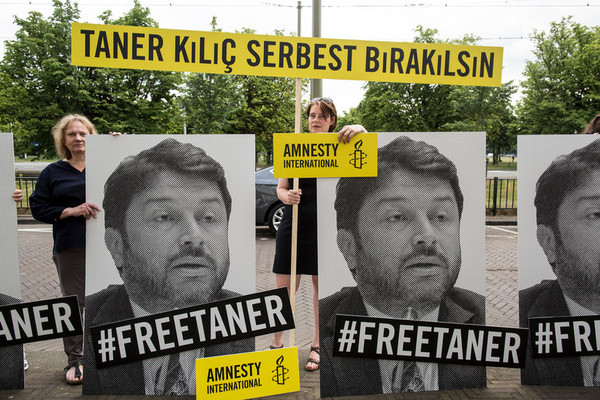
The International Commission of Jurists, the Turkey Human Rights Litigation Support Project and Human Rights Watch have jointly intervened before the European Court of Human Rights in the case of Taner Kiliç, former Chair of the Board of Amnesty International Turkey.
Taner Kiliç is a Turkish human rights defenders. He had been Chair of the Board of Amnesty International Turkey since 2014.
He was arrested on 6 June 2017 on reportedly unsubstantiated charges of “membership of a terrorist organisation” and was released on bail on 15 August 2018 after having spent 14 months in detention.
His case before the European Court of Human Rights challenges the lawfulness of his pre-trial and on remand detention, the violations of his right to judicial review of his detention, and of his freedom of expression and association, considering his arrest linked to his work as leader of a NGO.
As the interveners have written to the Court, this case epitomises some of the most fundamental human rights challenges in Turkey today.
These involve widely documented restrictions on freedom of expression, association, and assembly of human rights defenders (HRDs) and rapidly closing civil society space.
The interveners have submitted observations on:
- the factual context in respect of the situation facing HRDs in Turkey;
- international standards governing obligations towards HRDs of relevance to the Court’s interpretation of the European Convention on Human Rights, including the limits prescribed by Article 18;
- key principles necessary for a rule of law approach to the application of the criminal law, against the legal and practical pattern of excessive resort to criminal law against HRDs in Turkey today.
Turkey-ECtHR-icj&others-Kilic-Advocacy-legal submission-2019-ENG (download the third party intervention)
Photo credit: Amnesty International

Aug 8, 2019 | News
The ICJ called today on Italy and Malta to cooperate to swiftly provide a place of safety for the disembarkment of the 121 migrants, likely including asylum seekers, on board the Open Arms vessel.
Open Arms rescued 123 people that left Libya and were on a situation of distress in international waters, and has been navigating seven days on the Central Mediterranean Sea in search of a place of safety for disembarkment.
Currently Italy and Malta (the nearest States) and Spain (the flag State) have not granted access to their territorial waters.
“When a boat is conducting an operation of rescue it is the duty under international law for neighbouring States to provide a place of safety,” said Massimo Frigo, ICJ Senior Legal Adviser.
“The situation on the boat, with also 30 children and two babies, is rapidly deteriorating and it is of the utmost urgency to allow for their disembarkment,” he added.
“The refusals and lack of cooperation by Italy, Malta and Spain is in contravention of their obligations under the law of the sea,” said Frigo.
“These States should open their harbours and the EU should work hard to ensure that resettlement is ensured so as to relieve pressure from them.”
Relevant provisions of international law include: UN Convention on the Law of the Sea (Article 98); International Convention for the Safety of Life at Sea (SOLAS), Annex, Chapter V; International Convention on Maritime Search and Rescue.
Contact:
Massimo Frigo, ICJ Senior Legal Adviser, t:+41 22 979 3805 ; e: massimo.frigo(a)icj.org