Jun 7, 2019
The ICJ has presented its response to a European Commission consultation on how to strengthen protection of the rule of law in EU Member States through promotion, prevention mechanisms and measures to hold States accountable for rule of law violations.
In its response to the European Commission consultation , the ICJ highlights the declarations of ICJ Congresses from the Act of Athens in 1955 to the Tunis Declaration of 2019, which have helped to define and explain the rule of law. The ICJ’s long experience of working to advance the rule of law around the world has shown the need both for institutional and procedural safeguards for the rule of law, and for developing strong national rule of law cultures. The EU has an important role to play in supporting these protections in EU Member States, but it does not act alone in this field. The EU’s work on rule of law should be carefully positioned to take account of UN and Council of Europe standards and mechanisms, in the interests of the most effective possible strategies to protect the rule of law in Europe. Furthermore, for the EU to be credible in the action it takes to protect and promote the rule of law, the EU institutions themselves met be above reproach in their compliance with Rule of Law principles.
As regards the promotion of the rule of law, the ICJ underlines the importance of a shared understanding and commitment to the rule of law amongst legal and political communities, and the general public. The EU can make a significant contribution to supporting such understanding, through support and funding for civil society in its defence and promotion of the rule of law, through building the capacity of legal professionals including judges, prosecutors and lawyers to uphold the rule of law, and through support for building the engagement of national parliaments on rule of law issues.
In order to prevent threats to the rule of law, the ICJ supports the development of regular, uniform rule of law reviews by which EU Member States’ laws and practices are measured against objective standards by independent experts. Such assessments should be removed from political influence and should be conducted through an open and transparent process, and should be co-ordinated with existing initiatives of the EU and mechanisms of the UN and Council of Europe. The reviews could be conducted by a new independent, specialised Agency on the rule of law, or in co-operation with the Venice Commission of the Council of Europe.
It is vital that there are effective EU mechanisms to respond to violations of the rule of law in EU Member States. Both the European Court of Human Rights and the Court of Justice of the EU are essential to this response. The EU should therefore do all in its power to support the European Court of Human Rights and the implementation of its judgments. Infringement proceedings before the CJEU should be initiated regularly and promptly where the Commission identifies rule of law problems that violate EU law or affect the application of EU legislation. Institution of Article 7 TEU proceedings in appropriate cases is also vital to uphold the credibility of any rule of law assessment mechanism, and in the long term, consideration should be given to amending the treaties to strengthen this mechanism.
The full ICJ submission can be read here.

Jun 4, 2019 | News
The ICJ, European Council on Refugees and Exiles (ECRE) and the Greek Council for Refugees (GCR) welcome the decision of the European Committee on Social Rights that Greece should take “immediate measures” to protect the rights of migrant children as required under the European Social Charter.
The Greek government should now take urgent steps to comply with the Committee’s decision, to prevent serious and irreparable injury or harm to the children concerned, including damage to their physical and mental health, and to their safety.
The Committee’s decision, issued on 23 May, requires the government to immediately provide migrant children with appropriate shelter, food, water, education and medical care; to remove unaccompanied migrant children from detention and from Reception and Identification Centers (RICs) at the borders, place them in suitable accommodation for their age and appoint effective guardians.
The Committee noted that “immediate measures” were exceptional, but found that they were necessary in this case given the government’s failure to dispel serious concerns about the gravity and urgency of the situation of migrant children in Greece.
This decision is in response to a collective complaint brought before the Committee by ICJ, ECRE and GCR, alleging systemic violations of migrant children’s rights on mainland Greece and the North Eastern Aegean islands. The complaint catalogues the numerous ways in which Greece has failed to fulfill its obligations under the European Social Charter to protect the rights migrant children, leaving them in conditions of squalor, insecurity and violence.
In addition to indicating immediate measures, the Committee found the complaint itself admissible. The complaint now awaits examination and determination on the merits by the European Committee on Social Rights.
Read the statement on the decision here in English and in Greek and full complaint here.
Jun 3, 2019
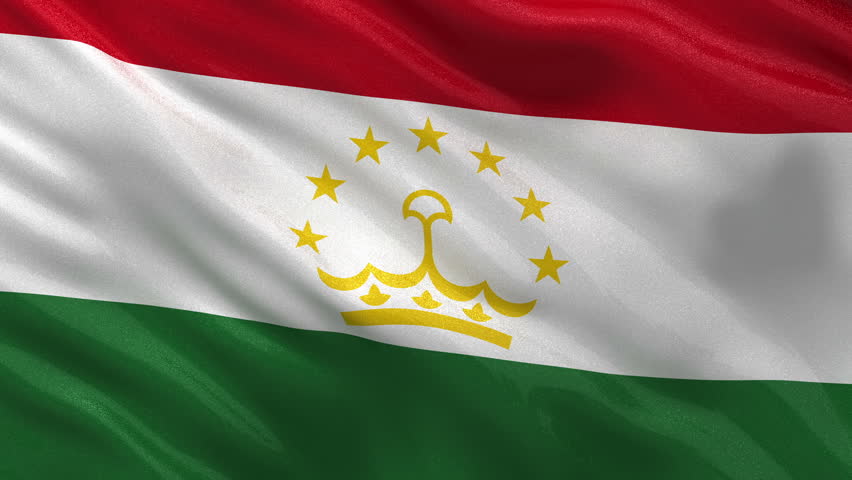
Today, the ICJ and IBAHRI filed their submission to the UN Human Rights Committee on the compliance by Tajikistan with its obligations under the International Covenant on Civil and Political Rights.
During its 126th session, from 1 to 26 July 2019, the Human Rights Committee will examine the Republic of Tajikistan’s implementation of the provisions of the International Covenant on Civil and Political Rights, including in light of the State Party’s third periodic report.
In the context of this review, the International Bar Association Human Rights Institute (IBAHRI) and the International Commission of Jurists (ICJ) bring to the Committee’s attention some issues of concern pertaining to Tajikistan’s implementation of the ICCPR. Their submission highlights a number of concerns relating to the lack of independence of the legal profession in Tajikistan, and its consequences for the protection of certain Covenant rights. In particular, the submission addresses:
(a) the legal profession’ lack of independence;
(b) the authorities’ interference with lawyers’ legitimate activities;
(c) restrictions placed on lawyers’ access to their clients and the rights of the defence; as well as
(d) specific cases of concern.
These concerns are relevant for the Committee’s evaluation of the Republic of Tajikistan’s implementation of the right to a fair trial under article 14 ICCPR, as well as other Covenant rights, including for example the State’s obligations under articles 2, 7, 9, and 10 of the ICCPR.
See the submission here: ICCPR report_Tajikistan_IBAHRI_ICJ_2019_eng.
Jun 3, 2019 | Адвокаси, Юридические заявления
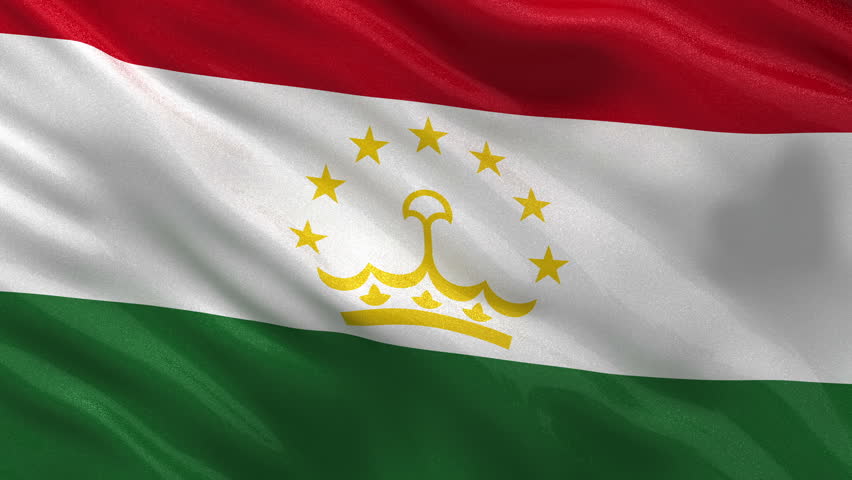
МКЮ и IBAHRI подали в Комитет ООН по правам человека свое представление о соблюдении Таджикистаном своих обязательств по Международному пакту о гражданских и политических правах.
В рамках своей 126-ой сессии, которая пройдет с 1 по 26 июля 2019 г., Комитет по правам человека («Комитет») рассмотрит вопрос о реализации Республикой Таджикистан положений Международного пакта о гражданских и политических правах (МПГПП или Пакт), в том числе в свете третьего периодического доклада государства-участника.
В контексте рассмотрения указанного вопроса Институт по правам человека Международной ассоциации адвокатов (IBAHRI) и Международная комиссия юристов (МКЮ) считают необходимым обратить внимание Комитета на ряд вопросов, вызывающих беспокойство с точки зрения реализации Таджикистаном положений МПГПП. Настоящее представление выделяет ряд проблем, связанных с недостаточной независимостью юридической профессии в Таджикистане, а также последствия данной ситуации с точки зрения защиты ряда прав, гарантированных Пактом. В частности, в настоящем представлении рассматриваются следующие вопросы:
(а) отсутствие независимости юридической профессии;
(b) вмешательство властей в законную деятельность адвокатов;
(с) ограничения в отношении доступа адвокатов к доверителям и прав защиты; а также
(d) конкретные примеры проблемных ситуаций.
Указанные проблемы имеют отношение к оценке Комитетом реализации Республикой Таджикистан права на справедливое судебное разбирательство по статье 14 МПГПП, а также иных прав, гарантированных Пактом, в том числе, к примеру, обязательств государства по статьям 2, 7, 9 и 10 МПГПП.
Текст представления доступен здесь:
Tajikistan-ICCPR-Advocacy-non legal submission-2019-RUS

May 20, 2019 | Communiqués de presse, Nouvelles
L’ICJ, l’Ordre des avocats de Genève et la communauté juridique de Genève joignent leurs forces pour lancer l’ICJ-Geneva Lawyers International Cooperation Initiative qui consistera en des missions de coopération sur les cinq continents afin de soutenir les avocats et magistrats menacés dans leur indépendance et ainsi œuvrer à la promotion de l’Etat de droit.
La première d’entre elles commence demain 21 mai. Une avocate de l’Ordre des avocats de Genève va se rendre au Guatemala pour enquêter sur le déplacement forcé de la communauté indigène de La Laguna d’El Petén.
D’une manière générale, ces missions consisteront notamment en des :
- Observations de procès ;
- Participations à des missions d’enquête ;
- Soutiens à l’indépendance des avocats et des Barreaux ;
- Participations à des activités de formations ;
- Expertises et soutiens académiques.
Depuis sa création en 1952, l’ICJ joue un rôle unique et prééminent en tant qu’organisation non-gouvernementale pour la défense de l’Etat de Droit dans le monde auquel participe l’indépendance des juges et des avocats.
De par la présence de son siège à Genève depuis 60 ans, l’ICJ souhaite cultiver son lien particulier avec la Cité, la faire rayonner et partager l’esprit de Genève.
Pour Michaël Sombart, Directeur des Partenariats Stratégiques de l’ICJ : “Il s’agit de renouer un lien professionnel fort entre l’ICJ, l‘Ordre des avocats de Genève et la communauté juridique genevoise. C’est aussi une opportunité de porter le message de la Genève humanitaire au-delà des frontières et de bénéficier de la réputation, neutralité et compétence de la communauté juridique suisse.”
“Cette initiative est bienvenue et nous la soutenons avec engagement,” souligne Me Sandrine Giroud, Membre du Conseil de l’Ordre des avocats de Genève et Présidente de sa Commission des droits de l’Homme. “L’Etat de droit est attaqué partout dans le monde et les avocats jouent un rôle primordial pour sa défense et l’impartialité de la justice. Notre soutien à l’ICJ-Geneva Lawyers International Cooperation Initiative est en ligne avec la mission de l’avocat comme rempart contre l’arbitraire et la tradition de défense de la défense de l’Ordre des avocats de Genève. Nous nous réjouissons de cette collaboration qui participe du combat pour la justice et le respect des garanties et droits fondamentaux.”
Pour Me Nicolas Gürtner, Premier Secrétaire du Jeune Barreau de l‘Ordre des avocats de Genève : “Ce projet offre une chance remarquable pour de jeunes avocats d’œuvrer, aux côtés des augustes juristes de l’ICJ, en faveur de la garantie de l’Etat de droit.”
Le Comité de Pilotage de ce projet comprend :
- L’ICJ ;
- Pour l’Ordre des avocats de Genève : la Commission des droits de l’Homme et le Jeune Barreau ;
- Des représentants du monde de la magistrature et académique genevois dont le Professeur Robert Roth, ancien Président de la Cour de Cassation, ancien directeur de la Geneva Academy, Professeur Emérite de l’Université de Genève
Contact :
Michaël W. Sombart, ICJ, Directeur des Partenariats Stratégiques, t: +41 22 979 38 31 ; m: +41 77 965 98 45 ; e: michael.sombart(a)icj.org