Apr 12, 2019 | News
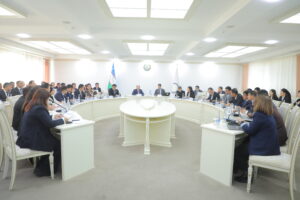
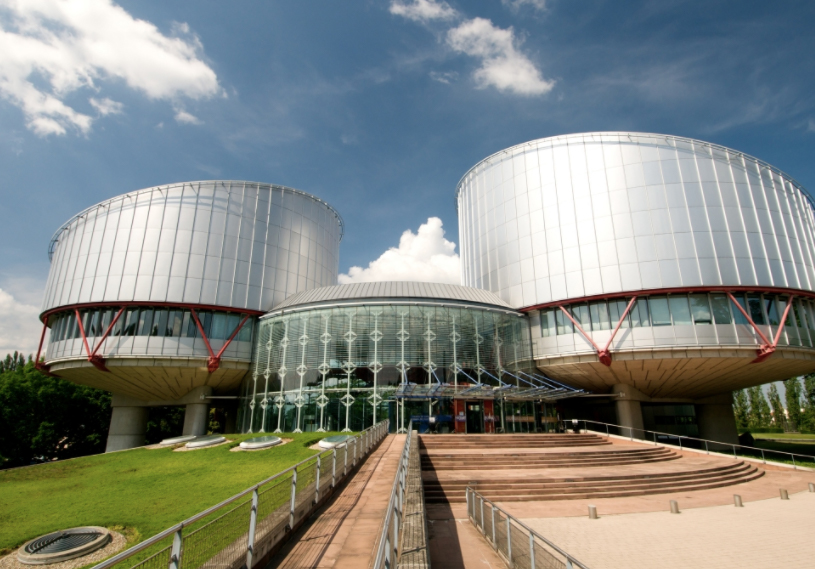
Today in Ankara the ICJ convened a workshop for lawyers and civil society practitioners on the implementation of judgments of the European Court of Human rights.
The 29 participants in the workshop will examine methods and tools available to guarantee the effective execution of the European Court of Human Rights judgments in Turkey.
The participants in the workshop will discuss the use of the Committee of Ministers’ judgment execution process and the potential of “rule 9“submissions, as well as ways to advance the implementation of the judgments oft he European Court of Human Rights in Turkey.
The workshop will share good practices with a view to promoting solutions and opportunities for cooperation in the matter.
This one-day event is organized by ICJ, in cooperation with its partners Kapasite Geliştirme Derneği, Human Rights Joint Platform and European Implementation Network, as part of the EU co-financed project Rebuilding and Ensuring Access to justice with civil society in Turkey.
The project is funded by the European Instrument for Democracy and Human Rights (EIDHR) of the European Union.
Mar 28, 2019 | Advocacy, Non-legal submissions
Today, the ICJ filed a submission to the Human Rights Council’s Working Group on the Universal Periodic Review in advance of its review of Kazakhstan’s human rights record in October-November 2019.
In its submission, the ICJ considered the situation with the independence of the legal profession in Kazakhstan and provided information on the status of international human rights treaties ratified by Kazakhstan.
The ICJ called on the Human Rights Council and the Working Group to recommend Kazakhstan:
• to amend the current legislation to ensure that representatives of the executive, such as the Ministry of Justice, are not included in the disciplinary bodies of the legal profession;
• to amend the current legislation to ensure that the qualification procedures are fully governed by the legal profession in Kazakhstan in line with international law and standards on the role of lawyers; in particular, the Qualification Commissions should be bodies of the Bar Association while their composition should predominantly consist of lawyers delegated by the Bar Association itself;
• to ensure that as the main stakeholder in any reforms affecting the legal profession, the Bar Association participates in such reforms in a meaningful way;
• to take effective measures to prevent further interference by the executive and law enforcement bodies in the exercise of lawyers’ professional duties, in particular prevent the practice of bringing disciplinary complaints against lawyers solely for their defence of their clients or legitimate exercise of their right of freedom of expression;
• to ensure that the right of lawyers to freedom of expression is respected, especially in regard to matters of public interest and law.
Furthermore the ICJ suggested:
• To ratify the Agreement on the Privileges and Immunities of the International Criminal Court.
• To ratify the Optional Protocol to the Covenant on Economic Social and Cultural Rights and International Convention on the Protection of the Rights of All Migrant Workers and Members of their Families as well as the Second Optional Protocol to the International Covenant on civil and Political Rights.
Kazakhstan-ICJ UPR 2019-Advocacy-Non legal submissions-2019-ENG (full text of submission, in PDF)
Mar 28, 2019 | Events, News
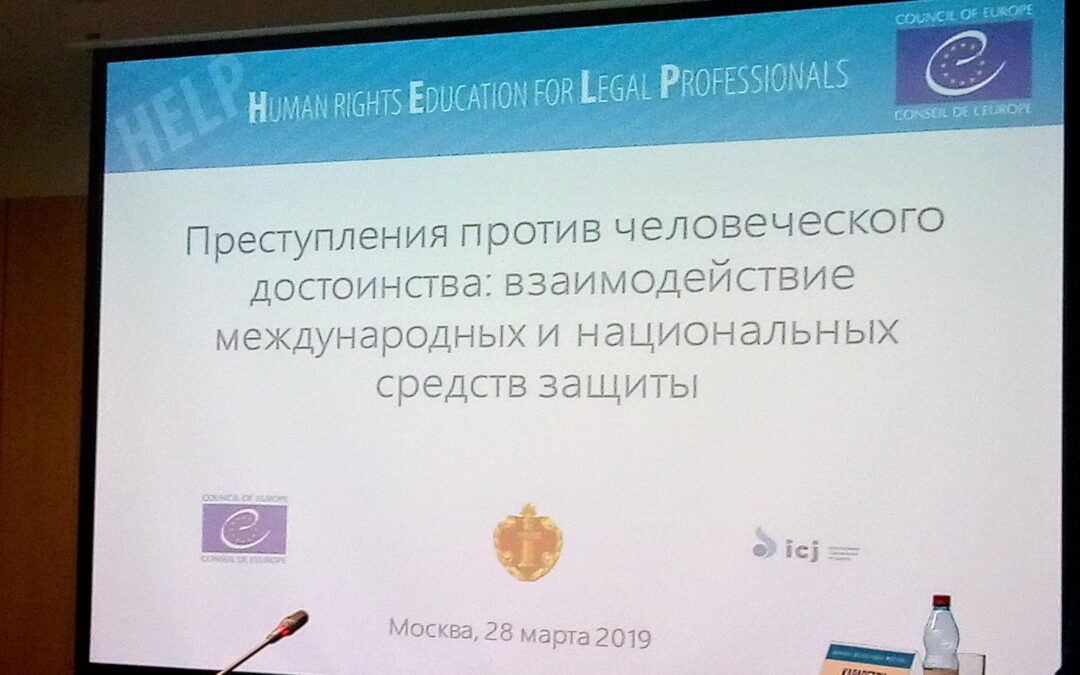
The ICJ is co-operating in a conference organized by the Council of Europe and the Federal Bar Association of Russia on “Crimes against Human Dignity: Interaction of International and National Remedies”, which will take place today, 28 March 2019 in Moscow.
The Conference will address crimes that affect physical and moral integrity of a person, notably through ill- treatment, domestic violence, trafficking in human beings and other forms of modern slavery. The core provisions of the European Convention on Human Rights and the related case-law of the European Court of Human Rights are of particular relevance in combatting these phenomena. The Conference will address national and international remedies against such crimes and serve for exchange of good legal practices in that regard.
Mikhail Lobov, Head of Human Rights Policy and Co-operation Department of the Council of Europe, Yuriy Pilipenko, President of the Federal Bar Association, Denis Novak, Vice-Minister of Justice of the Russian Federation, Radmila Dragichevich Dichich, Vice-President of the International Commission of Jurists, Judge of the Supreme Court of Serbia, Ilya Subbotin, Deputy Director of the Depratment of Paneuropean Co-operation of the Russian Foreign Ministry and Petr Sich, Head of Council of Europe Programme Office in the Russian Federation will open the Conference.
The Conference will give an overview of identification and qualification of crimes against human dignity, as well as of assessment of evidence and investigation of such violations. Special attention will be paid to such questions as professional training of practicing lawyers as a factor of strengthening of remedies’ efficiency and, in more general terms, the role of advocates in the framework of the Council of Europe conventions.
The event will take place on 28 March 2019 at 09.30 a.m., in Moscow, Hotel “Azimut Smolenskaya”, Smolenskaya street, 8.
The agenda for the conference is available here

Mar 13, 2019
The ICJ said today in an new report that Moldova remained a significant way from having a functionally independent judiciary, which is an indispensable element in the country’s capacity to deliver justice for its people and institutions.
The report ”Only an empty shell” – The undelivered promise of an independent judiciary in Moldova sets out a number of specific recommendations for reform which with a view to achieving a fully independent judiciary and effective justice system.
The report followed its field mission to Moldova in November 2018, which built upon the work of previous missions undertaken in 2004 and in 2012.
“While many significant legislative reforms have been undertaken, judicial independence is far from being achieved in Moldova,” said Massimo Frigo, Senior Legal Adviser for the ICJ Europe and Central Asia Programme,
“Reforms are needed in the law, but more than that a change is needed the mindset and working culture of many judges themselves that must protect and promote judicial independence in all of their work,” he added.
The ICJ acknowledged that important progress had been achieved in many areas, including in efforts to secure audio-recordings of all court hearings, the introduction of a system of random allocation of cases, and staff and salary increases for all judges.
However, the ICJ has concluded that the implementation of the most crucial legal reforms is significantly lagging behind and often lacks political will and conviction.
A culture of excessive hierarchy in the judiciary and of the judge remained prevalent among judges.
The ICJ is concerned at reports that the Superior Council of Magistracy (SCM) – a judicial self-governance body – instead of playing its crucial role of defending the independence of the judiciary, institutionally and in respect of individual judges, has become an instrument of pressure on individual judges and a threat to their independence.
“During our mission, we were presented with witness statements and stories of judges living often in a condition of fear: fear to express their opinions on the situation of the judiciary; and fear of criminal prosecution solely for issuing a decision contrary to the requests of the prosecutor’s office or of other powerful interests,” said Massimo Frigo.
Achieving judicial independence requires a change of attitude towards the judiciary from the executive and other sources of State and private power, but most importantly from the judiciary itself.
Contact
Massimo Frigo, Senior Legal Adviser, Europe and Central Asia Programme, International Commission of Jurists, massimo.frigo@icj.org
Download
The full story with additional information:
Moldova-Only an empty shell report launch-News-press releases-2019-ENG
The full version of the report and full set of recommendations is available in English and Romanian:
Moldova-Only an empty shell-Publications-Reports-Mission reports-2019-ENG
Moldova-Only an empty shell-Publications-Reports-Mission reports-2019-ROM
Mar 12, 2019 | News
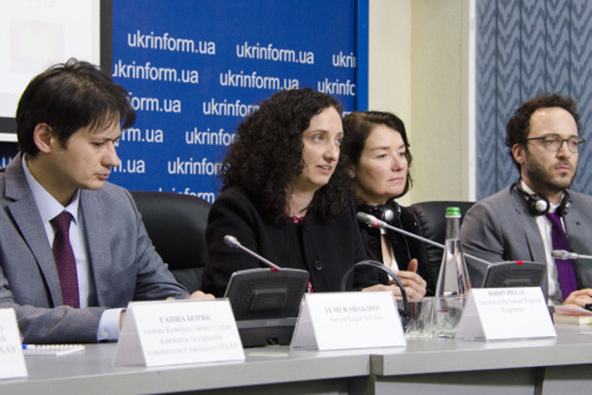
Following its mission to Ukraine on 4-8 March, the ICJ has called on the Ukrainian authorities to take urgent steps to ensure the physical safety of lawyers and to bring to justice those responsible for a series of violent attacks against them.
During its visit, the ICJ delegation heard consistent testimony of attacks on lawyers by private persons, ranging from acts of intimidation to use of firearms against them.
Several lawyers have been attacked physically and verbally by individuals or organized groups, including in court. At least six lawyers have recently been killed in relation to the exercise of their professional duties.
These attacks take place in an environment where legislative reforms directed at governance of the legal profession, which would have grave consequences for freedom of association and the functioning of the bar association and civil society, have been proposed by the Presidential Administration without consultation with lawyers.
Without urgent and significant efforts to prevent attacks and combat impunity, the independence of the legal profession, and the ability of lawyers to protect human rights, will be increasingly jeopardized, the ICJ concluded at the end of its mission to the country.
It is of concern that violent attacks against lawyers, many of which have been credibly attributed to extreme right-wing groups, often result in impunity of the perpetrators, despite evidence and despite specific provisions in the criminal law which protect lawyers against attacks.
The ICJ heard that the law enforcement bodies often fail to investigate these cases in a prompt and impartial manner even where the identity of perpetrators is known.
The ICJ stresses that these attacks on lawyers, which are often related to the defence of clients in politically sensitive criminal cases, undermine the ability of lawyers to exercise their duties and protect the human rights of their clients, free from intimidation, hindrance, harassment or improper interference.
Furthermore, the ICJ recalls that under international human rights law, the State must take steps to protect the security of persons who the authorities know or ought to know are under threat, and they must ensure an independent, prompt, and thorough investigation of any attacks on the life or physical integrity of individuals.
In this regard, the ICJ stresses that a well-functioning, independent legal profession is essential to any justice system that upholds the rule of law. International standards recognize the importance of lawyers in protecting human rights and the contribution they make to maintaining the rule of law and the fair administration of justice.
The UN Basic Principles on the Role of Lawyers emphasize the importance of the independence of bar associations in ensuring the fair and effective administration of justice. Such associations must be institutionally independent, both in law and in practice, from all external actors, including the government, other executive agencies, parliaments and outside private interests.
In light of these standards, the ICJ is concerned about the process of adoption of draft law No 9055 “On the Bar Association and Lawyers’ Activity”, which was drafted without the necessary level of consultation and participation of a main stakeholder, the National Bar Association of Ukraine, which strongly opposes it.
It is unacceptable that in this context the draft law had been submitted to the Parliament through an urgent procedure, the need for which appears to be dubious, the ICJ says.
If adopted without the necessary consultation and endorsement by the Bar Association, this law may pose a threat to the independence of the legal profession in Ukraine and the capacity of civil society, including human rights defenders, to carry out their critical work, the Geneva-based organization adds.
The ICJ is particularly concerned that according to the draft law, lawyers would not be able to be employed by NGOs while being members of the Bar Association.
While international practice may differ, in the context of Ukraine specifically, this may undermine the ability of human rights NGOs to provide qualified legal representation or assistance to those whose human rights have been violated.
The ICJ further noted consistent allegations of corruption and lack of integrity of lawyers including in the context of legal aid system.
It also appears that the examination process for qualification as a lawyer, especially in some regions, is not free from corruption. Until now, the Bar Association has not been able to effectively resolve this problem which must be addressed as a matter of urgency.
The mission to Ukraine included members of the ICJ Secretariat as well as representatives of the Amsterdam and Geneva Bar Associations. It met with leading human rights NGOs, IGOs, the members of the Ukrainian National Bar Association as well as representatives of the Ministry of Justice of Ukraine.
The ICJ wishes to thank all those whom its representatives met in Kyiv. A final report based on the key findings of the mission will be published later this year.