Oct 3, 2018 | News
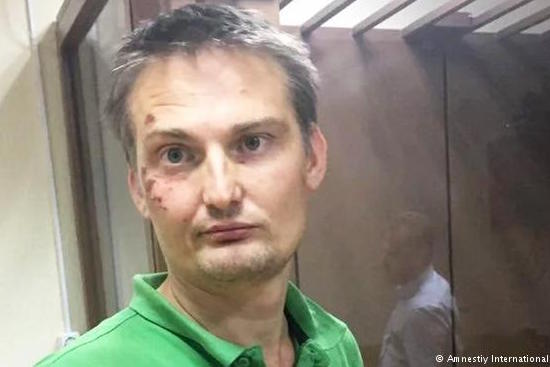
Today, the ICJ expressed concern at ongoing criminal proceedings against Mikhail Benyash, a lawyer practicing in Russia, who is charged with use of force against the police and impeding justice.
The lawyer has been detained until 23 November. The ICJ called on the responsible authorities to drop any criminal charge relating to his conduct of professional duties in the courtroom, and to ensure that the lawyer’s rights are protected and that allegations of his ill-treatment are fully investigated.
Benyash alleges that following his apprehension by the police on 9 September, the police beat him up in the car. According to the police report he inflicted the injuries on himself, contrary to demands of the police that he stop doing so.
He was charged with disobedience to the police, which according to the police report was due to “the fact that the police asked Benyash not to injure himself, but he continued self-beating”. Benyash was convicted and sentenced to 14 days of imprisonment and 40 hours of correctional works.
On 23 September, the day of his release, Benyash was arrested again. He was charged with two further offences: violence against a representative of authority (Criminal Code Article 318(1)) based on an allegation, seemingly not raised at the time of his earlier charge and conviction in relation to the same incident, that in the course of his arrest on 9 September he allegedly bit a police officer and hit another.
On 23 September he was also charged with obstruction of justice (Criminal Code Article 294(1)), reportedly on the basis of an allegation that in a court hearing on 6 May 2018, Benyash had “repeatedly interrupted, gave instructions and objections to the decisions of the judge” and after he had been removed from the courtroom “continued unlawful behaviour”.
According to the lawyer, he was taken out of the courtroom by force due to his motions to allow certain members of the public to be present at the open hearing.
The ICJ is concerned that the criminal obstruction charge against Mikhail Benyash appears to relate at least in part to statements he made in court in the course of carrying out his professional duties of representation of his clients.
The fact that this charge was only laid following his recent arrest, some five months after the alleged incident occurred, also raises questions as to the motivation for bringing the charge forward now.
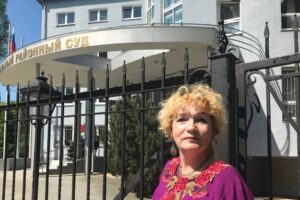
“Benyash is currently charged on account of his alleged attack on a police officer and obstruction of justice. While the first charge requires an impartial and independent inquiry, the second charge should be of concern to the entire lawyers’ community”, said Karinna Moskalenko, ICJ honorary member. “We fear that this may lead to lawyers in Russia being charged with obstruction of justice simply for actively expressing their position and objections in accordance with the procedure prescribed by law”, she added.
Furthermore, the ICJ emphasises that under international human rights law, states have obligations to investigate allegations of treatment that may amount to torture or inhuman or degrading in violation of Article 3 of the European Convention on Human Rights, as well as other international law norms binding on the Russian Federation.
The investigative authorities have duty to investigate allegations of ill-treatment of the lawyer by police following his arrest on 9 September promptly, effectively and impartially and any persons responsible should be brought to justice.
Read the ICJ’s full statement here: Russia-Statement on Benyash-News-Web Story-2018-ENG
Oct 3, 2018
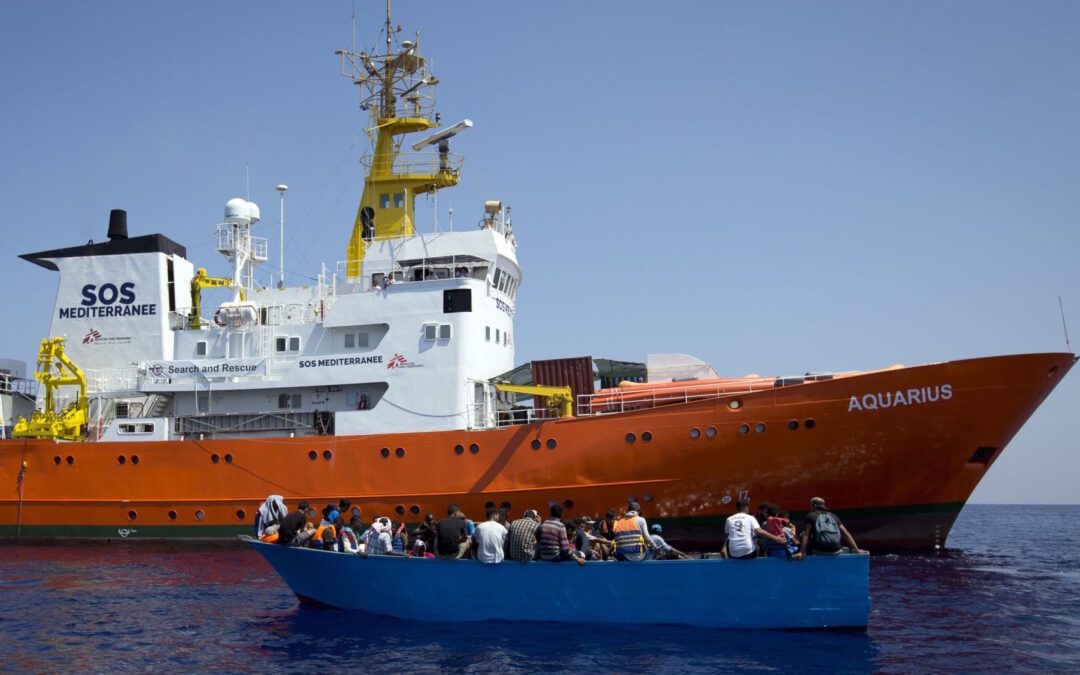
European leaders should act quickly to help the Aquarius, the last nongovernmental search and rescue ship operating in the Mediterranean, register after its flag was withdrawn by Panamanian authorities, five international rights organizations said today in an open letter.
The letter was sent to European leaders on the fifth anniversary of the Lampedusa shipwreck, in which at least 368 people died, urging them to offer the Aquarius a flag.
“The Aquarius has saved tens of thousands of lives at sea, filling a gap left by states,” said Judith Sunderland, acting Europe and Central Asia deputy director at Human Rights Watch, on behalf of the organizations. “What better homage to those who died off Lampedusa five years ago than to ensure that the Aquarius—a symbol of solidarity and respect for human life and dignity—can continue its life-saving work.”
The letter was signed by Amnesty International, Human Rights Watch, European Council on Refugees and Exiles (ECRE), International Commission of Jurists (ICJ), and the International Federation for Human Rights (FIDH).
SOS MEDITERRANEE and MSF initiated a petition here.
For more information and to arrange an interview, please contact:
Róisín Pillay, ICJ Europe Programme Director: + 32 2 734 84 46; or roisin.pillay(a)icj.org
The full letter is available here: Europe-Aquarius Letter-Advocacy-Open Letter-2018-ENG
Oct 3, 2018 | Communiqués de presse, Nouvelles, Plaidoyer
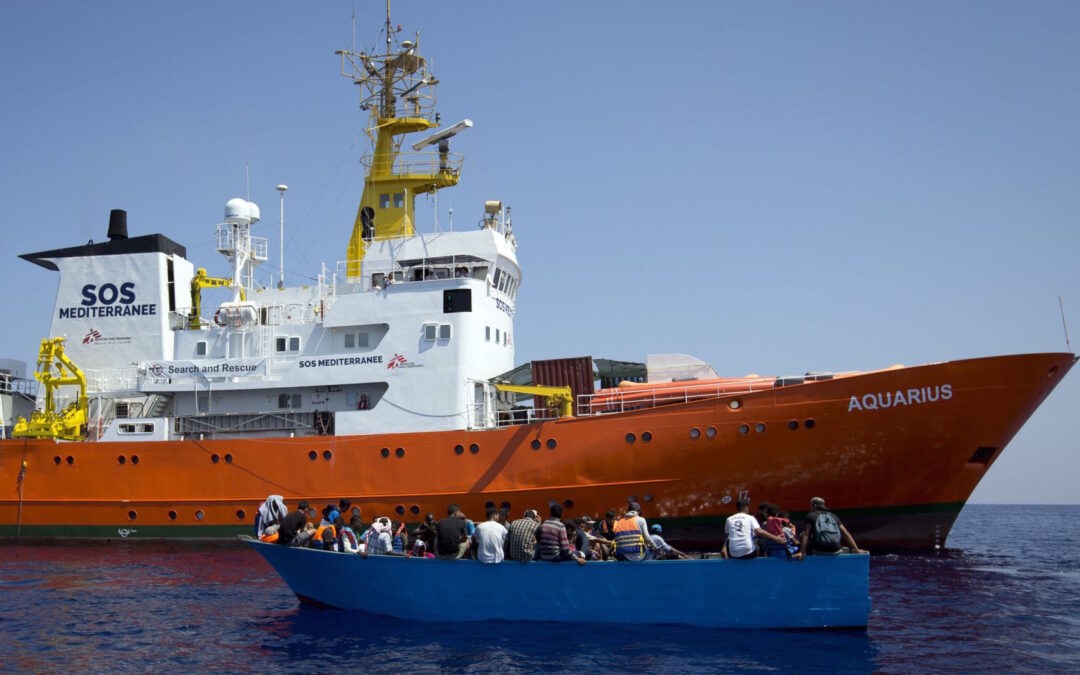
Les dirigeants européens doivent agir rapidement pour aider l’Aquarius, dernier navire de recherche et de sauvetage non-gouvernemental opérant en Méditerranée, à s’immatriculer après le retrait de son pavillon par les autorités panaméennes, ont annoncé aujourd’hui cinq organisations internationales des droits de l’Homme dans une lettre ouverte (uniquement disponible en anglais).
La lettre a été envoyée aux dirigeants européens à l’occasion du cinquième anniversaire du naufrage de Lampedusa, qui a fait au moins 368 morts, les exhortant à offrir un pavillon à l’Aquarius.
«l’Aquarius a sauvé des dizaines de milliers de vies en mer, comblant ainsi le vide laissé par les États», a déclaré Judith Sunderland, directrice adjointe par intérim de Human Rights Watch pour l’Europe et l’Asie centrale, au nom des organisations. «Quel meilleur hommage à ceux qui sont morts au large de Lampedusa il y a cinq ans que de veiller à ce que l’Aquarius, symbole de solidarité et de respect de la vie et de la dignité humaines, puisse continuer à sauver des vies».
La lettre a été signée par Amnesty International, Human Rights Watch, le Conseil européen sur les réfugiés et les exilés (ECRE), la Commission internationale de juristes (CIJ) et la Fédération internationale des droits de l’Homme (FIDH).
SOS MEDITERRANEE et MSF ont lancé une pétition ici (uniquement disponible en anglais).
Pour plus d’informations et pour organiser une interview, veuillez contacter:
Róisín Pillay, Directeur de programme auprès de la CIJ Europe: + 32 2 734 84 46; ou roisin.pillay@icj.org
La lettre complète est disponible ici: Europe-Aquarius Letter-Advocacy-Open Letter-2018-EN (uniquement disponible en anglais)
Oct 1, 2018 | Advocacy, Cases, Legal submissions
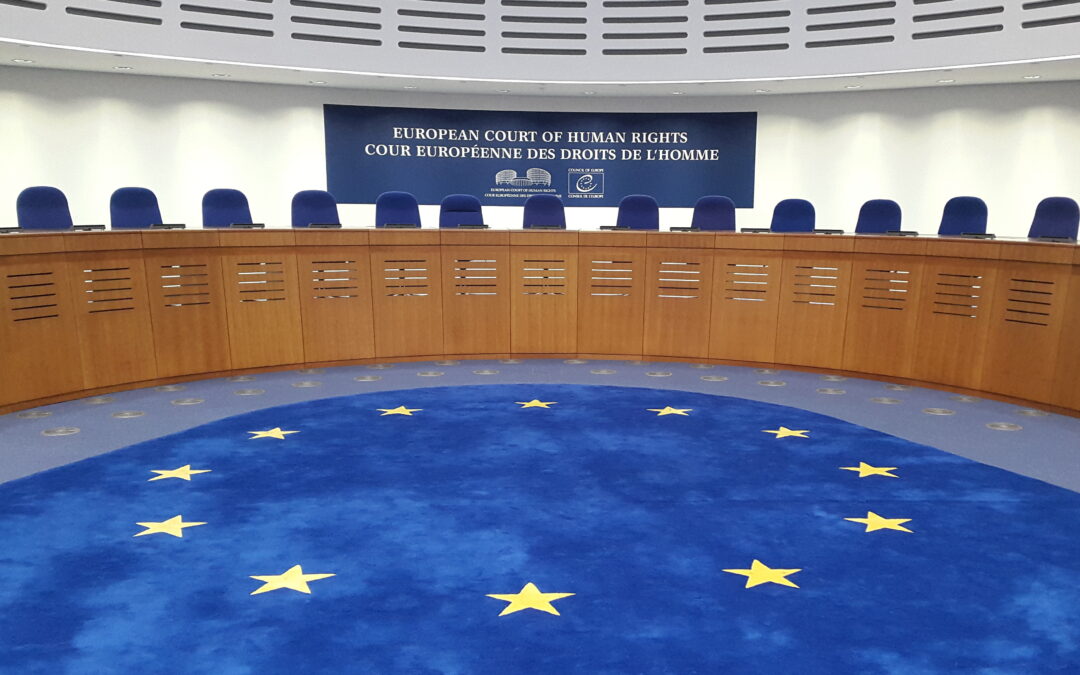
The ICJ made submissions today to the European Court of Human Rights in support of the right of association of Azerbaijan’s lawyers representing applicants before the Court and highlighting the situation of harassment of the legal profession in the country.
The ICJ intervened today in the cases of Democracy and Human Rights Resource Centre v. Azerbaijan and Mustafayev and Democracy and Human Rights Resource Centre v. Azerbaijan.
In these cases, lawyer Asabali Mustafayev and its NGO challenged the compliance of the freezing of their assets and criminal proceedings for financial offences as arbitrary interferences with their work as human rights defenders and in representation of clients before the European Court of Human Rights itself.
The ICJ has intervened to highlight the case-law regarding the right to individual application before the Court under article 34 ECHR and its application to the work of lawyers and legal NGOs.
It further examined the systemic practice in Azerbaijan of harassment of lawyers and of NGOs established by lawyers for the purpose of providing legal advice or representation, including representation of applicants before the European Court of Human Rights.
Finally, the ICJ analyzed the implications of such practices with regard to the State’s obligations under article 18 ECHR read together with article 11 ECHR.
Azerbaijan-icj-DHRRC&other-Advocacy-legal submission-2018-ENG (download the submission)
“Defenseless Defenders: Systemic Problems in the Legal Profession of Azerbaijan” – ICJ report in Azeri, Russian and English.
Question to the parties: http://hudoc.echr.coe.int/eng?i=001-184179
Sep 27, 2018 | Communiqués de presse, Nouvelles
2018 marque le 60ème anniversaire de l’arrivée à Genève de l’ICJ, à l’initiative du grand juriste Suisse Jean-Flavien Lalive qui était Secrétaire Général de l’Organisation en 1958.
Lors du Congrès de l’ICJ à New Delhi en 1959, le Dr Lalive a contribué à définir les principes de l’Etat de Droit et des droits de l’Homme.
La Déclaration de Delhi, en particulier, constitue à ce jour un instrument fondamental dans la définition de la primauté du droit dont les juristes sont principalement responsables pour sauvegarder et faire progresser les droits de l’Homme.
Cela fait de l’ICJ l’une des plus anciennes organisations internationales basées à Genève.
Elle y joue un rôle unique et prééminent en tant qu’organisation non gouvernementale pour la défense des droits de l’Homme et de l’Etat de Droit dans le monde.
L’ICJ va marquer cet événement par deux activités majeures:
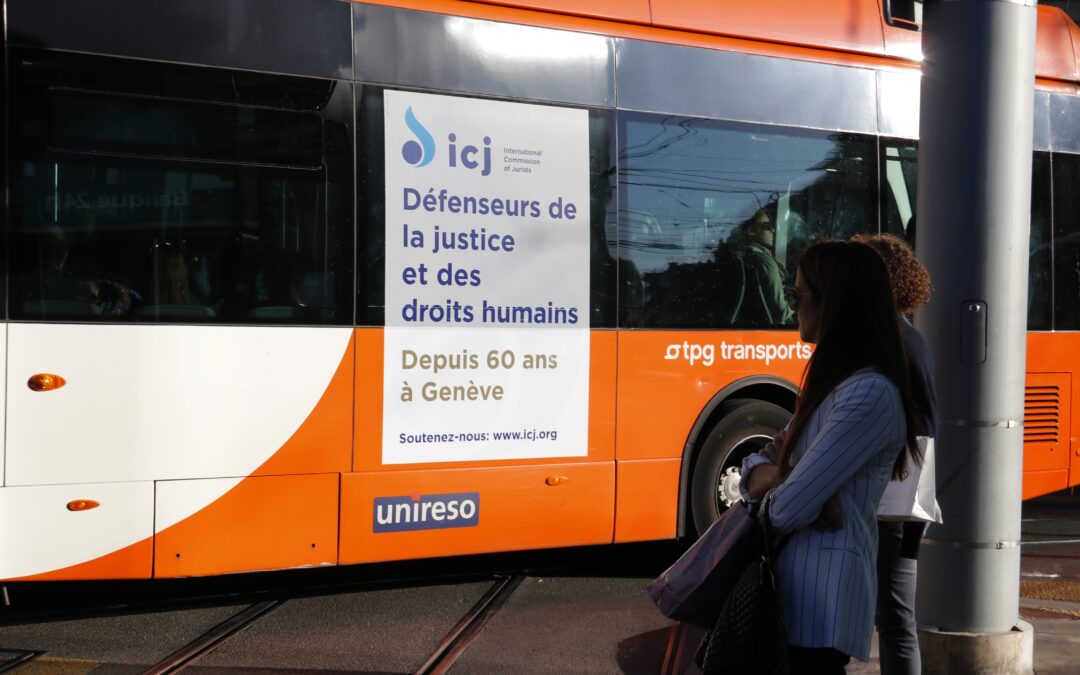
- Une campagne de visibilité du 26 septembre au 9 octobre sur cinq véhicules et tous les écrans intérieurs des trams et bus des TPG avec le slogan « Défenseurs de la justice et des droits humains – Depuis 60 ans à Genève »
- Le lancement de l’Appel du 60ème Anniversaire à tous les avocats du canton et de la Ville de Genève pour qu’ils soutiennent l’ICJ et, à travers elle, leurs confrères moins privilégiés, victimes de persécutions sur les cinq continents.
« Genève peut être fière de son image de capitale mondiale des droits de l’Homme. Elle est un phare pour ces défenseurs de la justice dans le monde. Il faut continuer à le faire rayonner, » souligne Sam Zarifi, secrétaire général de l’ICJ.
« Par son action en 60 ans, l’ICJ a grandement contribué à l’aura de Genève en matière de protection des droits de l’Homme : les campagnes ayant abouti à la création du poste de Haut-Commissaire aux droits de l’Homme en 1993 et du Conseil des droits de l’Homme à l’ONU en 2006, ainsi que celle qui a concouru à l’adoption de la Convention des Nations Unies contre la torture en 1984 sont quelques exemples notoires, » rappelle Olivier Coutau, Délégué à la Genève Internationale.
« Face aux attaques répétées contre les droits de l’Homme, le monde a besoin, plus que jamais, d’une défense compétente, rigoureuse et efficace de l’Etat de Droit par l’ICJ, » ajoute Sam Zarifi, secrétaire général de l’ICJ.
L’Appel du 60ème Anniversaire de l’ICJ est soutenu par la République et canton de Genève.
Information additionnelle
La réputation internationale de l’ICJ repose sur les piliers suivants:
- 60 Commissaires – juges et avocats éminents – du monde entier et de tous les systèmes juridiques, avec une connaissance sans égale du droit et des droits de l’Homme;
- Coopération avec les gouvernements qui s’engagent à améliorer leur performance en matière de droits de l’Homme;
- Équilibre efficace entre diplomatie, critique constructive, renforcement des capacités et, si nécessaire, dénonciation;
- Accès direct unique aux systèmes judiciaires nationaux et mise en place de normes internationales et de législations améliorées impactant des millions de personnes;
- Guider, former et protéger les juges et les avocats dans le monde afin qu’ils respectent et appliquent ces normes;
- Oeuvrer en faveur de l’accès à la justice pour les victimes, les survivants et les défenseurs des droits de l’Homme, et notamment les personnes issues de communautés marginalisées;
- Gestion rigoureuse basée sur résultats concrets dans l’exécution de ses projets.
En reconnaissance de cette approche efficace, l’ICJ s’est vu décerner, au cours de sa longue histoire, certaines des distinctions internationales les plus prestigieuses : Prix Européen des Droits de l’Homme du Conseil de l’Europe, United Nations Award for Human Rights, Erasmus Prize, Carnegie Foundation Wateler Peace Prize.
En 2018, l’ICJ a offert des formations locales sur les cinq continents, afin que 4,300 juges, avocats et procureurs renforcent leur compétence pour protéger et promouvoir les droits fondamentaux.
L’ICJ a un statut consultatif auprès des Nations Unies, du Conseil économique et social des Nations Unies, de l’UNESCO, du Conseil de l’Europe et de l’Union africaine.
Contact :
Michaël W. Sombart, Directeur Philanthropie & Partenariats stratégiques, t: +41 22 979 38 31 ; m: +41 77 965 98 45 ; e: michael.sombart(a)icj.org