Sep 27, 2018
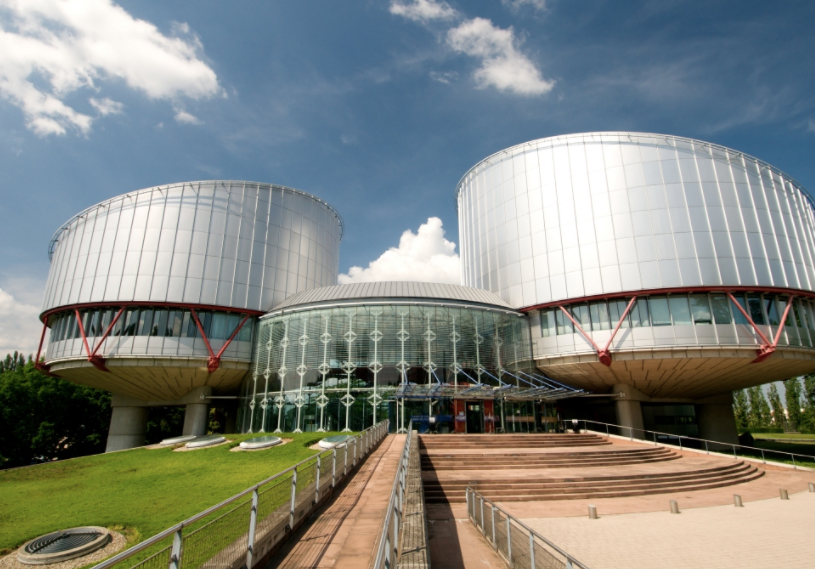
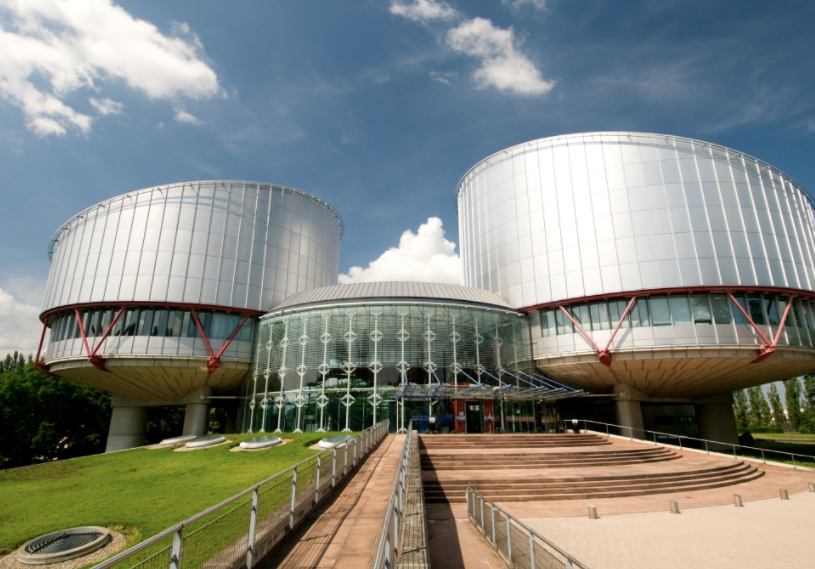
The ICJ intervened in the case Nahhas and Hadri v Belgium in front of the European Court for Human Rights in a case of a Syrian family applying for a visa at a Belgian embassy in Beirut.
The ICJ together with partner organisations (DCR, ECRE, AIRE Centre) submitted that there is an extra-territorial jurisdiction over persons when a state is issuing visa at its embassy, and that there might be positive obligations for the States to issue such visa when refusal would leave the applicants at a real risk of exposure to violations of Article 3 ECHR. Best interests of the child must underpin all decisions taken by the state.
In particular:
- Jurisdiction exists in a number of extra-territorial situations, including where the State exercises authority or control over persons, including decisions of diplomatic and consular personnel on the issuance of visas to third country nationals.
- State responsibility may thus be engaged when refusing treatment of a visa application, in circumstances where the State is or ought to be aware that applicant if returned faces a real risk of serious Convention human rights violations, in the absence of available alternatives that would prevent such outcome.
- To comply with their obligations under the Convention, Contracting States are prohibited from refusing to issue visas to travel to their territory when requested by those who have an arguable claim that he or she is at real risk of an Article 3 violation in a third State. This is particularly the case if no other legal route to safety exists and where if denied such visas, refusal would leave the applicants at a real risk of exposure (whether directly or indirectly) to violations of Article 3 in the third State and the Contracting State from which the visa is requested has (or ought to have) knowledge of the risks in question.
- Article 3 of the Convention read in the light of Article 3, 22 and 37 of the UNCRC requires that the best interests of the child underpin all decisions taken by Contracting States with regard to children, and that Contracting states ensure the child’s protection and give separate consideration to the child’s interest. These standards apply to decisions on visa applications made by children and their parents at the embassy of a Contracting State.
Please find the full intervention here:Belgium-Nahhas Intervention-Advocacy-Legal Submission-2018-ENG
Sep 26, 2018
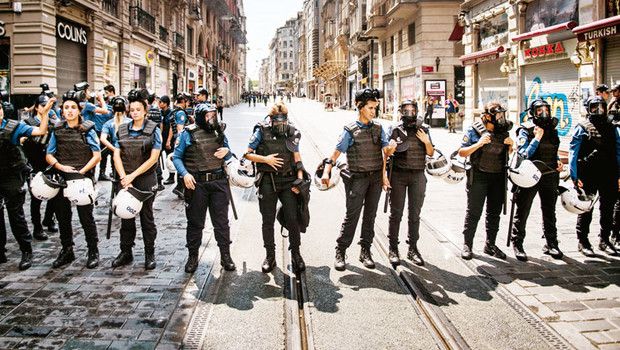
Today, the ICJ has presented a third party intervention before the European Court of Human Rights in Alayif Hasan oglu Hasanov v. Azerbaijan case.
In its submissions, the ICJ stresses that, while lawyers must perform their professional functions in conformity with ethical standards, the systems and procedures in respect of conditions of service, including in respect of admission to the profession and discipline, must not enforce such obligations in a way that impairs the exercise of human rights by lawyers or their capacity to effectively represent their clients.
The ICJ presented the submissions based on the jurisprudence of this Court as well as international standards governing the legal profession.
In particular, the submission addressed permissible restrictions of lawyers’ rights to respect for private (including professional) life under article 8 ECHR and to freedom of expression under article 10 ECHR, as well as the procedural safeguards required to apply such restrictions under article 6 ECHR.
Finally, the submission set out key findings of a recent ICJ fact-finding mission to assess the compliance of the governance of the legal profession in Azerbaijan with international law and standards.
Additional information:
Questions to the parties are available at http://hudoc.echr.coe.int/eng?i=001-184367
“Defenseless Defenders: Systemic Problems in the Legal Profession of Azerbaijan” – ICJ report in Azeri, Russian and English.
Azerbaijan-ICJ submission to ECHR-legal submission-2018-ENG – Submission in English.
Sep 21, 2018 | Advocacy, News, Non-legal submissions
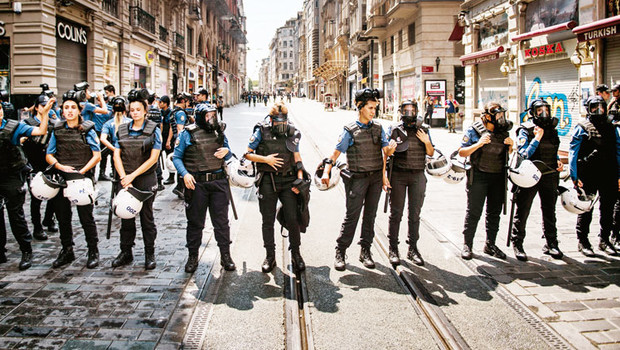
The ICJ wrote today to the Council of Europe’s Commissioner for Human Rights, Dunja Mijatović, to request action against the decision by Turkish authorities to ban entrance to Galatasaray square in Istanbul (Turkey) to a collective of mothers of disappeared persons called “Saturday Mothers”.
On 25 August 2018 , the Sub-Governorship of Beyoğlu District of İstanbul announced the prohibition of gatherings for assembly of any type of demonstrations in Galatasaray Square in Istanbul, the square where the Saturday Mothers have gathered every Saturday since 1995 to 1998 and since 2009 until 2018.
On the 700th week of their peaceful protests, the Saturday Mothers and their supporters congregated in Galatasaray Square at midday to once again raise awareness of the need for those responsible to be held accountable for the extrajudicial killings and enforced disappearances following their time in State custody in the 1990s. The police used tear gas to stop the protest and arrested 47 people. All were released by Saturday evening.
Senior officers of the Turkish authorities have even issued statements accusing the Saturday Mothers of being abused by or in collusion with terrorist organisations.
The ICJ wrote to the European Commissioner for Human Rights, that it “considers this situation to be at odds with Turkey’s obligations under international human rights law, in particular of the right to peaceful assembly under article 11 of the European Convention on Human Rights and article 21 of the International Covenant on Civil and Political Rights.”
The ICJ further added that “given the consistent record and presence of the Saturday Mothers in Galatasaray Square throughout the years, it is hard to see how the restriction on their right to peaceful assembly could in any way be necessary and proportionate to a legitimate purpose. It is clear that no prior warning for the gathering was needed for security reasons in light of its regular occurrence at least since its resumption in 2009, i.e. nine years ago. Furthermore, the demonstration took place on a pedestrian area where cars are not allowed.”
ICJ-Letter-SaturdayMothers-CoEComm-Turkey-2018-ENG (download the letter)
Sep 21, 2018 | Nouvelles, Plaidoyer
La CIJ a écrit aujourd’hui à la Commissaire aux droits de l’Homme du Conseil de l’Europe, Dunja Mijatović, pour demander d’intervenir contre la décision des autorités turques d’interdire l’accès à la place Galatasaray d’Istanbul (Turquie) à un collectif de mères de personnes disparues appelées « les Mères du samedi ».
Le 25 août 2018, le sous-gouvernorat du district de Beyoğlu à Istanbul a prononcé une interdiction de se rassembler pour tout type de manifestation sur la place Galatasaray à Istanbul, la place où ont pris l’habitude de se réunir chaque samedi « les Mères du samedi » d’abord de 1995 à 1998, et ensuite de 2009 jusqu’à 2018.
À la 700ème semaine de leurs manifestations pacifiques, les Mères du samedi et leurs partisans se sont réunis en milieu de journée sur la place Galatasaray pour sensibiliser une fois de plus sur la nécessité pour les responsables des exécutions extrajudiciaires et des disparitions forcées les années 1990 de rendre des comptes.
La police a utilisé des gaz lacrymogènes pour mettre fin à la manifestation et a arrêté 47 personnes. Toutes ont été libérées samedi soir.
Des officiers supérieurs des autorités turques ont même publié des déclarations accusant les Mères du samedi d’avoir été abusées par des organisations terroristes ou d’être en collusion avec elles.
La CIJ a écrit au Commissaire européen aux droits de l’Homme qu’elle « considère que cette situation est contraire aux obligations de la Turquie en vertu du droit international humanitaire, en particulier du droit de réunion pacifique en vertu de l’article 11 de la Convention européenne des droits de l’Homme et 21 du Pacte international relatif aux droits civils et politiques ».
La CIJ a ajouté que « compte tenu de la constance et de la présence des Mères du samedi sur la place Galatasaray au fil des ans, il est difficile de voir comment la restriction de leur droit de réunion pacifique pourrait être nécessaire et proportionnée à un objectif légitime.
Il est clair qu’aucun avertissement préalable pour le rassemblement n’était nécessaire pour des raisons de sécurité compte tenu de son occurrence régulière au moins depuis sa reprise en 2009, c’est-à-dire il y a neuf ans. En outre, la manifestation a eu lieu dans une zone piétonne où les voitures ne sont pas autorisées ».
ICJ-Letter-SaturdayMothers-CoEComm-Turkey-2018-ENG (télécharger la lettre, uniquement disponible en anglais)
Sep 20, 2018 | Advocacy, Non-legal submissions
The ICJ today put the spotlight the lack of independence of the legal profession in Azerbaijan speaking at the UN Human Rights Council in Geneva.
The statement, made during the consideration of the Universal Periodic Review (UPR) of Azerbaijan, read as follows:
The International Commission of Jurists (ICJ) welcomes the acceptance by Azerbaijan of the recommendations by France (140.70), by Greece (141.12), Austria (141.13), Estonia (141.68), Slovenia (141.71), and Mexico (141.77), to respect the rights of lawyers.
The ICJ regrets, however, that Azerbaijan only noted and did not explicitly support the recommendations by Sweden (141.33), USA (141.39), Czechia (141.67) and Germany (141.76) and rejected the recommendation by the United Kingdom (141.60) to “End all interference in the work of lawyers through disbarment or other disciplinary measures on improper grounds such as expressing critical views.”
These recommendations call for the amendment of the Law on Advocates and Advocates’ Activities to ensure the effective independence of the Bar Association of Azerbaijan. They also call for the setting up of independent and transparent mechanisms for lawyers’ admission to practice, and disciplinary proceedings against lawyers, in conformity with the UN Basic Principles on the Role of Lawyers.
The ICJ notes that Azerbaijan’s support of most recommendations is predicated on the assumption that the situation of the independence of the legal profession in Azerbaijan is in line with international law.
This, however, is not the situation in the country.
The ICJ expresses concern at the persistent lack of independence of the Bar Association of Azerbaijan; indeed, it has actually played a role in undermining the work of lawyers defending human rights. The situation is exacerbated by recent hasty reforms that prohibit lawyers from appearing in any court hearing unless they are members of this non-independent Bar association, furthermore without a sufficient and meaningful transition period. This seriously curtails access to justice for human rights violations in the country.