Nov 2, 2018 | Advocacy, Cases, Legal submissions
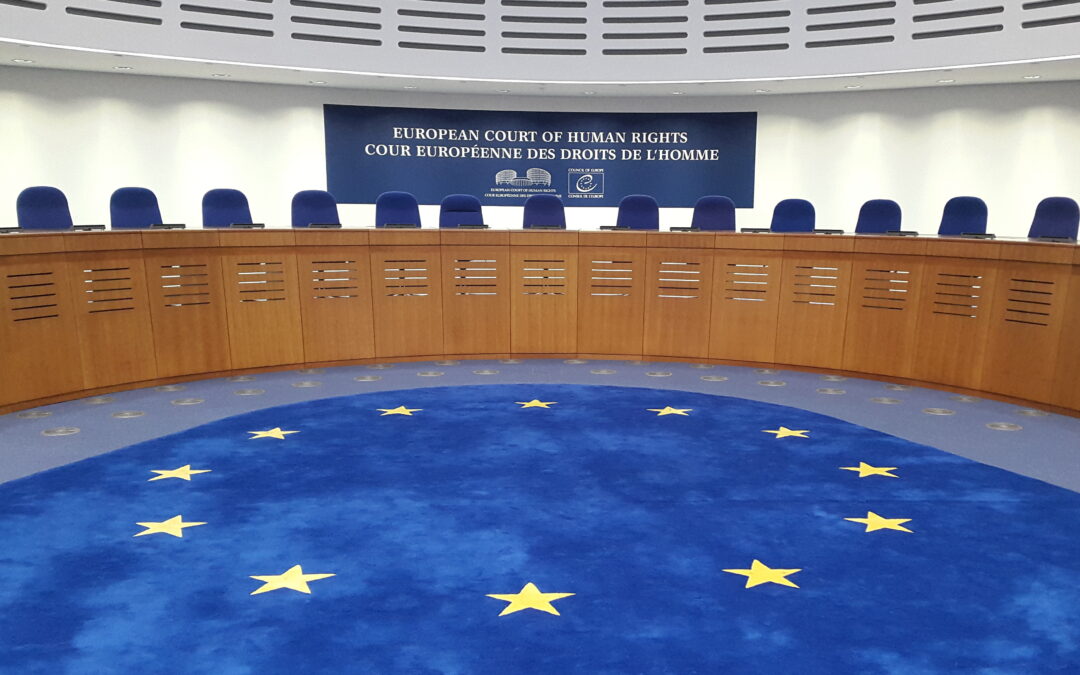
The ICJ intervened today before the European Court of Human Rights in the case of a detained Member of the Turkish Parliament from the HDP party, Ms Burcu Çelik, arrested in 2017 under “terrorism charges”.
In this submission, the ICJ provides the Court with observations concerning the capacity of the Turkish legal system to provide effective remedies for violations under the ECHR with regard to detention, in particular detention of Members of Parliament, in light of its Convention obligations, in particular obligations under Article 5.4.
The ICJ presents its analysis of these aspects of the Turkish legal system based, in part, on information ascertained during a mission to Turkey undertaken in May 2018 and in its report Justice Suspended.
Specifically, the ICJ addresses the question as to whether the remedies of individual application before the Constitutional Court (CC) and under article 141.1 (a) and (d) of the Code of Criminal Procedure (CCP) may be considered as effective in light of the State’s obligations under articles 5.4 and 35.1 ECHR.
Turkey-icj-Celik-Advocacy-legal submission-2018-ENG (download the intervention)
Oct 31, 2018 | Communiqués de presse, Nouvelles
Le 25 novembre 2018, les citoyens suisses seront appelés à voter sur l’initiative populaire dite “le droit suisse au lieu de juges étrangers (initiative pour l’autodétermination)”. La Commission Internationale de Juristes (CIJ) et la Section suisse de la CIJ ont appelé aujourd’hui le peuple suisse à considérer attentivement les conséquences néfastes que pourrait avoir cette initiative si elle était adoptée.
La campagne contre l’initiative la considère en effet comme une initiative “anti-droits de l’Homme”.
“Si elle était approuvée, cette initiative rendrait plus difficile l’accès aux tribunaux suisses pour toute personne revendiquant ses droits humains”, affirme Massimo Frigo, conseiller juridique principal de la CIJ. “Le peuple suisse perdrait une défense importante contre les abus qui pourraient être commis par l’Etat ou par des privés.”
Contrairement à ce que son titre suggère, cette initiative est dirigée contre le droit international en général (à l’exception des rares règles impératives du droit international), qui inclut les traités multilatéraux internationaux ou les accords administratifs et commerciaux bilatéraux.
Ainsi, l’initiative irait manifestement à l’encontre du principe juridique fondamental de l’Etat de droit, lequel stipule que les Etats ne peuvent pas invoquer une disposition de leur droit interne pour justifier la non exécution de leurs obligations de droit international.
“La Suisse, qui accueille nombreuses institutions responsables de l’élaboration du droit international, a une longue et prestigieuse histoire en tant que promoteur du droit international. L’adoption de cette initiative nuirait gravement à la réputation de ce pays et à son leadership dans ce domaine”, ajoute Massimo Frigo.
“Le rôle accordé au droit international par la constitution suisse et la jurisprudence du Tribunal fédéral suisse est essentiel pour assurer non seulement la fidélité de la Suisse en tant qu’Etat partie des traités internationaux, mais aussi son rôle d’acteur central et de promoteur dans plusieurs domaines du droit international, comme le commerce international, ainsi que la sécurité juridique en Suisse,” déclare le professeur Marco Sassòli, Commissaire de la CIJ et membre du Comité exécutif de sa section suisse.
“Une grande partie du succès économique et diplomatique de la Suisse résulte de son adhésion et de son soutien sans faille au droit international. Des valeurs suisses essentielles telles que la neutralité ou son engagement en faveur de la protection des victimes de la guerre trouvent leurs fondement dans le droit international,” ajoute le professeur Sassòli.
Bien que son titre le laisse entendre, cette initiative n’est pas dirigée contre les “juges étrangers” mais contre la pratique des juges suisses, ceux du Tribunal fédéral, estiment la CIJ et sa Section suisse.
Selon elles, l’initiative ignore que l’auto-détermination des peuples les soumet au droit international et que la conclusion des traités n’est pas contraire à la souveraineté de l’Etat, mais en est l’expression.
Le texte de cette initiative, si approuvé, pourrait amener à l’érosion de la primauté du droit international parmi les sources du droit en Suisse, disent encore la CIJ et sa Section suisse.
Elles rejoignent les multiples ONGs, syndicats, acteurs économiques, partis politiques, Suissesses et Suisses qui veulent assurer leurs droits et ceux de toutes les personnes en Suisse, et appellent les électeurs à prendre sérieusement en considération les arguments développés ci-dessus avant d’exprimer leur vote et de ne pas baser leur décision sur la base de slogans tels que “auto-détermination”, “démocratie” ou “juges étrangers”.
Contact:
Massimo Frigo, conseiller juridique pricipal, t: +41 22 979 38 05 ; e: massimo.frigo(a)icj.org
Oct 31, 2018 | News
The ICJ and the Swiss Section of the ICJ called today on Swiss people to seriously consider the adverse implications, if adopted, of the popular initiative called the “Swiss law instead of foreign judges – initiative for self-determination” by its proponents. On 25 November 2018, Swiss citizens will be called to vote on this initiative.
The campaign against the initiative has identified it as an “anti-human rights” referendum.
“The initiative, if approved, would have the effect of making it very difficult for people in Switzerland to access Swiss courts to vindicate their human rights,” said Massimo Frigo, ICJ Senior Legal Adviser.
“Swiss people would lose important defences against abuses by the State or private entities,” he added.
Unlike the title suggests the scope of the initiative is directed against international law in general (except for very few existing peremptory norms) which includes international multilateral treaties or bilateral commercial and administrative agreements.
The initiative would therefore fly in the fact of a fundamental legal principle essential to the rule of law, namely that individual States cannot use their national arrangements as an excuse to avoid their international legal obligations.
“Switzerland, as home to numerous international law-making institutions, has a long and distinguished history of championing international law. Adoption of this initiative would be a blow to the country’s reputation and leadership in this area,” said Massimo Frigo.
“The role accorded to international law by the Swiss Constitution and the jurisprudence of the Swiss Supreme Court is essential to uphold reliability of Switzerland as party to international treaties, its role as central actor and generator in many fields of law including international trade, but also legal certainty in Switzerland”, said Professor Marco Sassoli, board member of the Swiss Section of the ICJ and ICJ Commissioner.
“Much of the economic and diplomatic success of Switzerland is based on its faithful adherence and promotion of international law. Essential Swiss values such as its neutrality or its commitment to the protection of war victims are based upon international law,” said Professor Sassoli.
Contrary to its title the initiative is not directed against “foreign judges” but against the practice of Swiss judges, those of the Swiss Federal Supreme Court, and neglects that the self-determination of peoples leads to their direct submission to international law and that the conclusion of treaties is an expression of and not contrary to the sovereignty of the State.
The text of this initiative if approved could lead to the erosion of primacy of international law among the sources of law in Switzerland.
The ICJ and ICJ-Swiss Section join the several NGOs, trade unions, economic actors, political parties and people of Switzerland that want to secure their rights and those of everyone in Switzerland and appeal to the voters before casting their vote to seriously consider the above arguments and not to decide based upon mere slogans such as “self-determination”, “democracy” or “foreign judges”.
Contact:
Massimo Frigo, ICJ Senior Legal Adviser, t: +41 22 979 38 05 ; e: massimo.frigo(a)icj.org
PDF available in Italian: Switzerland-25 November Referendum-News-Press Release-2018-ITA
PDF available in German: Switzerland-25 November Referendum-News-Press Release-2018-GER
Oct 19, 2018 | News
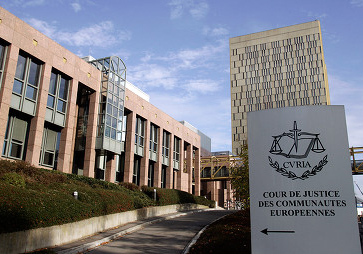
The ICJ welcomes the interim measures prescribed today by the Court of Justice of the EU as a necessary step in stemming the evident erosion of the rule of law in Poland.
The Court provisionally ordered Poland to preserve the composition of its Supreme Court of 3 April 2018, before a law forcing into retirement a third of the Court’s members entered into force.
The ICJ urges the Polish authorities to comply with the EU Court order by maintaining in office the Supreme Court judges .
“In accordance with today’s court’s order, Polish authorities should immediately rescind all measures taken since April 2018 that modify the composition of the Supreme Court. They are obliged to do this under EU law as it is binding on Polish authorities and by the fundamental principle of the rule of law that decisions of the judiciary must be respected and implemented.” said Róisín Pillay, Director of the ICJ Europe and Central Asia Programme.
On 10 October, President Andrzej Duda appointed 27 judges to the Supreme Court in place of those forcibly “retired” last July. The ICJ condemned this act of the President of Poland because it contravened an order of the Supreme Court suspending the law under which these appointments were made, pending a decision by the EU Court. Critically, the mass and forced retirement of sitting judges before the end of the established terms of tenure undermines their security of tenure, a key principle regarding the independence of the judiciary.
Background
The independence of the judiciary in Poland has been systematically undermined by the Polish executive and legislative authorities.
Earlier this year Poland issued a new law on the Supreme Court that attempts to force the “retirement” of one third of the Supreme Court judges, including the First President, by lowering the mandatory retirement age for its judges from 70 to 65. This measure clearly contravenes international human rights law and standards.
The European Commission has launched an infringement procedure for lack of compliance of this law with EU law.
In the absence of satisfactory reforms by Poland, on 24 September, the Commission referred Poland to the Court of Justice of the European Union (CJEU) and asked for interim measures to restore Poland’s Supreme Court to its situation before 3 April 2018. Today’s decision by the Court of Justice granted this interim measures request.
At the same time, the Supreme Court of Poland submitted a preliminary ruling request to the CJEU seeking its interpretation on the compliance of the legislation on retirement ages of judges with EU law, in particular with the prohibition of discrimination on grounds of age under Directive 2008/78.
An ICJ letter of 11 July 2018, signed by 22 senior judges from all regions of the world, urged the Polish government to act immediately to reinstate the forcibly retired judges in office.

Oct 11, 2018 | News
The ICJ today condemned the appointment by President Andrzej Duda of 27 judges to the Supreme Court in place of those forcibly “retired” last July.
“These appointments are patently illegitimate and deal a severe blow to the rule of law in Poland,” said Róisín Pillay, Director of the ICJ Europe and Central Asia Programme.
The new appointments purport to replace the Supreme Court Justices including President of the Supreme Court Małgorzata Gersdorf, whose forced “retirement” is in clear violations of international standards on the security of tenure and independence of judges.
The decision of the President is even more concerning since it contravenes an order of the Supreme Court suspending the law under which these appointments were made, pending a decision by the Court of Justice of the European Union.
It is a fundamental tenet of the rule of law and principles on the independence of the judiciary that the executive respect decisions duly made by the judiciary.
“In announcing these appointments now, while cases on the forced retirement of Supreme Court judges are still pending at the EU Court, President Duda has disregarded the proceedings of the EU’s apex judicial body,” Róisín Pillay added.
The ICJ considers that the legality of the appointments of the new judges is further compromised by the role played by the now politicized National Council for the Judiciary, whose independence and impartiality has been seriously compromised following recent legislative amendments.
The ICJ urges the Polish authorities to cease all interference with the Supreme Court in carrying out its legitimate functions, and to reverse the measures taken to force the retirement of Supreme Court judges.
Background
This attack against the actions of the Supreme Court occurs amid a systematic undermining of the independence of the judiciary in Poland by the Polish executive and legislative authorities, which attempt to increase political influence in the judiciary and which the ICJ has repeatedly condemned.
Earlier this year Poland issued a new law on the Supreme Court that attempts to force the “retirement” of one third of the Supreme Court judges, including the First President, by lowering the mandatory retirement age for its judges from 70 to 65. This measure clearly contravenes international human rights law and standards.
The European Commission has launched an infringement procedure for lack of compliance of this law with EU law.
In the absence of satisfactory reforms by Poland, on 24 September, the Commission referred Poland to the Court of Justice of the European Union (CJEU) and asked for interim measures to restore Poland’s Supreme Court to its situation before 3 April 2018.
At the same time Supreme Court of Poland submitted a preliminary ruling request to the CJEU seeking its interpretation on the compliance of the legislation on retirement ages of judges with EU law, in particular with the prohibition of discrimination on grounds of age under Directive 2008/78.
Following the jurisprudence of the CJEU, the Supreme Court suspended the effect of national law on the forcible retirement of the judges.
An ICJ letter of 11 July 2018, signed by 22 senior judges from all regions of the world, urged the Polish government to act immediately to reinstate the forcibly retired judges in office.