Feb 15, 2021 | News
On 15 February 2021, the International Commission of Jurists (ICJ) addressed the UN Committee on Economic, Social and Cultural Rights (CESCR) during the opening of its 69th Session.
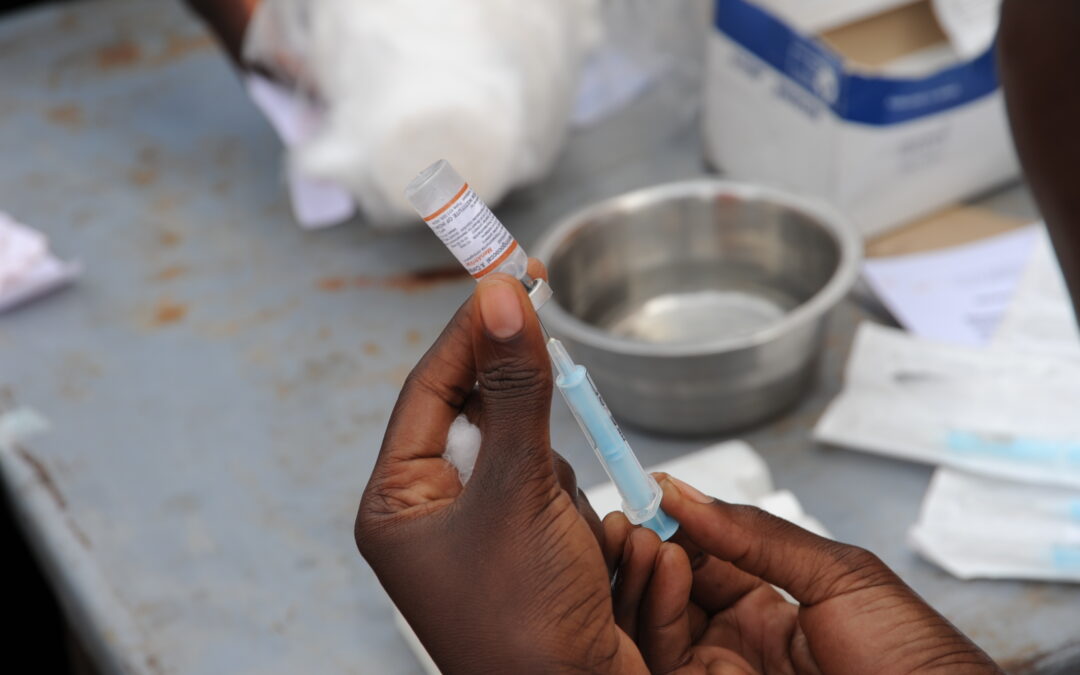
Drawing the CESCR’s attention to States’ continued failure to make provisions to meet their obligations under the right to health, the ICJ highlighted States’ obligations to:
- Procure COVID-19 vaccines;
- Produce, publicize and implement comprehensive vaccine rollout plans;
- Ensure non-discriminatory access to vaccines to all people, including to undocumented persons;
- Cooperate with other States to ensure equitable vaccine access globally; and
- Ensure continued access to effective remedies, including judicial remedies, for human rights violations, including of the right to health.
ICJ Legal Adviser on Economic, Social and Cultural Rights, Timothy Fish Hodgson, said:
“Equitable access to COVID-19 vaccines is a right, not a privilege. States are obliged to plan transparently and clearly for the provision of vaccines. In doing so, they must be guided by human rights standards, including those relating to the right to health. Particularly at this time, it is imperative that Courts be accessible and operational to ensure the enforcement of this right.”
Applauding CESCR’s statements on COVID-19 in general and vaccine access in particular, the ICJ’s submission encourages the Committee to make full use of the Convention’s State reporting procedure to provide crucial and specific guidance to individual States on how best to ensure compliance with their Covenant obligations under the right to health in the context of COVID-19.
The ICJ’s submission provides alarming examples of various States’ failure to respect, protect and fulfil the right to health, including the refusal of some States to take steps to procure vaccines at all. Such States include Tanzania, Burundi, Eritrea and Madagascar.
Notable too is Israel’s explicit flouting of its obligation to ensure vaccine access to Palestinians living in the Occupied Palestinian Territories, and the policy decisions of countries such as Guatemala, El Salvador and Costa Rica to inhibit access to vaccines for migrants by requiring prohibitive documentary access as a precondition.
The ICJ’s submission also addresses the large divide between vaccine access in Global North and Global South countries. Some States, notably in the Global North, have procured enough doses to vaccinate their population several times over, while others, especially in the Global South, have not been able to begin the process because of limited availability and purchasing power. Despite these inequalities, many wealthier countries continue to ignore the recommendations of CESCR and the advice of a large range of UN Special Procedures by opposing a WTO intellectual property waiver which would assist in ensuring the affordability of vaccines for all States.
To read the full statement, click here: Universal-CESCR-Opening-Statement-2021-ENG
Contact
Timothy Fish Hodgson, Legal Adviser on Economic, Social and Cultural Rights, t: +27828719905, e: timothy.hodgson(a)icj.org
Tanveer Jeewa, Media and Legal Consultant, e: Tanveer.Jeewa(a)icj.org
Jan 20, 2021 | News
Justice for serious human rights violations requires more effective evidence collection and prosecution, said victims and experts, at a conference organized by the Kingdom of the Netherlands and the ICJ, today.
Keynote speakers included the Prosecutor of the International Criminal Court, Fatou Bensouda, UN Assistant Secretary General for Human Rights, Ilze Brands Kehri, and victim representatives from Myanmar and Yemen.
“The quest for global accountability has progressed tremendously since the ICJ began working nearly 70 years ago,” said Sam Zarifi, Secretary General of the ICJ.
“Over the last three decades in particular we have seen increasing efforts to seek justice at the international level as well as through national courts.”
“We now have to ensure these efforts are more coherent and are able to gather and preserve evidence critical for the successful prosecution of crimes under international law,” he added.
The ICJ has dedicated a Global Accountability Initiative to combat impunity and promote redress for serious human rights violations around the world through the entrenchment of the rule of law.
The Initiative works at the national, regional, and global level to facilitate victims’ access to justice.
“All over the world, perpetrators of serious human rights violations still go unpunished,” said Stef Blok, Foreign Minister of the Kingdom of the Netherlands.
“But this climate of impunity cannot be allowed to continue,” he added.
Impunity for serious human rights violations remains a significant challenge for a variety of reasons including when certain countries obstruct the work of the International Criminal Court.
In response, UN Bodies, including the Human Rights Council and General Assembly, are increasingly being called upon to establish innovative accountability mechanisms often with an evidence collection and preservation function.
Examples include Syria, Myanmar and Yemen where the lack of an UN Security Council referral to the International Criminal Court led the UN General Assembly and Human Rights Council to take action.
At the same time, accountability mechanisms have indicated challenges, including failures of political support, lack of international cooperation, and difficulties in securing the necessary resources and staffing in the amount and time required to effectively fulfill their mandates within the mandate period.
Mr Blok opened today’s online event, in which over 30 countries, numerous NGOs and victim’ advocacy groups discussed how best to enhance these various efforts. The event was moderated by Sam Zarifi.
Fatou Bensouda, Prosecutor of the International Criminal Court
Radya Al-Mutawakel, President of the Mwatana Organization for Human Rights
Ambia Perveen, Vice chairperson of the European Rohingya Council
Omar Alshogre, Syrian refugee and human rights activist
The full video of the conference can be viewed here.
Contact
Kingsley Abbott, Director of Global Accountability and International Justice, kingsley.abbott(a)icj.org

Dec 21, 2020
The ICJ has issued its Annual Report 2019, which offers a concise summary of the work carried out by the ICJ over the past year.
Human rights work is tough at the best of times and while some years it feels like more progress is being made than lost, in other years the challenges faced seem almost overwhelming.
In 2019 the ICJ has continued its work in defense of the rule of law and human rights but there is no doubt that this has been a challenging year and that more challenges, predictable and unpredictable, await us in the years ahead.
These threats are serious but over the past seven decades the ICJ has learned how to face dark times effectively. As the lawyers of the human rights movement, we have fostered global institutions and grassroots human rights defenders; drafted international treaties and used them to defend the rights of individuals; worked hand in hand with the most marginalized people and advocated for their rights face to face with the most powerful authorities.
In early 2019, the ICJ was able to bring together its Commissioners, Sections and Affiliates, and supporters in a full Congress that emphasized the organization’s commitment to the core mandate issues that have directed our work for almost 70 years. These continued challenges include the fettered and ineffective judiciaries that cannot properly dispense justice (or worse, become tools of injustice), the continued marginalization of vulnerable groups, attacks on rights defenders and the inaccessibility of justice.
The Tunis Declaration that resulted from the 2019 Congress reaffirmed the ICJ’s unyielding commitment to defend and advance the rule of law and human rights at a time when commitment to them by States and other powerful actors has been wavering.
The Declaration also stressed that not only are human rights and the rule of law indispensable to the betterment of the human condition but must also be harnessed to address contemporary challenges identified by the Commission including those posed by resurgent authoritarian populism, unprecedented movements of people driven by increasing social disparity and climate change and intrusive new technologies.
These challenges in 2019 all prefigured, and were aggravated by, the unprecedented and catastrophic impact of the Covid-19 pandemic on lives and livelihoods, the repercussions of which can be expected to impact human rights development for years to come.
Throughout 2019, the ICJ has continued working against discrimination that inhibits access to justice and accountability, particularly barriers to justice on the basis of gender in Asia and the Middle East and North Africa and discrimination on the basis of sexual orientation and gender identity in Asia, Africa, and Europe.
We have pushed for accountability for human rights violations in Latin America, Asia and the Middle East, and pushed to develop new global norms necessary to hold businesses responsible for their impact on human rights
As existing and new threats to human rights and the rule of law evolve and emerge the ICJ knows that it needs to adapt to be able to meet these challenges.
In 2019, we accelerated efforts to make sure the ICJ has sufficient resources and an infrastructure that is fit for purpose, which included investing in a number of new systems and processes to support staff, improve accountability and ensure we are capable of delivering the ICJ’s expertise in a way that really benefits the lives of the people on whose behalf we work.
The implementation of some of these changes, such as technological improvements that facilitated information and resource sharing, have immediately helped us continue our work despite the movement restrictions that are currently binding our Commissioners, staff and partners. However, some of the changes we have attempted have taken longer than we hoped to implement and we know we have more work to do to guarantee we are ready to address the challenges ahead.
It can be hard to remain optimistic when there is so much work to do but the ICJ has proven itself as an organization that can stand fast in the face of extraordinary pressures and bring to bear a weight, that far exceeds its resources, in bringing about real change that improves lives. With your support we will keep doing the good work that is showcased in this report and will continue working towards our vision of a rule of law that upholds the dignity and human rights of every person everywhere.
(Message from Sam Zarifi, ICJ Secretary General)
Download
Universal-ICJ AnnualRep 2019-Publications-Annual Report-2020-ENG
Dec 21, 2020 | News
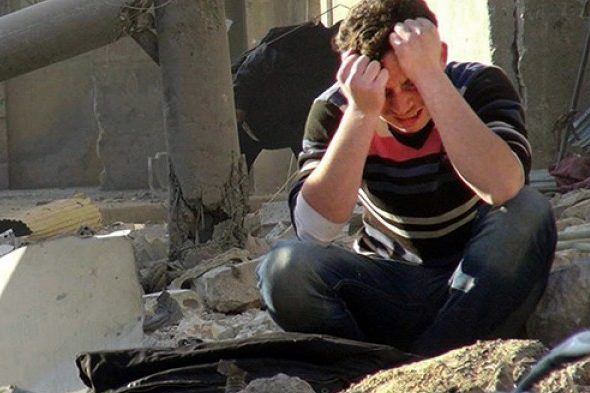
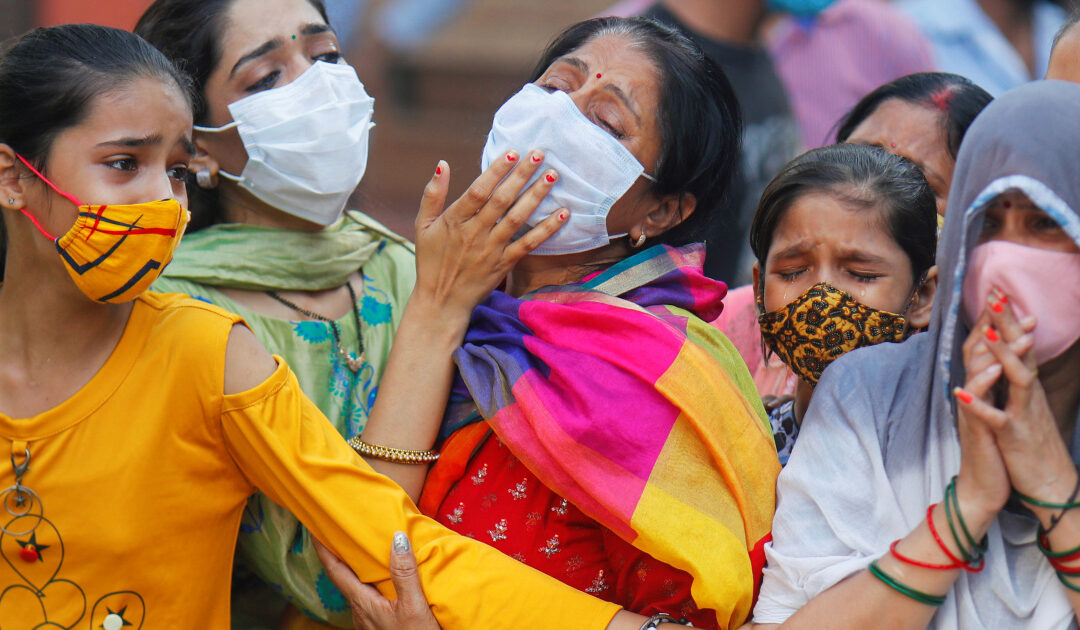
We are all about to celebrate the festive season. For a large number of people, there will be little to celebrate. Rule of Law & Human Rights violations are taking place, daily, unaccounted for and affecting their lives.
Here are some example:
- Failure to access healthcare of all people in India, Libya and South Africa;
- Enacting effective bans on abortion in some states in the USA;
- Failure to adequately tackle skyrocketing domestic violence around the globe during lockdown;
- Rights of refugees, stateless persons and destitute migrants being trampled on worldwide;
- LGBT minorities refused access to shelters;
- Ban on sexual education in Poland;
- Hungary’s prohibition of legal gender recognition;
- Curtailing of due process and fair trial rights;
- … and more
For almost a year, the ICJ has been on the front lines to document, advocate and provide efficient legal tools for civil society and the legal community to stop these abuses.
Please click on Donate, as little as 5 US$, to support ICJ fight against these repeated attacks on the most basic of Human Rights.
Dec 10, 2020 | News
ICJ’s 16 Days of Activism Against Gender-Based Violence underscores the need for justice systems to be more responsive.
The campaign commenced on 25 November, International Day for the Elimination of Violence against Women, and ended today on Human Rights Day. The campaign presented “an impact story” poster series, Facebook live interviews and opinion pieces on gender-based violence in Africa, Asia, Latin America, Middle East and North Africa.
The campaign underscored that harmful traditional norms and gender stereotypes provide the backdrop for the systematic and widespread abuse of women and girls’ human rights across the globe; it also emphasized the need to maintain essential services for survivors of gender-based violence (GBV) during COVID-19 lockdowns, including ensuring a continuum of adequate criminal justice response.
“Violence against women and girls around the world has increased in this global pandemic. Governments have a duty to ensure that their response to Covid-19 includes preventing such violence. For instance, all hotline services for reporting domestic violence must remain open during lockdowns and be considered part of essential services. The police must likewise be ready to act speedily if required. They must be made aware that women and girls are especially vulnerable at this time,” said ICJ Commissioner Ambiga Sreenevasan from Malaysia.
Throughout the campaign, the ICJ also underscored the ongoing need to support civil society organizations’ and women human rights defenders’ response to GBV, as well as the need to strengthen the judiciary’s capability to respond to GBV by enhancing its reliance on international human rights law and standards.
“The authorities have turned a blind eye to gender-based violence for far too long and it is time to prioritize combatting the phenomenon effectively, including through legislative reform and awareness raising,” said ICJ Commissioner Marwan Tashani from Libya.
Poster Series
Imrana Jalal (ICJ Commissioner, Fiji)
Mikiko Otani (ICJ Commissioner, Japan)
Ambiga Sreenevasan (ICJ Commissioner, Malaysia)
Marwan Tashani (ICJ Commissioner, Libya)
Kaajal Ramjathan-Keogh (ICJ Africa Regional Programme Director)
Saïd Benarbia (ICJ MENA Programme Director)
Carolina Villadiego Burbano (ICJ Legal and Policy Adviser, Latin America)
Sexual Violence & Criminal Law in Zimbabwe
Amy Alabado Avellano (Family Court Judge, Philippines)
Savithri Wijesekera (Executive Director of Women In Need, Sri Lanka)
Nahla Haidar (ICJ Commissioner, Lebanon)
Saman Zia-Zarifi (ICJ Secretary General)
Tshabalala v S (South African Constitutional Court judgment on the doctrine of common purpose applied to rape)
Infographic
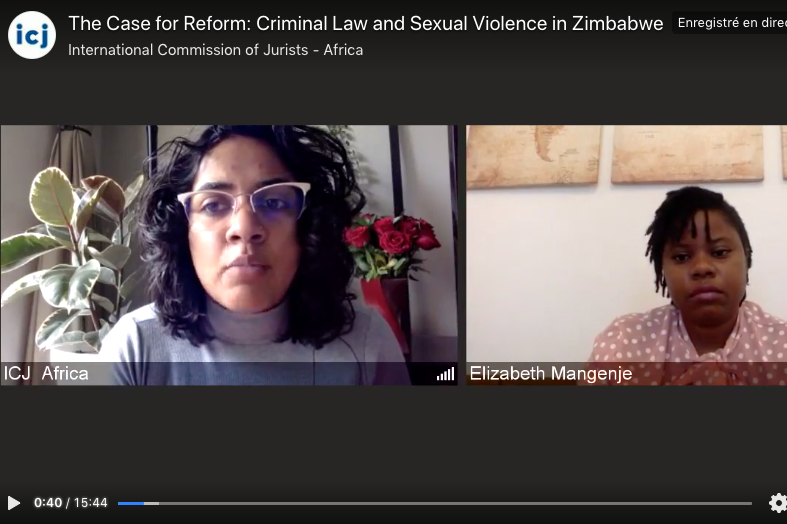
The Case for Reform: Criminal Law and Sexual Violence in Zimbabwe
Facebook Live Interviews
The Case for Reform: Criminal Law and Sexual Violence in Zimbabwe with Elizabeth Mangenje (ICJ Legal Adviser, Africa Regional Programme)
The State of GBV in the Middle East and North Africa Region with Nahla Haidar El Addal (ICJ Commissioner, Lebanon)
Women’s Access to Justice – What does justice mean for women in the context of COVID-19? (Joint initiative of ICJ, UN Women, and OHCHR)
Women’s Access to Justice – What does justice mean for women prisoners? (Joint initiative of ICJ, UN Women, and OHCHR)
Op-eds
Mujeres, justicia y pandemia, by Carolina Villadiego Burbano
Yet another treaty aims to protect African women. But how will it be enforced? by Nokukhanya Farisè and Tanveer Rashid Jeewa