Mar 27, 2014 | Advocacy, Non-legal submissions
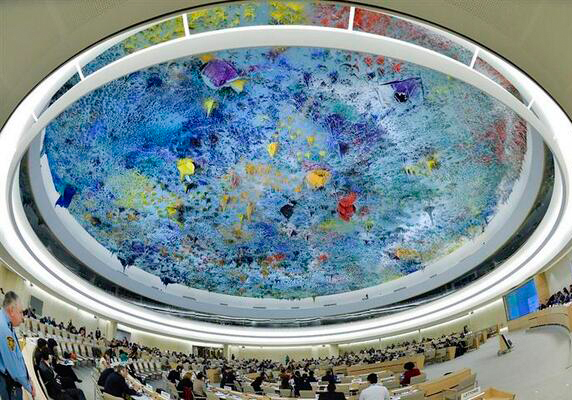
The ICJ made an oral statement on the recommendations made to Israel by the UN Human Rights Council, following Israel’s Universal Periodic Review.
The ICJ statement focussed on recommendations related to:
- compliance with international humanitarian and international human rights law , including particularly for thorough and impartial investigations into all allegations of human rights and humanitarian law violations committed in the context of the prolonged occupation of the OPT, and accountability of individuals responsible for such violations;
- Israel’s unlawful settlement policy;
- the separation wall; and
- administrative detention.
The full statement can be downloaded in PDF: Advocacy-UN-HRC25-IsraelUPR-20032014
Video of the discussion, including the ICJ statement, may be viewed here.
Mar 25, 2014 | News
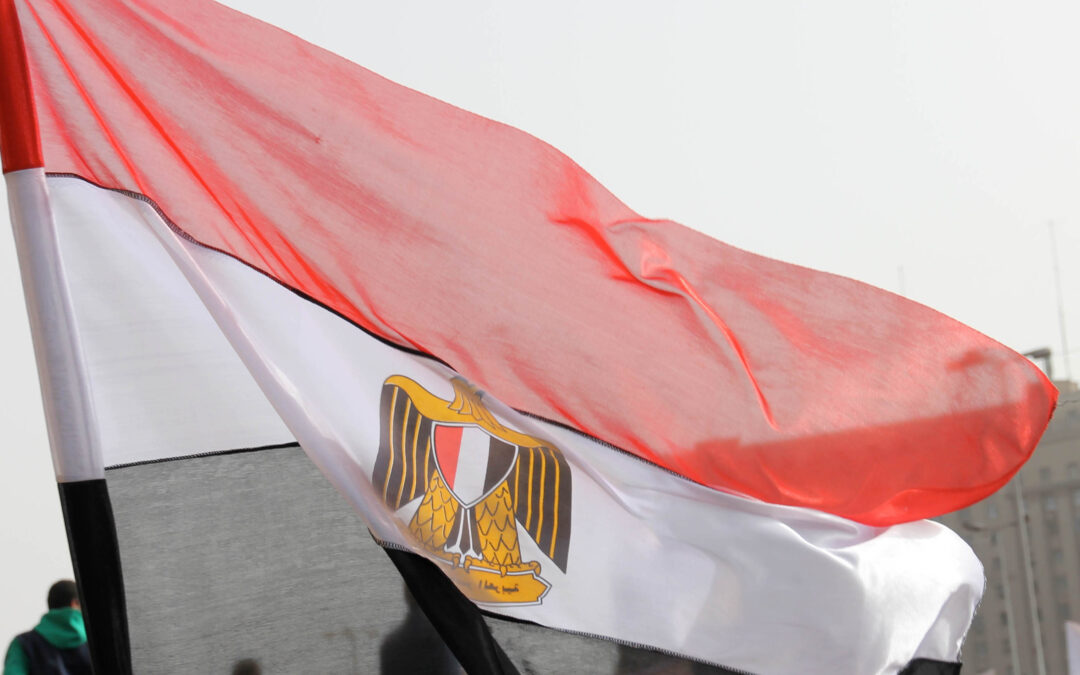
The ICJ today strongly condemned the decision of the Criminal Court of Minya to convict 529 individuals and to sentence them to death.
The individuals were sentenced for “participating in an attack on a police station in Minya,” “murder of a police officer,” “attempted murder of two other officers,” “seizing weapons” and “damaging public property”.
The verdict comes against a backdrop of a continuing crackdown on individuals suspected of supporting the ousted President, Mohamed Morsi, or being members of the Muslim Brotherhood, an organization officially designated by the military and other transitional authorities as a terrorist organization.
The verdict followed a two-day trial that disregarded fundamental fair trial standards.
The first hearing lasted 30 minutes, while the second lasted one hour.
International law is clear: the imposition of the death penalty following an unfair trial violates the right to life.
The ICJ calls on the Egyptian authorities to extinguish the convictions resulting from this trial and ensure that those arrested, prosecuted and convicted for the legitimate exercise of their rights to freedom of association and assembly are immediately released.
“The Minya trial made an absolute mockery of justice, violating basic human rights, including the rights to life, to liberty, to be presumed innocent and to defence,” stated Said Benarbia, Director of the ICJ Middle East & North Africa Program. “Even with Egypt’s long history of unfair trials and systematic politicization of the judiciary, the Minya trial sets a new low, and could be dangerous precedent for mass convictions following mass trials against government critics.”
The ICJ is deeply concerned that this trial is a part of a deliberate policy by the Egyptian authorities to use the courts and the Office of the Public Prosecutor to arrest, prosecute, convict, and imprison opponents of the current authorities.
The ICJ is also concerned that this policy effectively shields from accountability police, security, and military officers responsible for human rights violations committed in the context of the crackdown that followed the ouster of President Morsi, including the killings of more than 1200 people, in particular during the dispersal of the Rabaa Al-Adawyia and Annahda pro-Morsi sit-ins on 14 August.
No effective investigation has yet been conducted into these killings, and the perpetrators remain unpunished.
“In times of crisis, judges and prosecutors must safeguard and uphold human rights and fundamental freedoms, not act as tools of repression by prosecuting and convicting individuals for the legitimate exercise of their rights” said Benarbia.
“The Egyptian authorities must respect the independence of judges and prosecutors and refrain from any undue, inappropriate or unwarranted interference in judicial matters,” Benarbia concluded.
Contact:
Said Benarbia, ICJ Director of the Middle East and North Africa Programme, tel: 41 22 979 38 17, e-mail: said.benarbia(a)icj.org
Mar 24, 2014 | Advocacy, Non-legal submissions
The ICJ made an oral statement to the UN Human Rights Council during the general debate on the situation of human rights in the Occupied Palestinian Territory.
The ICJ noted that, almost ten years after the International Court of Justice ruled the construction of the separation wall in the Occupied Palestinian Territory (OPT) to be unlawful, States and international organizations have failed to take effective measures to hold Israel accountable for violations of international humanitarian law and human rights law arising from the wall.
As the International Court of Justice held, States must not “recognize the illegal situation resulting from the construction of the wall” and must not “render aid or assistance in maintaining the situation created by such construction.” Israel, for its part, must dismantle the wall and its associated regime and provide reparation to victims.
At the same time, Palestinian armed groups must renounce all direct or indiscriminate attacks on civilians and civilian objects. Israel must also cease its own violations of international humanitarian law.
The ICJ further addressed the human rights impacts of Israeli settlements in the occupied territory, and the need for the Security Council effectively to address the issue.
The full statement can be downloaded in PDF here: Advocacy-UN-HRC25-IsraelOPT-24032014
Mar 20, 2014
National and global human rights organizations today called upon the Arab League’s member States to suspend efforts to adopt a draft statute of the Arab Court of Human Rights (the Arab Court).
Our organizations are concerned, ahead of the Arab League’s summit to be held in Kuwait on 25 and 26 March, that efforts to adopt a draft statute are being rushed in a way that would be detrimental to the efficacy of the court.
Our organizations believe efforts should be suspended until broad discussions and consultations have taken place with all interested stakeholders, who must be permitted to participate meaningfully in all stages of the process of establishing the Arab Court.
Our organizations call on the on the member States of the League of Arab States (LAS), LAS Summit, and Secretariat to amend the draft statute as detailed in the attached documents.
This statement is supported by:
International Commission of Jurists; International Federation for Human Rights; Egyptian Initiative for Personal Rights; Al Haq; Human Rights Watch; Cairo Institute for Human Rights Studies; Human Rights Information Training Center; Gulf Center for Human Rights; Human Rights Organization for the Documentation of War Crimes in Libya; Damascus Center for Human Rights Studies; Mauritanian Association for Human Right; Open Society Foundations – Arab Regional Office; Arab Women Organization of Jordan; African Center for Justice and Peace Studies; Bahrain Center for Human Rights; The Yemeni Organization for Defending Rights and Democratic Freedoms – Aden; Legal Agenda
Contact:
Said Benarbia, Director, Middle East & North Africa Programme, t + 41 22 979 38 17, said.benarbi(a)icj.org
Further information:
MENA-Arab Court-Press Release-2014-Eng (Full press release, PDF, English)
MENA-Arab Court-Press Release-2014-Ara (Full press release, PDF, Arabic)
MENA-Arab Court-Position Paper-2014-Eng (Position paper, PDF, English)
MENA-Arab Court-Position Paper-2014-Ara (Position paper, PDF, Arabic)
Mar 18, 2014 | Advocacy, Non-legal submissions
The ICJ made an oral statement to the UN Human Rights Council, during the session with the Commission of Inquiry on Syria, concerning failures to protect the civilian population and the need for justice and calling for referral of the situation to the International Criminal Court.The ICJ underscored that for more than three years, the international community has failed to respond in a meaningful or effective manner to serious violations of international human rights and humanitarian law and other human rights abuses committed in the context of the Syrian conflict, to ensure that perpetrators on all sides are held accountable, and to implement concrete measures towards justice for victims.
The statement called on the Human Rights Council to request the Security Council to take effective measures, in accordance with the UN Charter, to protect the civilian population, bring an end to the conflict, and restore and maintain peace and security in the region.
The ICJ said that states, including the member States of this Council, should also act to provide urgent humanitarian relief to refugees, IDPs, and those trapped in besieged areas.
The statement emphasised that as the armed conflict continues to escalate, government forces and opposition groups have both been responsible for war crimes, crimes against humanity and other crimes under international law, including murder, hostage-taking, torture and other ill-treatment (including rape and other sexual violence), enforced disappearance, recruiting and using children in the hostilities, and disproportionate and indiscriminate attacks against civilians and civilian objects.
To address the pervasive and structural culture of impunity, the ICJ called on the Council to request the Security Council to refer the situation in Syria to the International Criminal Court. States, individually and collectively, must also comply with their obligations under international law to prevent war crimes and crimes against humanity and to exercise all grounds of jurisdiction at their disposal to investigate and prosecute anyone suspected of responsibility for such crimes.
The full statement, in PDF: Advocacy-UN-HRC25-Syria-OralStatement-032014