Dec 4, 2017 | News
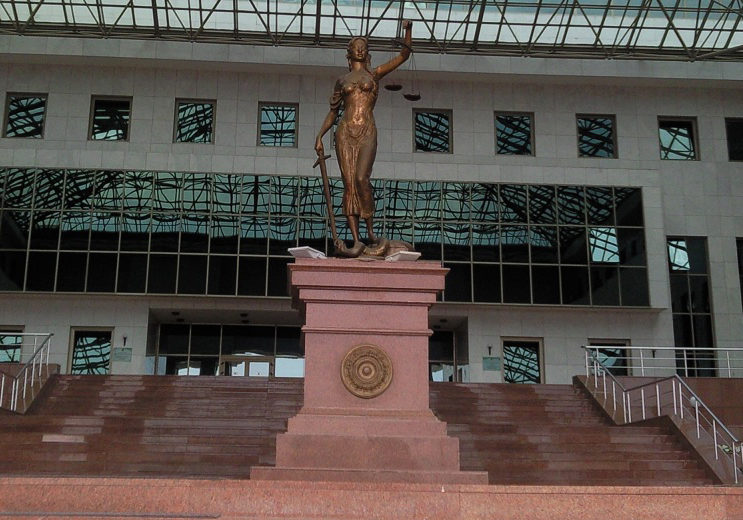
Today, the International Commission of Jurists (ICJ) began a two-day mission on the reform of the legal profession in Kazakhstan.
The ICJ mission will discuss comparative experiences and international standards on the role and independence of lawyers.
The ICJ mission will include representatives of the Bar Associations of Germany, the Netherlands and the United Kingdom.
The experts will have an opportunity to share their views on the reform and discuss their own country practices on the role of lawyers and institutional guarantees of the independence of the legal profession.
In Astana, the ICJ mission will meet, among others, with the Minister of Justice, the Supreme Court of Kazakhstan, members of the Parliament, the Kazakhstan Collegium of Lawyers and National Public Association of Commercial Lawyers “Kazakhstan Bar Association” (“KazBar”).
Contact:
Temur Shakirov, Senior Legal Adviser, ICJ Europe Programme, temur.shakirov(a)icj.org

Nov 20, 2017 | Advocacy
The ICJ, with 35 other human rights organizations, today called on members and observers of the UN Human Rights Council to convene a special session on the deteriorating human rights situation in Myanmar.
In open letter to member and observer States of the Human Rights Council, delegations are urged to support holding a special session of the Council against the backdrop of serious reports of human rights violations, including crimes against humanity, committed by Myanmar security forces in northern Rakhine state.
The letter also sets out key elements that should be included in the text of a resolution adopted by the Human Rights Council at such a session, considering action that should be taken by the Government of Myanmar, as well as by neighbouring and other States and by human rights mechanisms.
The ICJ on the same day released a briefing note, entitled Questions & Answers on Human Rights Law in Rakhine State, clarifying national and international law and standards applicable to the crisis.
Myanmar Joint Civil Society Letter 20 November 2017 (download open letter in PDF format)
For a copy of the ICJ’s Q&A briefing, go to ‘Myanmar: rule of law must drive responses to Rohingya crisis’
Nov 1, 2017 | News, Publications, Reports, Thematic reports
The arrest of absconding murder convict Bal Krishna Dhungel, a senior Maoist leader, highlights the weaknesses, as well as the promises, for victims seeking accountability through Nepal’s judicial system, said the ICJ as it released a report on accountability mechanisms in the country.
The ICJ’s report Achieving Justice for Gross Human Rights Violations in Nepal concludes that impunity for gross human rights violations is one of the major obstacles to the creation of a stable and legitimate democratic government and lies at the heart of the rule of law crisis in Nepal.
It found that a lack of commitment by Nepal’s political leadership to address past and ongoing human rights violations continues to allow perpetrators to escape justice and undermines victims’ right to effective remedies and reparation.
“In the past, the promise to shield perpetrators for human rights violations has been used as a bargaining chip to garner political support and build political alliances,” said Frederick Rawski, Director of the ICJ’s Asia Pacific Regional Programme.
“It is imperative that accountability for human rights violations remains a priority for Nepal’s political leadership after Parliamentary elections, and that alliances between political parties are not once again used as an excuse to undermine Nepal’s human rights obligations,” added Rawski.
Attempts to thwart justice have also included the cynical manipulation of justice sector actors, from the police to the Attorney General’s office, in a way that threatens the independence and credibility of the institutions responsible for safeguarding human rights and the rule of law in Nepal, the report highlights.
This pattern of impunity persists despite demands for accountability by civil society and victims’ organizations, as well as the National Human Rights Commission and Nepal’s Supreme Court.
“In many ways, the Supreme Court of Nepal has emerged as a beacon of hope for victims of human rights violations,” said Rawski.
“The Court has given domestic effect to Nepal’s obligations under international law and has set high standards for accountability, remedy and reparations,” he added.
However, the Government’s disregard of key judgments has limited the impact of the Supreme Court’s jurisprudence, the report says.
Attacks on the independence of the judiciary, as demonstrated by the impeachment motion against former Chief Justice Sushila Karki, also indicate a worrying trend.
The ICJ’s report found that the mandate and operation of transitional justice mechanisms fall short of international standards despite the repeated reinforcement of such standards by the Supreme Court.
Though ostensibly formed to provide a measure of public accountability, the practice of forming ad hoc commissions of inquiry to investigate rights violations has promoted impunity by diverting investigations from the criminal justice process – where they belong – into parallel mechanisms that are established by means that make them vulnerable to political interference and manipulation.
The ICJ’s report also concludes that gross human rights violations in Nepal are not a thing of the past, but are ongoing.
Notably in the Terai region, the State has responded to the Madhesh movement with excessive use of force, extrajudicial killings, and torture and other ill-treatment.
Political expediency has trumped calls for justice and accountability and the Government continues to use State machinery to shield perpetrators rather than serve the interests of justice.
“In a seemingly perpetual cycle, the weak rule of law in the country contributes to impunity for human rights violations, and this culture of impunity further erodes the rule of law,” said Rawski.
“The search for truth and justice in Nepal will not be realized unless this cycle is ended,” he added.
Additional information
Dhungel had been absconding since the Supreme Court upheld his conviction for murder in 2010. The arrest comes after a contempt of court petition was filed before the Supreme Court against the Inspector General of Police for failing to implement multiple Supreme Court orders directing Dhungel’s arrest.
Contact
Frederick Rawski, ICJ Asia Pacific Regional Director, t: +66 64 478 1121, e: frederick.rawski@icj.org
Alex Conte, ICJ Global Redress and Accountability Initiative, t: +41.79.957.2733; e: alex.conte@icj.org
Download
Nepal-GRA Baseline Study-Publications-Reports-Thematic reports-2017-ENG (full report in PDF)
Read also
ICJ Discussion Paper Nepal’s Transitional Justice Process: Challenges and Future Strategy (August 2017)
ICJ Report Authority without Accountability: The struggle for justice in Nepal (October 2013)
Jun 16, 2017 | News
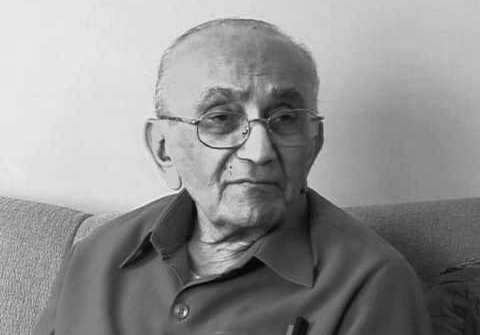
Justice Prafullachandra Natwarlal Bhagwati, former ICJ Commissioner and Honorary Member and Chief Justice of the Supreme Court of India, passed away at the age of 95, on 15 June 2017, following a brief illness.
“The International Commission of Jurists benefited greatly from Justice Bhagwati’s engagement and leadership. He was a giant of the human rights movement, dedicated to enlarging and ensuring access to justice for everyone, including those who couldn’t seek and receive justice due to their economic or social status,” said Sam Zarifi, ICJ’s Secretary-General.
“His dedication and ground-breaking approach to human rights accountability inspired many within and outside of the ICJ, and the values he represented will continue to inspire and inform our work,” he added.
Justice Bhagwati had a long history of promoting and protecting human rights, both at home and on the international stage, particularly for the most marginalized and vulnerable individuals and groups.
Former Chief Justice of India, Justice P.N. Bhagwati held a long and illustrious career within the Indian judiciary.
He introduced many innovative reforms within the Indian judicial system that increased access to justice for the poorest and most disadvantaged, including as a pioneer of public interest litigation and absolute liability.
Outside of India, Justice P.N. Bhagwati played a prominent role in the international human rights movement, for example as a member of the Committee of Experts of the International Labour Organization and Chair of the United Nations Human Rights Committee.
He was also actively involved in a number of non-governmental organizations, including the ICJ, where he committed to a high number of missions, seminars, publications and other activities on behalf of the organization.
He also served as a long-standing Chair of the Advisory Board for the ICJ’s Centre for the Independence of Judges and Lawyers.
Jun 13, 2017 | Advocacy, Non-legal submissions
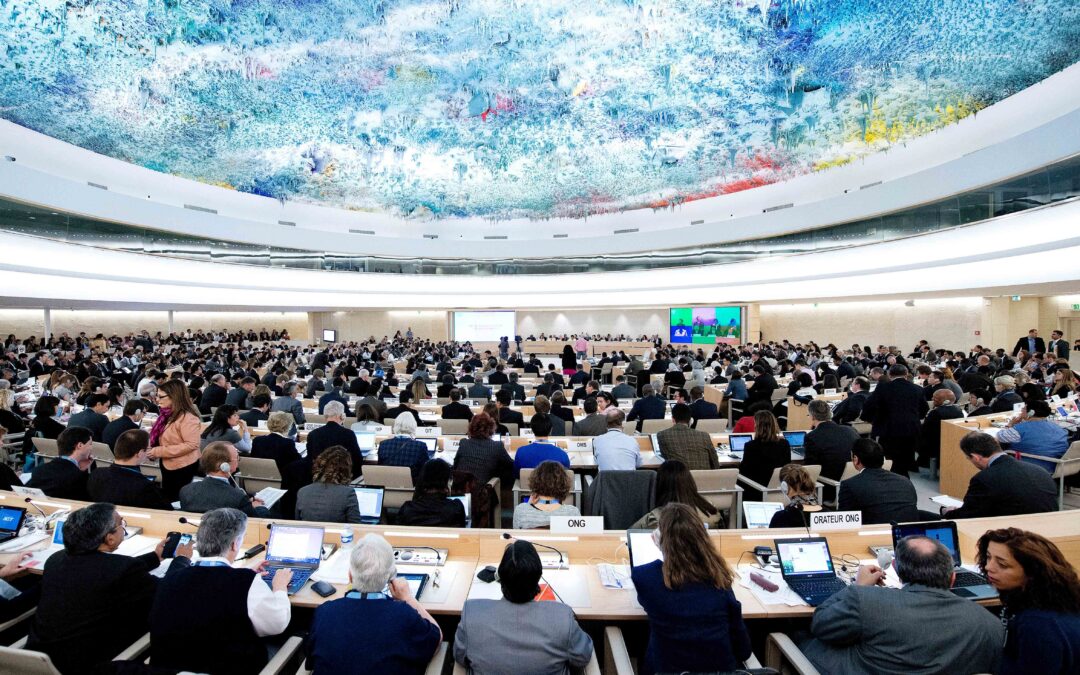
During a panel discussion at the UN Human Rights Council, the ICJ delivered an oral statement on the role of men and boys in eliminating violence against women by ensuring women’s access to justice for gender based violence.
The statement was delivered during the first panel of the Council’s annual full-day discussion on the human rights of women. The panel focused on accelerating efforts to eliminate violence against women by engaging men and boys in preventing and responding to violence against women.
The ICJ’s statement was as follows:
Violence against women is a widespread human rights abuse rooted in patriarchal societies and gender stereotypes that are harmful to everyone. As the panel have recognised, the international community cannot address the issue as though it is only a problem for women and we welcome the positive focus on the role of men and boys as beneficiaries and agents of change.
The ICJ remains concerned about women’s access to justice for gender based violence. Strong domestic laws, grounded in an international human rights framework, that are upheld by a robust and independent judiciary, are essential components of tackling the problem.
However, the ICJ has worked with lawyers, judges and civil society to assess the obstacles that continue to face women seeking justice for gender based violence and we know that laws alone are not enough. It must also be acknowledged that many laws are based on patriarchal norms and stereotypes that are intrinsically discriminatory against women seeking justice through the legal system.
Behavioural change is required in not only preventing violence against women but also in ensuring that justice is available to those that have been subject to this violence. Men have a pivotal role to play in working with women to ensure that a gender based perspective is applied to the way laws are accessed and implemented.
We applaud the panellists’ focus on engaging with men and boys to prevent harmful behaviours of violence against women from taking root.
However, we would like to ask what role panellists suggest men and boys have in:
a) ensuring that perpetrators are held accountable for their actions, and
b) in supporting the justice system in rehabilitating offenders to prevent further acts of violence, without compromising justice and services available to women?
In response to the ICJ’s statement the Special Rapporteur on Violence Against Women commented that structural problems impact on the effectiveness of laws.
Mr Abhijit Das noted that prosecution was only one means of addressing gender inequality and that engagement with men and boys needed to go beyond this to include the widest number of stakeholders possible, including those men and boys that do not perpetrate violence against women.
Mr Anthony Keedi noted that rehabilitation was a key component of addressing violence against women and must be at the heart of change to prevent cycles of violence from continuing.
The participants in the panel and discussion were:
- Chair: H.E. Mr Joaquin Alexander Maza Martelli, President of the Human Rights Council.
- Opening statement: Ms Kate Gilmore, UN Deputy High Commissioner of Human Rights provided an opening statement
- Keynote speaker: H.E. Ms Karen Ellemann, Minister for Equal Opportunities and Nordic Cooperation, Denmark
- Moderator: Ms. Lana Wells, Brenda Stafford Chair in the Prevention of Domestic Violence, University of Calgary, Canada
- Panellist: Ms Dubravka Simonovic, Special Rapporteur on violence against women, its causes and consequences
- Panellist: Mr Anthony Keedi, Masculinities Technical Adviser, ABAAD Resource Centre for Gender Equality, Lebanon
- Panellist: Mr Francis Oko Armah, Youth Activist, curious Minds, Ghana
- Panelist: Mr Abhijit Das, Co-Chair of MenEngage Alliance and Founder of Men’s Action for Stopping Violence against Women, India