Jun 9, 2017 | Advocacy, Non-legal submissions
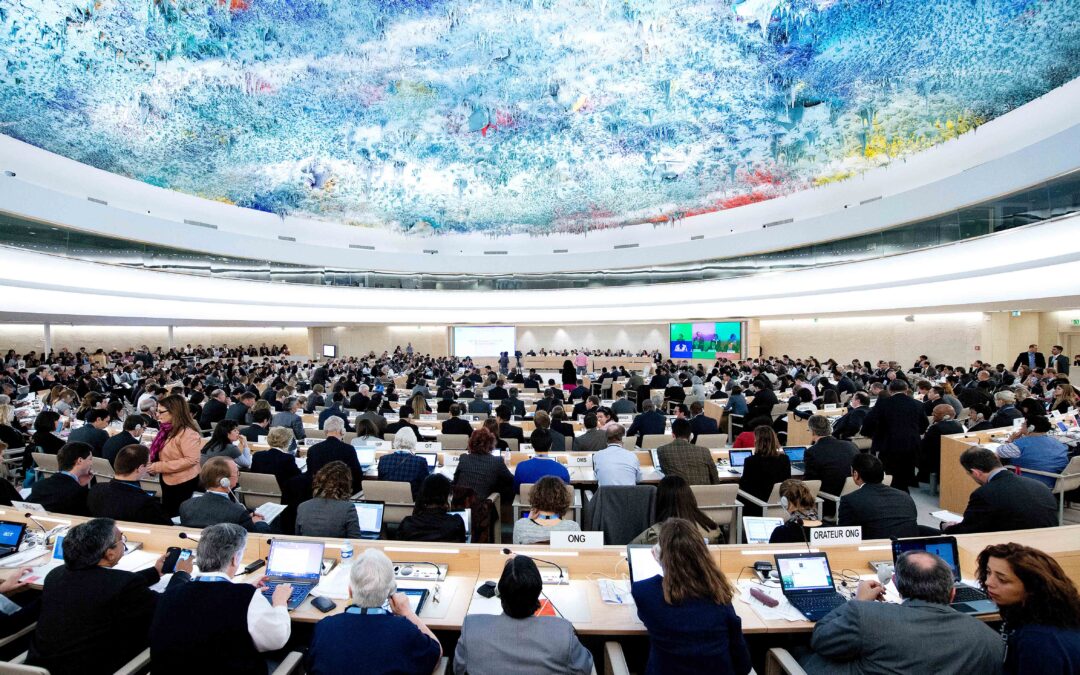
Today the ICJ delivered an oral statement on discrimination against women in access to justice at the UN Human Rights Council in Geneva.
The statement came during an interactive dialogue with the Working Group on the issue of discrimination against women in law and in practice. Ms Alda Facio, Chair of the Working Group, presented the Working Group’s latest report which highlighted examples of good practice in eliminating discrimination against women.
The ICJ stated as follows:
The ICJ would like to thank the Working Group for its report and welcomes its positive focus in highlighting examples of good practice, whilst continuing to note that discrimination against women remains a multifaceted and systemic problem.
The ICJ shares the Working Group’s concerns about the intense backlash against women’s rights gains in national, regional and international spheres. We are particularly concerned about the levels of discrimination women continue to face in accessing the justice required to uphold their human rights.
The ICJ has been working for a number of years, in different regions and with different stakeholders, to identify the discriminations women face in accessing justice and to consider the opportunities that can be used to address these discriminations. The importance of applying a gendered analysis to the law and the way that this is accessed and applied is essential to the elimination of discrimination in this area.
The ICJ supports the Working Group’s identification of the fundamental importance of incorporating international human rights standards into domestic legal frameworks to ensure gender equality protections. In the context of the 2030 Agenda, and with particular reference to Sustainable Development Goals 5 and 16, the ICJ encourages States to ensure that any laws and practices that discriminate against women in accessing justice are repealed, and to recall that any exceptions on the grounds of culture, religion or tradition are unacceptable.
Whilst discrimination against women in access to justice has been well documented and is by no means a new phenomenon, it is highly alarming that the problem is worsening in a number of states. The ICJ would ask that the international community remains vigilant about these potential regressions and commits to holding to account any States that fail to fulfil their international obligations to ensure access to justice for women.
May 29, 2017 | Multimedia items, News, Video clips
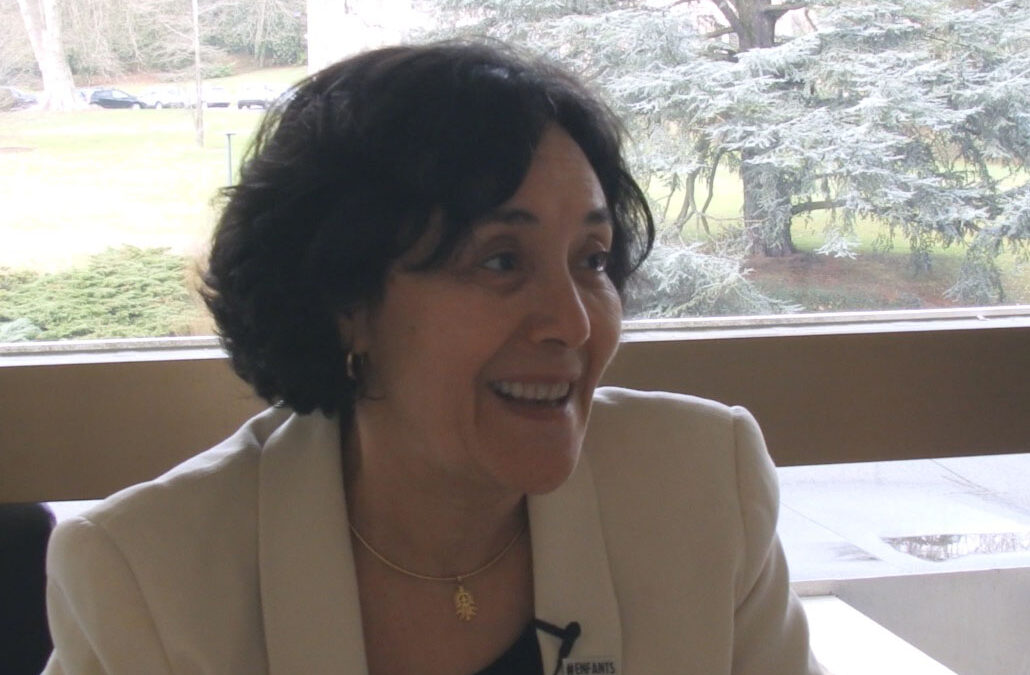
Honorary ICJ Member Leila Zerrougui speaks about the obstacles in accessing justice that women face, particularly in conflict settings, in the latest ICJ profile on women human rights defenders.
Professor Leila Zerrougui is an Algerian legal expert on human rights and administration of justice. She has served as a juvenile judge, judge of first instance, appeals court judge and was appointed to the Algerian Supreme Court.
She was the Deputy Special Representative of the Secretary-General and Deputy Head of the United Nations Stabilization Mission in the Democratic Republic of the Congo (MONUSCO) where, from 2008, she spearheaded the Mission’s efforts in strengthening the rule of law and protection of civilians. From 2012 to 2017 she served as Special Representative of the Secretary-General for Children and Armed Conflict.
Prof. Zerrougui explained that she was part of a first generation of women who had access to education in her country and that the opportunity to study law helped her to understand rights, how to exercise these and how to protect them.
When she started as a juvenile judge, the family code was very unjust for women, and she was motivated to try and fix these injustices.
Although confronted by occasional misogyny, Prof. Zerrougui considered that in some ways her gender enabled her to enjoy more opportunities when she started her career as there were so few female judges and male peers felt less threatened by her.
Prof Zerrougui said that throughout her career she has been supported by many men, but emphasized that it is important that men understand that gender issues are about the relationships between men and women and that it is in everyone’s best interests to promote gender equality in all aspects of life.
Among the many obstacles facing women in accessing justice, she cited administrative blockages, lack of knowledge about legal procedures, lack of financial means and family pressures and interference. Women without access to education or other public spaces, particularly those whose families do not support them, are totally disempowered.
Prof. Zerrougui said that as a judge she observed many cases were thrown out because those filing cases didn’t understand the legal procedures that were involved. She therefore decided to spend two hours every week taking part in a TV programme to explain these procedures to citizens in a way that they could access and understand.
Prof. Zerrougui has worked in many conflict settings and is known for her innovative methods. She said: “In many conflict settings, you don’t have justice. So it is not about how can you access justice, the system is not there.” Prof. Zerrougui went on to explain that in these settings it is first necessary to take justice to where the victims are.
In the Democratic Republic of the Congo, Prof. Zerrougui established mobile criminal justice courts, with an investigator, prosecutor and a mobile court and a prison in every Province. It was the first stage to bring justice to remote areas, and to allow the victim to face the perpetrators, sometimes high ranking military.
In this context, she explained how rewarding it was to see a colonel taken to the village where he and his solders had raped women and to face justice there. His victims were able to participate in the process and see him face justice and receive his sentence. The decision was then made to detain the perpetrator in a different area, where he would not have the influence to arrange his release.
Prof. Zerrougui explained that children are often victims of conflicts they have not instigated but, despite sometimes constituting as much as 50 or 70 per cent of the overall population in conflict zones, are frequently forgotten and left without a voice.
In her role as UN Special Representative for Children and Armed Conflict, she was involved with the Colombia peace process and the first agreement signed there was about releasing children and reintegrating them into their family or society rather than seeking punishment. However, she explained it is also vital to ensure that perpetrators of abuses against children are punished.
Prof. Zerrougui encouraged more young women to think about working in human rights and said: “just choose the space when you have the opportunity to get it, don’t think about all the obstacles, it’s good to know them but not stop at that, and you will achieve results, the recognition will come.”
She added that this work is important, “because without human rights defenders, without people that dedicate their lives, their careers, to defend the most vulnerable, the voiceless, then the world becomes a jungle.”
Watch the interview:
The series of profiles introducing the work of ICJ Commissioners and Honorary Members on women’s rights was launched on 25 November 2016 to coincide with the International Day to Eliminate Violence against Women and the first day of the 16 Days of Activism Against Gender-Based Violence Campaign.
May 10, 2017 | Advocacy, News, Non-legal submissions
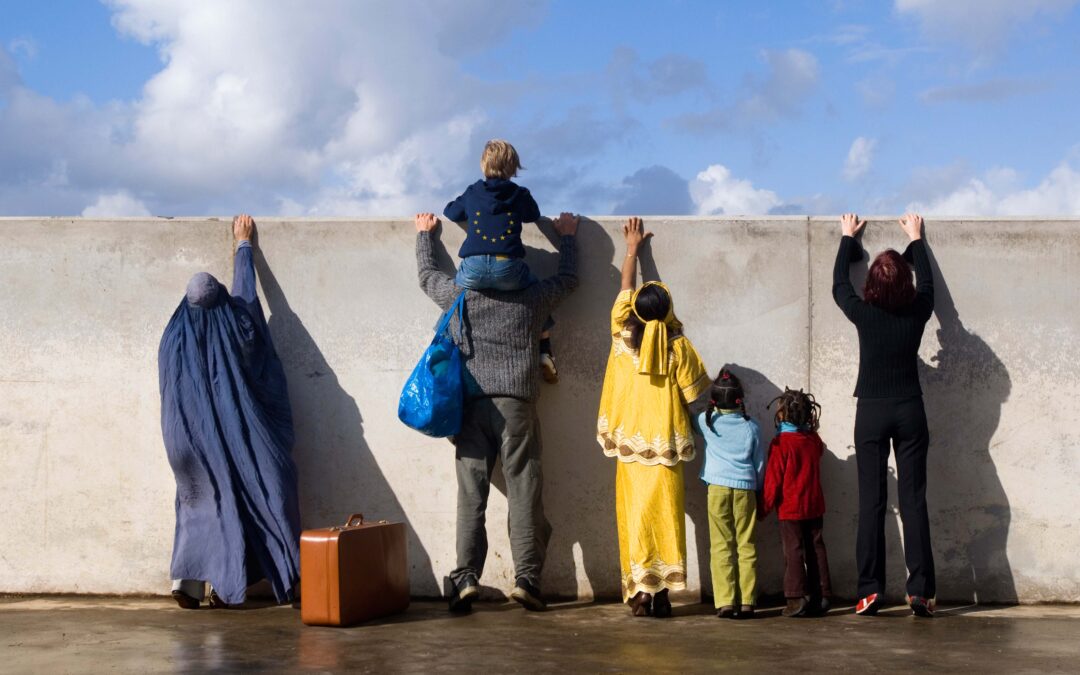
The ICJ emphasised the role of judges and lawyers in protecting human rights of migrants, during consultations at the UN in Geneva, as part of the preparatory process for a Global Compact on migration.
The informal consultation was convened by the UN General Assembly and held in Geneva on 8-9 May 2017. With a focus on human rights of migrants, it was the first thematic consultation to be held in connection with ongoing efforts by States to agree a UN global compact for safe, orderly and regular migration.
In addition to a written submission, the ICJ made statements during the main discussion, and as part of the concluding discussions.
The initial statement highlighted the recently published Principles on the Role of Judges and Lawyers in relation to Refugees and Migrants, developed by the ICJ in consultation with a wide range of relevant experts.
The concluding statement emphasised that effective protection of human rights, including of migrants, requires equal and effective access to impartial courts and independent lawyers, and urged States to ensure that the need for legal and practical guarantees for such access is reflected in the Global Compact eventually to be adopted. Indeed, the ICJ noted, access of individuals to a means of their enforcement is a key element distinguishing durable “rights” from, for instance, welcome but not necessarily permanent generosity.
For more information about the Principles on the Role of Judges and Lawyers in relation to Refugees and Migrants, click here.
Apr 28, 2017 | Multimedia items, News, Video clips
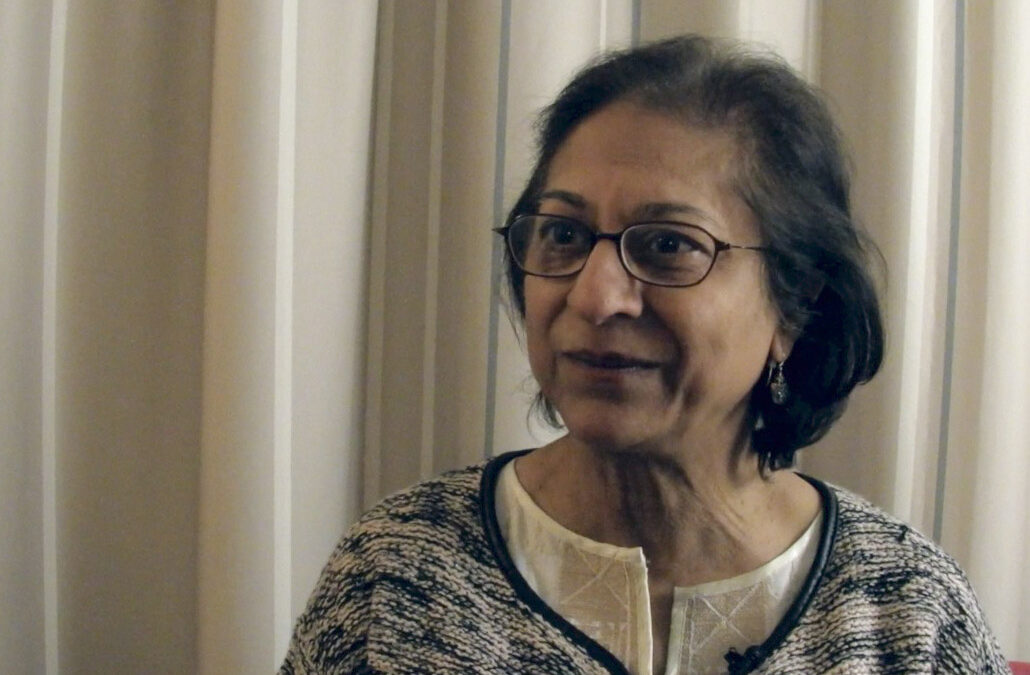
Honorary Member of the ICJ, Asma Jahangir, talks of her experiences as part of the ICJ’s ongoing profile series on women human rights defenders.
Asma Jahangir became interested in human rights legal work after having witnessed the frequent arrests of her father, an outspoken critic of military dictatorships, and seeing the courtroom as a place where justice could be accessed. From these early experiences, Asma identified the importance of rule of law but came to understand that this was something that went far beyond the courtrooms of Pakistan.
As a married women, her in-laws had concerns about her practicing law in a mixed firm so she co-founded Pakistan’s first all-female law firm. Initially the firm was viewed as a hobby but Asma and her other co-founders persevered and the firm still thrives today.
Ms Jahangir spoke about the challenges she faced as a female lawyer where courts and judges were at first patronizing towards her and then became angry at her as she continued to present them with cases that were challenging for them. She worked on a number of landmark cases including about whether women could get married without their fathers’ permission, be entitled to family maintenance and whether women should be judged according to religious or codified law.
Women in Pakistan face many issues in accessing justice, Ms Jahangir said. They lack resources, if they are able to access the courts they are frequently exploited by male lawyers and they encounter prejudice in their cases. In addition many laws are simply discriminatory, however women have been challenging these and will continue to do so.
There has been progress in family law in Pakistan, particularly in relation to the procedures if not the substance, yet Pakistan remains a long way from having equality in the family law framework.
Asma noted that it can be hard to engage men in women’s rights issues but commented that many men who had not considered giving certain rights to their wives had become a lot more conscious about women’s rights issues as their daughters had grown up. Many of her colleagues now ask for internships for their daughters at her law firm and admit how narrow-minded they had previously been in relation to women’s rights and equality.
From 2004 to 2010, Ms Jahangir served as the UN Special Rapporteur on Freedom of Religion and explained that she worked with the Special Rapporteur on Freedom of Expression to address the delicate balance in managing freedom of religion and freedom of expression.
Freedom of expression is currently under threat around the world, Asma commented, and is being undermined in the name of a variety of reasons including security, religion and tradition or social norms. Asma said that freedom of expression is fundamental to basic human rights because stopping freedom of expression stops people from thinking.
“Self-censorship is a by-product of undermining freedom of expression and self-censorship by itself dis-informs people, brings out irrelevant issues, and suppresses the more relevant issues.”
Ms Jahangir told the ICJ that in the course of her work as a human rights activist she has been threatened, put under house arrest and imprisoned. However, rather than deterring her, Asma’s experience in jail made her stronger: “It made every woman who went to jail stronger and more resolute that we want rights.”
There was a particular case that had a strong impact on Asma, which was when she worked in defence of a child who had been accused of blasphemy and was sentenced to death. The initial verdict against the boy knocked her confidence as a lawyer, but senior colleagues encouraged her and she continued with the case, taking this to appeal.
This was a very contentious case that attracted a lot of negative attention against Ms Jahanagir. People claimed she was anti-Muslim and, as she argued for the defendant, crowds gathered outside the court calling for her execution. At one point opposing lawyers asked the judges if they could simply close the case but the judges said that if Asma was prepared to keep arguing they were prepared to hear her arguments.
Asma explained that she was inspired to continue by the defendant himself, a boy of around 14 years of age, who, when given the opportunity to run away whilst on bail, decided to stay and continue the trial rather than risk others being harmed in retaliation if he were to flee. She felt that even if she had to give her life to defend this child then it would be worth it. Ultimately the case was decided in the boy’s favour and he was acquitted.
She advised young women interested in a career as a human rights lawyer not to label themselves as ‘human rights lawyers’ rather than simply ‘lawyers’ or they will not be taken seriously. Asma said that “I think that life where you don’t have dignity and where you don’t fight for people’s dignity is a wasted life.”
Watch the interview:
The series of profiles introducing the work of ICJ Commissioners and Honorary Members on women’s rights was launched on 25 November 2016 to coincide with the International Day to Eliminate Violence against Women and the first day of the 16 Days of Activism Against Gender-Based Violence Campaign.
Apr 20, 2017 | News
Nepali authorities should immediately take effective steps to enforce the landmark Kavre district court murder verdict for the 2004 torture and killing of teenage Maina Sunuwar, the ICJ, Amnesty International, and Human Rights Watch said today.
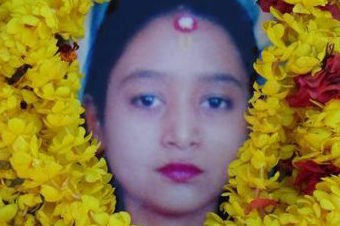
On 16 April 2017, the Kavre district court sentenced three army officers to life imprisonment for the murder of Maina Sunuwar, a 15-year-old girl (photo) who was tortured in army custody and died as a result in February 2004.
Maina’s killing took place during the decade-long armed conflict between the Maoists and government forces that ended in 2006.
A court martial in 2005 found that Maina had died in army custody, convicted the three officers of torture and murder, but only sentenced the three perpetrators to six months’ imprisonment for minor offences, and promptly released them on grounds that they had already served the six months while confined to army barracks during the period of investigation.
“These convictions are an important development in Nepal’s slow-paced justice system’s ability to deal with grave conflict-era human rights abuses,” said Sam Zarifi, the ICJ’s Secretary General.
“What we need now is for the government to demonstrate its commitment to the rule of law and enforce them,” he added.
The trial before the Kavre district court took place in the absence of any of the four accused, despite repeated court summonses, including an arrest warrant, to notify them of the charges and compel them to appear in court.
The three accused army officers who were convicted of Maina Sunuwar’s murder, Bobi Khatri, Amit Pun and Sunil Adhikari, are no longer in the army and are believed to have fled abroad after the court martial proceedings.
The fourth accused, who was acquitted, Major Niranjan Basnet, is still in the army and was repatriated to Nepal from a UN peacekeeping assignment in Chad in 2009 due to the indictment against him.
Maina Sunuwar’s case has become emblematic of the shortcomings in Nepal’s justice system that have repeatedly frustrated efforts of Nepali conflict victims to secure justice for wartime abuses.
Maina Sunuwar’s mother first filed a report with the police in November 2005.
Since then, there have been numerous procedural and political hurdles, and a lack of cooperation by the military as it sought to protect its own.
An arrest warrant issued in 2008 was never enforced by Nepali authorities, with the police telling the court they were unable to trace them.
“Maina Sunuwar’s case was a true test case for the Nepal criminal justice system, but the government has a habit of simply ignoring court orders,” said Brad Adams, Asia director of Human Rights Watch. “This is the first sign of hope for victims after more than ten years since the end of the conflict—and now we need to see all those convicted of murder behind bars.”
The human rights organizations expressed concern that the government might refuse to seek to take measures to enforce the Kavre court’s verdict given its prior record on this and thousands of other conflict-era cases.
In a disturbing example, the police have yet to implement a 13 April 2017 Supreme Court order to arrest Bal Krishna Dhungel, a Maoist politician convicted of a 1998 murder.
Dhungel has yet to serve out his life sentence handed down by the courts.
The court gave the police a week to execute its order and present Dhungel before it.
“The Kavre district court has done its job, reaffirming the independence of the judiciary from political and military pressure, and holding perpetrators of serious crimes committed during the conflict to account,” said Biraj Patnaik, Amnesty International South Asia Regional Office Director. “Now the authorities must do their job by breaking with the practice of successive past governments that ignore and undermine the courts’ decisions. We expect the government to promptly implement this week’s ruling.”
Contact
Nikhil Narayan, ICJ’s South Asia Senior International Legal Adviser, e: Nikhil.narayan@icj.org
Sam Zarifi, ICJ’s Secretery General, e: sam.zarifi@icj.org