
May 29, 2015 | Advocacy, News, Non-legal submissions, Position papers
The ICJ called today on the EU institutions to bridge the final implementation gaps to ensure an effective access to justice to victims of violent hate crimes.
The contribution of the ICJ was submitted as input for the European Commission’s first annual fundamental rights colloquium to be held next October and focused on “Tolerance and respect: preventing and combating antisemitic and anti-Muslim hatred in Europe”.
In its submission, the ICJ finds that the greatest weakness in addressing violent hate crime currently lies primarily in the failure of effective national implementation, which has meant that, despite development of the law, and despite authoritative recommendations from international and EU human rights bodies, the frequency of commission of violent hate crimes appears to have increased, and impunity for such crimes has persisted.
The ICJ considers that there are two main reasons for this lack of implementation: 1) lack of political or institutional will in Member States; 2) lack of implementation tools tailored to the laws, legal institutions and culture of the single national legal system.
The ICJ concluds, in its contribution, that it is the time for the European Union institutions to take up the opportunity to unite the efforts of all those concerned in the administration of justice – judges, court administrators, lawyers, civil society, judicial organizations, bar associations and government officers – throughout the EU to work together on the detailed technical assistance needed for an effective implementation of the right to an effective remedy for victims of crimes motivated by discrimination.
EU-Colloquium2015-ICJContribution-ViolentHateCrimes-Advocacy-non legal submission-2015-eng (download the submission)

May 4, 2015 | News
Following a recent international conference, the ICJ and the other participants elaborated and signed the Tunis Declaration on the Arab Court of Human Rights.Among other things, the Tunis declaration (see below) is calling for the members of the League of Arab States (LAS) to refrain from ratifying the Statute of the Arab Court unless and until it is revised in accordance with international standards, with a view to creating an effective Arab human rights court.
The conference was organized from 8-9 April in Tunis by the ICJ and the Legal Agenda, and attended by international, regional and national judges, lawyers, human rights defenders and members of civil society.
Key provisions of the Statute of the Court, which was adopted by the Ministerial Council of the League of Arab States on 7 September 2014, were discussed and assessed in light of the experience and practice of regional human rights systems and international mechanisms.
Conference participants identified both shortcomings of the Statute and the necessary reforms required to establish a court that provides meaningful access to individuals alleging a violation of their human rights.
A detailed analysis of the provisions of the Statute can be found in the ICJ’s report, The Arab Court of Human Rights: A Flawed Statute for an Ineffective Court, published on 8 April 2015 (to access the Statute of the Court, see annex 1 of the ICJ report).
MENA-Arab Court Tunis Declaration-Advocacy-2015-ENG (full text in PDF, English)
MENA-Arab Court Tunis Declaration-Advocacy-2015-ARA (full text in PDF, Arabic)
Mar 27, 2015 | Advocacy, News, Non-legal submissions
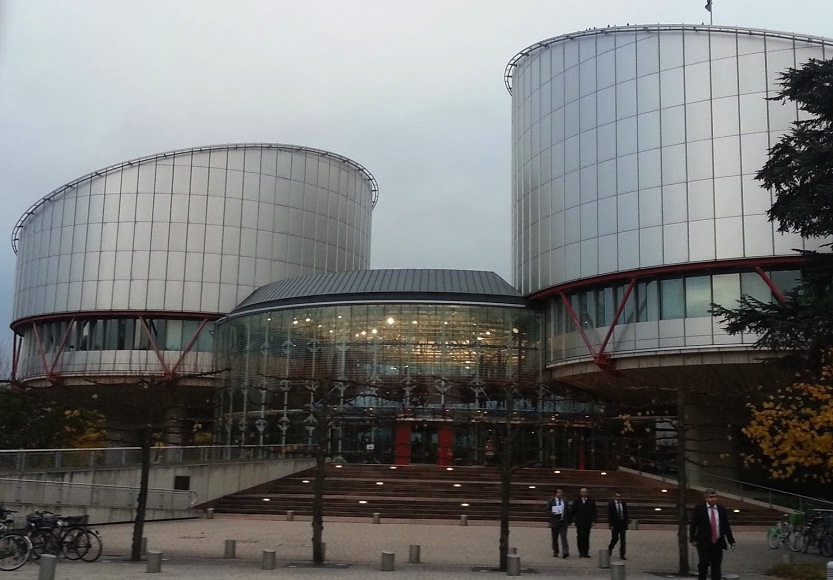
The ICJ, and other NGOs present at the Brussels Conference on the implementation of the European Convention on Human Rights today responded to the final draft of the Brussels Declaration to be adopted today, with ten specific action points.
The response welcomes the draft Declaration’s deadline of June 2016 to improve the execution of the judgments of the European Court of Human Rights, but regrets that it does not set out the specific measures that states and the Committee of Ministers should take to improve implementation.
CouncilofEurope-JointStatement-ExecutionofJudgments-BrusselsConference-Advocacy-non legal submission-2015-ENG (download the joint statement)
Mar 12, 2015 | News
Thailand must live up to its repeated promises to bring justice to the case of Somchai Neelapaijit, who was forcibly disappeared eleven years ago today, said the ICJ.
In multiple statements since Somchai Neelapaijit was abducted on a street in central Bangkok, the Royal Thai Government has pledged to resolve the case.
Before the United Nations Human Rights Council in May 2008, the Royal Thai Government pledged “to do its utmost and leave no stone unturned in order to bring to justice the case of Mr Somchai.”
In April 2014, Thailand gave assurances to the UN Committee that monitors the implementation of the Convention Against Torture in Geneva that the Department of Special Investigations (DSI) was continuing to investigate Somchai Neelapaijit’s case without any interference.
“Despite the passage of eleven years, Thai authorities have not carried out a comprehensive investigation or exhausted the possible sources of evidence,” said Sam Zarifi, ICJ’s Regional Director for Asia and the Pacific. “What is required is the DSI’s real and determined effort to identify the perpetrators and bring them to justice.”
Thailand signed, but has not yet ratified, the Convention Against Enforced Disappearance in January 2012.
Pending the ratification, Thailand must desist from any acts that would defeat the objective and purpose of the Convention, which among other things places an obligation on State Parties to make enforced disappearance a criminal offence, to thoroughly and impartially investigate cases, bring those responsible to justice and treat family members of a ‘disappeared’ person as victims in their own right.
Promisingly, the Ministry of Justice is in the process of drafting a Torture and Enforced Disappearance Prevention and Suppression Bill, which, in its current form, defines and criminalizes enforced disappearance and torture in Thailand.
“This new law must ensure there is no statute of limitations on enforced disappearance, which is not only a serious human rights violation but also a crime under international law,” added Zarifi. “Somchai’s fate and whereabouts remain unresolved, and his family continue to demand truth and justice from the authorities.”
To mark the 10-year anniversary of Somchai Neelapaijit’s “disappearance”, the ICJ released a report Ten Years Without Truth: Somchai Neelapaijit and Enforced Disappearances in Thailand, in which it documented the tortuous legal history of the case.
The report highlighted several key problems, such as poor use of forensic evidence, failure to follow and develop leads, unduly restrictive interpretation of national and international law, and above all, a lack of political will to resolve a case that remains emblematic of the culture of impunity in Thailand.
Contact
Sam Zarifi, ICJ Asia-Pacific Regional Director, (Bangkok), t:+66 807819002, e-mail: sam.zarifi(a)icj.org

Nov 19, 2014 | News
Thailand must end immediately the prosecution of civilians in military tribunals and transfer all remaining cases to the civilian courts, said the International Commission of Jurists (ICJ) today.
On 18 November 2014, the Bangkok Military Tribunal convicted a political broadcaster, Khathawut B., of lese majeste under article 112 of the Thai Criminal Code and Article 14 of the Computer Crimes Act, and sentenced him to five years in jail following a plea of guilty. The court barred observers and the public from the proceedings on the ground that they “concerned matters of national security.”
There is no appeal possible under article 61 of the Thai Act for the Organization of the Military Court so long as Thailand remains under Martial Law, which has been in force nationwide since May 22.
“Under international standards, civilians should not be subject to the jurisdiction of military tribunals, particularly where, like in military-ruled Thailand, military tribunals lack the institutional independence from the executive required by international law regarding fair trials. Thus, civilians convicted before such tribunals should have the right to a new trial before a civilian court,” said Wilder Tayler, Secretary General of the ICJ. “This case also highlights another very serious problem with the state of human rights in Thailand: Thailand’s misuse of criminal defamation laws to imprison people exercising their right to freedom of expression.
The National Council for Peace and Order (NCPO) extended the jurisdiction of military tribunals over civilians after it took power by a coup d’etat and imposed Martial Law throughout Thailand. Prior to this, civilians had not been subject to military jurisdiction in Thailand for crimes not directly involving the military for decades, including during the state of emergency in place in southern Thailand since 2004.
Among crimes now within the jurisdiction of military tribunals in Thailand is lese majeste – criminalizing the making of statements that could be construed as defaming or insulting the Thai Monarchy. Such broad restrictions violate the right to freedom of expression guaranteed under article 19 of the International Covenant on Civil and Political Rights (ICCPR), to which Thailand is a state party.
Since the coup, at least 69 civilians have faced prosecution before military tribunals in Thailand on charges ranging from breaching NCPO orders, to planning a terrorist act and lese majeste.
Under article 14 of the ICCPR, everyone has the right to a “fair and public hearing by a competent, independent and impartial tribunal established by law.” The imposition of Martial Law, and the State’s suspension of some of its obligations under the ICCPR, including the right to appeal guaranteed by article 14(5) for cases heard by military tribunals, does not affect the applicability of this provision.
“All prosecutions of civilians before military tribunals must be transferred to civilian courts immediately, if Thailand is to comply with its international obligations,” said Tayler. “There is absolutely no excuse or justification for the use of military tribunals to prosecute civilians in Thailand, and especially not for simply exercising the right to freedom of expression.”
The Draft Principles Governing the Administration of Justice through Military Tribunals, set out principles that apply to state use of military tribunals.
Principle 5 states “Military courts should, in principle, have no jurisdiction to try civilians. In all circumstances, the State shall ensure that civilians accused of a criminal offence of any nature are tried by civilian courts.”
Further, Principle 2 states “Military tribunals must in all circumstances apply standards and procedures internationally recognized as guarantees of a fair trial.” Military tribunals must in all circumstances respect the principles of international law relating to a fair trial, even in times of crisis.
Thailand-military courts-news-press release-2014-THAI (full text, PDF)