Jan 20, 2021 | News
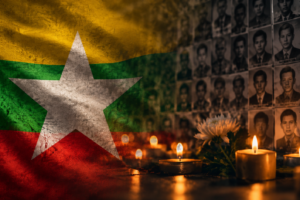
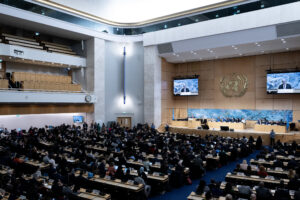
Justice for serious human rights violations requires more effective evidence collection and prosecution, said victims and experts, at a conference organized by the Kingdom of the Netherlands and the ICJ, today.
Keynote speakers included the Prosecutor of the International Criminal Court, Fatou Bensouda, UN Assistant Secretary General for Human Rights, Ilze Brands Kehri, and victim representatives from Myanmar and Yemen.
“The quest for global accountability has progressed tremendously since the ICJ began working nearly 70 years ago,” said Sam Zarifi, Secretary General of the ICJ.
“Over the last three decades in particular we have seen increasing efforts to seek justice at the international level as well as through national courts.”
“We now have to ensure these efforts are more coherent and are able to gather and preserve evidence critical for the successful prosecution of crimes under international law,” he added.
The ICJ has dedicated a Global Accountability Initiative to combat impunity and promote redress for serious human rights violations around the world through the entrenchment of the rule of law.
The Initiative works at the national, regional, and global level to facilitate victims’ access to justice.
“All over the world, perpetrators of serious human rights violations still go unpunished,” said Stef Blok, Foreign Minister of the Kingdom of the Netherlands.
“But this climate of impunity cannot be allowed to continue,” he added.
Impunity for serious human rights violations remains a significant challenge for a variety of reasons including when certain countries obstruct the work of the International Criminal Court.
In response, UN Bodies, including the Human Rights Council and General Assembly, are increasingly being called upon to establish innovative accountability mechanisms often with an evidence collection and preservation function.
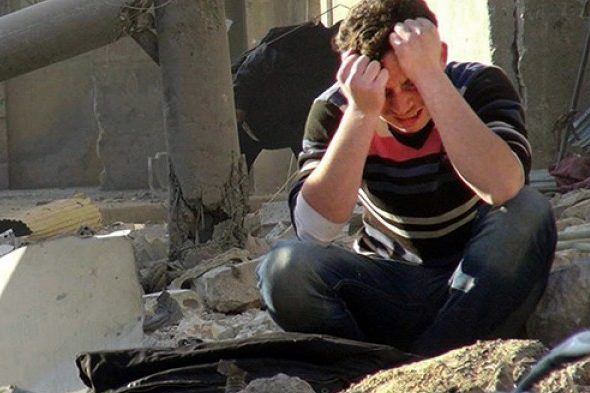
Examples include Syria, Myanmar and Yemen where the lack of an UN Security Council referral to the International Criminal Court led the UN General Assembly and Human Rights Council to take action.
At the same time, accountability mechanisms have indicated challenges, including failures of political support, lack of international cooperation, and difficulties in securing the necessary resources and staffing in the amount and time required to effectively fulfill their mandates within the mandate period.
Mr Blok opened today’s online event, in which over 30 countries, numerous NGOs and victim’ advocacy groups discussed how best to enhance these various efforts. The event was moderated by Sam Zarifi.
Fatou Bensouda, Prosecutor of the International Criminal Court
Radya Al-Mutawakel, President of the Mwatana Organization for Human Rights
Ambia Perveen, Vice chairperson of the European Rohingya Council
Omar Alshogre, Syrian refugee and human rights activist
The full video of the conference can be viewed here.
Contact
Kingsley Abbott, Director of Global Accountability and International Justice, kingsley.abbott(a)icj.org
Oct 28, 2020 | News
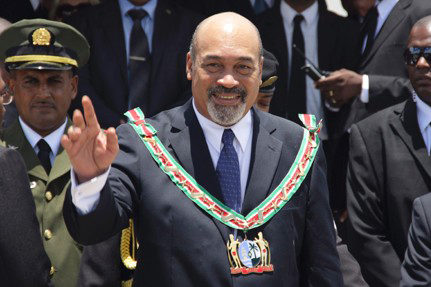
On Friday, 30 October 2020, the Military Court of Suriname (“Krijgsraad”) is expected to resume the appeal process against Suriname’s former president Desi Bouterse. The ICJ will maintain its longstanding monitoring of this trial, which began in 2012.
As of 2020, the trial monitoring exercise will be led by Godfrey Smith SC who is a Senior Counsel, former Attorney General of Belize, and a former High Court judge and acting Justice of Appeal of the Eastern Caribbean Supreme Court.
The Court has announced that the general public will not be permitted to attend the hearing due to the COVID-19 measures.
While Suriname has a general obligation to ensure that trials are public, some restriction on public attendance of a trial maybe appropriate and even necessary to protect public health.
However, the authorities retain a duty to make accommodation for public access to the proceedings, for example by making the proceedings available through video transmission. In this respect, it is critical that efforts be made to ensure transparency, both in the process and in the outcome of the hearing.
Background to the 2020 Hearing
Desi Bouterse was sentenced on 29 November 2019 to 20 years in prison while he was still president of the country. He was found guilty of planning and ordering the murder of 15 political prisoners on 8 December 1982 at the military barracks of Fort Zeelandia. No arrest warrant has ever been issued in relation to either the charge, the conviction or the sentence.
The appeals process started on 22 January 2020. However, after one of the judges fell ill, the case was postponed to 31 March 2020. The merits of the case have not yet been heard.
As with many pending matters in Suriname, the trial was postponed several times due to the COVID-19 pandemic.
The ICJ maintains that the judicial process should run its course with due impartiality, independence and fairness to all parties concerned, and insists that the principles of the rule of law be respected by all.
The ICJ reminds the authorities of the State’s obligation to ensure a fair trial by a competent, independent, and impartial tribunal as guaranteed under article 14 of the International Covenant on Civil and Political Rights, to which Suriname is a party. It also recalls the obligation to ensure accountability for gross human rights violations, including the extrajudicial killings of which Desi Bouterse is accused.
Contact:
Godfrey Smith SC, ICJ monitor of the trial of former President Bouterse, t: 501-610-3114, e: godfrey(a)byronsmithlaw.com
Oct 27, 2020 | Agendas, Events, News
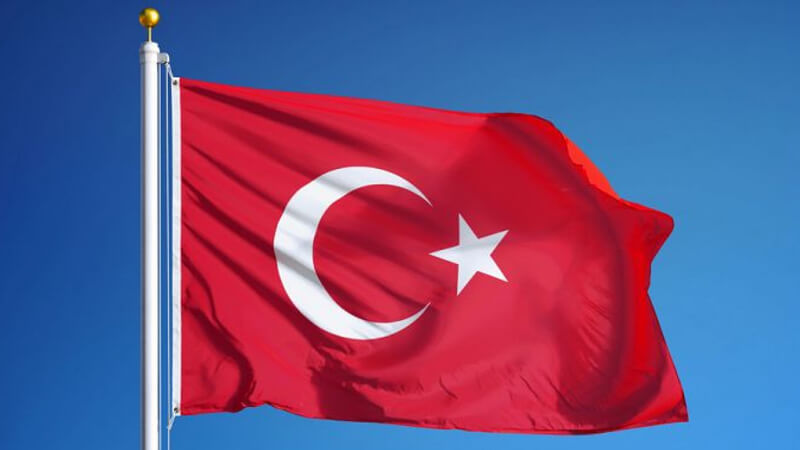
The International Commission of Jurists and the Human Rights Joint Platform (IHOP) invite you to a conversation on the past and current situation of the fight against impunity in Turkey with eminent international and Turkish expert.
Registation is on a first come first served basis by writing to: ihop@ihop.org.tr
Join our speakers:
– Juan Mendez, former UN Special Rapporteur on Torture
– Wilder Taylor, Former Secretary-General of ICJ and chair of Uruguary NPM
– Luciano A. Hazan, Member of the UN Working Group on Enforced and Involuntary Disappearance
– Melis Gebeş, Lawyer, Truth Justice and Memory Center:
– Feray Salman, General Coordinator of Human Rights Joint Platform
IHOPICJ-ZoomConference-ImpunityTurkey-Agenda-2020-ENG (download the agenda in English)
IHOPICJ-ZoomConference-ImpunityTurkey-Agenda-2020-TUR (download the agenda in Turkish)
The event is part of the REACT project: implemented jointly by ICJ and IHOP, this project seeks to support the role of civil society actors in turkey in ensuring effective access to justice for the protection of human rights. This project is funded by the European Union. The views expressed in the event do not necessarily reflect the opinion of the EU.
Oct 26, 2020 | News
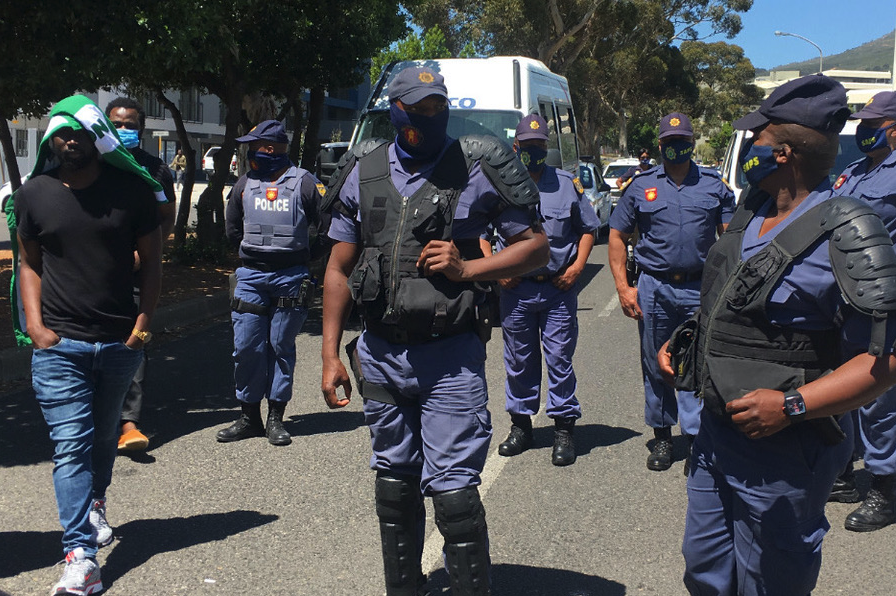
The ICJ and Lawyers Alert today called on the Nigerian authorities to undertake immediate independent and thorough investigations into credible allegations of extrajudicial killings by the military responding to mass protests against the SARS police unit.
Those responsible for criminal conduct must be brought to justice and held to account, the two organizations said.
The authorities must respect their international legal obligations under international law and cease the unlawful, unnecessary and disproportionate use of force in response to Nigerians’ lawful protest actions.
Protest actions have escalated over the last two weeks as Nigerians have staged a series of protests under the #EndSARS movement. Thousands of people joined the demonstrations, demanding an end to police brutality and corruption.
Reports confirm that more than 56 people have died over the two weeks of protest actions, including 38 protesters who were killed, on the 20 October alone, as a result of the Nigerian military opening fire on thousands of peaceful protesters.
“The right to peaceful assembly is guaranteed under international law, including the International Covenant of Civil and Political Rights (ICCPR) which Nigeria has acceded to. Nigeria’s brutal responses to the peaceful demonstrations, including the use of lethal force on force protestors, not only violates this right but also their right to life,” said Kaajal Ramjathan-Keogh, ICJ Africa Regional Programme Director.
Lawyers Alert Executive Director Rommy Mom said: “The Nigerian government’s responses to the protests have undermined the rule of law. Groups and persons should not be afraid to approach the Judicial Panels of Inquiry to lay their grievance towards identification of culpable SARS officers for appropriate sanctions and the compensation of victims.” The organizations recall that under international law, the use of lethal force by law enforcement officials is permissible only when strictly necessary to protect life.
Police in the SARS unit are credibly alleged to be responsible for a widespread practice of torture and other serious human rights violations.
In addition to ending these violent attacks on protestors, the ICJ and Lawyers Alert call on the Nigerian government to address the demands of protestors and embark on comprehensive reform of the police, with emphasis on oversight functions, tethering oversight to civil society groups, the National Human Rights Commission and the constitutional oversight body of the Nigeria police.
“These protests have gained momentum outside Nigeria and have extended beyond the local borders to Ghana, United Kingdom and South Africa. The world’s attention is currently on Nigeria, as the global support for protestors rise amidst further police brutality. The Nigerian government must ensure that it respects and protects the human rights of all in accordance with its obligations under international law,” added Ramjathan-Keogh.
Background
Founded in 1992, the Special Anti-Robbery Squad (SARS) was mandated to “investigate cases involving armed robbery and kidnapping”. However, since its inception, there have been widespread complaints by Nigerians about the conduct of SARS This year Amnesty International issued a report, documenting at least 82 cases of torture, ill treatment and extra-judicial execution by SARS during the period of January 2017 and May 2020
In addition to the ICCPR, Nigeria is party to the UN Convention against Torture and the African Charter on Human and Peoples’ Rights (African Charter), which guarantees the right to life under Article 4 and the right to assemble freely with others under Article 11. These rights are also respectively protected under sections 33(1) and 40 of the Nigerian Constitution.
Article 6 of the ICCPR prohibits the arbitrary deprivation of life.
Principle 9 of the UN Basic Principles on the Use of Force and Firearms by Law Enforcement Officials affirm that:
Law enforcement officials shall not use firearms against persons except in self-defence or defence of others against the imminent threat of death or serious injury, to prevent the perpetration of a particularly serious crime involving grave threat to life, to arrest a person presenting such a danger and resisting their authority, or to prevent his or her escape, and only when less extreme means are insufficient to achieve these objectives. In any event, intentional lethal use of firearms may only be made when strictly unavoidable in order to protect life.
Contact
Kaajal Ramjathan-Keogh, Director of ICJ’s Africa Regional Programme, c: +27845148039, e: kaajal.keogh(a)icj.org
Tanveer Jeewa, Communications Officer, tanveer.jeewa(a)icj.org
Homepage photo credit: Tshwanelo Mathwai
Oct 6, 2020 | News
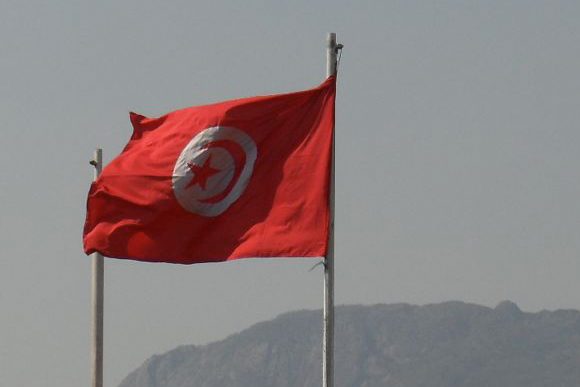
The Tunisian Parliament should amend or reject the revised Draft Organic Law No. 25-2015 on the protection of security forces scheduled for discussion in Parliament today, said the ICJ. The Law if adopted would reinforce impunity for violations committed by security forces and undermine the rule of law and human rights.
The revised Draft Law was approved by the Parliamentary Commission in July 2020, following unsuccessful attempts to adopt it in 2015 and 2017.
Article 7 of the Draft Law provides for the exoneration of security forces from criminal responsibility for using lethal force to repel attacks on a security building, when the force is necessary and proportional to the danger posed to the building. In 2017, the ICJ and other organizations urged Parliament to reject a prior draft which included the same provision.
“More than 10 years after the uprising, Tunisia’s security forces continue to enjoy impunity for decades of serious human rights violations,” said Said Benarbia, the ICJ’s MENA Programme Director.
“The Parliament should adopt all the effective measures at its disposal to end such impunity, not entrench it by allowing the use of lethal force when it’s not strictly necessary to protect lives.”
Article 7 of the Draft Law would preserve the operation of Law No. 69-04, which permits the use of firearms to defend property, “mitigate” a resistance, or stop a vehicle or other form of transport in the context of public meetings, processions, parades, public gatherings, and assemblies. It allows for the use of lethal force to disperse an unlawful gathering where other means of dispersal have failed.
Under international law, including the United Nations Basic Principles on the Use of Force, the intentional use of lethal force must be reasonable, necessary and proportional, and is only permissible if strictly necessary to protect life from an imminent threat to life, not a threat to property.
In the context of non-violent assemblies, the use of force should be avoided and, where unavoidable, restricted to the minimum extent necessary against only those individuals posing an imminent threat of death or serious injury.
The Draft Law appears to preserve an exemption under article 42 of the Criminal Code and Article 46 of Law No. 82-70 on the Statute of Internal Security Forces of 6 August 1982. Article 42 of the Criminal Code provides that a person is not liable for crimes under the Criminal Code, including homicide, if their acts were carried out pursuant to other laws or orders from a competent authority. Article 46 of Law No. 82-70 limits this immunity in relation to orders given to officers of the Internal Security Forces by requiring the orders be given “by their superior in the framework of legality.” Under international law, superior orders cannot serve as a ground of defence to a crime of unlawful killing by a State agent, such as a member of a security force.
“The Tunisian Parliament should reject the Draft Law and conduct a complete review of all laws regulating the conduct of the security forces to ensure they meet standards necessary to protect the population from the excesses demonstrated in the past,” said Kate Vigneswaran, the ICJ’s MENA Programme Senior Legal Adviser.
“Members of the Parliament should send a clear, unequivocal message that the impunity of the security forces can no longer be tolerated.”
Contact:
Said Benarbia, Director, ICJ Middle East and North Africa Programme, t: +41-22-979-3817; e: said.benarbia(a)icj.org
Kate Vigneswaran, Senior Legal Adviser, ICJ Middle East and North Africa Programme, t: +31-62-489-4664; e: kate.vigneswaran(a)icj.org
Tunisia-draft law security forces-News-2020-ARA (story in Arabic, PDF)