Mar 15, 2021 | News
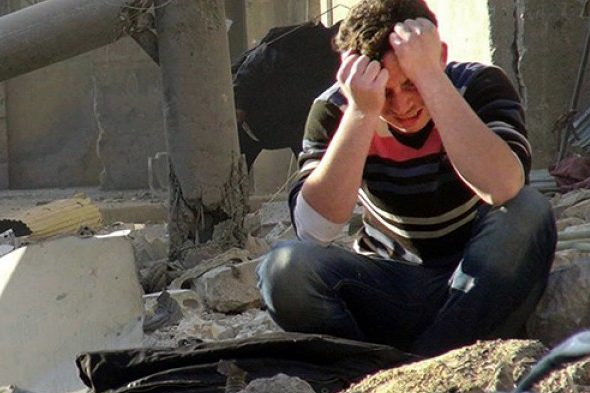
As Syria marks 10 years of a devastating armed conflict, the UN Security Council continues to abdicate its responsibility to address the gross human rights abuses committed by the Syrian government and various other actors in the country, including the use of chemical weapons and the perpetration of other crimes against humanity, likely genocide and war crimes, the International Commission of Jurists (ICJ) said today.
Since a popular uprising began in March 2011, the regime’s unabated repression has driven Syria into a full-scale civil war. Hundreds of thousands have been killed; tens of thousands have been tortured and forcibly disappeared; over 11 million have been forcibly displaced, either internally or to host countries; and tens of thousands continue to to be arbitrarily detained.
Notwithstanding this, Russia and China have vetoed at least 15 Security Council resolutions seeking to address and deter the perpetration of crimes under international law in Syria, including through the establishment of investigations into the use chemical and other weapons, by imposing sanctions over such use, and by referring the Syria situation to the International Criminal Court (ICC).
“The SC’s failure to address the Syrian conflict has been chronic and structural, and so wrong about so much and at the expense of so many”, said Said Benarbia, MENA Programme Director at the ICJ. “The SC’s failure calls into question its very role as a guarantor of peace and security and its relevance in upholding a rule-based order.”
To end impunity and ensure victims’ right to justice and effective remedies, the SC must reform its accountability practices, including by ensuring that decisions on the investigation of crimes under international law, the referral of these crimes to the ICC, and the establishment and operationalization of other forms of accountability be based on the existence of overwhelming evidence of such crimes, rather than political expediency.
In the meantime, individual UN Member States must act to begin filling the accountability gap in Syria, including by supporting United Nations accountability mechanisms, such as the the International, Impartial and Independent Mechanism, and by seeking out, prosecuting and punishing those responsible for the atrocities committed in the country pursuant to the principle of universal jurisdiction, as the recent, first-ever guilty verdict against a former official of the Syrian regime delivered by the Higher Regional Court in Koblenz, Germany, shows.
Contact:
Asser Khattab, Research and Communications Officer, ICJ Middle East and North Africa Programme, asser.khattab@icj.org
Mar 15, 2021 | Advocacy, Non-legal submissions
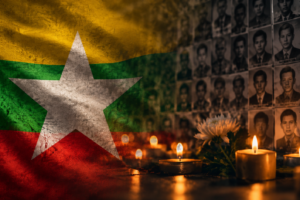
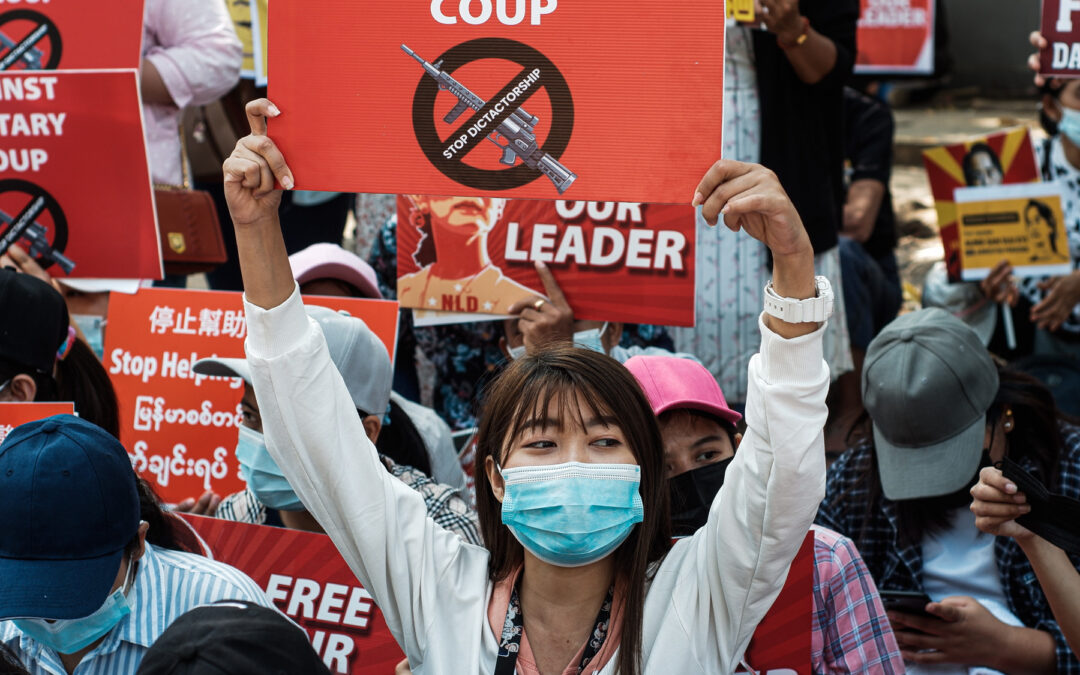
Today, during a General Debate, the ICJ called on the UN Human Rights Council to condemns a set of laws amendend by the military governmentn in Myanmar and restricting human rights, and to demand the return to of Myanmar civilian rule respecting the rule of law.
The statement reads as follows:
“Madame President,
The International Commission of Jurists (ICJ) condemns the illegitimate attempts to “amend” several laws by the Military appointed Myanmar’s State Administration Council (SAC) following its unlawful seizure of power on 1 February 2021.
The implementation of the Amended Law Protecting the Privacy and Security of Citizens (2017) would undermine the democratic process, criminalize peaceful protests and remove various human rights protections. It would provide for broad and unchecked power to the military to arrest anyone without a warrant and aim to remove basic protections, including the rights to be free from arbitrary detention and from warrantless surveillance and search and seizure.
The amendments to the Penal Code and the Criminal Procedural Code have made non-bailable certain offenses, specifically targeting persons criticizing the coup or the military junta, as well as those encouraging others to support the “Civil Disobedience Movement.”
In addition, Amendments made to other existing laws, such as the Ward and Tract Administration Law and Electronic Transactions Law, allow for search and seizure at night without arrest warrant and allow for the silencing of critical voices against the coup and human rights violations of the military, in violation of international standards.
The ICJ calls on the Council to adopt a resolution, which, among other things, univocally condemns and demands the repeal of these laws and the return to of Myanmar civilian rule respecting the rule of law.
Thank you.”
Mar 12, 2021 | Advocacy, Non-legal submissions
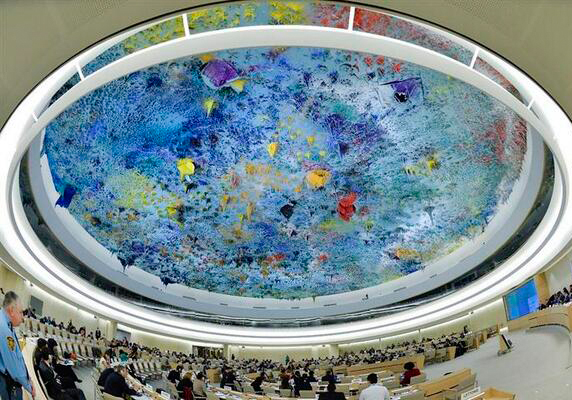
Today, the ICJ delivered a statement to the UN Human Rights Council calling for accountability for crimes against humanity committed in Myanmar during the Interactive Dialogue on the report by the UN Special Rapporteur on the situation of human rights in Myanmar.
The statement reads as follows:
“Madame President,
The International Commission of Jurists (ICJ) welcomes the recent report of the Special Rapporteur on the situation of human rights in Myanmar.
The widespread gross violations of human rights documented in the report – including extrajudicial killings, arbitrary arrests and detention- underscore the need for urgent measures of accountability to redress these and to deter further violations.
ICJ has documented further evidence that the unlawful crackdown against peaceful protestors have continued to worsen leading to more extrajudicial killings. More than 50 people have already been unlawfully killed and several hundreds have been severely injured.
Hundreds of others have been arbitrarily arrested and detained, with some subjected to torture and ill-treatment. As the scale of violations continues to increase in many parts of the country, these attacks have become systematic and widespread, and must be investigated as crimes against humanity.
The ICJ therefore supports the recommendations made by the Special Rapporteur, including for referral of the situation to the ICC.
The ICJ urges the Council to adopt a resolution that would strengthen and support the IIMM’s work to collect and preserve evidence for accountability; and to extend the mandate of the Special Rapporteur, including to ensure the immediate, full and unrestricted monitoring of the situations and prompt and effective implementation of their recommendations.
Thank you.”
Contact:
Massimo Frigo, ICJ UN Representative, e: massimo.frigo(a)icj.org, t: +41797499949
Feb 25, 2021 | Advocacy, Non-legal submissions
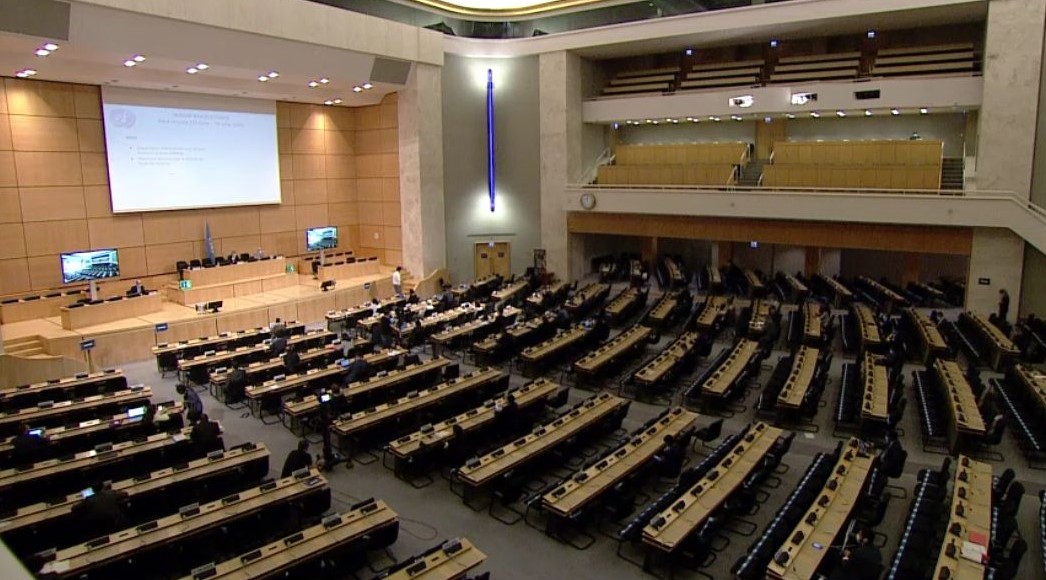
The ICJ today addressed the UN Human Rights Council in the Interactive Dialogue on the Report of the Office of the High Commissioner for Human Rights on Promoting reconciliation, accountability and human rights in Sri Lanka.
The statement reads as follows:
“Madam President,
The ICJ welcomes the comprehensive OHCHR report on Sri Lanka.
We share OHCHR’s observation that domestic initiatives for accountability have repeatedly failed to produce results, ‘more deeply entrenching impunity, and exacerbating victims’ distrust in the system.’ [A/HRC/46/20, pp. 52]
The ICJ has continuously observed that Sri Lanka’s incapacity and unwillingness to pursue accountability for crimes under international law is deep-rooted and longstanding.
The extensive militarization of civilian functions, the reversal of constitutional safeguards, the obstruction of the rare cases of domestic criminal accountability and the deteriorating human rights situation all point to a systemic culture of impunity that will only worsen in the years to come.
Sri Lanka’s failure to establish a hybrid accountability mechanism in the five years since the adoption of Resolution 30/1 demonstrates a complete lack of political will to hold perpetrators accountable. The rights of the victims of human rights violations cannot be ignored any longer.
The ICJ endorses all of OHCHR’s recommendations, particularly the call for international and external accountability processes, whether before the ICC or through the exercise of universal jurisdiction by other States.
We further call for enhanced monitoring and reporting on the ground situation and for the establishment of a mechanism for the collection and preservation of evidence for future prosecution.
Madam High Commissioner, how can OHCHR ensure that the victims’ call for accountability is effectively fulfilled?
I thank you.”
Contact:
Massimo Frigo, ICJ UN Representative, e: massimo.frigo(a)icj.org, t: +41797499949
Feb 5, 2021 | Advocacy, Non-legal submissions
Today, the ICJ and other human rights NGOs have written to UN Member States to call for a renewal of the mandate of the UN Commission on Human Rights in South Sudan.
The joint letter highlights the existing remaining concern on the human rights situaion in South Sudan and provide with key recommendation for its functioning.
Find the joint letter here: SouthSudan-UN-JointLetter-Advocacy-NonLegal-2021-ENG
Contact:
Massimo Frigo, ICJ UN Representative, e: massimo.frigo(a)icj.org, t: +41797499949