Sep 30, 2020 | Events, News
For decades, victims of enforced disappearances and extrajudicial killings in Latin America have been demanding justice, truth, and reparations. Despite these efforts, impunity remains rampant. In some cases, victims have been waiting for justice for over four decades.
As a part of its strategy to promote accountability for serious human rights violations around the world, the ICJ, together with partners, is implementing a regional project to address justice for extrajudicial killings and enforced disappearances in Colombia, Guatemala, and Peru, supported by the European Union.
One of the results of the project has been to support the production of three case dossiers by the ICJ’s local partners.
In Colombia, to illustrate one of the patterns of extrajudicial killings, the Asociación de Red Defensores y Defensoras de Derechos Humanos (dhColombia) produced a document concerning three cases of extrajudicial killings committed during 2006 and 2008.
The report Una práctica sistemática ejecuciones extrajudiciales en el eje cafetero (2006-2008) presents the challenges the victims and their lawyers have faced when seeking responsibility for those crimes.
In Peru, the Instituto de Defensa Legal (IDL) documented the enforced disappearances of university students and professors between 1989 to 1993, at the height of the internal conflict. In the report Los desaparecidos de la Universidad Nacional del Centro IDL describes the difficult legal path victims have faced in order to bring state agents suspected of committing crimes to justice.
In Guatemala, to highlight the manner in which enforced disappearances were committed against rural communities during the internal armed conflict, the Asociación de Familiares de Detenidos-Desaparecidos de Guatemala (Famdegua) wrote about the enforced disappearance of more than 500 people in the region of the Veparaces. In the report Las desapariciones forzadas en la región de las Verapaces the story of five cases is presented.
These three reports contribute towards understanding the prevalence of these violations in Latin America, and the available options to tackle impunity.
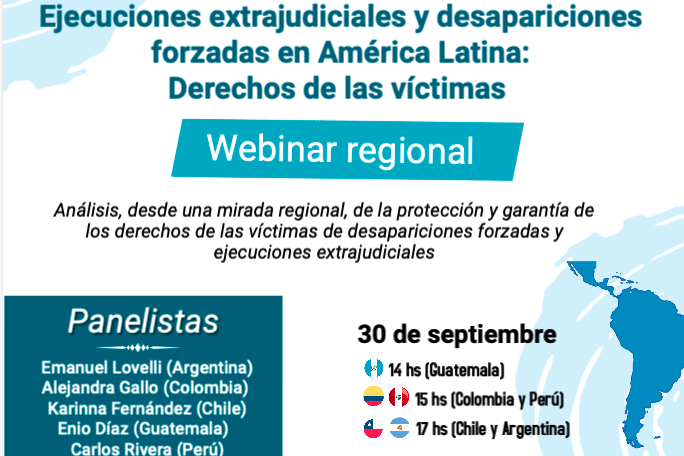
On 30 September 2020, the ICJ will host a regional webinar to discuss the protection and guarantee of the rights of victims of enforced disappearances and extrajudicial executions in Argentina, Colombia, Chile, Guatemala and Peru.
The webinar will be broadcast live on the ICJ’s Facebook page, at 14 hours (Guatemala time)/15 hours (Colombia and Peru time)/ 17 hours (Chile and Argentina time).
Contact
Kingsley Abbott, Coordinator of the Global Accountability Initiative, e: kingsley.abbott@icj.org
Carolina Villadiego Burbano, Legal and Policy Adviser, Latin America and Regional Coordinator of the Project, e: carolina.villadiego@icj.org
Rocío Quintero M, Legal Adviser, Latin America, e: rocio.quintero@icj.org
Sep 14, 2020 | Advocacy, Non-legal submissions
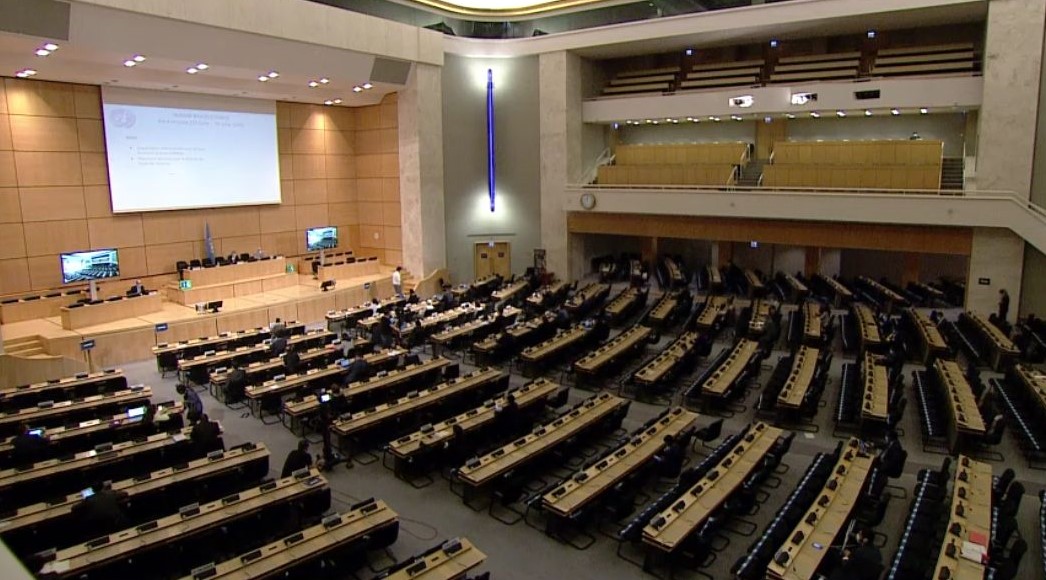
In a statement to the UN Human Rights Council in Geneva, the ICJ has welcomed the report of the Independent Investigative Mechanism for Myanmar (IIMM)
The oral statement was delivered in an interactive dialogue with the IIMM, and read as follows:
“The ICJ salutes the Mechanism in setting up the necessary infrastructure for its operation despite the challenges brought about by the COVID-19 pandemic. Given the lack of genuine and independent domestic investigation and prosecution of serious human rights violations in Myanmar, the efficient establishment of the Mechanism is welcomed.
The ICJ shares its concern over the Government of Myanmar’s lack of cooperation with the Mechanism. The ICJ recalls Myanmar’s obligation to ensure accountability for serious human rights violations occurring in Myanmar, including, but not limited to, the acts against ethnic Rohingya that were the subject of the report of the Government-appointed Independent Commission of Enquiry.
Given the Mechanism’s mandate to gather and preserve evidence of any serious human rights violations committed in Myanmar from 2011 to the present, the ICJ underscores the need to investigate the widely reported accounts of killings, serious physical injury, mass displacement and destruction of property in various parts of Rakhine and Chin states in the context of the ongoing conflict between Myanmar and the Arakan Army. The Myanmar Government still refuses to hold a ceasefire despite the onset of the COVID-19 pandemic in Rakhine. The parties to the conflict must be held accountable for any violation of international human rights and humanitarian law.
The ICJ would like to ask: how can States and inter-governmental organizations strengthen support for the mandate?”
For more information, contact: Kingsley Abbott, kingsley.abbott(a)icj.org
Sep 8, 2020 | Feature articles, News
Judges from six Latin American countries revealed that there were serious obstacles, but also possibilities for justice, facing regional judiciaries as they try to protect the human rights of those who have been adversely affected by the activity of business entities.
The judges gathered as part of the Regional Judicial Dialogue on Business and Human Rights organized by the ICJ of Jurists on September 7.
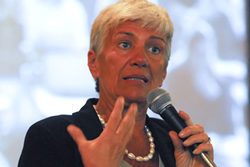
The Dialogue, moderated by ICJ Commissioner Professor Monica Pinto, brought together 17 judges from Central and South America to consider the role of judges in guaranteeing the right of access to justice and remedy and reparation. The judges also considered the need to guarantee the independence of the judiciary and the security of individual judges, lawyers, and human rights defenders in the context of business activities in the region.
The session featured presentations from a member of the UN Working Group on Business and Human Rights and the Office of the UN High Commissioner for Human Rights. The Dialogue took place in the context of the 5th Regional Forum on Business and Human Rights for Latin America and the Caribbean.
Discussing access to justice and remedy and reparation, the judges shared experiences and jurisprudence in cases related to serious crimes, including against humanity committed during the Argentine military regime, as well as cases of serious corruption and embezzlement in Guatemala.
In Argentina, in a case concerning the 1976 kidnapping and torture of 24 workers employed by the local Ford Motor company at their factory in Buenos Aires during the 1976-83 military dictatorship, a Federal Trial Tribunal sentenced three persons, a former military officer and two former Ford executives to prison of between 10 and 12 years, for their complicit involvement in the crimes.
Former Ford executives were accused of providing detailed information and logistical support to security agents that led to the abduction and torture of the victims, and also allowed a detention centre to be set up inside the premises of that factory.
The three judges of the Tribunal in this case attended the meeting to share the lessons learned and the significance of the criminal proceedings in the context of efforts to bring justice and reparations for the crimes of the past.
The process and the final sentence is a landmark in the fight against impunity in Argentina and an important message to all so that these crimes are not committed again. The case clarified the ways in which private individuals (the former company executives) participated in the commission of the crimes by State agents (military and security agents), elaborating upon modalities of attribution of the acts to the accessory perpetrators.
It is also an innovation in the ways it gathered and assessed the probatory value of the available evidence of crimes committed more than 30 years ago so that the crimes could still be attributed to the perpetrators.
The reparation ordered by the Tribunal in this case was “symbolic and historical”, consisting on an acknowledgment of the facts by the State and the private actors. The victims may demand now other forms of reparation from the State, but not from individuals.
The company as such was not part of the criminal proceedings nor was it sanctioned in the final sentence, since Argentinian law does not accept the criminal responsibility of legal entities such as corporations.
A participant judge from Guatemala shared a case concerning economic crimes of corruption, fraud, illicit association and assets laundering in a provincial town in Guatemala. Here, the experience and outcomes were somewhat different.
The case involved the town major and several of his relatives as well as some 20 companies out of which nearly 20 individuals and seven companies received penalties in the final sentence.
The case is of special significance in Guatemala as one of the few, large scale, corruption cases that has reached its final stage with convictions. In the investigation and collection of evidence considered during the trial, participated several public offices and the then International Commission Against Impunity in Guatemala (CICIG), which is no longer in operation.
Thanks to recent laws on corruption and money laundering, it is possible to impose sanctions on the company, as a legal entity. In the instant case, those sanctions consisted of monetary fines but not suspension or dissolution of the legal entity to allow other administrative proceedings against the same companies to continue.
In accordance with national laws and international standards, the judges ordered full reparation, including for damages, measures of satisfaction such as public statements of apologies and publications to be made by the convicted.
Citing a graphic statement contained in the final sentence, the judge Pablo Xitumul who presided the Tribunal said “corruption and impunity are even more lethal than a cancer or a pandemic, and should be combated without delay or excuses!”
Read the full story here: Americas-Judges and BHR-News-Feature article-2020-ENG
Aug 30, 2020 | News, Publications, Reports, Thematic reports
The ICJ marked the International Day of the Victims of Enforced Disappearances today by releasing a baseline study (in Spanish) which identifies key obstacles to accountability for serious human right violations in Colombia.
“The report finds that although Colombia has a comprehensive legal framework aimed at providing accountability for serious human rights violations, victims still face many challenges in obtaining access to justice,” said Kingsley Abbott, Coordinator of the ICJ’s Global Accountability Initiative.
“A robust domestic legal framework is important, but without effective Government implementation at every level full accountability for these violations will remain out of reach,” added Abbott.
Among other challenges, some victims still encounter difficulties in participating in criminal proceedings or obtaining information about investigations and prosecutions of those alleged to be responsible for violations.
The study recommends steps Colombia should take to improve the implementation of the domestic legal framework, including:
- raising the awareness of civil servants, including judicial employees, of victims’ rights and the appropriate legal mechanisms employed to search for “disappeared” persons;
- improving coordination between the State’s institutions, including the Search Unit for Persons Presumed Disappeared in the context and by Reason of the Armed conflict, the Special Jurisdiction for Peace, and the Office of the Attorney General; and
- ensuring that the investigation and prosecution of enforced disappearances and extrajudicial killings take place within the civilian rather than the military justice system.
The study also stresses the importance of Colombia recognizing the competence of the UN Committee on Enforced Disappearances (CED) to receive and consider individual communications. Considering the high levels of impunity, the recognition has been requested by Colombian civil society organizations and victims to improve the protection and guarantee of rights of victims of enforced disappearances.
The baseline study has been produced as part of the ICJ’s regional project addressing justice for extrajudicial killings and enforced disappearances in Colombia, Guatemala and Peru, sponsored by the European Union.
The baseline study is available in Spanish.
Background
The ICJ has long been monitoring laws, policies and practices concerning the investigation and prosecution of serious human rights violations and abuses in Colombia, including enforced disappearances and extrajudicial killings, as part of its efforts to promote accountability, justice and the rule of law around the world.
Enforced disappearances and extrajudicial killings are among the most prevalent human rights violations committed in Colombia, particularly in the context of the ongoing internal armed conflict. In Latin America, Colombia has one of the highest figures of people who have been subject to enforced disappearance or unlawfully killed.
The project is implemented under the ICJ’s Global Accountability Initiative which has also produced baseline studies for Eswatini, Nepal, Myanmar, Venezuela, Cambodia, Tajikistan and Tunisia.
Contacts
Kingsley Abbott, Coordinator of the Global Accountability Initiative, e: kingsley.abbott(a)icj.org
Carolina Villadiego, Legal and Policy Adviser, Latin America, and Regional Coordinator of the Project, e: carolina.villadiego(a)icj.org
Rocío Quintero M, Legal Adviser, Latin America, e: rocio.quintero(a)icj.org
Download
Colombia-GRA-Baseline-Study-Publications-Reports-Thematic-reports-2020-SPA (full report, in Spanish, PDF)
Aug 17, 2020 | Advocacy, News
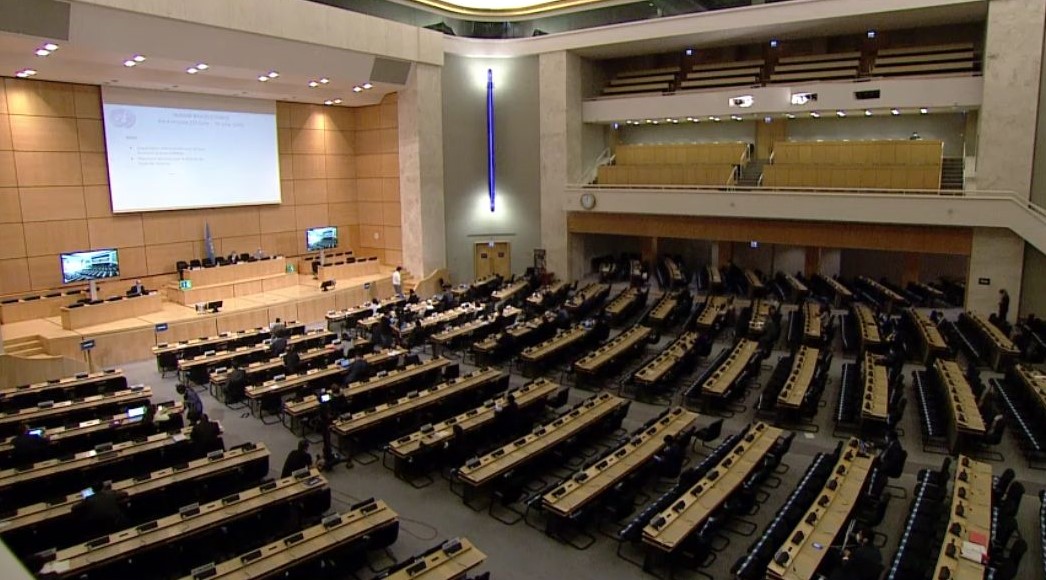
Today, the ICJ joined 83 other human rights organizations to call the United Nations Human Rights Council to renew and strengthen the mandate of the Independent International Fact-Finding Mission (FFM) on Venezuela in its upcoming session in September, and to ensure it has adequate resources to continue its critical work.
The ICJ considers that the lack of judicial independence in the country, recently addressed by the High Commissioner and documented by ICJ during several years, presents a major obstacle to victims seeking to access effective remedies and reparation for gross human rights violations in the country. There has also been near complete impunity for those responsible for such violations. The lack of effective accountability makes the work of the FFM indispensable
Last year at its 42nd session, UN Human Rights Council established the Independent International Fact-Finding Mission with a mandate to investigate extrajudicial executions, enforced disappearances, arbitrary detentions and torture and other cruel, inhuman or degrading treatment since 2014.
The Council expressed “grave concern at the alarming situation of human rights in the Bolivarian Republic of Venezuela, which includes patterns of violations directly and indirectly affecting all human rights (…) in the context of the ongoing political, economic, social and humanitarian crisis.”
The FFM’s first report is expected to be presented at the Council’s next session scheduled for 14 September to 6 October.
The NGO joint statement stressed that the report “will mark an important first step on the path to accountability in Venezuela through the documentation of the participation of those suspected of criminal responsibility. It is critical that the Human Rights Council respond meaningfully to the findings and recommendations in the report”.
The ICJ notes that the COVID-19 pandemic has engendered further stresses on the human rights situation. The United Nations Office for the Coordination of Humanitarian Affairs (OCHA) reported in July 2020 that an “assessment of water, hygiene and sanitation (WASH) conditions in 17 hospitals conducted by PAHO/WHO in 2019 found that 88.3 per cent of the assessed hospitals present a high risk that hygiene and sanitary conditions pose a health risk to patients and staff; the rest face a medium risk.”
The joint statement is available here.