Apr 1, 2019 | News
As military courts in Pakistan once again cease to have jurisdiction over civilians for terrorism-related offences, the Government must bring reforms to strengthen the country’s criminal justice system, the ICJ said today.
Perpetrators of terrorist attacks and other serious crime must be brought to justice fair trials before competent, independent and impartial courts as required under international law, the ICJ added.
“The lapse of the jurisdiction of military courts over civilians is a step in the right direction, but unsurprisingly – even four years after military courts were empowered to try civilians – there is no sign of the promised reforms to strengthen the ordinary criminal justice system to effectively and fairly handle terrorism-related cases,” said Frederick Rawski, ICJ’s Asia Director.
The 23rd Amendment and corresponding amendments to the Army Act, 1952, lapsed on 30 March 2019, as their respective two-year sunset clauses expired. So far, the Government has failed to get support from opposition parties for a constitutional amendment to once again extend the jurisdiction of military courts to conduct trials of civilians.
“The Government must not re-enact legislation to continue secret military trials of civilians, nor resort to more short-term, short-sighted security measures that are contrary to Pakistan’s obligations to protect human rights,” Rawski said.
“Instead, the Government should urgently invest in enhancing the capacity and security of judges, investigators and prosecutors to make the regular criminal justice system more effective in conducting fair, credible terrorism trials, and bringing perpetrators to account without imposing the death penalty.”
According to military sources and ICJ’s monitoring of military trials in Pakistan since January 2015, military courts have convicted 617 people for terrorism-related offences, out of which 346 people have been sentenced to death and 271 people have been given prison sentences. At least 56 people have been hanged. Only four people have been acquitted.
The ICJ has documented serious fair trials violations in the operation of military courts, including: denial of the right to counsel of choice; failure to disclose the charges against the accused; denial of a public hearing; failure to give convicts copies of a judgment with evidence and reasons for the verdict; and a very high number of convictions based on “confessions” without adequate safeguards against torture and ill treatment.
Contact
Frederick Rawski, ICJ Asia Pacific Regional Director (Bangkok), e: frederick.rawski(a)icj.org
Reema Omer, ICJ International Legal Adviser for Pakistan (London), t: +447889565691; e: reema.omer(a)icj.org
Additional information
Military courts were first empowered to try civilians for certain terrorism-related offences in January 2015 through the 21st Amendment to the Constitution and amendments to the Pakistan Army Act, 1952, which were in operation for a period of two years.
The expansion of the jurisdiction of military tribunals was a key part of the Government’s 20-point National Action Plan, adopted following the attack on the Army Public School in Peshawar in December 2014. NAP envisioned military courts to be a short-term “solution” to try “terrorists”, to be operational only for a two-year period during which the government would bring about necessary “reforms in criminal courts system to strengthen the anti-terrorism institutions”.
Despite promises that military courts were only temporary, after the expiration of the 21st Amendment, on 31 March 2017, Parliament enacted the 23rd Amendment and amendments to the Army Act to renew military courts’ jurisdiction over civilians. The amendments were given retrospective effect from 7 January 2017, and were due to lapse two years after their date of “commencement”. The expanded jurisdiction of military courts lapsed on 30 March 2019 (even though earlier reports suggested the amendments would expire on 6 January 2019) — two years after the date of “operation” of the 23rd Amendment).
The ICJ opposes the death penalty in all circumstances as a form cruel, inhuman and degrading punishment and an arbitrary denial of the right to life. The ICJ recalls that the UN General Assembly has by overwhelming majorities repeatedly called on all states the retain the death penalty to place a moratorium on the practice with a view to abolition. Pakistan previously had such a moratorium from 2008 to 2014.
Mar 19, 2019 | News
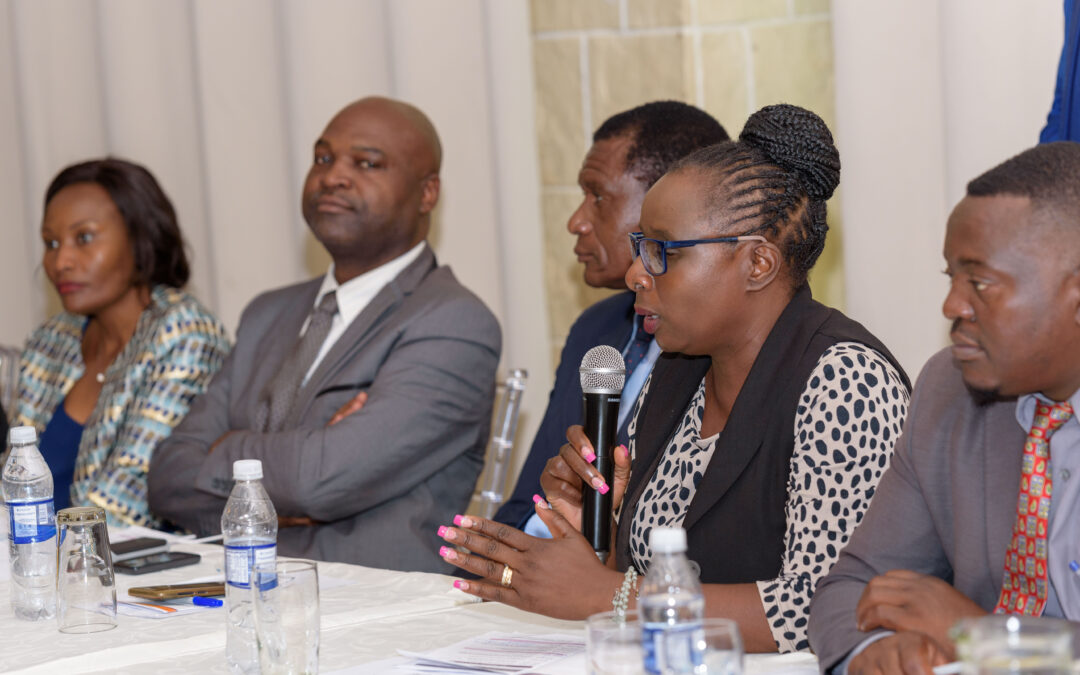
The ICJ in partnership with the National Prosecuting Authority (NPA) convened a two day training workshop to build the capacity of Chief prosecutors and Senior management to effectively investigate corruption cases.
The training workshop took place at the Wild Geese Lodge, Harare on 18 – 19 March 2019.
The new government under President Mnangagwa, saw a shift in government priorities evidence of this is the launch of the Transitional Stabilisation Programme in October 2018. The Transitional Programme seeks to propel the country towards stabilisation and economic development as well eradicate corruption.
Through this programme, the government has established institutions to deal with corruption, this has seen the establishment of Special Anti-Corruption Courts, which has resulted in an increase in high level arrests on corruption charges. Additionally a new Anti-Corruption Prosecution Unit was established within the Office of the President and Cabinet to improve efficiency in the fight against all forms of graft and to strengthen the effectiveness of national mechanisms for the prevention of corruption.
This anti-corruption training workshop therefore becomes relevant in the government’s fight against corruption. The main objective of the workshop is to enhance the capability of prosecutors to handle corruption cases effectively.
Presentations focused on understanding corrupt practices; defining white collar crime and financial crimes in Zimbabwe; domestic, regional and international framework on corruption; seizure, freezing and confiscation of the proceeds of corruption; and the practical steps to combatting corruption. It is hoped that at the end of the two day meeting, prosecutors will effectively implement legal frameworks and policies in the prosecution of corruption cases.
Prosecutor General Hon K. Hodzi in his opening speech remarked that the NPA is proud of their partnership with the ICJ in their fight against corruption. He was grateful for the continued support from the ICJ. The Prosecutor General noted that corruption is a lived experienced by everyone in this country because it has direct impact on the socio-economic welfare of the people of Zimbabwe. He noted that this was an important workshop which would serve as a toolkit that would help renew the NPA’s approach to in the prosecution of corruption in this country.
The Prosecutor General hoped that the workshop would enable the prosecutors to share knowledge and experience as well meaningful discourse bordering around challenges in the prosecution of corruption cases. This approach would enable the NPA to contribute to effectively eliminating corruption in the improvement of justice in Zimbabwe. He urged prosecutors to show that corruption does not pay and can be defeated.
Present at the training workshop was the Prosecutor General of NPA, senior prosecutors and senior management, representatives from the Judicial Service Commission, Solomon Mhlanga from Office of the President and Cabinet, Mr. Shana from the Judicial College of Zimbabwe, Mr. Zowa from the Law Development Commission representatives from Transparency International Zimbabwe, and representatives from the Reserve Bank of Zimbabwe. There were a total of 45 (forty-five) delegates; 29 (twenty-nine) male and 16 (sixteen) female delegates.
Contact:
Brian Penduka, e: brian.penduka(a)icj.org, t: +263772274307
Vimbai Mutandwa, e: vimbai.mutandwa(a)icj.org, t: +263773517733
Mar 19, 2019 | Events, Multimedia items, News, Video clips
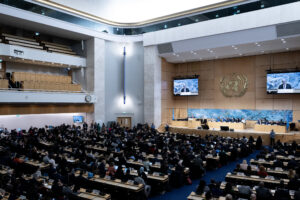
Watch on video this side event held on 18 March 2019 at the Human Rights Council.
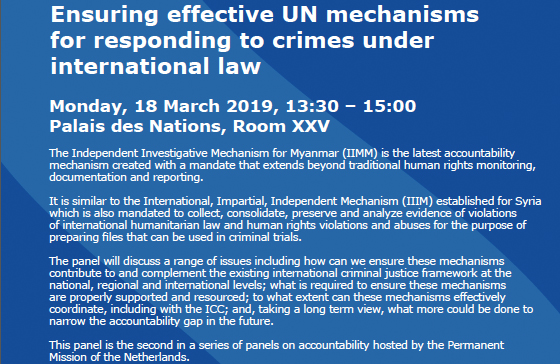
The Independent Investigative Mechanism for Myanmar (IIMM) is the latest accountability mechanism created with a mandate that extends beyond traditional human rights monitoring, documentation and reporting.
It is similar to the International, Impartial, Independent Mechanism (IIIM) established for Syria which is also mandated to collect, consolidate, preserve and analyze evidence of violations of international humanitarian law and human rights violations and abuses for the purpose of preparing files that can be used in criminal trials.
The panel discussed a range of issues including how can we ensure these mechanisms contribute to and complement the existing international criminal justice framework at the national, regional and international levels; what is required to ensure these mechanisms are properly supported and resourced; to what extent can these mechanisms effectively coordinate, including with the ICC; and, taking a long term view, what more could be done to narrow the accountability gap in the future.
This panel was the second in a series of panels on accountability hosted by the Permanent Mission of the Netherlands.
Opening Remarks:
- Ambassador Monique van Daalen, Permanent Representative to the UN of the Kingdom of the Netherlands
Moderator:
- Saman Zia-Zarifi, Secretary General, International Commission of Jurists
Panelists:
- Andrew Clapham, Member of the Commission on Human Rights in South Sudan
- Sanji Monageng, former Judge/Vice-President of the ICC, and Commissioner of the ICJ
- Stephen Rapp, Chair, Commission for International Justice & Accountability (CIJA), Distinguished Fellow, US Holocaust Memorial Museum, and former United States Ambassador-at-Large for Global Criminal Justice
- Amady Ba, Head, International Cooperation Section, JCCD, OTP, International Criminal Court (ICC)
- Kingsley Abbott, ICJ Senior Legal Adviser for Global Redress and Accountability
Side event ICJ NL Accountability No2 (side event flyer, in PDF)
Watch on video:
https://www.facebook.com/ridhglobal/videos/347634279184620/UzpfSTQ3MTQ2NzA4NjIyMTM3MzoyNDc4ODQxODc4ODE3MjA3/
Mar 19, 2019 | News
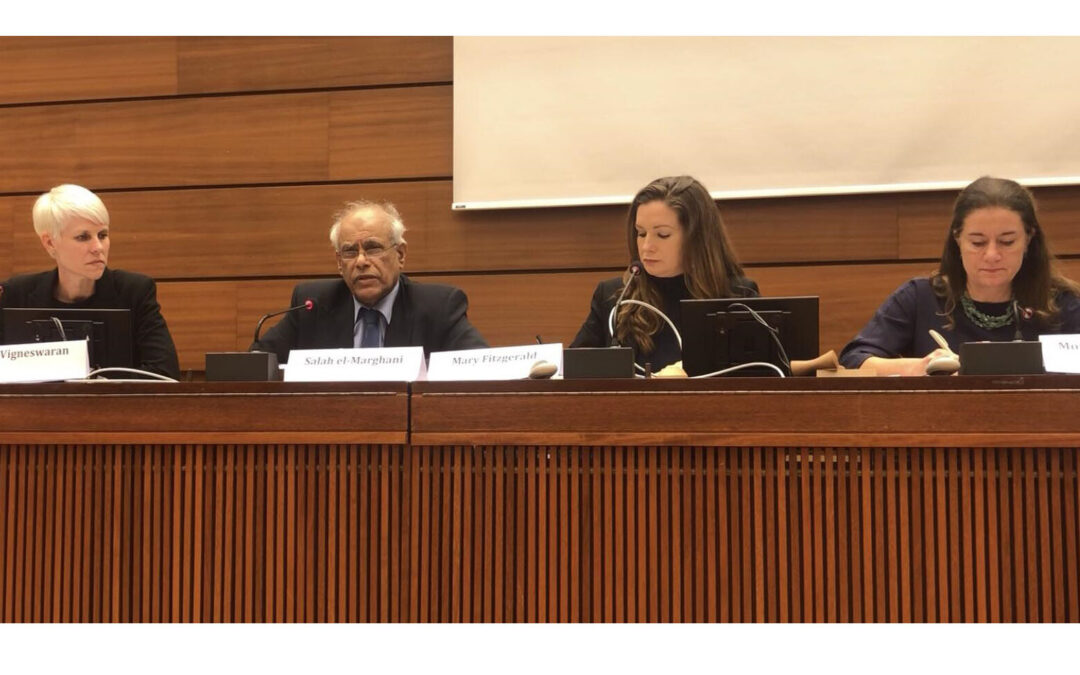
Today, the ICJ held a side event titled “Accountability for crimes under international law in Libya: Challenges and Prospects” during the 40th Session of the UN Human Rights Council in Geneva.
The event was co-hosted by the Permanent Mission of the Kingdom of Netherlands and the Permanent Mission of the Federal Republic of Germany.
A panel of renowned experts discussed a number of issues relating to accountability for crimes under international law in Libya, including shortcomings in Libyan law and practice, political and security challenges impacting prospects for reform, the role of the International Criminal Court, and the consequences for tackling human trafficking and abuse of migrants.
The panel included Monique van Daalen, Ambassador of the Permanent Mission of the Netherlands; Salah el-Marghani, former Justice Minister of Libya; Marwa Mohammed, Lawyers for Justice in Libya; Mark Kersten, Munk School of Global Affairs and Public Policy, University of Toronto, and Wayamo Foundation; Kate Vigneswaran, Senior Legal Adviser for the ICJ’s Middle East and North Africa Programme; and Mary Fitzgerald, Libya researcher and expert.
During the side event, the ICJ presented and distributed a briefing paper highlighting the key issues that hamper accountability for crimes under international law in Libya, including the definition of crimes under domestic law, amnesties and imunities, rights during arrest and detention, and rights at trial.
The paper included detailed recommendations to the Libyan authorities as well as the international community with a view to tackling the main obstacles to the achievement of accountability in Libya.
The briefing paper anticipates the publication of the forthcoming ICJ report on Libya’s criminal justice system.
Download:
Lybia-Accoutability challenges-Advocacy-Analysis brief-2019-ENG (Briefing paper, in PDF)
Libya HRC side event flyer – March 2019 (Event flyer, in PDF)

Mar 13, 2019 | Advocacy
This important blog by ICJ Senior Legal Adviser Kingsley Abbott was first posted to Opinio Juris. It has been translated into Burmese language as a resource for individuals, institutions and organizations in the country.
Documenting criminal human rights violations in the Myanmar is critical, so we must be careful not to create problems for future efforts at establishing criminal responsibility.
In his article, Kingsley Abbott, discusses the important role of the documentation of serious human rights violations in Myanmar by civil society, UN bodies and journalists.
This effort has played a critical role in raising awareness of the situation inside and outside the country and in getting responses from the international community.
Read the article in English
Read the article in Burmese
Contact
Kingsley Abbott, ICJ Senior Legal Adviser for Global Redress & Accountability e: kingsley.abbott(a)icj.org